Gangnam Agnes Acne-Prone Skin
If you want to receive treatment?
Gangnam Agnes
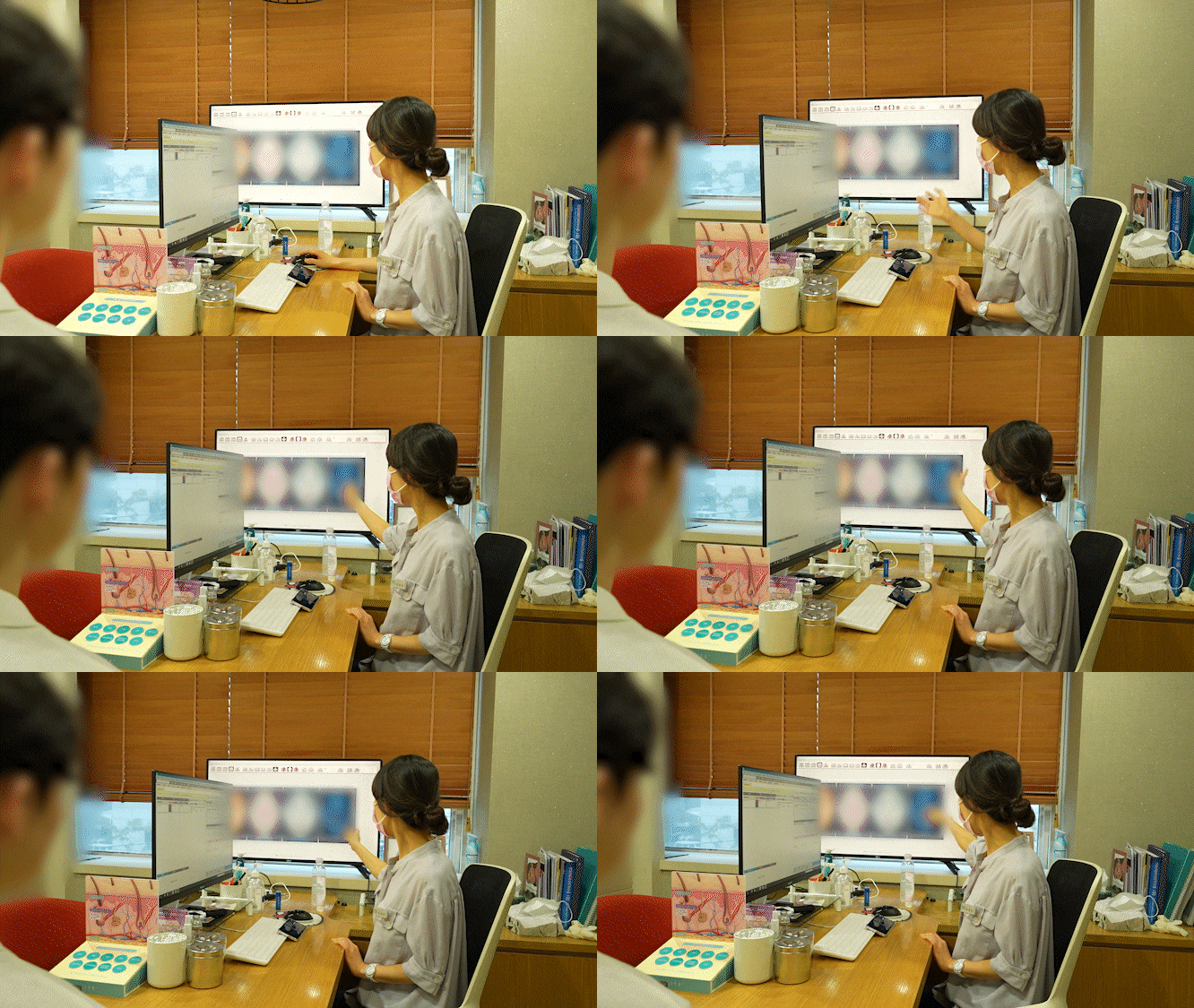
Hello, I’m Park Young-mi, the chief director of Seolleung UNNI Clinic.^^
"My acne just won’t go away,
and it’s causing so much stress..."
"No matter how much I take care of it, it keeps coming back.
Is there any way to solve this?"
Many people may be looking into acne treatment while worrying about these kinds of concerns, and have come across the Agnes procedure.
When acne calms down and then flares up again, it can feel frustrating, as if all your efforts were for nothing.
So today, I’ll explain in detail from why acne appears, to how Agnes helps improve acne, and what precautions to keep in mind.
I hope this is helpful for those with similar concerns. Let’s begin.
Gangnam Agnes
Why does acne occur?
Acne is an inflammatory skin condition caused by blocked pores or overactive sebaceous glands.
One of the causes of acne is hormonal changes.
When male hormones (androgens) increase, sebum secretion is promoted. This can be influenced by puberty, the menstrual cycle, stress, and other factors.
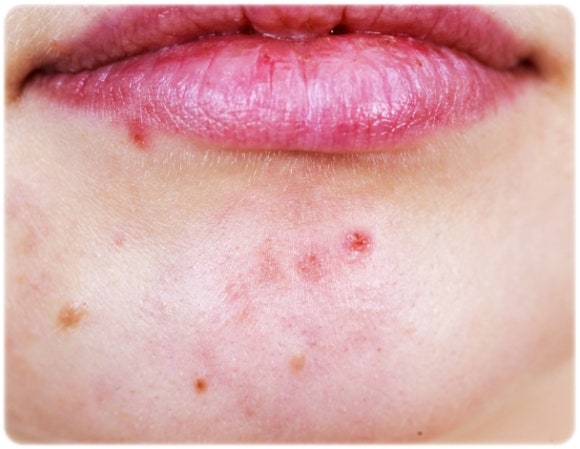
In addition, if pores become blocked and sebum cannot be properly expelled, it accumulates and acne bacteria multiply, causing an inflammatory reaction.
Other factors such as genetics, stress, certain cosmetics, high-fat foods, and environmental pollution can also worsen acne.
Gangnam Agnes
What is the principle behind the Agnes procedure?
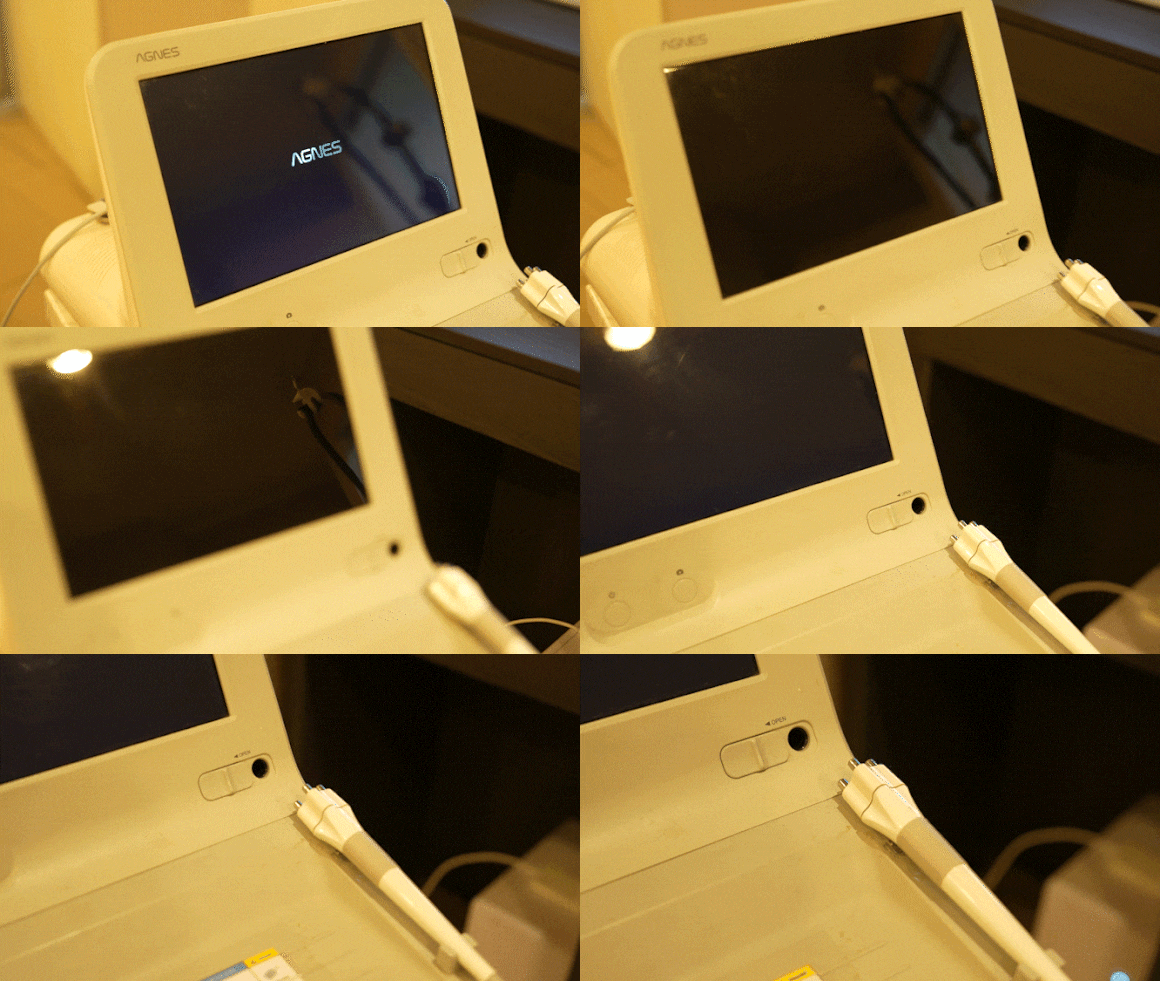
Agnes is an acne treatment device that uses micro-insulated needles and radiofrequency (RF) energy.
Simply put, it is a procedure in which micro-needles are inserted into the skin and RF energy is delivered inside the skin to help improve the condition.
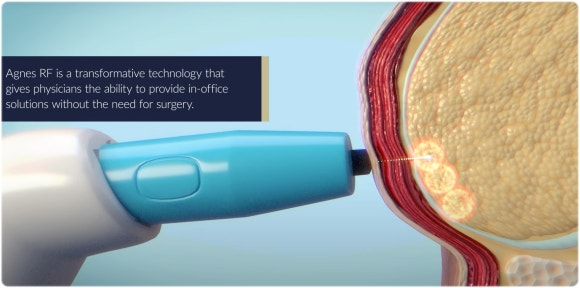
The radiofrequency released inside the skin physically removes the sebaceous glands themselves.
Afterward, depending on the situation, extraction may be performed, or combining it with other laser procedures can lead to good results.
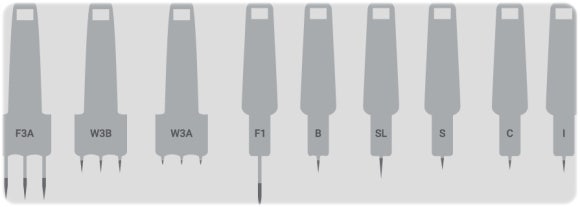
Agnes has a total of nine types of tips: F3A, W3B, W3A, F1, B, SL, S, C, and I.
As you can see in the photos, most of them have a single needle, so they are useful when acne in a specific area is the problem and you want to focus treatment on that area.
The F3A, W3B, and W3A tips are mainly used for treating facial acne, while F1 is used when performing precise treatment on narrow areas.
The B tip can be used for blackheads and care around the nose, the SL and S tips can be used for stubborn lesions such as syringomas, and the C and I tips can be used for deep lesions or treatment in special areas.
Gangnam Agnes
What should you be careful about, and what are the side effects?
As with all procedures, for about one week after treatment you should avoid hot environments such as saunas or jjimjilbangs, and you can wash your face or apply makeup after about 2 to 3 hours.
Also, since the skin is sensitive immediately after the procedure, moisturizing care and sunscreen are essential.
In addition, during downtime there may be redness, warmth, or itching, and in rare cases inflammation, pigmentation, or scabbing may occur, but most cases recover naturally.
So far, I’ve explained to those looking for Gangnam Agnes from the causes of acne, to the principles of Agnes and the precautions to keep in mind.
As mentioned, if skin trouble in a specific area does not heal easily, this is a procedure worth considering, so I hope this was helpful.
Thank you for reading this long post. I’m Chief Director Park Young-mi. ^^
<Recommended reading>
- Seolleung UNNI Clinic directions -