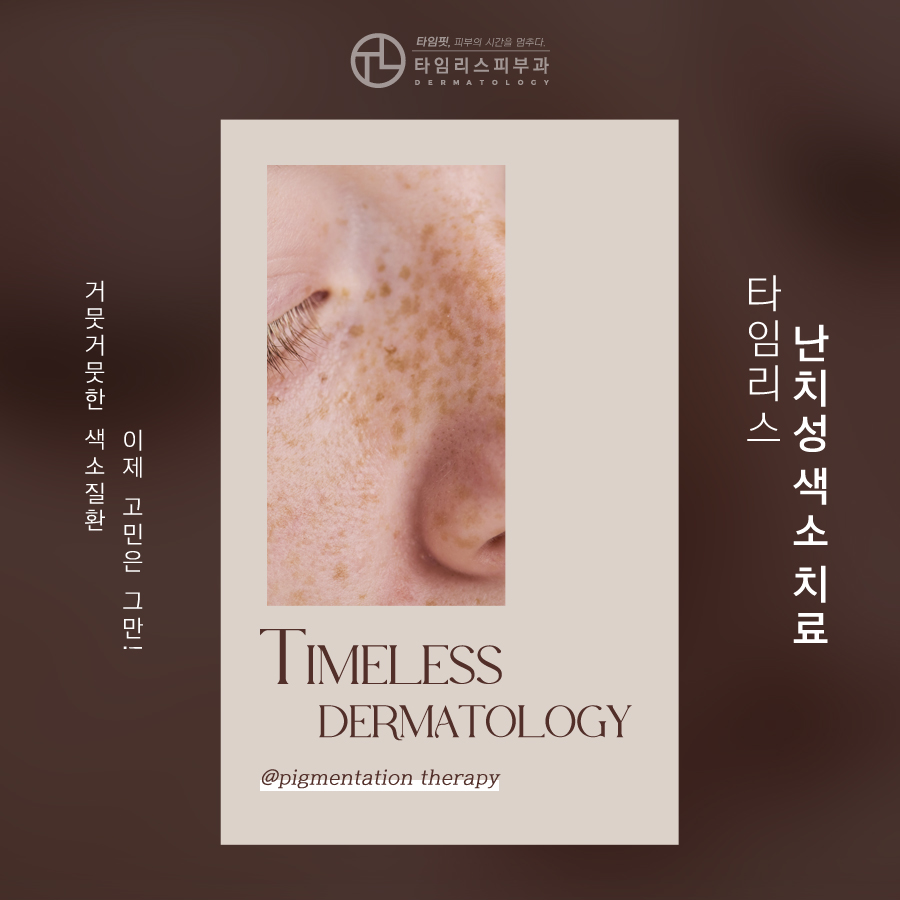
When it comes to pigmentary disorders that appear on our skin,
they can all look similar at a glance, so many people are not exactly sure
what kind of pigmentary disorder they have on their skin.
Because of that, when taking care of the skin, some people do not know exactly what has appeared on their skin,
and end up managing it the wrong way, which means they do not see much effect.
In particular, refractory pigmentary disorders can look similar to general pigmentary disorders,
and treatment is more difficult, so today I would like to explain how to distinguish
these hard-to-identify refractory pigmentary disorders.
Pigmentary disorders, aren’t they all the same?

Many people think that most pigmentary disorders that appear on our skin are
freckles or melasma.
Because of that, some people assume refractory pigmentary disorders are also melasma and move on.
They may look similar to the naked eye, but there are many different types of pigmentary disorders.
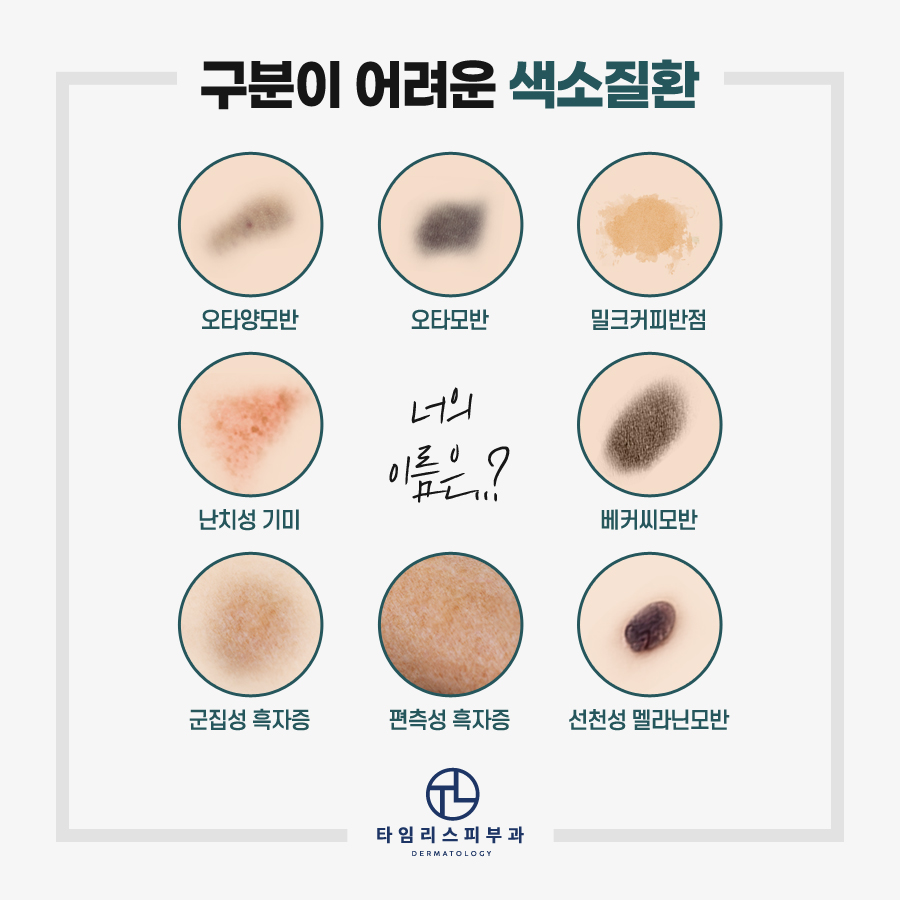
In general, refractory pigmentary disorders refer to cases that are difficult to treat among the many different pigmentary disorders.
The longer they are left untreated, the darker the pigmentation becomes and the more it spreads, so treatment can be difficult at first.
In such cases, it is best to seek treatment early and try to improve them.
Examples of pigmentary disorders that are difficult to treat include Ota nevus, café-au-lait spots,
refractory melasma, Becker nevus, lentiginosis, melanocytic nevi, and many others.

Among them, one pigmentary disorder that many people overlook is Ota nevus.
Ota nevus is easily confused because it appears in a shape very similar to melasma.
It usually appears around one eye, the temple, and the forehead or nose.
In fact, many people visit a dermatology clinic thinking they have melasma, only to be diagnosed with Ota nevus.

First, melasma and Ota nevus have different causes.
| Ota nevus | A spot caused by abnormal proliferation of melanin located in the dermis of the skin; a congenital spot that mainly appears around the eyes and cheeks. In particular, it is often inherited from parents. |
|---|
| Melasma | Occurs on the skin when ultraviolet rays promote melanin production in the skin. |
Ota nevus often appears due to genetics or congenital factors.
By contrast, melasma is an acquired pigmentary disorder caused by ultraviolet rays.
Also, Ota nevus often has various shades such as blue, brown, and gray,
and in most cases appears darker than the surrounding skin.
Melasma is usually black or brown, and its borders are distinctly separated from the surrounding skin.
Although the spots are relatively small, they often appear in clusters, so they can be sufficiently distinguished by a careful look at their appearance.
Pigmentary disorders, is it okay to just leave them untreated?

These days, cosmetics are so good that some people think they can just cover them up with makeup
and wonder, “Do I really need treatment?”
However, there is a period often called the golden time, when refractory pigmentary disorders can respond best to treatment.
The younger the patient is, the more irregular the shape, and the lighter the color,
the better the results tend to be.
In addition, pigmentary disorders like these do not disappear on their own if left untreated;
they may actually become larger and spread more widely. That is why I hope you will receive an accurate diagnosis from a board-certified dermatologist
and improve them with the proper treatment method.