When you feel that your skin elasticity is not what it used to be,
the first visible changes are sagging cheeks, deeper nasolabial folds, and a softer overall facial contour.
At times like this, if you want a natural restoration of elasticity rather than excessive lifting,
a representative treatment often sought in Gongdeok is Tune Face.
A high-frequency elasticity treatment that naturally refines the facial line
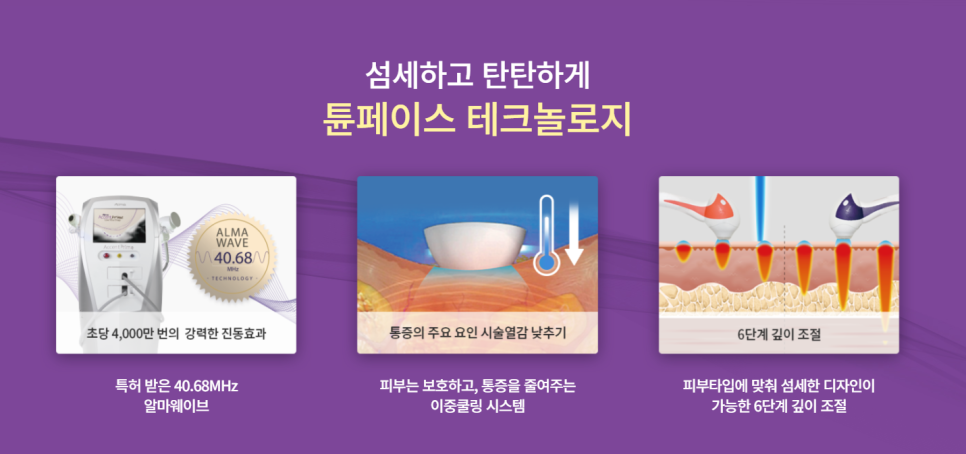
Tune Face uses 40.68MHz unipolar RF, a special frequency,
to directly stimulate collagen in the skin,
which has the advantage of helping restore your skin’s original elasticity.
It is especially preferred by busy office workers and homemakers because it causes little pain and recovery is quick.
Why 40.68MHz?
The “ideal frequency” that maximizes collagen response
The skin contains plenty of water,
and when these water molecules are rotated by high-frequency energy, frictional heat is generated,
which helps promote collagen regeneration.
What matters here is which frequency is used to rotate them,
and Tune Face uses 40.68MHz, the frequency at which the collagen response is most active.
Because of this, while keeping the skin temperature steadily between 42 and 48°C,
it reduces unnecessary pain,
so the treatment feels comfortable, almost like “a warm tightening sensation.”
That is a major advantage for people who are sensitive to anesthesia and want a treatment without 부담.
Immediate changes felt after the treatment
“Firming, contour refinement, elasticity” early effects + gradually improving long-term effects
A key feature of Tune Face is that the immediate tightening and line refinement are noticeable.
When you look in the mirror right after the treatment,
you may feel that the skin is slightly tightened and areas that looked saggy have been refined.
But the real effect starts after that.
→ New collagen is produced within the skin, helping restore volume and elasticity
→ Wrinkles ease, skin thickness increases, and skin quality improves
→ A naturally younger-looking facial line is maintained
For this reason, people who want a lifting effect that “gradually gets better without being obvious”
are especially satisfied.
More deeply and evenly with a fractional method
Energy delivery to depths of 1 to 20 mm
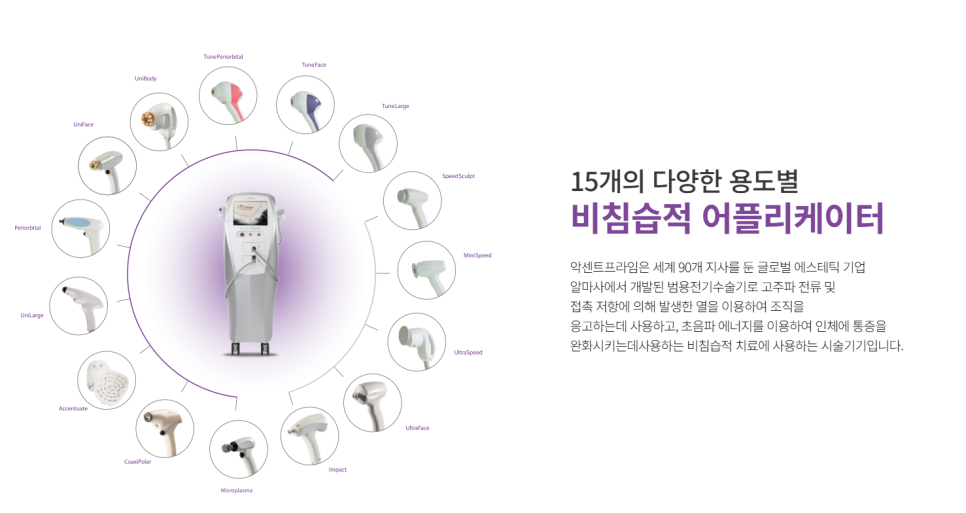
Tune Face delivers energy in a 1 to 20 mm fractional pattern,
and the reason this matters is that skin thickness varies by area.
Some areas need shallow delivery, while others need deeper delivery for results,
and Tune Face can adjust those depths in various ways,
making it possible to give the entire face a uniformly firmer appearance.
These are areas where the effects tend to appear clearly.
Advantages of Tune Face
A “remodeling treatment” that also considers changes in skin structure
Skin elasticity is maintained when three elements are balanced:
collagen (provides elasticity), elastin (provides resilience), and fibroblast activity (regeneration).
But as we age, this structure breaks down,
and the skin becomes thinner and begins to sag more quickly.
The reason Tune Face is effective is that it does not simply pull on the surface,
but delivers heat stimulation stably to the dermis and subcutaneous fat layer
to induce collagen remodeling.
This is also the key reason why the results become more natural and healthier over time rather than immediately after the treatment.
In addition, the unipolar method
minimizes energy loss, allowing treatment to be delivered evenly over a wide area,
which is an advantage because it can be applied relatively safely even to areas with thin skin.
Recommended Gongdeok Tune Face for these people
-
When you want a natural improvement in elasticity
-
If you are sensitive to pain or heat and find lifting treatments 부담스러운
-
When you prefer a treatment with no recovery period
-
If blurred facial lines and sagging cheeks are a concern
-
For those who want to manage their skin consistently and turn back the skin’s age
Elasticity care that makes you look better without overdoing it
Why people look for Tune Face in Gongdeok
The reason Tune Face is popular is its natural look.
It does not create an obvious “I had a procedure” feeling,
but rather a change that makes people think,
“Your face looks a little more refined these days.”
Also, as it is repeated, the skin itself improves in quality,
bringing positive changes in elasticity, wrinkles, and skin texture.










 Previous image
Next image
Previous image
Next image










Previous image
Next image










Previous image
Next image