
One of the changes people feel first as they get older is
that the face appears generally more sunken
or that their expression looks more tired than before.
Especially when volume decreases in the center of the face,
such as in the cheeks or nasolabial folds,
facial contours can look blurred and may lead to a more aged appearance,
so many people start looking for ways to improve it naturally.
Because of these concerns,
many people search for the Hapjeong Juvelook Volume treatment.
However, volume treatments are not simply about filling in areas;
a proper approach needs to consider both skin condition and the cause of the hollowing.
The reasons for volume loss are not simple
Facial volume loss
is often not just a matter of reduced fat.
As skin elasticity declines, the dermal structure changes,
and supporting tissues weaken as well,
leading to a loss of overall three-dimensional fullness.
In this condition,
simply injecting a large amount
or aiming for an immediate change
can instead lead to an unnatural appearance.
That is why, these days,
the focus is shifting from
'how much to fill' to
'how to restore it in a way that suits the facial structure.'
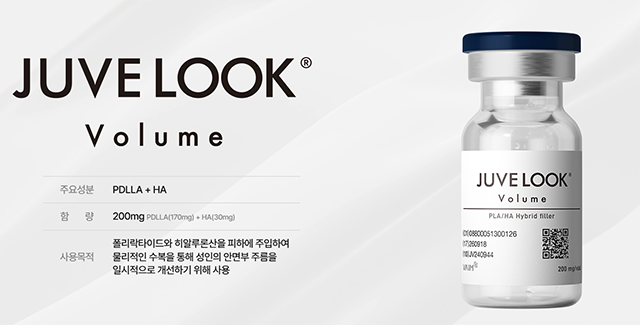 For those who want natural volume: Juvelook Volume
Juvelook Volume is
For those who want natural volume: Juvelook Volume
Juvelook Volume is
known as a treatment that improves the skin environment from within,
based on ingredients similar to the skin's extracellular matrix.
In other words, rather than simply adding volume,
it is an approach that also considers the foundation of skin structure and elasticity.
For areas like sunken cheeks or nasolabial folds,
where there is hollowing but not a desire for dramatic change,
it is often considered a lower-burden option.
Among those considering Hapjeong Juvelook Volume,
there are many requests such as
"I want it to look natural without being obvious"
and "I want my facial lines to look softly refined."
Treatment cycle and care flow for Juvelook Volume
Juvelook Volume
is typically based on an initial treatment course of three sessions at one-month intervals.
During this process,
progress is made step by step while checking skin response and the volume-forming process.
After the initial course,
maintenance is often carried out with one session every 4 to 6 months
to sustain the results.
However, the treatment interval and number of sessions
can be adjusted depending on an individual's skin condition and response.
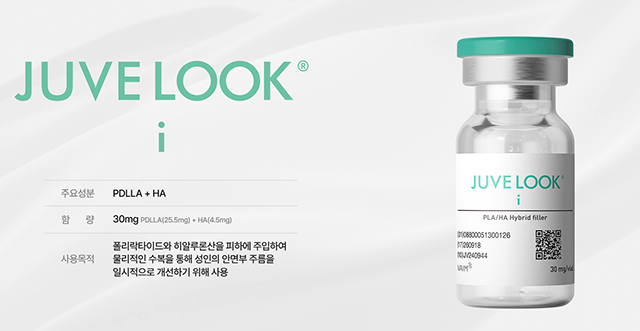 The eye area requires a different approach to volume
The eye area has
The eye area requires a different approach to volume
The eye area has
thin skin and a delicate structure,
so it requires a different approach from general volume treatments.
In such cases,
Juvelook Eye, which has smaller particles, may be used
for treatments specifically around the eyes.
Juvelook Eye is
characterized by reduced particle size,
which lowers the possibility of nodule formation,
making it possible to more safely consider improvement of eye wrinkles and fine lines.
Distinguishing the approach by area
is important for natural-looking results.
Key selection criteria for volume treatments
Volume treatments are
not about a fixed dose or number of sessions;
the key is how accurately the current facial structure and skin condition are understood.
Even with the same treatment,
the perceived results can differ depending on the cause of the hollowing,
skin elasticity,
and facial proportions.
That is why, when considering Hapjeong Juvelook Volume,
rather than making a simple comparison,
it is important to go through a specialist diagnosis
to confirm whether it is the right direction for you.
 If your goal is naturalness
The purpose of a volume treatment is
If your goal is naturalness
The purpose of a volume treatment is
not to change the face,
but to tidy up areas that lack volume
without compromising the original impression.
Rather than dramatic changes,
a stable recovery process over time
often leads to greater satisfaction.
If you are concerned about sunken cheeks or nasolabial folds,
carefully looking at what kind of approach your face needs first
can be a wiser way to begin.











 Previous image
Next image
Previous image
Next image










Previous image
Next image










Previous image
Next image