
Among people considering lifting procedures,
interest in radiofrequency lifting continues to rise steadily.
Accordingly, questions such as “Which device is better?” and “Will it suit my skin?” have also become more common.
Recently, more people near Mapo have been looking for OligioX lifting,
not simply because it is a new device,
but because it applies a different approach from existing radiofrequency lifting.
The key to radiofrequency lifting is depth and heat retention
Radiofrequency lifting
does not work by pulling the skin surface,
but by delivering thermal energy into the dermis to stimulate the collagen structure.
There are two important points here.
If these two factors are not met,
even if the skin feels firmer immediately after the procedure,
the lasting effect or perceived benefit may decrease quickly.
 How OligioX differs from existing radiofrequency devices
Mapo OligioX is
How OligioX differs from existing radiofrequency devices
Mapo OligioX is
a radiofrequency device designed to more precisely achieve this “depth and retention of heat.”
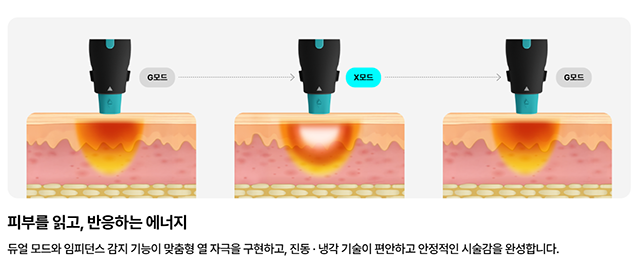
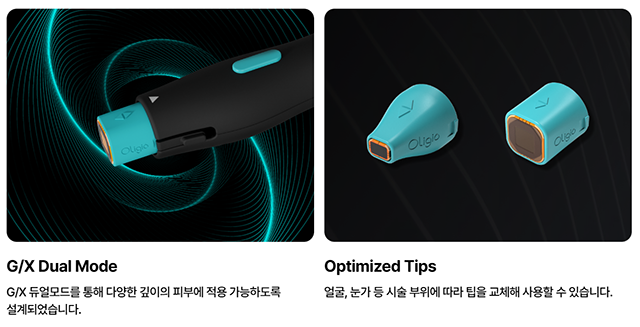
- Through dual modes (G/X mode),
a structure that maintains deep heat once more or stably extends heating time
automatically adjusts energy delivery according to skin condition
- With enhanced vibration and cooling technology compared with previous devices,
a method that lowers discomfort during the procedure and improves stability
Thanks to this structure,
many procedures involve only the warm sensation characteristic of radiofrequency,
with little burden from pain.
Is it a treatment only for people with thin skin?
There is a perception that radiofrequency lifting
is only suitable for people with thin skin,
but in practice, that is not the case.
Because OligioX can adjust energy delivery according to skin thickness, density, and elasticity,
it can also be considered for the following skin types.
-
When the skin is not thin but elasticity has declined
-
When overall tightening is needed more than fine lines
-
When strong pain or downtime is a concern
-
When natural restoration of elasticity is desired
In fact, when consulting about Mapo OligioX,
even in cases where the skin is relatively thick or there is a certain amount of fat in the subcutaneous layer,
effects that help refine elasticity can be experienced.
 Immediate changes and the difference made by time
Radiofrequency lifting
Immediate changes and the difference made by time
Radiofrequency lifting
can show some degree of skin tightening
and a more refined skin texture immediately after the procedure.
However, the key point is that
the collagen reorganization and regeneration process continues afterward.
So it is better to understand it as a structure in which
appear together.
Rather than judging all changes from a single treatment,
a focus on both skin response and progress is needed.
Understanding treatment intervals and care
OligioX radiofrequency lifting
is often considered for maintenance care about once or twice a year
after initial intensive treatment.
Depending on each person’s skin condition and the degree of elasticity loss,
the appropriate interval may vary,
and after the procedure, strong heat stimulation or excessive massage
is temporarily recommended to be avoided.
The most important criterion in choosing a lifting treatment
In lifting procedures,
just as important as device performance is
the process of accurately assessing the skin condition and setting goals.
Even with the same radiofrequency lifting,
the approach should differ depending on whether the goal is
So when considering Mapo OligioX,
rather than deciding based only on the device name,
it is important to receive enough explanation about which method is suitable for your skin condition.
 If you have these concerns, check through a consultation
- If you have experienced not feeling the effects of radiofrequency lifting properly
- If you want to improve elasticity without the burden of pain
- If you value stable results more than a single change
Based on your current skin condition,
a process of checking which lifting method is suitable
can be the starting point for increasing satisfaction.










 Previous image
Next image
Previous image
Next image










Previous image
Next image










Previous image
Next image