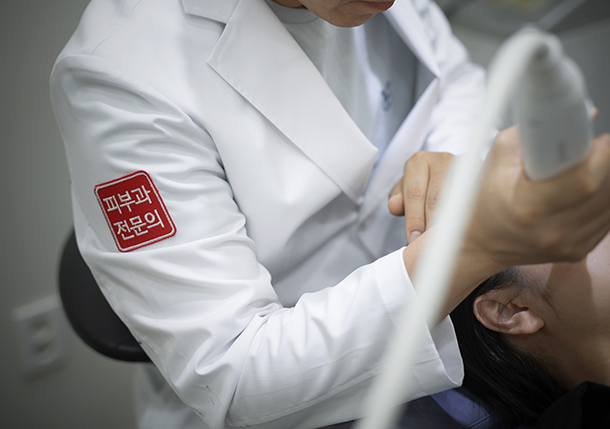
When looking into lifting,
you may come across this kind of story at least once.
“Lifting makes the face look hollow.”
“Cheek hollows appear, making you look older.”
Especially among people searching for lifting at a Yeonhui-dong dermatology clinic,
there are many who hesitate because of these concerns.
However, in actual clinical practice,
the lifting procedure itself does not often create cheek hollows.
The issue is not the word “lifting” itself,
but how, for whom, and in what way the procedure was performed.
There is a separate reason why people feel they have developed cheek hollows
In most cases where the cheeks seem hollow after lifting,
it happens in the following situations.
-
The person originally had little cheek fat, or
-
Volume loss had already progressed due to aging, and
-
Strong energy was applied with the sole goal of improving sagging
Lifting devices
help organize loosened structures upward.
When facial contours become more defined in this process,
the cheek fullness that had been spread out may appear more prominent by comparison.
In other words,
it is often not that fat has actually disappeared,
but that the refined contours make the face feel “hollow.”
 Is it a device issue, or a procedure issue?
“It is this device that causes cheek hollows.”
“That device is safe.”
It is difficult to make such a simple distinction.
Even when the same device is used,
there are clear reasons why the results differ.
-
How the depth of energy delivery was set
-
Which areas were targeted with concentrated energy
-
Whether the plan avoided areas lacking volume
All of these steps
fall under the practitioner’s judgment,
not the device itself.
The reason concerns about cheek hollows often come up during Yeonhui-dong dermatology lifting consultations
is that the procedure is sometimes carried out without a sufficient explanation of this difference.
If you do not read the skin structure, lifting can become excessive
With lifting,
what matters more is not “how much” or “how strongly,” but
which areas should not be touched.
-
Areas that already lack volume
-
Face shapes with a thin fat layer
-
Regions where hollowing may be emphasized
For these areas,
energy should be intentionally reduced,
or they should be excluded from the treatment plan altogether.
This judgment
requires the ability to read skin thickness, fat distribution, and the direction of aging in a three-dimensional way,
and this is where the role of a board-certified dermatologist becomes important.
 The difference in lifting when a board-certified dermatologist is involved
In a board-certified dermatologist’s practice,
lifting is not viewed simply as a “pulling” procedure.
After identifying the cause,
the areas that need lifting and the areas that should be avoided are separated.
So even when considering lifting at a Yeonhui-dong dermatology clinic,
it is not the device used that matters most,
but who designs the treatment and according to what criteria.
If you are worried about cheek hollows, check this first
Before lifting treatment,
it may help to ask yourself the following questions.
-
Is my problem sagging, or is it volume loss?
-
Which areas of my face already look hollow?
-
Do I need lifting for the entire face, or only for certain areas?
If you undergo lifting indiscriminately
without answers to these questions,
the chance of dissatisfaction can only increase.
The key to lifting is design, not the device
The reason concerns about cheek hollows keep coming up in Yeonhui-dong dermatology lifting
is not that lifting is a bad procedure,
but that it was applied in a way that did not match the individual skin structure.
Lifting is
not a procedure that changes the face,
but one that organizes the original structure.
So
rather than how famous the device is,
the most important standard is whether the practitioner can accurately judge
what to preserve and what not to touch on your face right now.











Previous image
Next image










Previous image
Next image










Previous image
Next image