When considering a lifting procedure,
the first question that comes to mind is
“Which lifting treatment is right for me?”
There are many different procedures available,
such as Ulthera, Thermage, and RF lifting,
but there are not many cases where
one procedure alone can solve everything.
The reason is simple.
Because the appropriate lifting method
differs depending on skin type and facial structure.
That is why, in consultations at Sinchon Station Dermatology,
the process first focuses on considering the current skin condition
and the characteristics of each area,
rather than deciding on a specific device first.
The lifting method changes depending on skin type.
Even with the same loss of elasticity,
the approach can differ depending on the skin condition.
• If the skin is thin and sensitive → lifting with adjusted stimulation.
• If the skin is thicker → lifting that works down to deeper layers.
• If dryness and loss of elasticity are both present → a combined approach.
Because the appropriate energy and method
differ by skin type in this way,
it may be difficult to solve all problems with
a single procedure.
The lifting needed also differs by area.
The face may look like one structure,
but in reality, each area has different characteristics.
• Eye area: A region where the skin is thin and stimulation control is important.
• Cheeks: A region where volume maintenance and elasticity improvement must both be considered.
• Jawline: A region where lifting effects are directly visible.
In this way, even the same lifting treatment
must be applied differently depending on the area
in order to lead to natural results.
That is why “combination lifting” is considered.
Recently, rather than applying only one lifting treatment,
a method that combines lifting treatments with different characteristics
is often considered.
For example,
• A lifting treatment that stimulates deep layers to refine the structure, and
• A surface lifting treatment to supplement skin texture and elasticity.
By combining the strengths of each procedure in this way,
more balanced results can be expected.
In other words, lifting is not a single choice,
but rather a process that is completed by combining multiple elements.
Reasons it can feel lacking with a single procedure
There are cases where people have undergone lifting
but feel that “the change is not as great as expected.”
In such cases, it is likely not a problem with the procedure itself,
but rather that the approach did not match the skin condition.
For example,
if the skin texture has already started to break down
and only lifting is repeated,
or if the skin lacks elasticity
but only surface-focused procedures are performed,
the changes may appear limited.
Results are determined by the “plan.”
Lifting procedures depend more on
how they are designed
than on the device itself.
• Choosing a procedure that matches skin type.
• Applying it with consideration of each area’s characteristics.
• Adjusting the intensity and treatment range.
When these factors work together,
natural and stable results can follow.
The dermatologist’s judgment is as important as the device
When choosing a lifting procedure,
the type of device is important,
but even more important is
the judgment of how it should be applied.
An experienced dermatologist will
• analyze the skin condition,
• distinguish the characteristics of each area, and
• combine the necessary procedures to set the direction.
It is also important to exclude unnecessary procedures
and establish an appropriate plan within
the range suitable for the current condition.
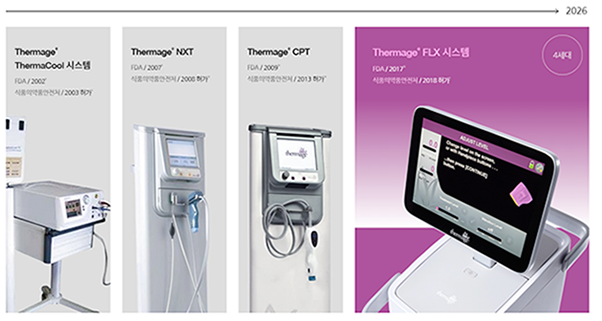
Why a variety of devices are needed
Because a complex approach is necessary,
it is difficult for one device alone
to sufficiently handle every case.
Therefore, it is important to have an environment where
multiple lifting devices can be used as a basis
and flexibly selected according to skin condition.
This is not simply about having more choices,
but serves as the foundation for precise treatment planning.
The lifting treatment that suits your skin is important.
If you are considering lifting,
rather than asking which procedure is best,
it is important to first check
• what changes your skin currently needs, and
• which area needs what kind of approach.
Through a consultation at Sinchon Station Dermatology,
if you accurately understand your skin condition
and set up a combined lifting plan,
it can lead to more natural results
and a higher level of satisfaction.
Natural results are completed through “balance.”
The purpose of lifting is
not simply to pull things up,
but to naturally organize the overall balance of the face.
Therefore, rather than relying on a single procedure,
a customized approach that considers skin condition
and the characteristics of each area is important.
When these standards are aligned,
lifting can lead to changes that are
not excessive but still stable.