
When considering lifting,
you first hope for good results,
but on the other hand, you may hesitate
because of concerns about strong stimulation, pain, recovery time,
or excessive changes.
So these days, rather than simply pursuing strong lifting,
there is growing interest in approaches that improve naturally
while reducing the burden.
One method chosen within that trend is
Onda lifting.

What kind of method is Onda lifting?
- Differences from other lifting procedures
Onda lifting differs from conventional lifting methods
that use radiofrequency or ultrasound,
in that it uses microwave energy.
→ In this process,
• the fat layer
• the dermis layer
are considered together.
In other words, it is a structure that addresses
both contour and firmness, not just improving elasticity.
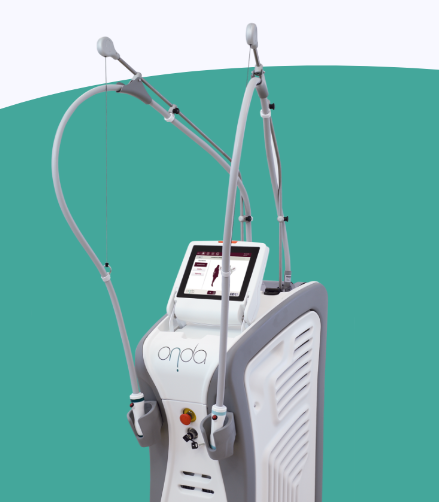
In addition, Onda lifting is performed using different handpieces
depending on the purpose.
- A handpiece for considering fat reduction
- A handpiece for improving elasticity
Because energy can be applied separately according to the area and purpose,
this allows for a more detailed approach.
Why Onda is chosen
If you have had lifting done
but did not experience a big change in your facial line,
the reason may be that only the elasticity was improved.
That is because facial sagging is affected not only by the skin
but also by fat.
Onda
✔ reduces unnecessary fat layers
✔ improves elasticity through collagen regeneration
at the same time, which is why it often makes a difference,
especially in the jawline, cheeks, and double chin area.

You may notice changes like these
- Natural improvement without being excessive
A feature of Onda lifting is
its gradual improvement rather than dramatic change.
• Tidy up a blurred jawline
• Improve a sagging cheek line
• Sharpen the overall contour
These changes
appear naturally over time.
In addition, as collagen regeneration takes place,
improvements in skin texture and elasticity may also follow.
So it is suitable for those who want a
“refined look”
rather than a
“noticeable change.”

Mapo Onda Lifting
- Consider it in the following cases
If you have concerns like these,
Onda lifting may be one option.
• If it is your first lifting procedure
• If strong procedures feel burdensome
• If you want to refine your facial line naturally
• If both fat and elasticity are affecting the area
Especially in the early stage of sagging,
a less burdensome approach may be more appropriate than an excessive procedure.
The difference you may feel during the procedure
- Why the burden is reduced
Onda lifting uses a handpiece with a cooling function
while delivering energy.
Because of this,
- it helps minimize damage to the skin surface
- it reduces the burden of pain during the procedure
- it helps ease discomfort from the heat sensation
Also, immediately after the procedure,
there is usually not much swelling or a long recovery period,
so → being able to return to daily life relatively quickly
is also seen as an advantage.

Not only for the face
but also for the body line
Onda lifting can be applied not only to the face
but also to body areas.
In particular,
it is also used for contour refinement in areas where both fat and elasticity play a role.
This wide range of application is another reason
why Onda is chosen.

What matters is not the device,
but the direction that matches your current condition
For lifting, more important than which device is used
is why the sagging has occurred.
For example,
• whether the main issue is reduced skin elasticity
• whether fat has a large influence
• whether it is a complex problem
the approach should differ depending on this.
If a procedure is chosen without these criteria,
it may be difficult to feel the results.
Mapo Onda
You should start with lifting that suits your skin
Lifting is not simply a procedure that tightens;
it is a treatment that considers the overall facial structure.
Therefore, what matters is not choosing a trendy procedure,
but accurately determining the direction your skin needs right now.
If you are considering Mapo Onda lifting,
rather than deciding based only on effectiveness or intensity,
→ we recommend first checking whether it is an approach that matches your current condition.











Previous image
Next image










Previous image
Next image










Previous image
Next image