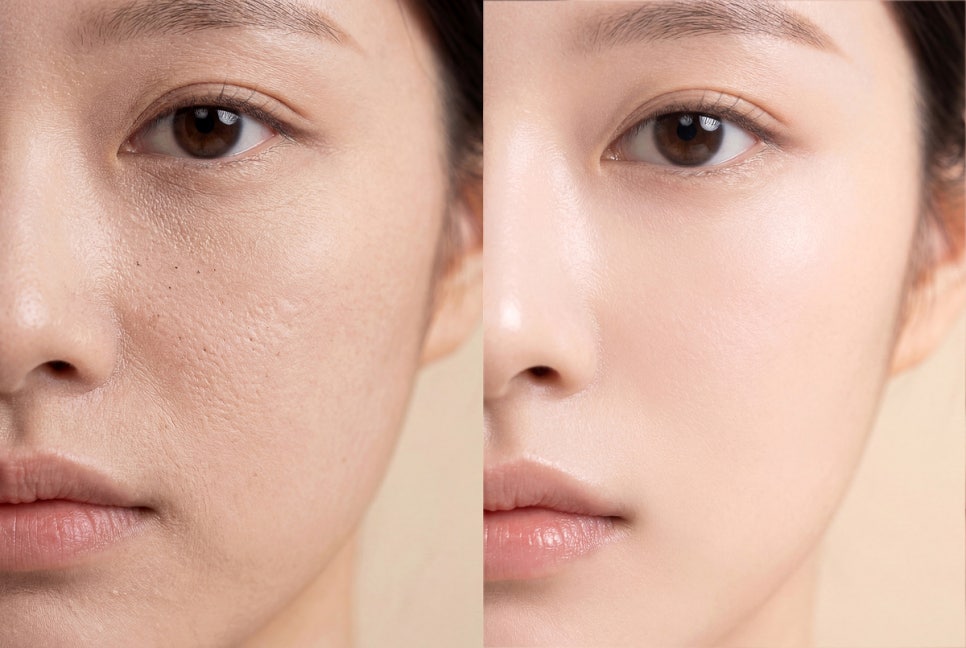
The start of summer is also a time when skin concerns begin to change.
In particular, around this time of year, more people visit dermatology clinics with concerns such as:
"My pores suddenly seem much larger."
"Even when I apply makeup, it breaks down quickly."
"I am producing far too much sebum."
In fact, as temperatures and humidity rise during summer, sebum production may increase and the condition of the skin may change.
As a result, pores may appear more prominent, or the skin’s texture may look rougher.
Today, we will discuss how Gongdeok Dermatology Clinic approaches pore concerns during the summer.
Why Do Pores Look Larger?
Many people think that their pores have suddenly become larger, but in reality, this is often not a sudden change.
These factors may have an impact when the skin is continuously exposed to them.
In particular, during summer, the amount of sebum produced increases, making it easier for impurities to accumulate inside the pores. The surface of the skin may also become shiny, making the pores more noticeable.
Therefore, rather than focusing only on the pores themselves, it is important to identify the underlying causes as well.
Sebum-Related Concerns and Elasticity-Related Concerns May Be Different
Not all enlarged-looking pores are the same.
For example, sebum-related pores often appear mainly on:
In some cases, they are accompanied by a high level of sebum production as well as blackheads or whiteheads.
Elasticity-related pores often appear mainly on:
As skin elasticity decreases, the pores may appear elongated in a vertical direction.
As these causes differ, the approach to care may also differ.
For this reason, Gongdeok Dermatology Clinic considers it important to first determine what type of pore concern is currently present.
Sebaceous Filaments Are Often Mistaken for Blackheads
When consulting about pores, some people say:
"I have so many blackheads."
However, in quite a few cases, what they actually have are sebaceous filaments.
Sebaceous filaments are structures inside the pores that help sebum flow out smoothly. They are most commonly observed around the nose and in the T-zone around the nose and cheeks.
They may look like black dots and therefore resemble blackheads, but they are not exactly the same.
Blackheads refer to sebum that has oxidized and turned black after coming into contact with air, while sebaceous filaments often appear as part of the normal process of sebum excretion.
In particular, increased sebum production during summer may make them more prominent than usual.
Therefore, rather than viewing them as something that must be removed unconditionally, it is important to consider the current condition of the skin as a whole.
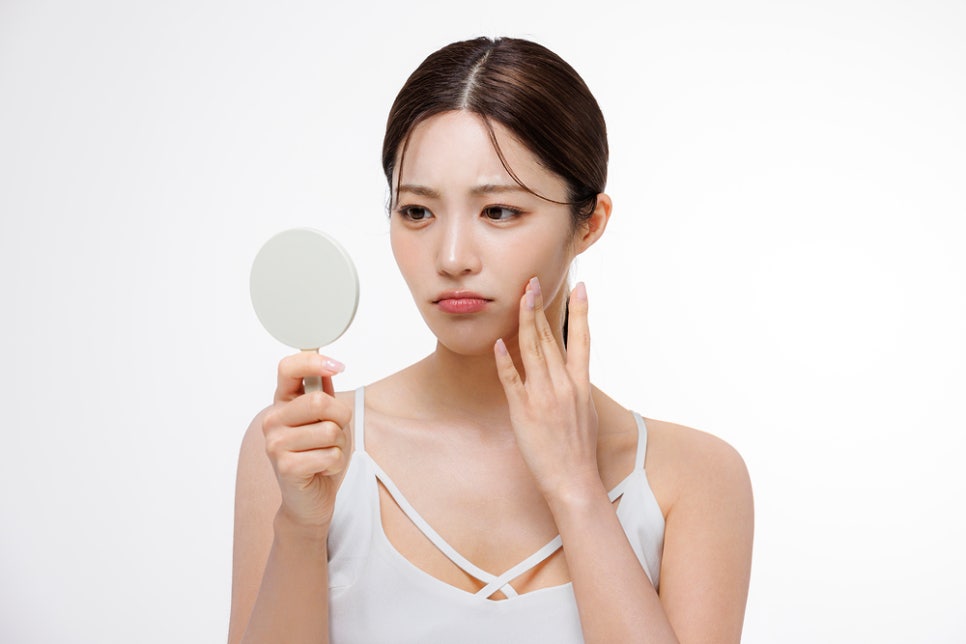
Repeated Extraction May Not Be the Solution
Some people frequently use nose strips or undergo extraction because they are concerned about sebaceous filaments or blackheads.
Of course, the skin may look clean temporarily.
However, excessive extraction or strong irritation can place stress on the skin and may instead make the skin more sensitive or cause the pores to become even more noticeable.
In particular, because sebum production is active during summer, these concerns may often reappear relatively quickly even after removal.
Therefore, rather than simply repeating extraction, it is important to determine the appropriate care approach by considering sebum production, skin type, pore condition, and other factors together.
Recurrent Acne Can Also Have an Impact
During summer, acne often worsens due to increased sebum production.
In particular, recurrent inflammatory acne can affect the skin tissue and make the pores appear even larger.
As acne repeatedly develops and subsides, the following may also appear together:
-
Red marks
-
Hyperpigmentation
-
Enlarged pores
Therefore, if both acne and pores are concerns, it may be necessary to take both issues into consideration together.
Pore Care Also Varies Depending on the Condition of the Skin
These days, pore care is performed using a variety of devices and treatments.
In particular, when recurrent acne and enlarged pores are both concerns, devices such as Potenza may be considered depending on the condition of the skin. Skin boosters such as Rejuran or Rituo may also be used alongside treatment to improve skin texture and the skin environment.
In addition, when reduced skin elasticity makes the pores appear more prominent, lifting treatments may also be helpful when used together.
However, the important question is not which treatment is popular.
The priority is choosing a method that suits the current condition of the skin.
For example, the approach may differ depending on whether:
For this reason, Gongdeok Dermatology Clinic considers it important to thoroughly assess the condition of the skin before creating a necessary treatment plan.
Skin Barrier Care Is Especially Important During Summer
In an effort to reduce the appearance of pores, some people repeatedly engage in:
-
Frequent scrubbing
-
Excessive peeling
-
Forceful extraction
However, these habits may instead irritate the skin barrier and make the skin more sensitive.
In particular, the skin can become sensitive more easily during summer due to strong UV rays and high temperatures, so more careful management is needed.
Pore care should also be performed within limits that do not compromise skin health.

Points to Know Before Consulting Gongdeok Dermatology Clinic About Pore Concerns
Pores are rarely caused by just one factor.
This is because multiple factors, including sebum production, acne, skin elasticity, and lifestyle habits, often work together.
In addition, what many people think are blackheads may actually be sebaceous filaments, and the cause of enlarged pores may be reduced elasticity rather than excess sebum.
Therefore, if you are considering visiting Gongdeok Dermatology Clinic, it is advisable to focus not simply on reducing the appearance of pores, but on accurately assessing the current condition of your skin and establishing a care plan suited to the underlying causes.
In particular, since summer is a time when increased sebum production and changes in skin condition occur together, a more systematic approach may lead to more satisfactory results.