
The difference between a mini facelift and lifting treatment
�
When facial sagging becomes noticeable enough to bother you every time you look in the mirror, most people would first try lifting treatment.
�
Among these, there are cases where it may look tightened for the moment but then feel like it returns to its original state after a few days,
�
and in more severe cases, the jawline is still sagging, nasolabial folds remain deep, and the area around the mouth still looks droopy.
�
Especially for people in their 40s and older, it can be difficult to address these concerns with lifting treatment alone.
�
Why did I clearly have a lifting procedure, but it still is not the look I wanted?
�
The reason is that the root cause of the problem is not on the outside of the skin, but in the underlying structure.
�
If structural collapse caused by time, such as the SMAS layer or deep buccal fat, is not addressed quickly, a tired-looking impression will remain even after lifting.
�
�
In cases like this, there is a good option to consider.
�
It is the "mini facelift," which minimizes scarring while firmly lifting the structure.
So, what is the difference between lifting treatment and a mini facelift?
�
Today, rather than simply a lifting procedure that "pulls" the skin on the surface,
�
we will talk about a method that changes the depth of the transformation through a "structural design" tailored to your face.
A mini facelift is, quite literally, not just a "simple pulling" lift surgery.
�
�
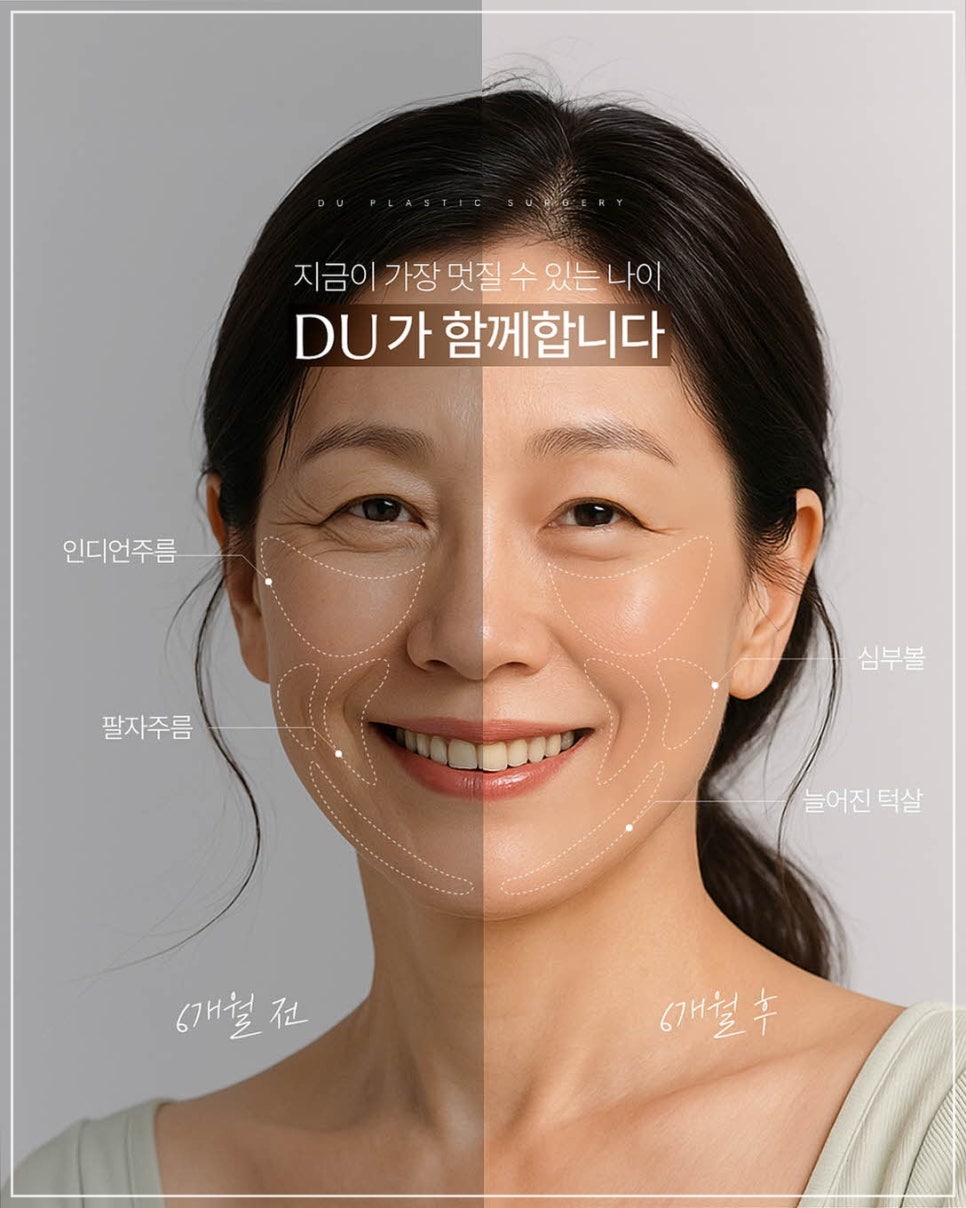
It is a surgical method in which the result changes completely depending on how precisely the anatomical structures are organized within a reduced incision range.
Facial sagging is not caused simply by the skin stretching.
�
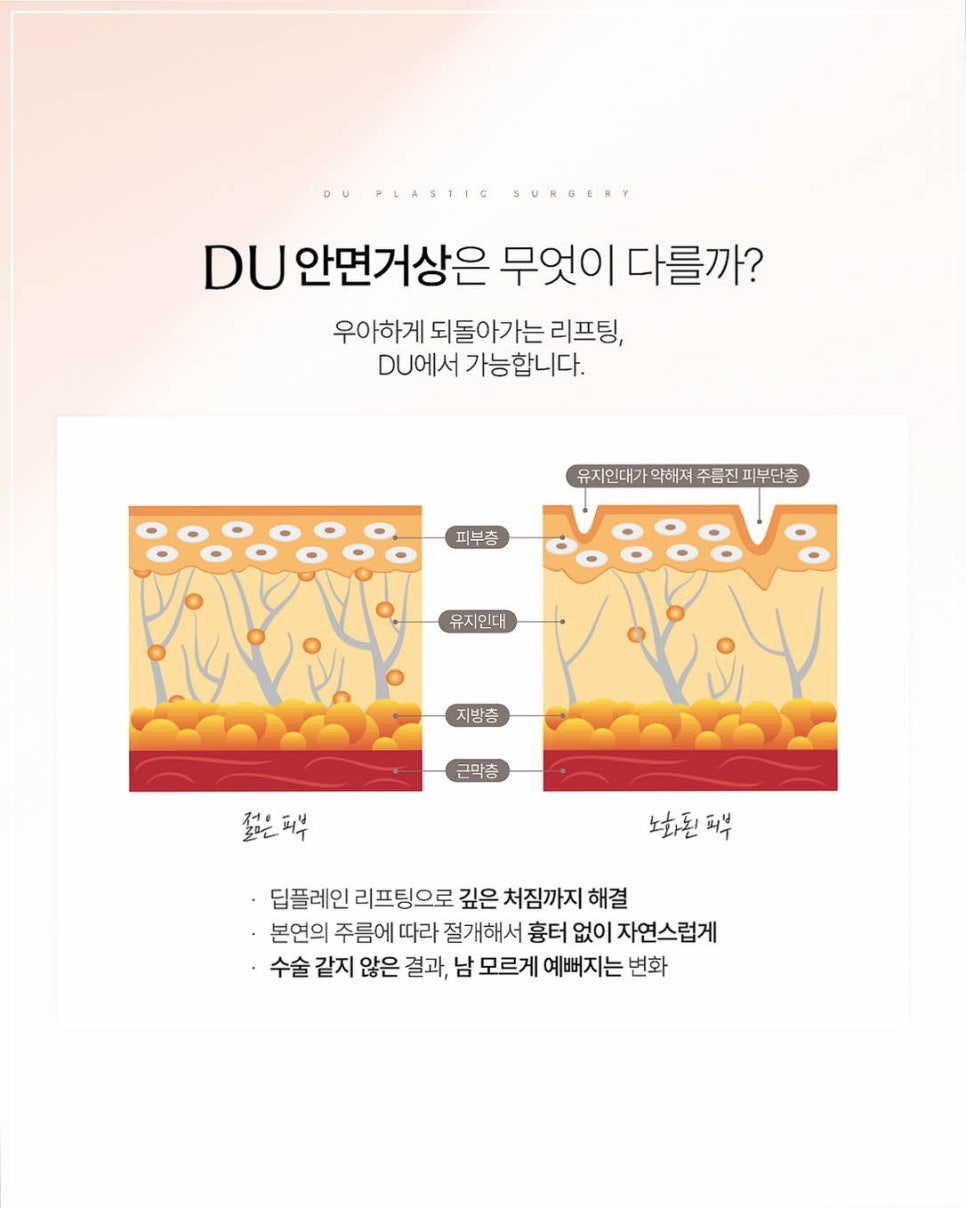
It happens because structures that supported the skin from below, such as the SMAS layer (superficial musculoaponeurotic system), deep buccal fat, and retaining ligaments, lose elasticity and collapse as we age.
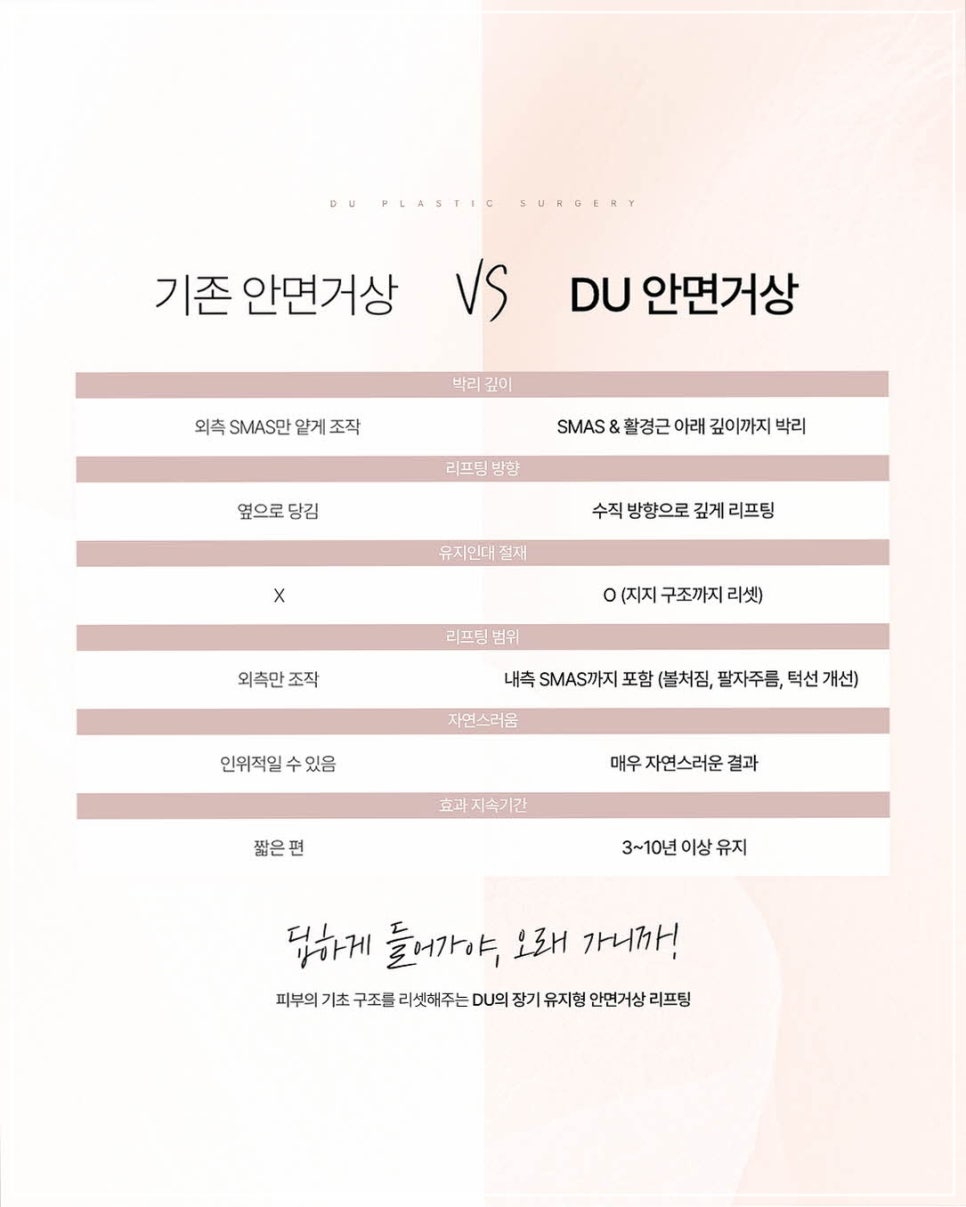
In other words, a lifting procedure that only pulls the "outside" returns to its original state quickly over time, while a mini facelift that organizes even the "internal structure" provides deeper and longer-lasting lifting effects.
�
 Mini facelift differences
�
This approach is especially effective in key areas that determine expression and contour, such as nasolabial folds, the mouth area, and sagging around the jawline.
�
Although the surgical range is limited, the structure is properly lifted within it, which naturally sharpens the overall impression.
Also, what matters in this surgery is not "where and how much to pull."
�
The key is which layer to pull, in which direction, and with what degree of fixation.
That is why this surgery should not simply involve thinning the skin and pulling it taut; it must approach the SMAS layer, which is involved in actual elasticity recovery, and lift and fix the entire structure upward rather than just the skin.
�

�
At this point, the procedure does not proceed based on a rough sense alone. Instead, the facial structure is carefully examined from the preoperative stage,
�
and the surgical direction changes depending on how developed the deep buccal fat is, where the retaining ligaments are located, and what the skin thickness and elasticity are like.
Depending on the structure, the SMAS may be pulled vertically or fixed diagonally, and the pulling direction may also be designed differently according to the degree of left-right facial asymmetry.
�
In this way, even though it is called the same "mini facelift," it becomes a completely different surgery for each face.
Also, for more three-dimensional contour restoration, the plan may include simultaneous removal of deep buccal fat or even fat repositioning or grafting.
�
For those with cheeks that look heavy and broad, reducing the deep buccal fat and filling in hollow areas with fat can help create a more three-dimensional and youthful impression.
�

�
So far, I have explained that a mini facelift is not simply for cosmetic purposes, but is a surgery that restores a collapsed structure, improves facial sagging, and recovers the impression of the face.
�
As mentioned above, lifting that only pulls the surface of the skin may have limitations in improving the jawline, nasolabial folds, and wrinkles around the mouth.
Therefore, if you want to improve the root cause of facial sagging, I recommend getting a mini facelift at a place that can design and lift not only the skin surface but also the "internal structure."
�
Also, although a mini facelift involves a small incision, without precise design and skilled judgment, the impression can instead become unnatural or the effect may not last long.
Therefore, it is important to find the medical team in charge who can perform the surgery based on structural understanding of the face and anatomical design.
If I were to cover everything on this topic in today’s post, the article would become too long.
�
I will cover it in more detail in the next post, so please read that as well.
Thank you for reading this long post.
�