When people considering a facelift come into the consultation room, this is one of the most common questions they ask.
These days, people say the technology has improved a lot,
so there isn’t much difference from one hospital to another, right?
To give the conclusion first, even if they look similar on the surface, the actual results differ clearly depending on the plastic surgery clinic and the medical team.
Especially in surgeries that require precision, such as a facelift, the medical team’s anatomical understanding, surgical skill, and philosophy make a decisive difference.
The reason is simple.
The face is not a simple flat surface, but a three-dimensional structure where muscle, fat, and skin layers are intertwined.
Exactly where and how to make the incision and perform the dissection must be carefully designed, taking into account the direction and depth of sagging, as well as the thickness and elasticity of the skin, in order to achieve natural and satisfying results.
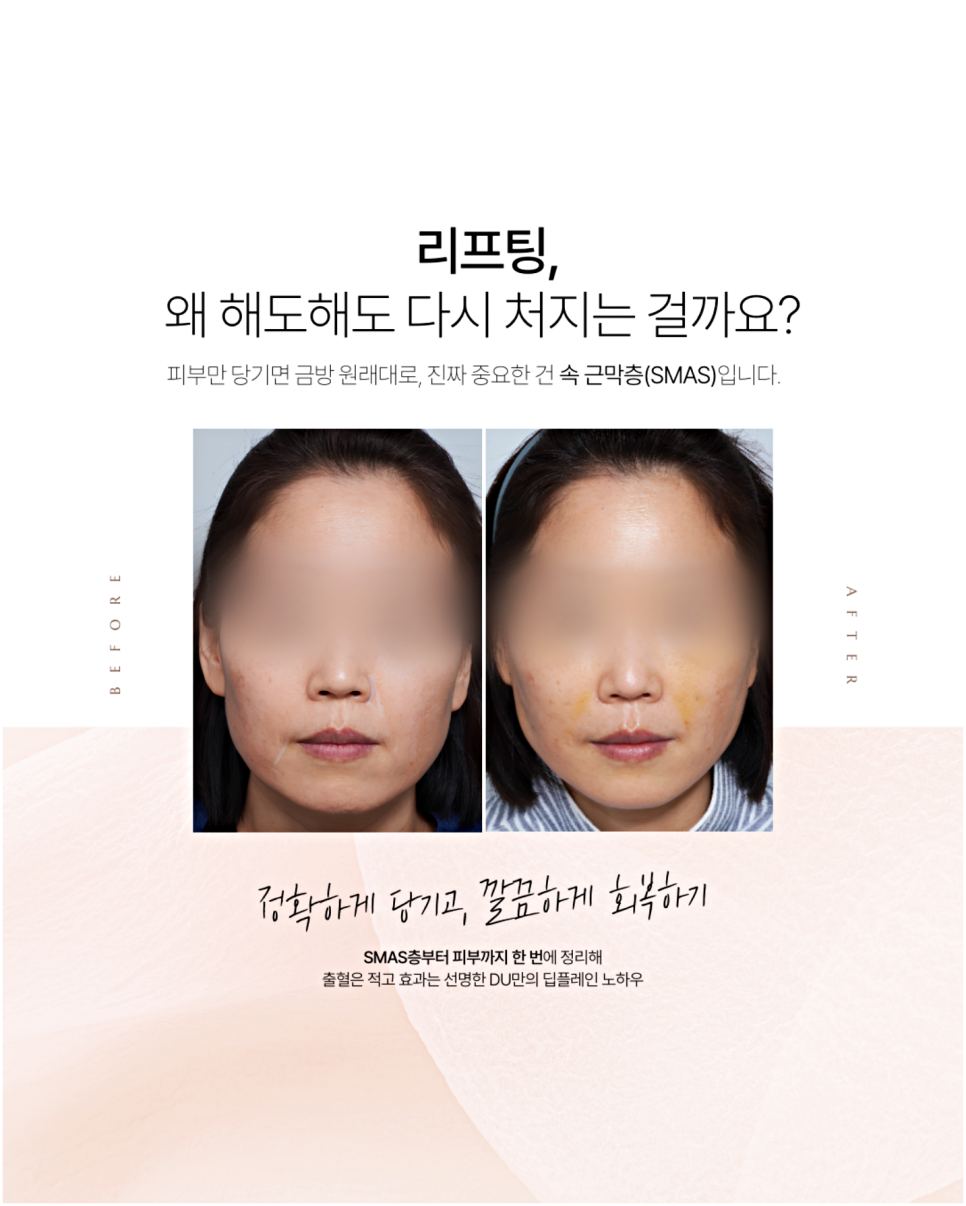
However, if this process is ignored and only the superficial sagging is pulled tight,
-
the skin can be pulled too tightly, making facial expressions look unnatural, or
-
over time, the elasticity can break down again.
That is why, for a facelift, anatomical understanding of facial structure, rather than simple technique, and the experience and insight to “design” each patient’s face are more important.
In other words, the results are determined by whether you receive the procedure at a clinic where the medical team directly handles and carries out every part of the process, from preoperative diagnosis to the surgery itself.
In this column, for those considering a Seoul facelift, I will guide you through two key criteria for making a choice without regret.
Let’s look together at the decisive factors that create differences in results.
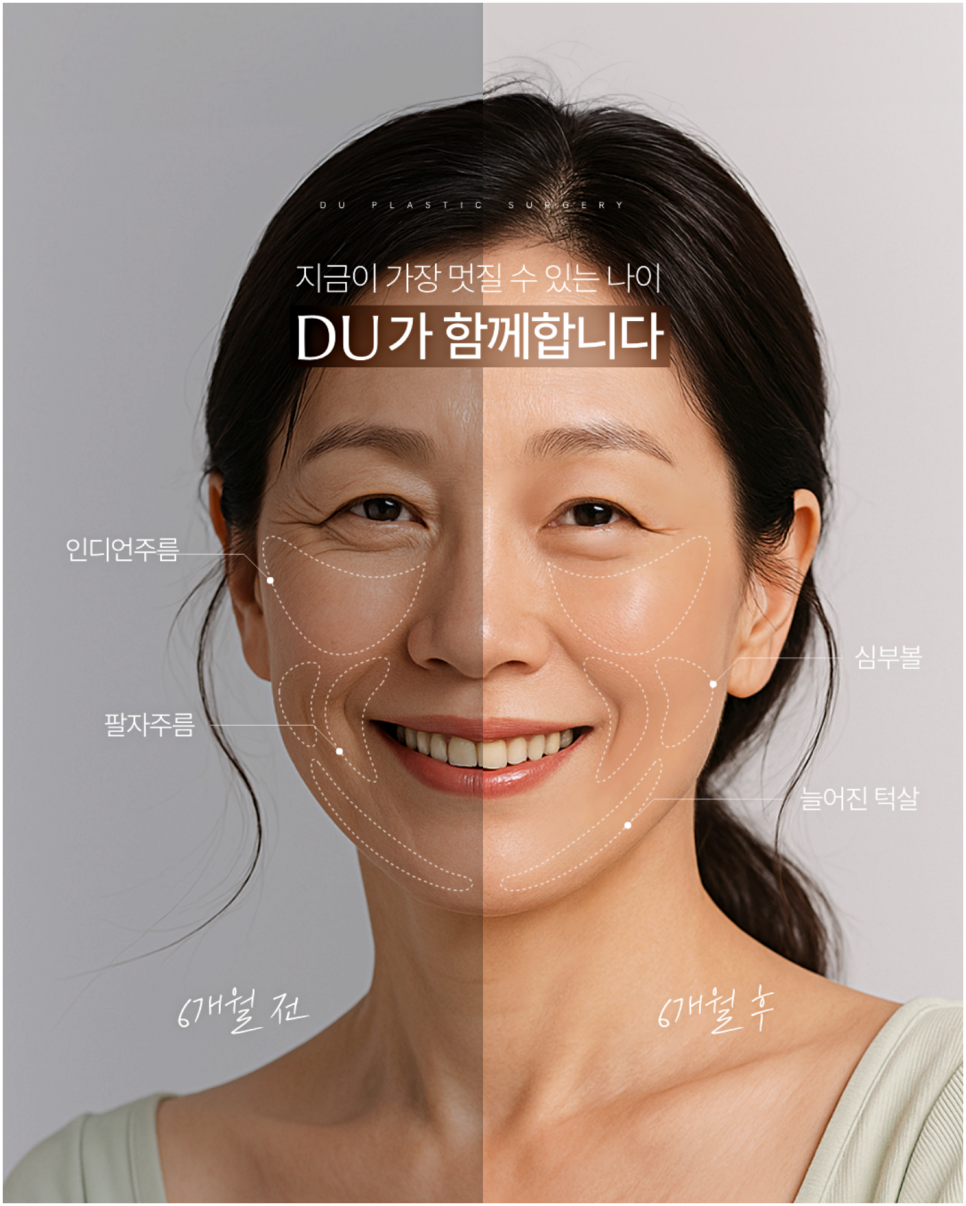
Surgical approaches that change depending on facial structure
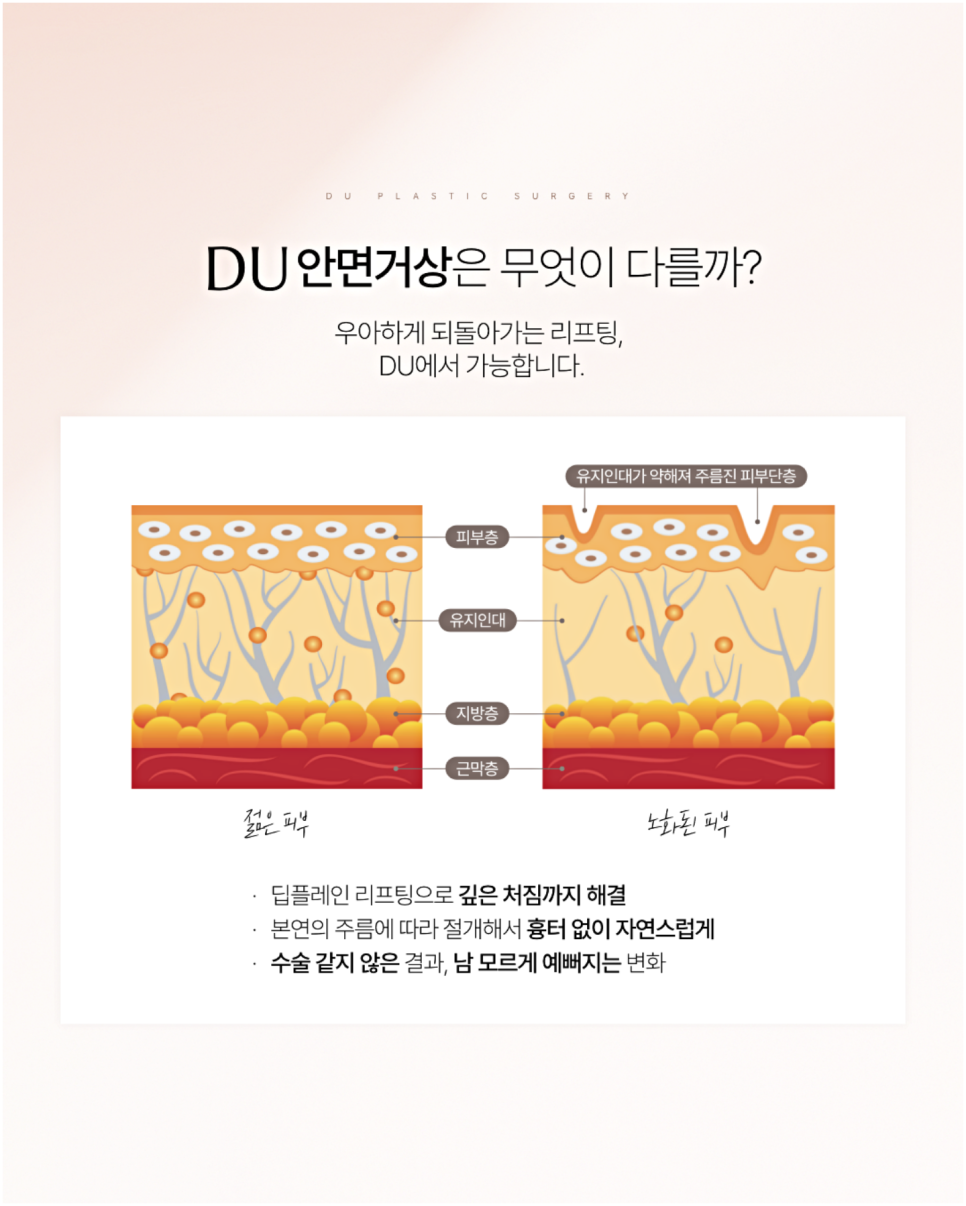
For a facelift to be maximally effective, the surgical approach must change according to facial structure.
At this stage, the results can differ completely depending on which layer is lifted and in what direction.
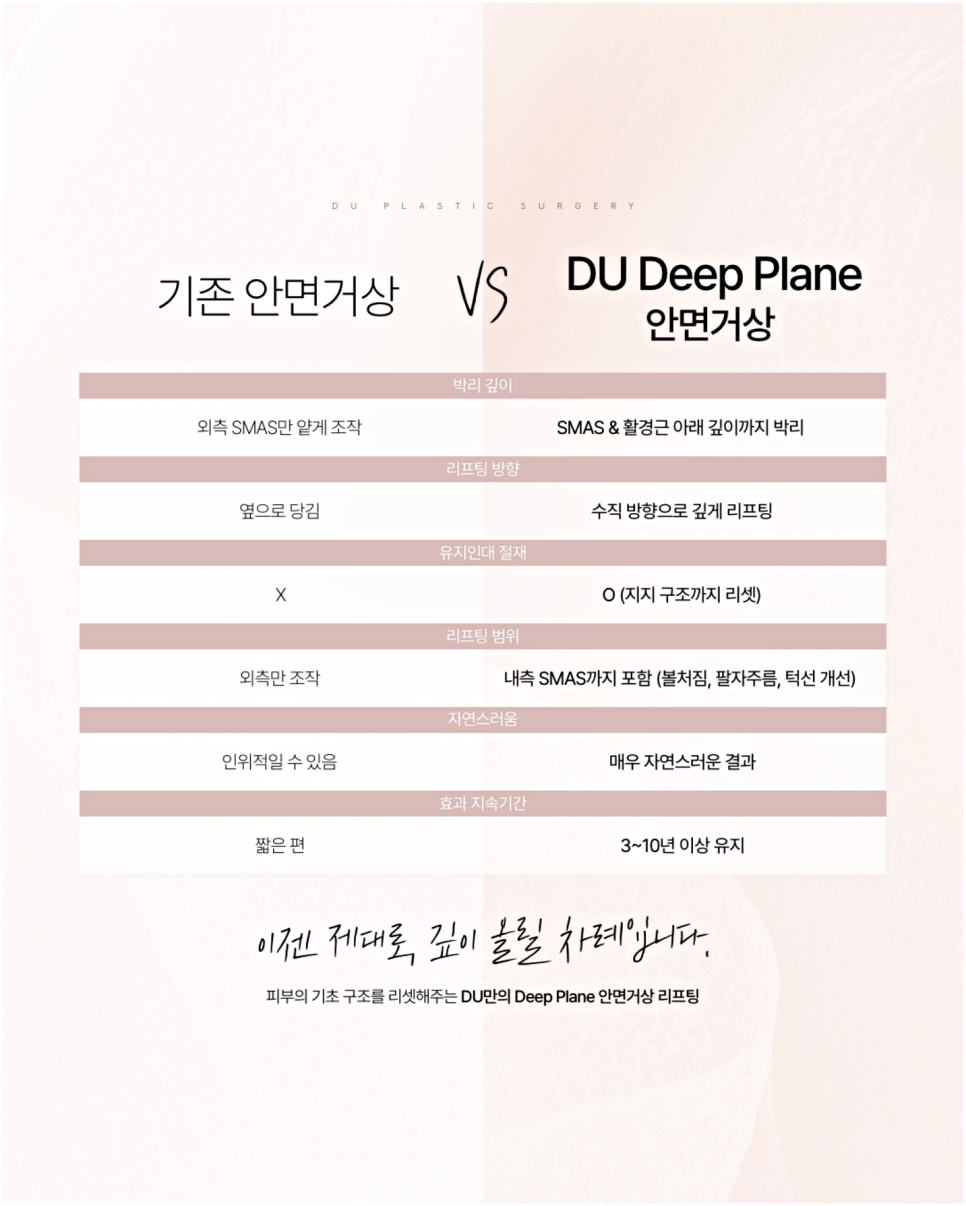
The SMAS layer (Superficial Musculoaponeurotic System), which is the main target during surgery, exists between the skin and the muscles and is a key structure that supports the overall elasticity of the face.
In a facelift, this SMAS layer is not simply fixed in place; instead, the Deep Plane Facelift technique is applied, in which the layer is anatomically dissected with precision to lift even deep sagging.
Unlike traditional facelifts that simply pull on the surface, this method provides a much stronger lifting effect while preserving the face’s natural volume and expressions.
It is especially effective for sagging cheeks after contouring surgery, a weakened jawline in the late 30s to mid-40s, or cases where overall sagging has become more severe due to aging.
In addition, because the face has both fuller areas and sunken areas, it is difficult to create an ideal contour through lifting alone.
So when necessary, areas with excess volume are treated with liposuction, and sunken areas are supplemented with autologous fat grafting for a three-dimensional redistribution.
Because the fat removed in this process is used as is, a natural facial balance can be achieved without the need for additional harvesting for fat grafting.
 The presence of medical staff who take responsibility from diagnosis to surgery
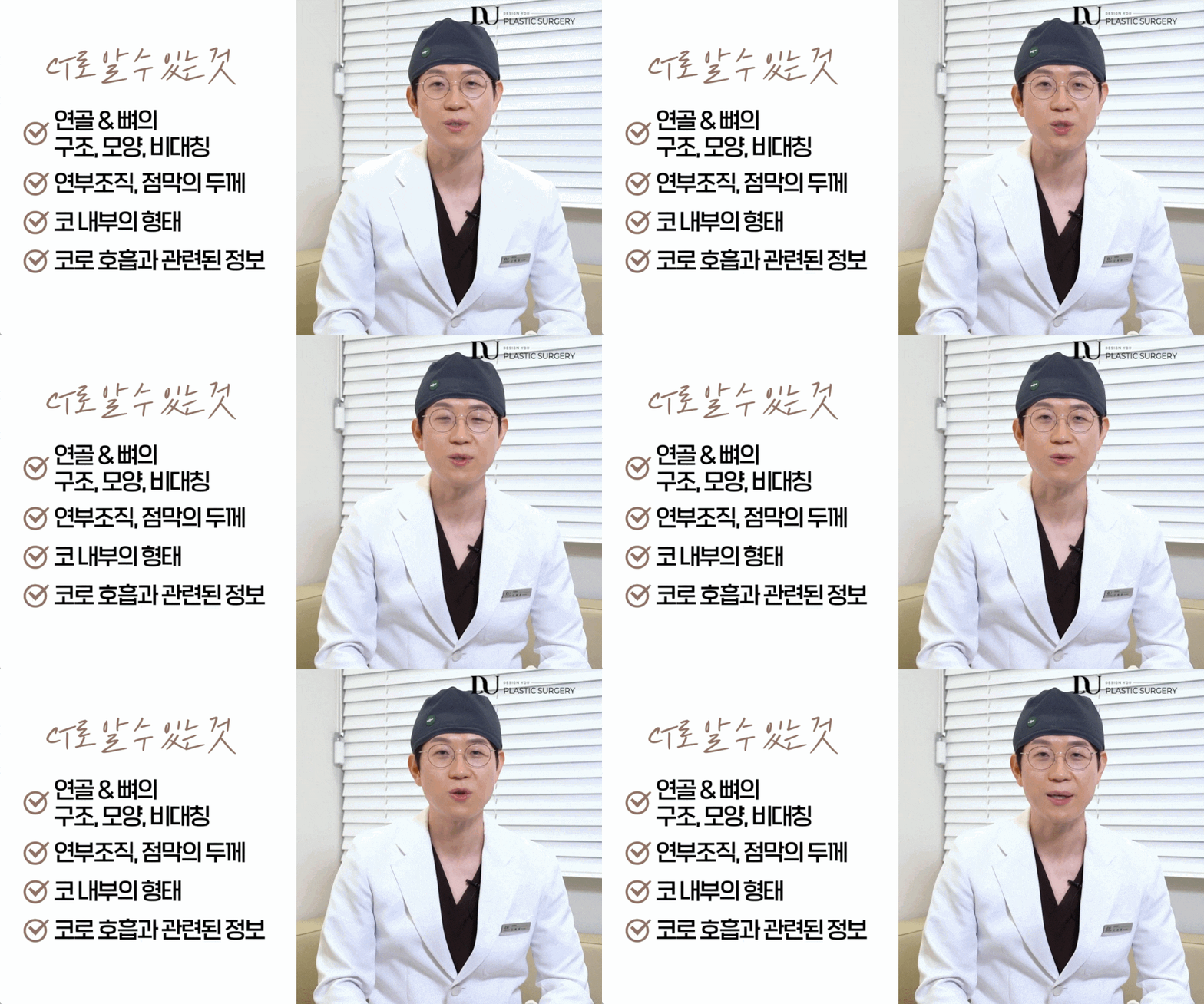
Even for the same surgery, the reason results differ is due to “who performs the surgery.”
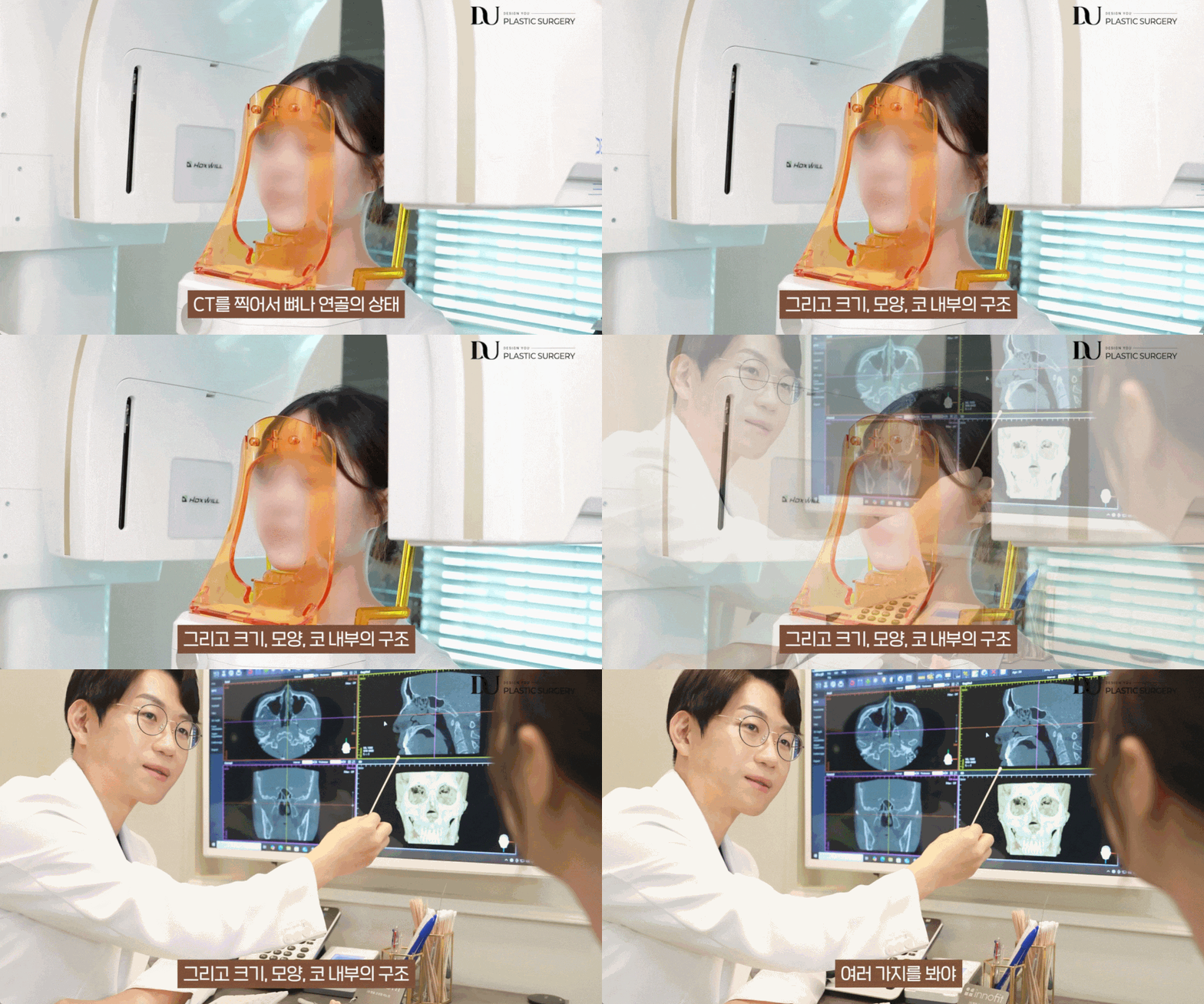
A lifting surgery connects every step—from planning, incision, dissection, fixation, to suturing—into one continuous process, and every stage requires precise anatomical judgment.
In particular, because a Deep Plane Facelift includes deep-layer dissection rather than simple pulling, experience with highly advanced surgery is essential to reduce the risk of facial nerve injury or changes in skin sensation.
At this point, the medical team’s hands-on skill and case-by-case judgment create a clear difference.
For example, the classic Extended SMAS method is widely used because it involves dissection over a broad area, but it can have subtle effects on facial expressions and movement, so delicate adjustments are necessary.
By contrast, Deep Plane is a method that is more faithful to anatomical structure, and if applied properly, it can satisfy both natural expressions and lifting effects.
In addition, scar concerns, which many people worry about, also vary depending on the medical team’s sense of design and suturing technique.
A Seoul facelift designs the incision line along the crease in front of the ear and uses fine suturing techniques to hide the surgical scar as much as possible.
It is also common to perform lower blepharoplasty or forehead lift at the same time, allowing the overall anti-aging effect to be maximized with a single operation.
A facelift is not a surgery that simply changes appearance.
Because it involves a face that carries layers of time, emotion, and expression, you should make the decision carefully.
The decision to undergo surgery itself can already take a great deal of courage, and it is only natural to think carefully about which hospital and which medical team to work with.
Even during consultations, I often meet people who chose a clinic thinking, “This should be fine,” only to consider surgery again later.
And I always say this.
A facelift is a surgery most people will have only once or twice in a lifetime. That is exactly why it must be done properly.
I sincerely hope you find a place that can read and understand the structure of your face and think about your expressions and emotions as well.
Thank you for reading this long post.