Hello! Today, I’d like to have an honest and realistic conversation about thread lifting, which many people are interested in.
In today’s post, I’ll explain in detail the concerns that actual patients often ask about regarding the drawbacks and cautions of thread lifting, as well as D.U Plastic Surgery’s differentiated approach.
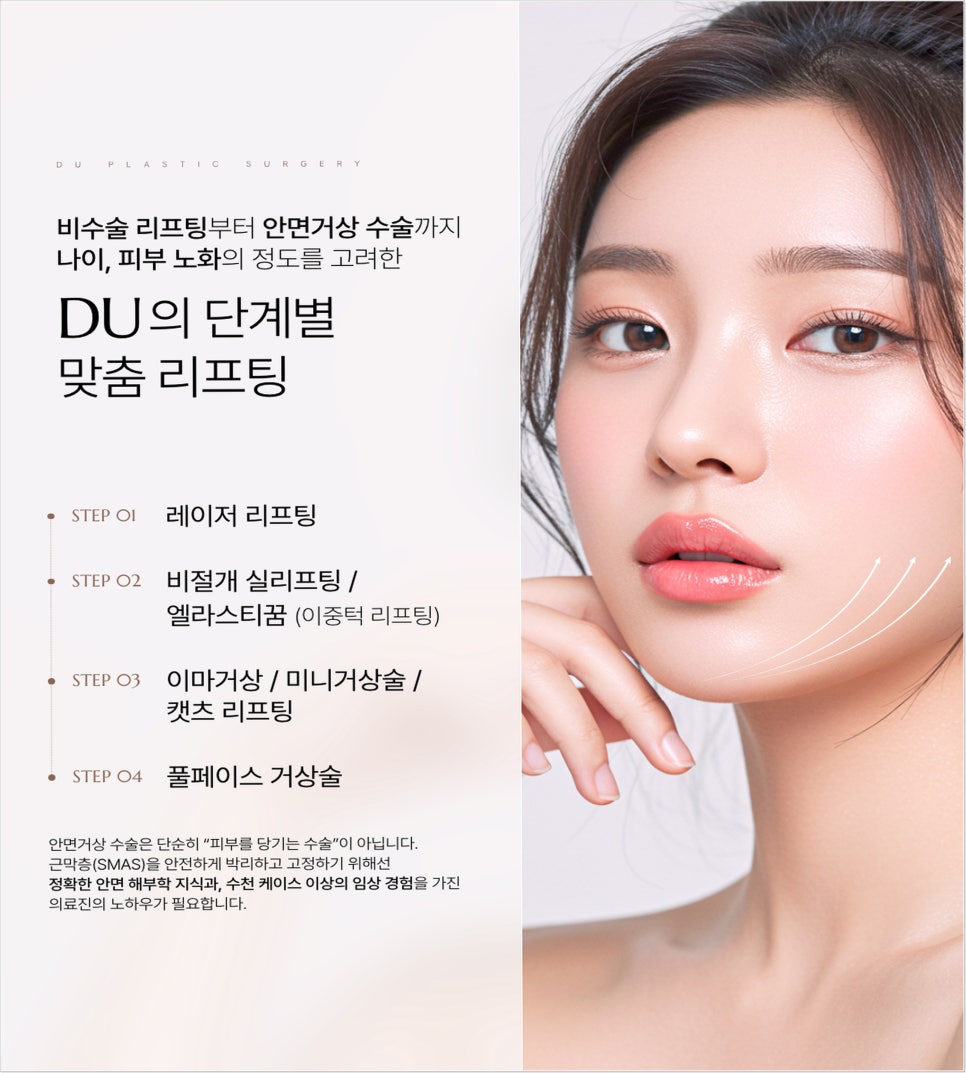
Is thread lifting really a perfect solution?
Interest in thread lifting has grown a lot lately. On social media and online, you often see phrases like “simple and 부담 없는 lifting,” don’t you? But is it really that way?
What I’ve come to feel over many years of clinical experience is that thread lifting is, in fact, a medical procedure.
Many people think of thread lifting as if it were a simple treatment that can be done during lunch break, but that is a big misunderstanding. Of course, it is true that it does not use a scalpel and the recovery period is relatively short. But that does not mean there are no side effects or risks.
To briefly explain how thread lifting works: special threads are inserted deep into the skin to pull up sagging tissue. As the threads bond with the tissue, they create a natural lifting effect. However, this process does not always go smoothly.
In fact, many people often say, “The effect didn’t last as long as I expected,” or “There wasn’t as much change as I wanted.” This is due to the inherent limitations of thread lifting and individual differences.
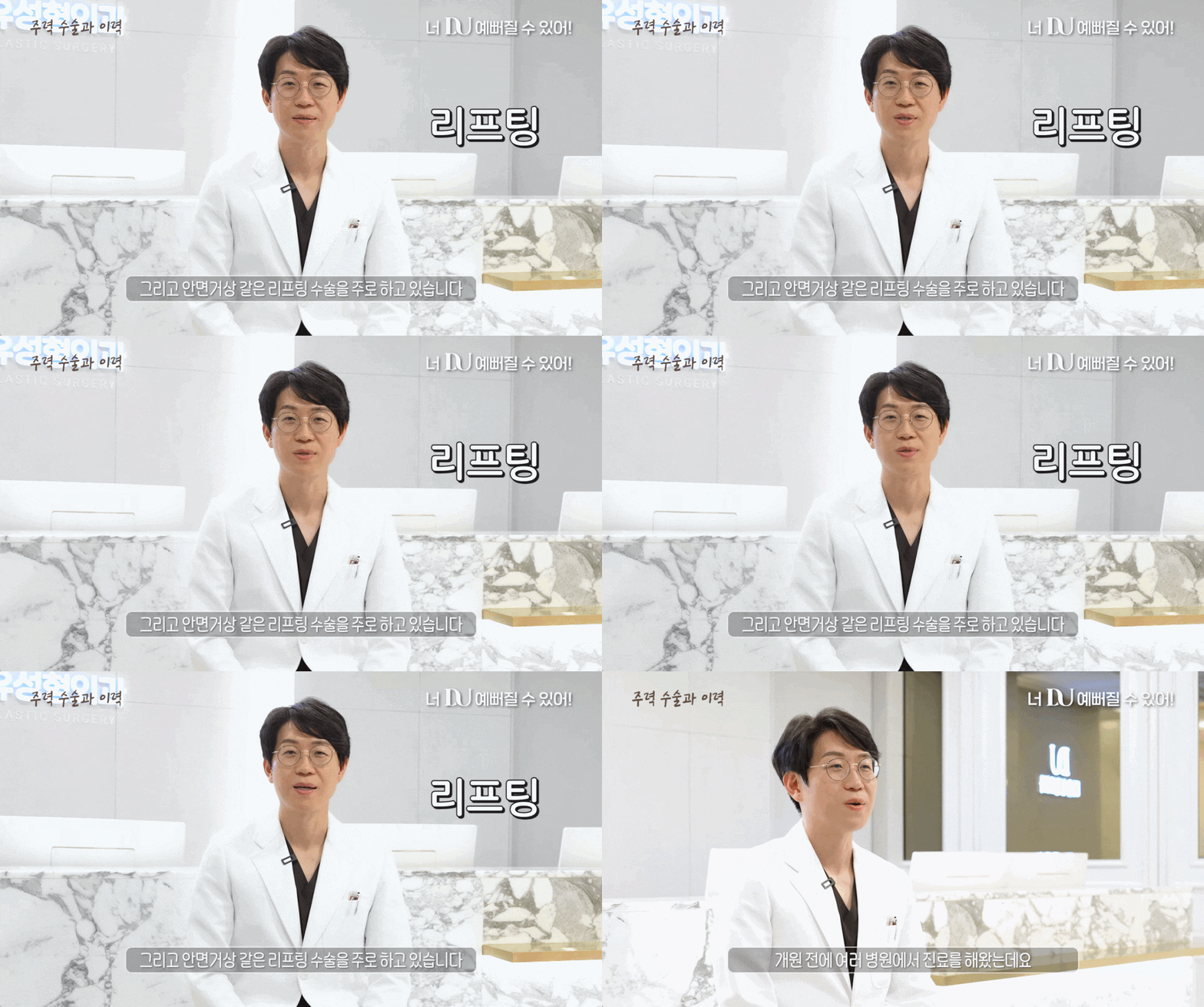
How to compensate for the drawbacks of thread lifting and extend its duration
Hidden limitations of thread lifting
Shorter-than-expected duration
The biggest challenge for many people is the duration.
Although advertisements and promotions often say “lasts 1–2 years,” the reality is that there are very large individual differences. If skin elasticity is poor or depending on lifestyle habits, the effect can noticeably decrease in as little as 6 months.
In particular, for people who smoke or are in high-stress environments, the threads may not settle well and may return to their original state much sooner than expected. In such cases, you may feel that the cost-effectiveness is low.
Also, as people get older, the skin’s regenerative ability decreases, so the bond between the threads and tissue becomes weaker. This phenomenon is especially noticeable after the age of 50.
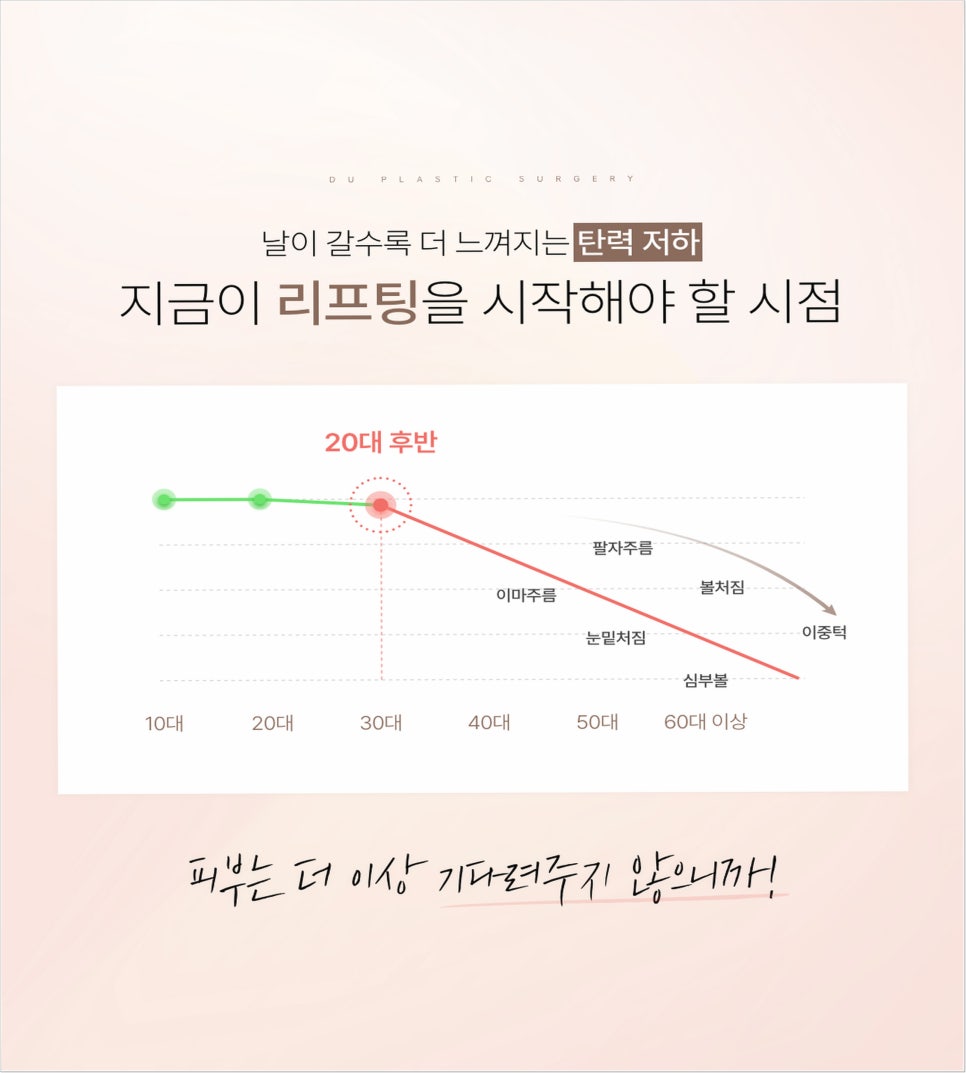
How to compensate for the drawbacks of thread lifting and extend its duration
Asymmetry and unevenness
One of the side effects that requires the most caution in thread lifting is asymmetry. Even if threads are inserted with the same tension on both sides of the face, the results can differ depending on the individual’s muscle structure and fat distribution.
Small uneven areas can also appear where the threads are inserted. This is especially common in people with thin skin or when the threads are placed too close to the surface. If a problem occurs, it can be uncomfortable in daily life.
In severe cases, the threads may protrude through the skin, or a hard lump may be felt around the thread. If this happens, the threads may need to be removed.
Risk of inflammation and infection
No matter how simple the procedure may seem, there is a risk of inflammation or infection during the process of inserting threads through the skin. Problems can occur especially if proper aftercare is not followed or if the procedure is performed in an environment that is not fully sterile.
If inflammation occurs, it may not be resolved with antibiotics alone, and in severe cases the threads may need to be removed. In such cases, you may not get the desired result and instead be left only with side effects.
In particular, people with weakened immune systems or chronic conditions such as diabetes may have a higher risk of infection. These individuals should 반드시 receive 충분한 consultation and testing before treatment.
Key points for minimizing the drawbacks of thread lifting
The importance of accurate anatomical knowledge
It is no exaggeration to say that the success of thread lifting depends on the medical provider’s anatomical knowledge.
The reason is that the face has numerous nerves, blood vessels, and muscles intricately intertwined. If the structure is not understood accurately and the threads are inserted, nerve damage or vascular injury can occur.
Especially if facial nerve damage occurs, serious aftereffects such as facial paralysis or sensory abnormalities may remain. To avoid risks, it is most important to choose a medical provider with a deep understanding of facial anatomy.
Also, textbook knowledge alone is not enough to respond to every case, so experience and know-how that can account for anatomical variations that differ from person to person are essential.

How to compensate for the drawbacks of thread lifting and extend its duration
The need for a personalized plan
Because every person’s face is different, it is difficult to handle every case with textbook knowledge alone.
Therefore, thread lifting also cannot achieve good results with a one-size-fits-all method; it must be approached differently for each person. A customized plan that takes into account skin thickness, muscle structure, fat distribution, age, and lifestyle habits is necessary.
For example, people with thick skin and those with thin skin should use different types of threads and different insertion depths. The method should also be adjusted according to the degree of sagging and the desired result.
Different approaches are also needed by age group. People in their 30s and those in their 50s have completely different skin conditions and recovery abilities, so the same method cannot be used.
The importance of post-procedure care
One point many people overlook is aftercare.
However, after thread lifting, it is important to help the threads bond stably with the tissue.
For 2–3 weeks after the procedure, excessive facial movements and massage should be avoided, and sleeping face down is also not recommended. High-temperature environments such as saunas and jjimjilbangs should also be avoided. If you do not properly follow the care instructions, the thread position may change or the effect may decrease.
In particular, people who exercise often should avoid strenuous exercise for a while, and those whose jobs require many facial expressions should also be careful.
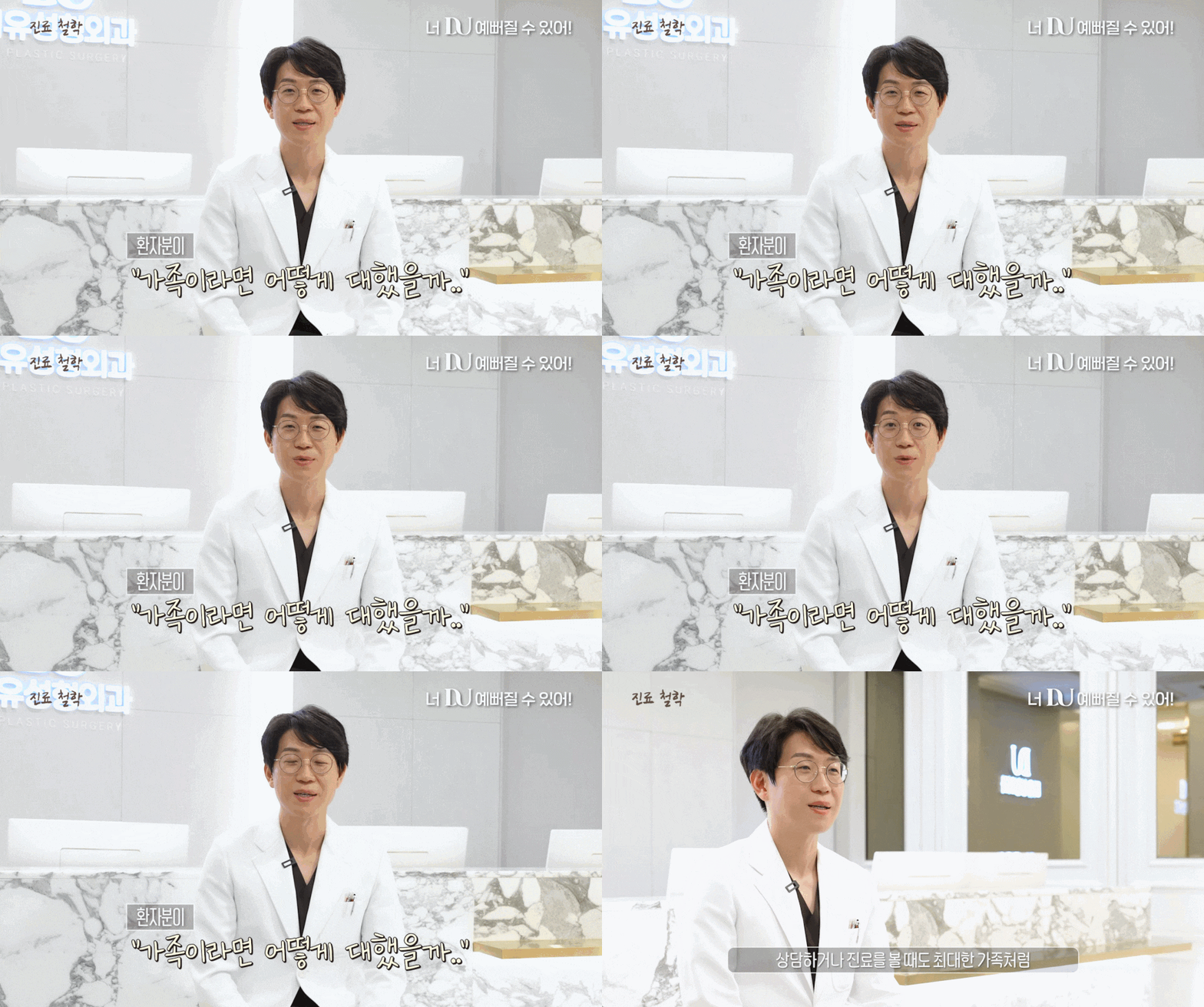
How to compensate for the drawbacks of thread lifting and extend its duration
D.U’s differentiated thread lifting approach
3D anatomical analysis system
At D.U, we do not simply look at outward sagging; we perform precise anatomical analysis through 3D imaging. Through this, we identify the individual’s muscle structure, fat distribution, and even bone shape to design the most effective thread pathway.
With this scientific approach, we can achieve predictable results and significantly reduce the risk of side effects. In addition, because we can show the expected results in advance before treatment, patient satisfaction is high.
In particular, we have built an analysis system that reflects the structural characteristics unique to Korean faces, creating optimized results suited to our features, which differ from those of Westerners.
Step-by-step lifting protocol
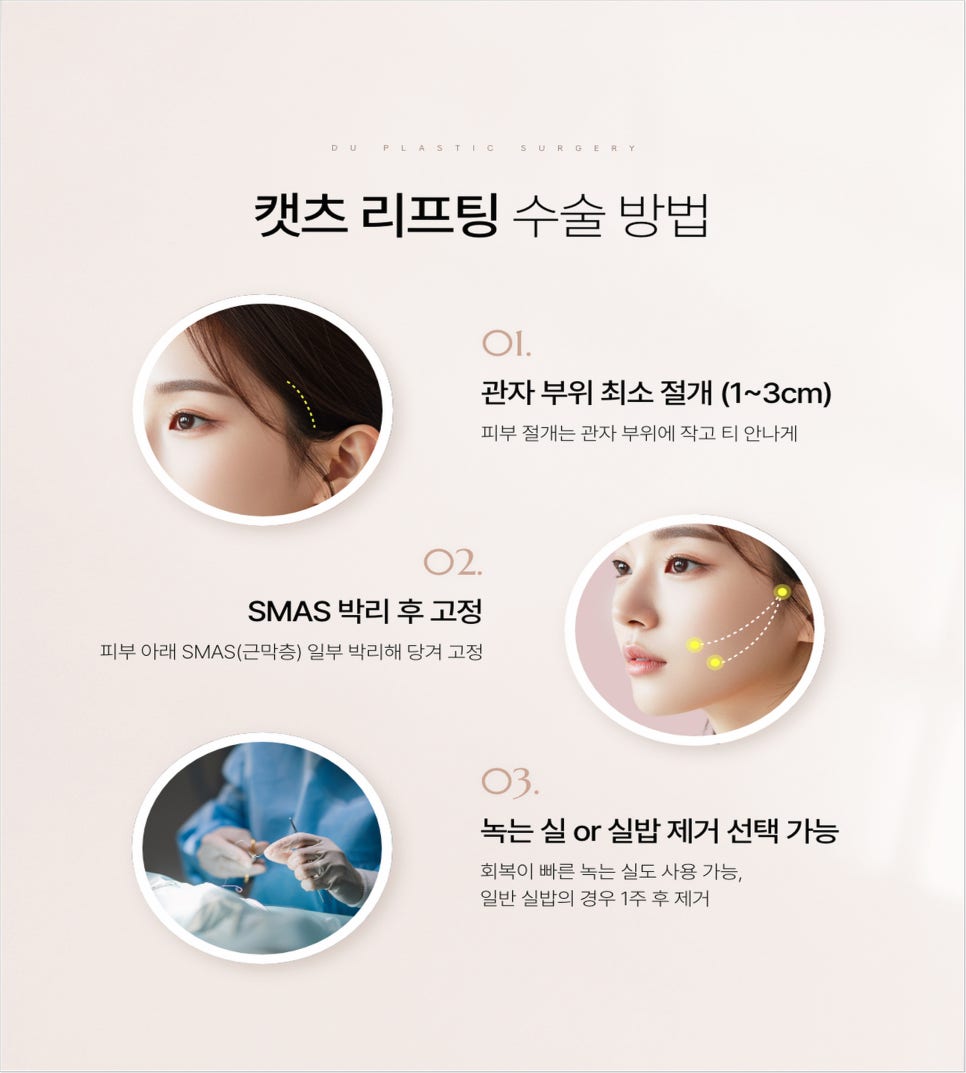
D.U’s thread lifting is not simply about inserting threads; it takes a comprehensive, multi-step approach. First, we perform pre-treatment to improve skin condition and elasticity, and then we insert the appropriate threads at the correct positions for each individual.
In addition, after treatment, we use post-treatment methods that promote collagen production to create longer-lasting effects. Through a systematic approach, we can achieve results that are far superior to ordinary thread lifting.
For example, pre-procedure skin conditioning improves the bond between the threads and tissue, and post-procedure, a special care program promotes recovery.
How to compensate for the drawbacks of thread lifting and extend its duration
Customized thread selection system
We do not use the same thread for every patient. At D.U, we have a system for selecting the optimal thread based on each person’s skin characteristics and desired results.
We offer various types of threads such as PDO threads, PLLA threads, and PCL threads, and we accurately understand the characteristics of each to choose the most suitable one. In addition, combination treatment using different types of threads for different areas is also possible.
By carefully considering the thickness and length of the thread, as well as the shape of the barbs, we create an optimized combination for each individual. Through this delicate approach, more natural and longer-lasting results can be achieved.
What to consider before thread lifting
Setting realistic expectations
Thread lifting is certainly an effective treatment, but it is not magic. It cannot turn the face back 20–30 years. It is more realistic to expect an effect that makes you look about 5–10 years younger from your current state.
You should also keep in mind that individual differences are significant. Even if people are the same age and receive the same treatment, the results will differ. This is because skin condition, lifestyle habits, genetic factors, and more all have an influence.
Especially in cases of severe sagging, thread lifting alone may have limitations. In such cases, combining it with other procedures or taking a step-by-step approach may be necessary.
And another important point is the financial burden.
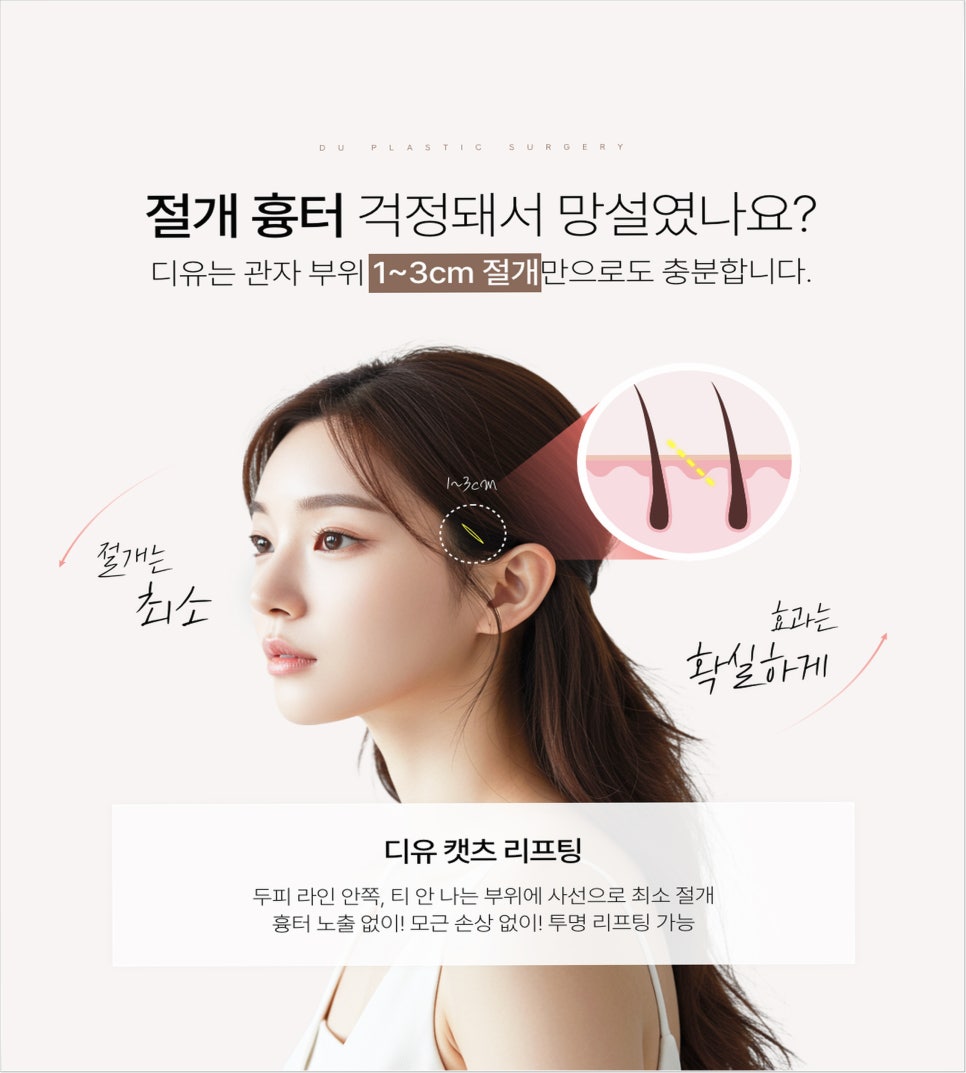
Thread lifting is not a one-time treatment. To maintain the effect continuously, repeat procedures are needed. In many cases, repeat treatment is performed every 12–18 months, so it is best to decide while considering long-term costs as well.
You should also keep in mind the cost of treatment if side effects occur, as well as any additional costs needed to improve unsatisfactory results.
How to compensate for the drawbacks of thread lifting and extend its duration
D.U Plastic Surgery’s safety management system
- Thorough pre-examination system
At D.U, a comprehensive examination is always performed before thread lifting. We do not simply check the outward appearance; we assess suitability through blood tests, allergy tests, and skin elasticity measurements.
In particular, the procedure is not recommended for people with blood clotting disorders or autoimmune diseases. Safety comes first. Through thorough pre-examinations, the risk of side effects can be minimized.
We also carefully review medications and supplements being taken, and guide patients to adjust anything that may have an effect in advance.
- Sterile procedural environment
One of the most important things in thread lifting is a sterile environment. At D.U Plastic Surgery, procedures are performed in a sterilized environment at an operating-room level. All instruments are disposable or undergo a complete sterilization process.
In addition, the medical staff wear full sterile gowns, and strict sterile principles are followed throughout the procedure. Through careful management, the risk of infection or inflammation can be significantly reduced.
We also thoroughly manage air purification systems and temperature/humidity control to create the optimal environment.
- 24-hour emergency response system
If an emergency occurs after treatment, we have a system that allows patients to contact us at any time. Medical staff are on standby 24 hours a day to respond quickly to emergencies.
We also continuously monitor the recovery process through a regular follow-up care system. Even small changes are not overlooked, and appropriate measures can be taken.
We also have a connection system with the emergency room, so if a serious situation occurs, specialized treatment can be provided immediately.
Comparison with other lifting methods
Differences from surgical lifting
Many people debate between thread lifting and surgical lifting (facelift), and each has its pros and cons. Surgical lifting lasts longer and can create more dramatic changes, but the recovery period is longer and the risks are higher.
On the other hand, thread lifting has a faster recovery and does not greatly disrupt daily life, but the effect is relatively limited and the duration is shorter. You can choose depending on your personal situation and the results you want.
There is also a difference in cost. Surgical lifting has a higher initial cost but may be more economical in the long run, while thread lifting has a lower initial cost but needs to be repeated, so cumulative costs should be considered.
Comparison with non-surgical lifting
Compared with lifting devices such as Ulthera, Thermage, and Shurink, thread lifting has the advantage of allowing you to see the effect immediately. Device-based lifting aims for gradual improvement through collagen regeneration, whereas thread lifting physically pulls up tissue, so you can see an immediate change.
However, device-based lifting can create more natural results and carries a relatively lower risk of side effects. Depending on your condition and preferences, you may choose one or consider combination treatment in some cases.
In terms of duration, thread lifting lasts longer, but in terms of natural appearance, device-based lifting has the edge.
Who is suitable for thread lifting?
Thread lifting is not suitable for everyone. The most suitable candidates are people in their 30s to 50s with mild to moderate sagging. It is also suitable for people who still have some skin elasticity and are in generally good health.
It can be a good option especially for those who feel burdened by surgery or want a quick recovery. It is also suitable for people who want gradual changes or prefer natural-looking results.
People whose jobs do not allow for a long recovery period, or those who feel a strong psychological burden toward surgery, can also be good candidates.
On the other hand, there are cases in which thread lifting should be avoided. First, if sagging is severe, satisfactory results may be difficult to achieve with thread lifting alone. In such cases, surgical lifting should be considered.
Also, for people with blood clotting disorders, autoimmune diseases, or those who are pregnant or breastfeeding, it is safer to avoid the procedure. It is also not possible if there is an allergy to the threads.
People with a keloid tendency or poor wound healing should also be careful. In such cases, it is better to consider other alternatives.
Criteria for choosing a medical institution for thread lifting
- Extensive clinical experience and know-how
D.U Plastic Surgery has many years of extensive experience in the field of thread lifting. Based on know-how accumulated through thousands of clinical cases, we can suggest the most suitable method for each individual case.
In particular, we have developed procedures suited to Korean facial characteristics, creating more natural and satisfying results. Experience and know-how are not built overnight.
Because we have experience with various ages and a wide range of cases, we can respond appropriately even to unexpected situations or complex cases.
- Continuous research, development, and updates
Medical technology continues to advance, and the same is true in the field of thread lifting. At D.U Plastic Surgery, we continuously research and introduce the latest technologies and materials to create better results.
We regularly attend international conferences and benchmark advanced techniques from other countries, applying them appropriately to local conditions. Through continuous effort, we can always provide the highest level of treatment.
When new types of threads or techniques are developed, we adopt them immediately to offer patients better options.
- Systematic aftercare system
Treatment does not end when the procedure is over. At D.U Plastic Surgery, we continuously manage patients’ recovery through a systematic aftercare system.
We check recovery status through regular examinations and take appropriate action when necessary. We also have a system in place where patients can receive consultations at any time if they have questions or concerns.
We operate a systematic follow-up schedule at 1 week, 1 month, 3 months, and 6 months to help maintain the best possible results. Careful management is what sets us apart.
- Transparent consultations and realistic advice
At D.U Plastic Surgery, we do not use exaggerated advertising or pushy recommendations. We accurately assess each individual’s condition and speak honestly about the results that can realistically be expected.
Sometimes another method may be more suitable than thread lifting, or it may be better not to undergo a procedure at all. In such cases, we prioritize the patient’s best interest and provide honest advice.
During the consultation process, we take enough time to understand each person’s concerns and needs, and together we find the most suitable solution. Sincere consultations lead to high satisfaction.
Thread lifting is certainly an effective and useful procedure. However, it is not a perfect one. It is important to understand both its advantages and limitations and make a wise choice based on your individual situation.
Above all, choosing an experienced and trustworthy medical provider is the most important thing. At D.U Plastic Surgery, we are waiting for you with all of the above conditions in place.
If you are considering thread lifting, please find the optimal method for yourself through sufficient consultation. We will do our best to help you achieve safe and satisfying results.
Thread lifting is not just a procedure, but a journey to finding beauty for the individual. We hope you will take that journey together with D.U Plastic Surgery.
How to compensate for the drawbacks of thread lifting and extend its duration