Nasal tip drooping
It was definitely satisfying right after the surgery.
But after a few years, it started to feel like the tip of my nose was gradually dropping.
This is a common comment from people who have had nose surgery.
A nose shape that was satisfying right after surgery... then gradually collapses over time.
Among these changes, the one mentioned most often is exactly “nasal tip drooping.”
This problem leads not only to psychological stress from changes in appearance, but also to anxiety and burden over thoughts like, “Do I have to have surgery again?”
 Nasal tip drooping
For those who have already undergone surgery once or twice, fear of revision surgery is naturally even greater.
That is because the skin becomes thinner over time, and the cartilage is likely to have been damaged.
However, the reason the nasal tip droops is not simply a problem with the implant.
The more fundamental cause lies in the design of the internal structure of the nose.
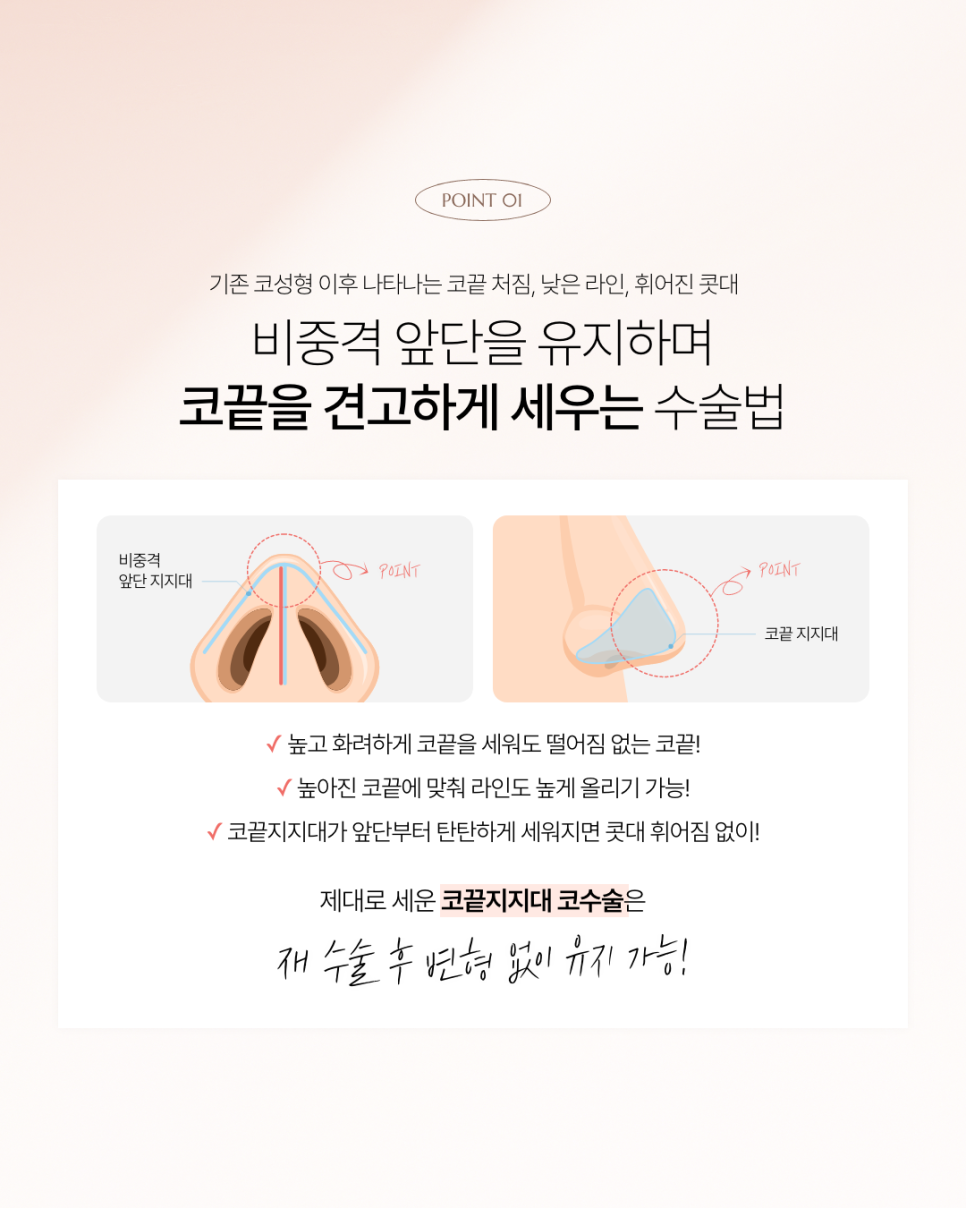
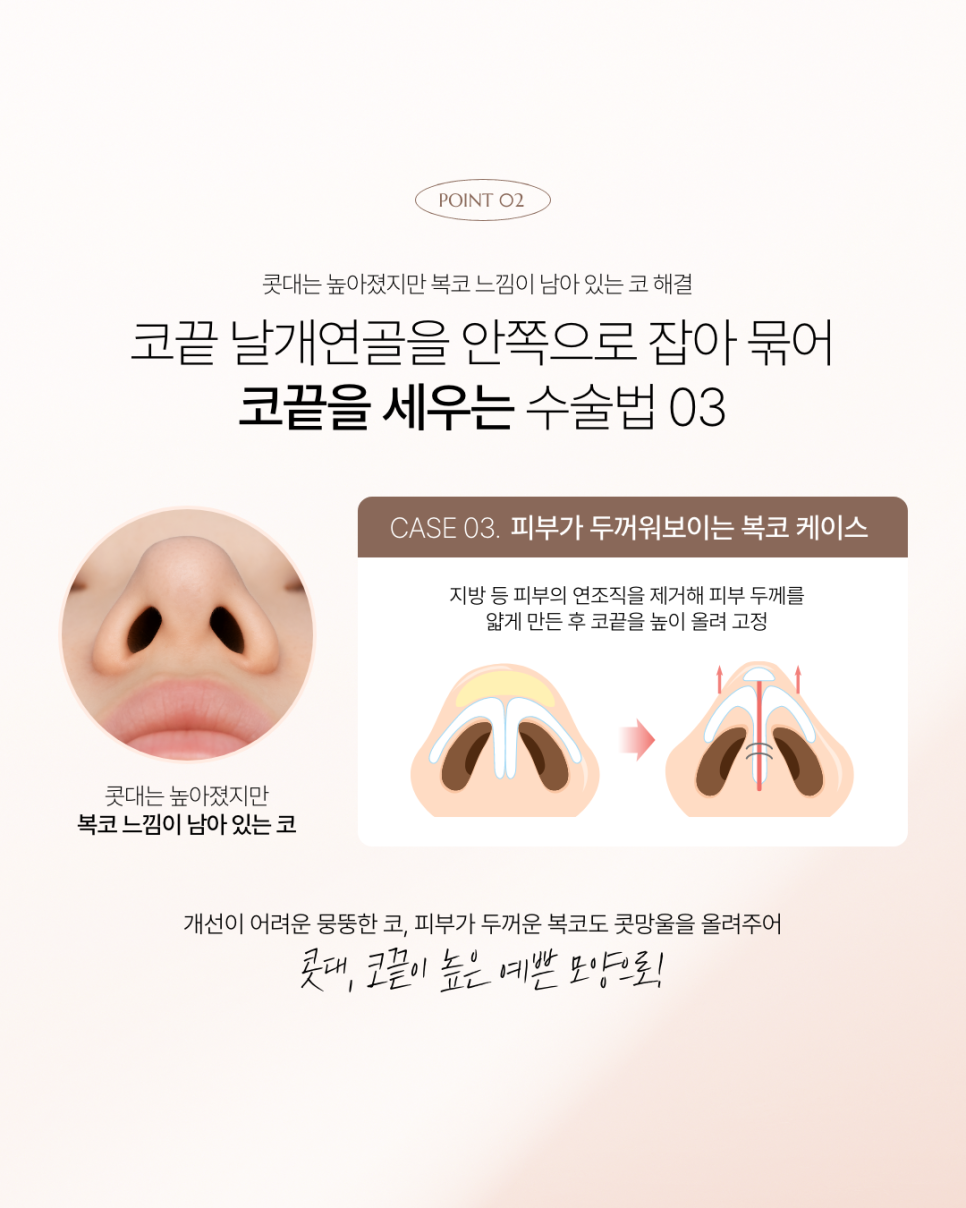
In particular, if the cartilage structure that supports the tip of the nose upward is weak or unbalanced, collapse over time becomes an unavoidable result.
At times like this, the solution that is emerging as a way to rebuild the structure is “rib cartilage nose surgery.”
This is not simply a procedure that corrects the shape, but a surgery that anatomically redesigns and reconstructs the inside of the nose.
Today, I will explain in detail why this “revision surgery using autologous rib cartilage,” which many people are curious about, is effective in resolving nasal tip drooping, and what criteria should be used to design surgery for a nose that does not need revision.
Why does the nasal tip droop?
Previous image
Next image
Nasal tip drooping may be seen as simply a noticeable cosmetic issue, but in fact it is a representative result that shows how well the internal structure was designed during surgery.
Many people say, “I really liked it right after surgery, but as time passed I started to feel like the shape was gradually collapsing.”
In most of these cases, the cause is not the skin or the implant, but the support structure inside the nose.
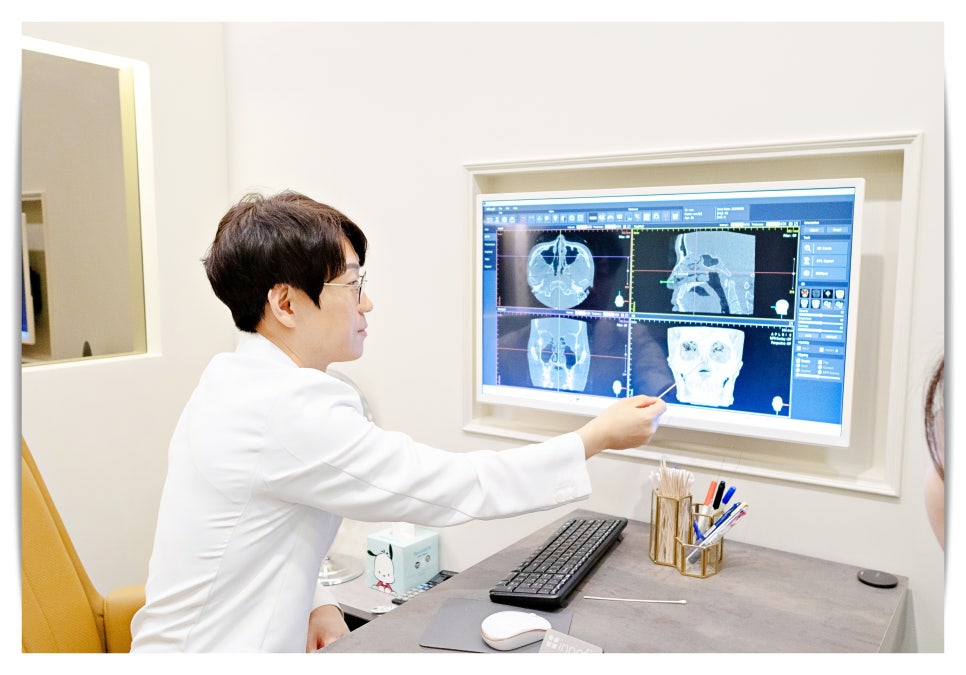
In fact, when looking at CT scans of patients who came in for revision surgery, structural causes like the following are often found.
| If the septal cartilage is weakened or short | If the septal cartilage that supports the center of the nose was excessively harvested or damaged during surgery, the force supporting the nasal tip upward is reduced. |
|---|
| If only ear cartilage was used in a simple reinforcement procedure | Ear cartilage is soft and has weak shape-retaining ability, so when used alone, it is often gradually compressed or absorbed over time, causing the shape to collapse. |
| If only an implant was inserted without a support column | An implant does not support the structure by itself. Without an internal “supporting pillar,” it gradually droops under the weight of the implant, external pressure, and the loosening force of the skin. |
A nose built on such a structurally weak foundation may look beautiful at first, but over time it cannot avoid the effects of gravity and tissue changes.
In particular, if the skin is thin or lacks elasticity, drooping appears more quickly, and once a nose has drooped, it is difficult to restore it to its original state. That is why many people consider revision surgery.
Why rib cartilage nose surgery is needed
Previous image
Next image
Nasal tip drooping
The key to nose surgery is the “structure,” not the outer appearance.
Among the materials that support that structure, the most powerful is autologous rib cartilage.
Autologous rib cartilage is, as the name suggests, cartilage taken from one’s own ribs, and it is a surgical material that can strongly support the nasal tip.
It is especially used as, in effect, the only option in revision cases where the existing septal cartilage has been damaged or is difficult to use.
Autologous rib cartilage is thick and firm, making it possible to stably build a vertical support structure.
Compared with septal cartilage or ear cartilage, it has excellent shape retention and is advantageous for keeping the nasal tip long and straight.
 Nasal tip drooping
Rib cartilage provides enough length and volume to be used as much as the surgeon intends.
In particular, when complex reconstruction is needed, it is a big advantage that it can be shaped into various forms for use.
And unlike artificial implants, it is autologous tissue, so there is no rejection response in the body, and the absorption rate is low, allowing for long-term stability.
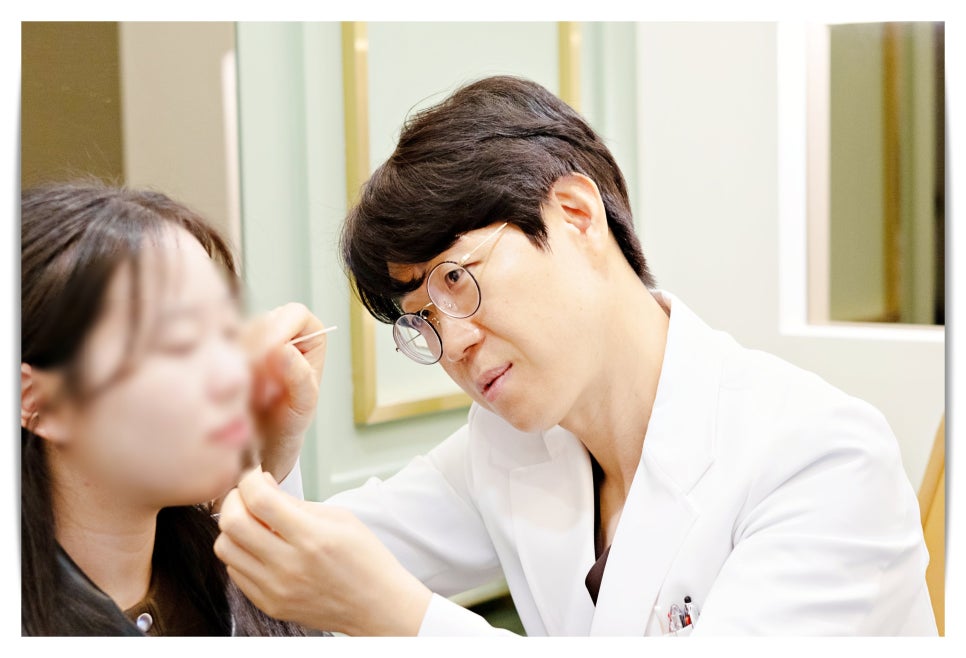
At D.U Plastic Surgery Clinic, we do not simply harvest and use autologous rib cartilage; we thoroughly carry out a pre-processing step to prevent cartilage warping.
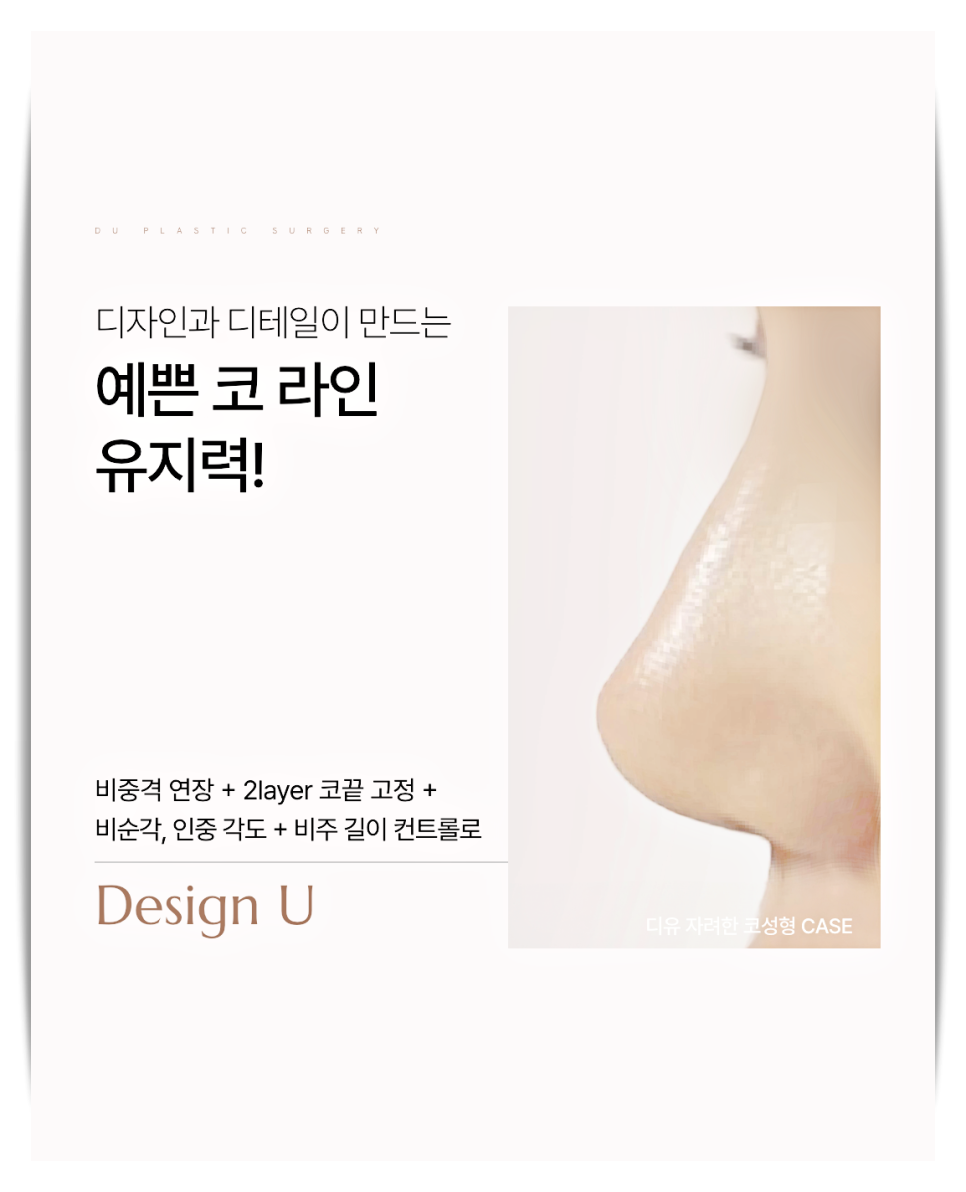
In addition, through fine cartilage processing and anatomical positioning design, we perform the surgery with precision so that the nasal tip is firmly supported while still having a natural curve.
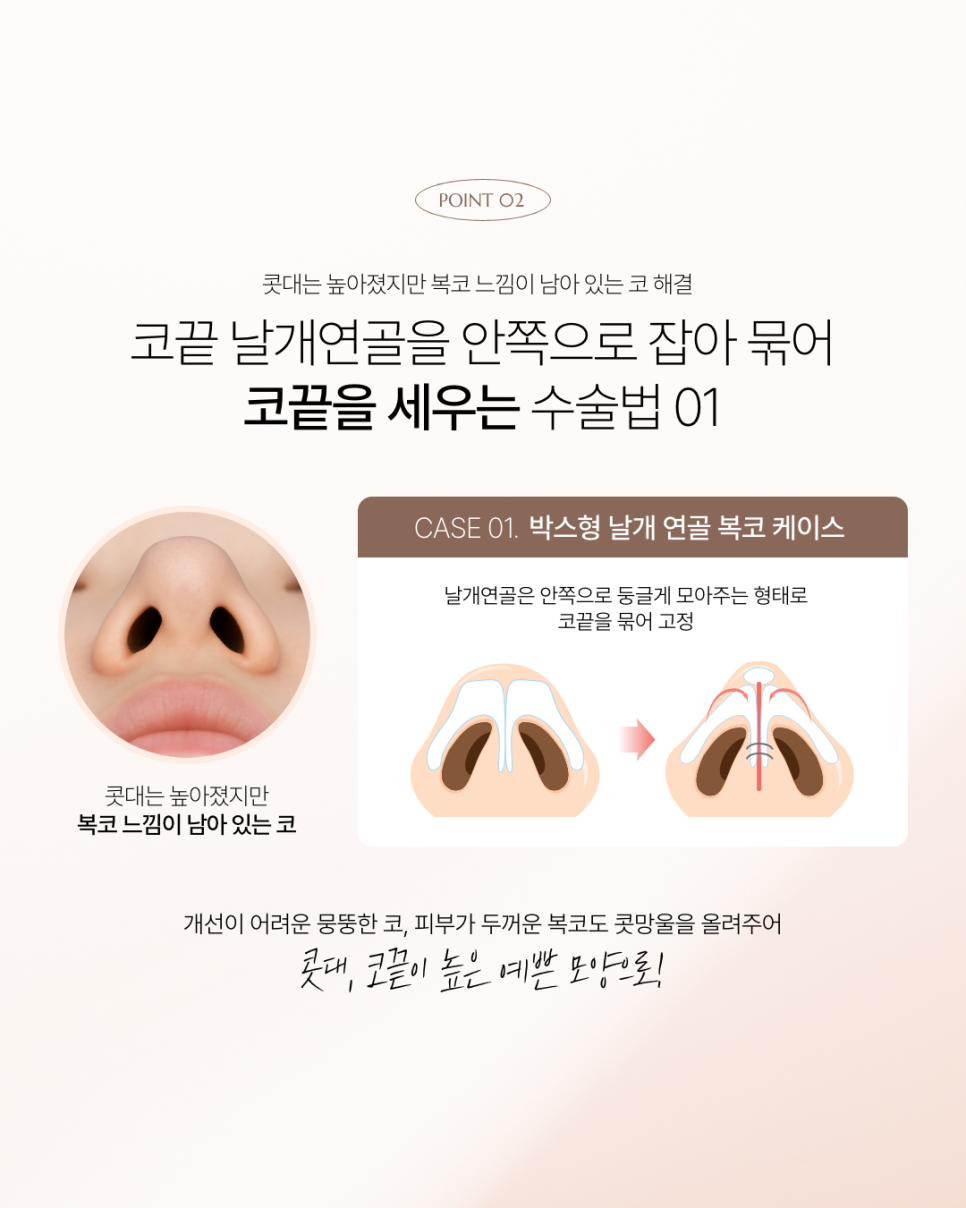
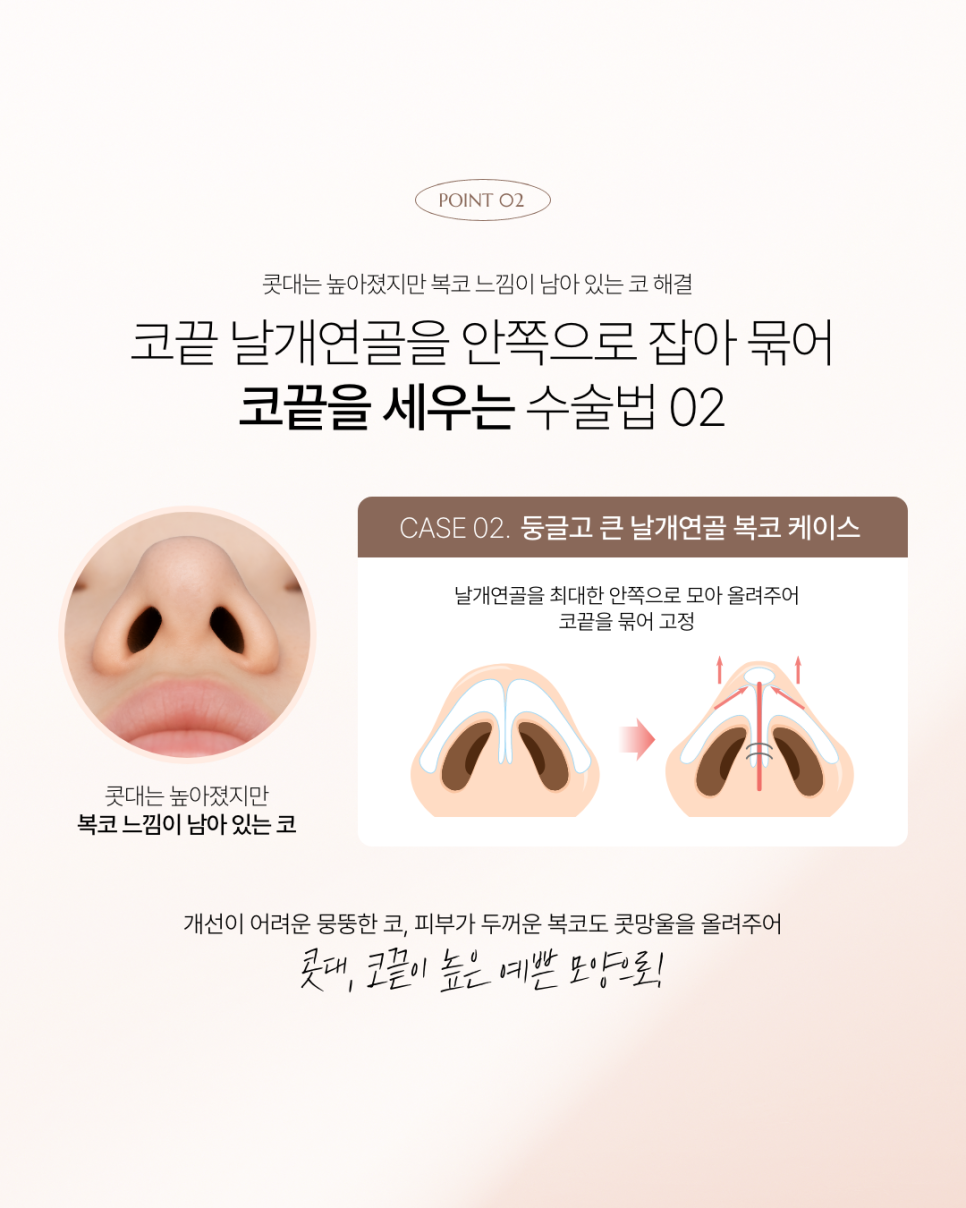
In a word, rib cartilage nose surgery is not just the use of a strong material; it is closer to a “reconstructive surgery” that restores and rebuilds a collapsed structure.
How can you get a nose surgery that does not require revision?



Previous image
Next image
Nasal tip drooping
Many people ask, “What kind of nose surgery should I have so I don’t need revision again?”
The clearest answer to this question is one thing.
It must be a “structurally designed surgery.”
A surgery that simply raises the nose may look fine for now, but over time it will inevitably come back as “drooping.”
Nose surgery must be a systematic structural procedure, not merely a cosmetic one.
Rhinoplasty is not a surgery that simply makes you look better with one implant.
 Nasal tip drooping
Especially in revision surgery, it is essential to accurately diagnose the problems from the previous surgery—such as cartilage damage, implant movement, and skin adhesion—and improve them structurally.
If you want a nose surgery that does not require revision, be sure to check the conditions below.
Is structural analysis performed through 3D CT imaging?
Rather than deciding on surgery based only on the outside appearance, it is most important to identify structural problems inside the nose in advance.
Is it a surgery that designs the nasal tip support structure?
It is not enough to simply place an implant; a pillar structure that supports the nasal tip must be designed in order to achieve a result that does not collapse.
Is the material chosen appropriately for the skin and tissues?
If the skin is thin or the cartilage is weak, even the material and position of the implant must be individually designed.
Is cartilage trimming performed based on anatomical understanding?
Even with the same autologous rib cartilage, the result changes completely depending on how it is processed.
Nasal tip drooping
We do not simply aim to create a beautiful nose; we design with the goal of creating a structure that will not collapse over time.
If you do not want revision surgery, it is most important to receive surgery that reflects an anatomy-based design from the very beginning, so we recommend visiting a place that meets the criteria above.




Previous image
Next image
As we have seen so far, nasal tip drooping is not simply a problem of the outer appearance, but an anatomical issue caused by the design of the internal structure.
Replacing the implant alone will never solve it, and in cases where surgery has already been done once or twice, the existing structure is even weaker, so accurate redesign and reconstruction are absolutely necessary.
In such cases, revision surgery using autologous rib cartilage can be the most reliable way to rebuild the collapsed support structure and firmly support the nasal tip.
We do not simply pursue height.
Through precise diagnosis with 3D CT, extensive revision surgery experience, and anatomy-based customized design, we create a structure that will not collapse over time.
What you want is probably more than just a “beautiful nose.”
A nose that stays natural over time without drooping, and a comfortable appearance that harmonizes with your facial expressions, is likely the real goal.
If you are worried about nasal tip drooping again, now is the time to think about a comfortable nose that will not collapse again through structural redesign.
In the following article, we will cover revision nose surgery in more detail, so please refer to the link below.
Thank you for reading this long post.