Previous image
Next image
It looked pretty at first... why does the nose shape keep changing?
Hello. I am Oh Se-won, the chief surgeon at DIU Plastic Surgery Clinic.
Recently, we have been seeing a steady increase in patients visiting our consultation room due to nasal tip filler spreading.
"At first, I liked how the tip of my nose became more refined, but over time the bridge of my nose got thicker, and the shape looked awkward when I smiled."
"I thought the filler was only at the tip of my nose, but when I touched it, it had spread firmly up to the area above the tip."
Most of the people who come in say things like this.
Nasal tip filler is often chosen because of the short procedure time, relatively quick recovery, and immediate change.
However, if the procedure is done excessively or repeated too many times, spreading can occur as the filler disperses into surrounding areas.
This goes beyond simple cosmetic dissatisfaction and can even lead to deformation of the nasal tip structure and unnatural facial expressions.
Today, based on real consultation cases and the surgical process, I will explain in detail why nasal tip filler spreading occurs and how it can be resolved through nose surgery.
The process and causes of nasal tip filler spreading
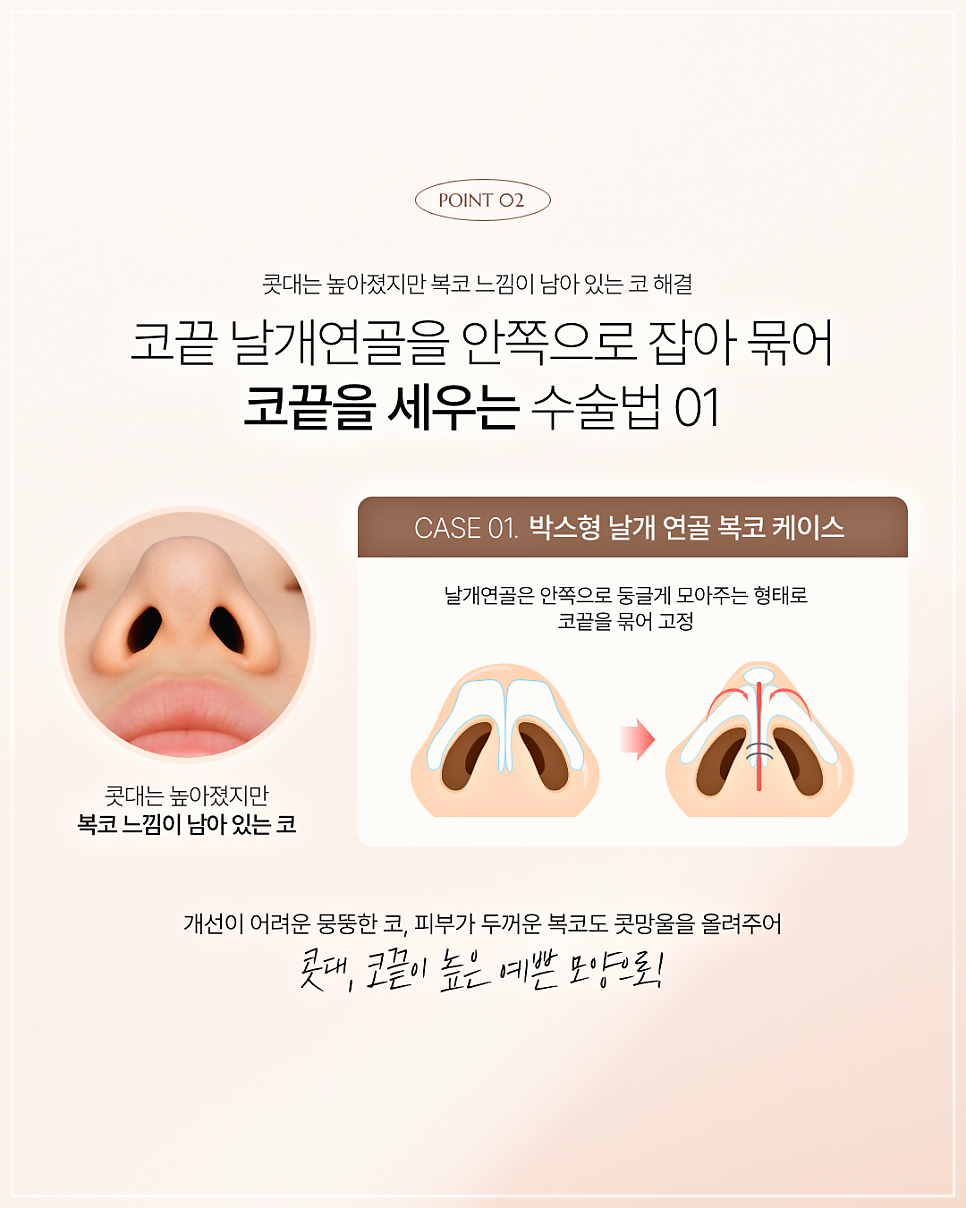
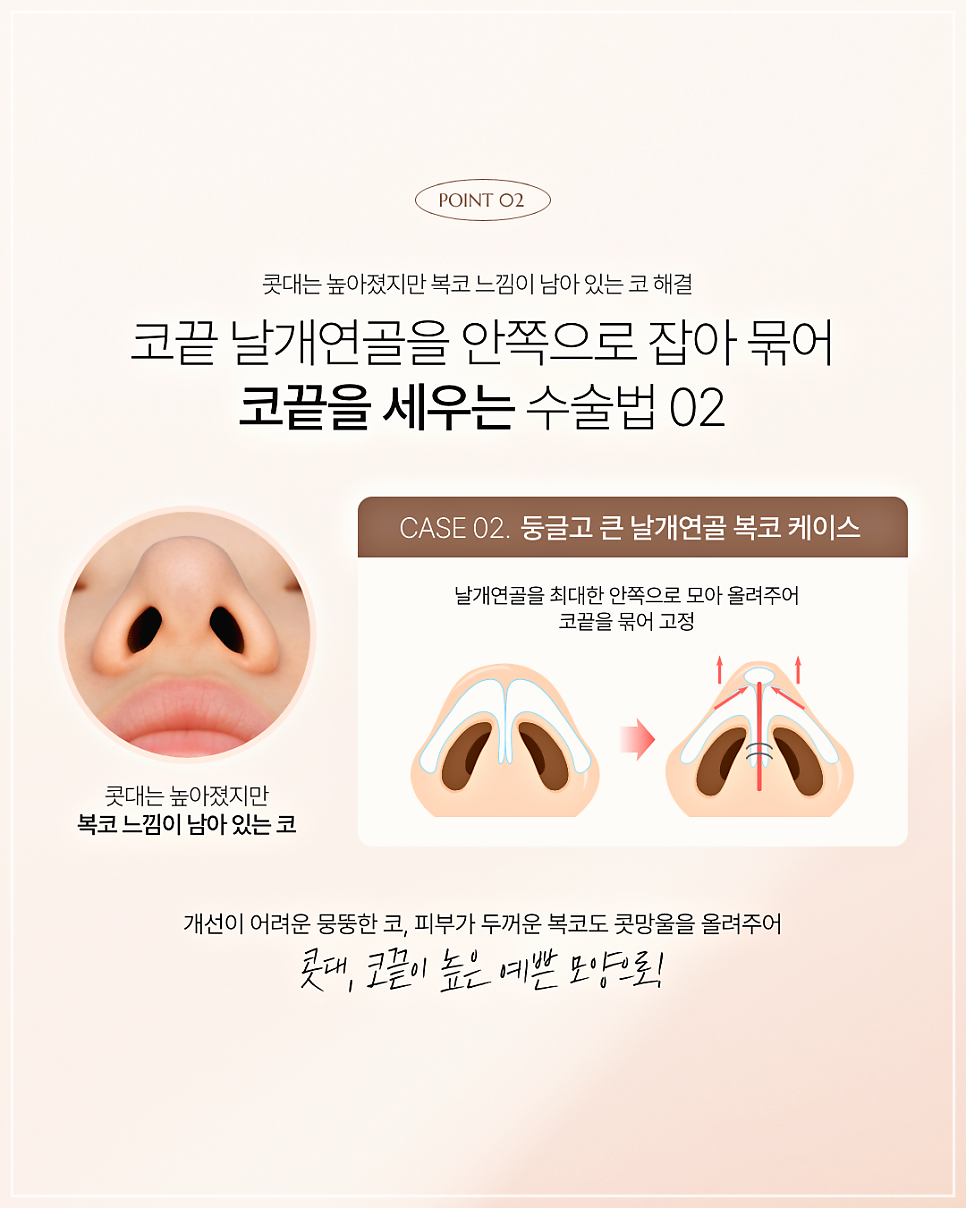
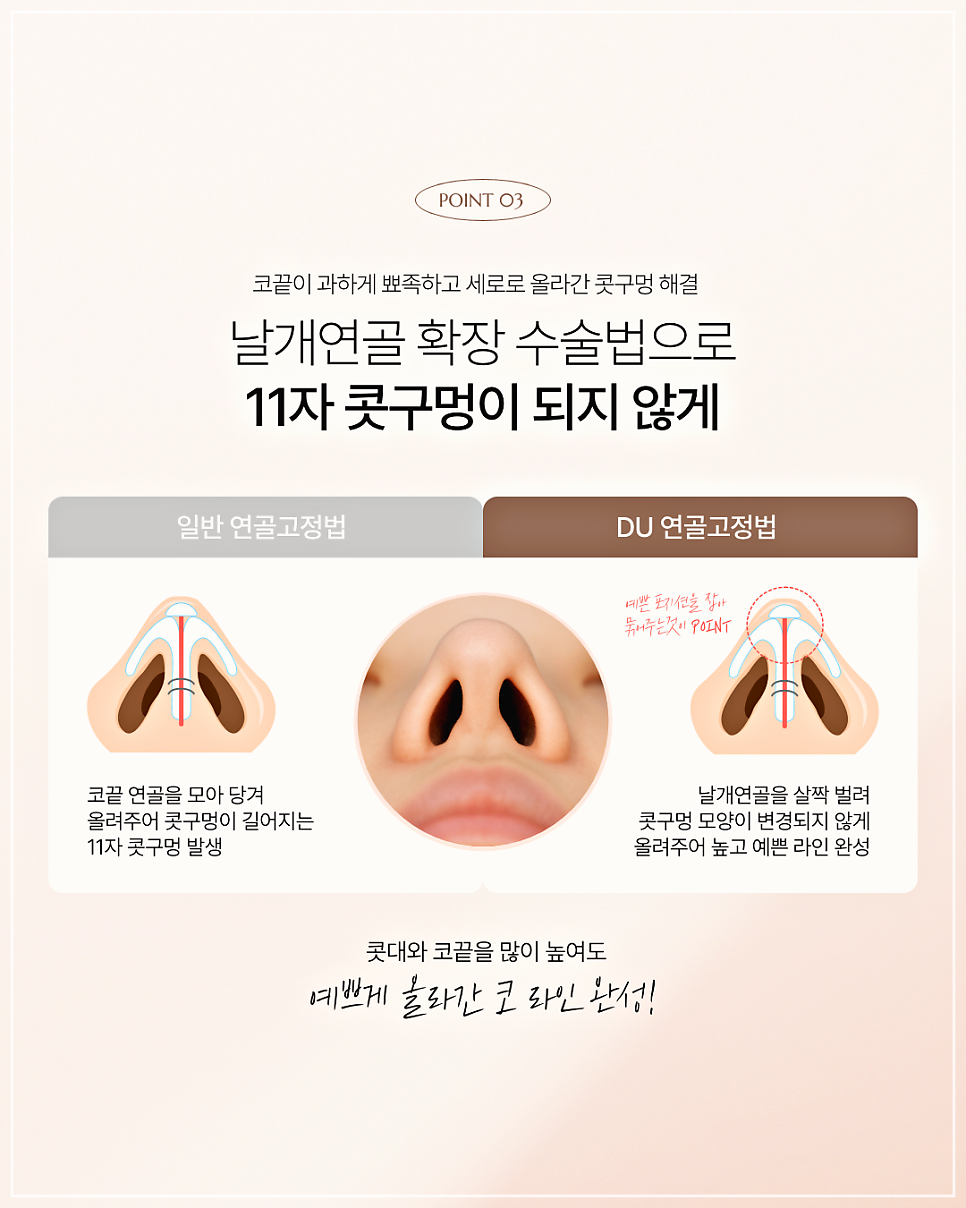
Previous image
Next image
The nasal tip area has thin skin and sits directly over cartilage, so filler is not easy to keep stable there.
Over time, a combination of 1) gravity, 2) repeated movement of facial muscles, and 3) viscoelastic changes in the filler itself causes the filler to spread upward and sideways.
In particular, when the procedure is repeated many times, new filler layers build up before the existing filler has been fully absorbed.
During this process, fibrotic tissue forms, the nasal tip becomes blunt, and the pulling sensation when smiling becomes more severe.
Why filler alone has its limits
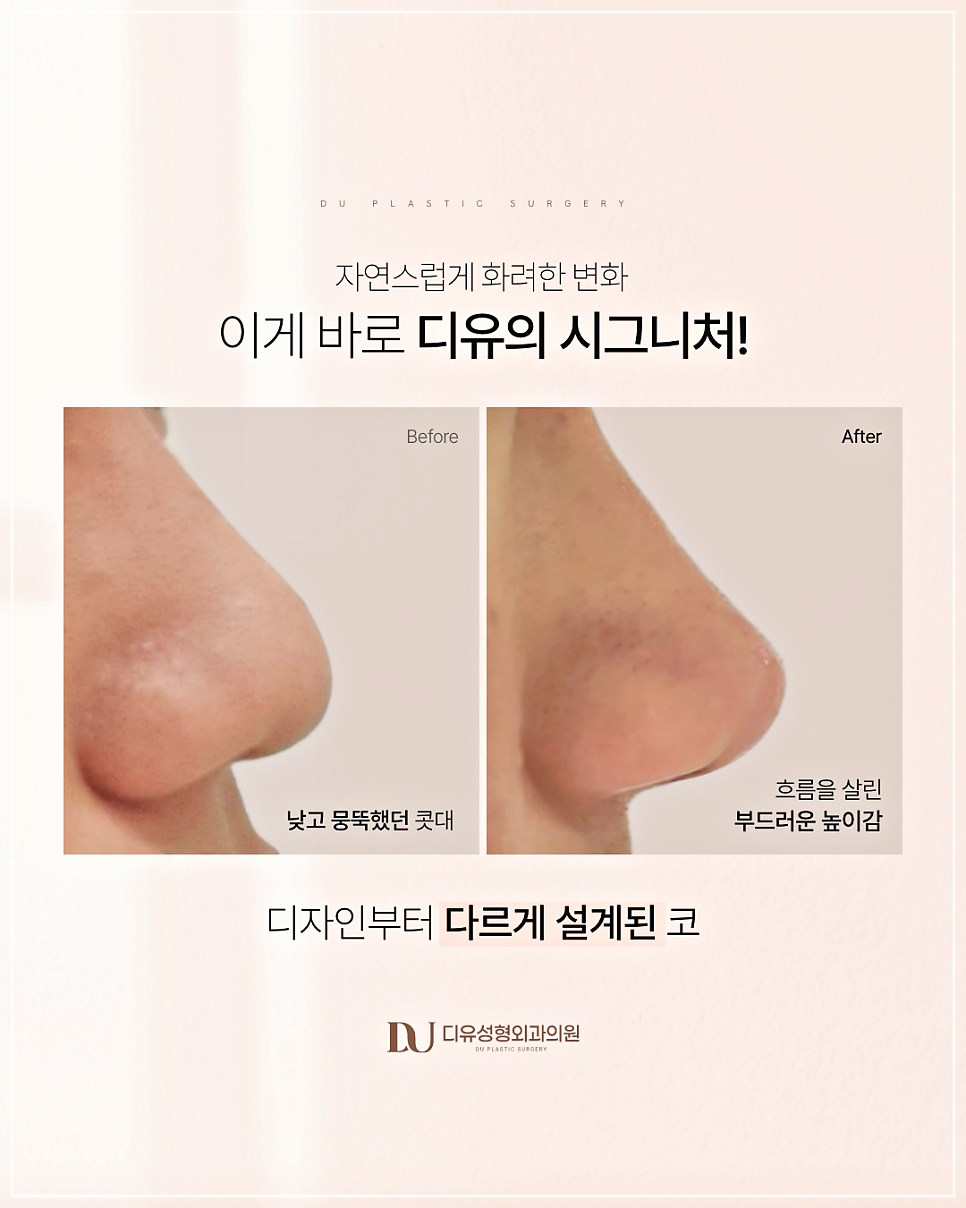
Previous image
Next image
Many of the patients who come in because of nasal tip filler spreading ask this:
"If we dissolve the filler and inject it again, will it be okay?"
But once filler spreading has been established for a long time, simply dissolving it is often not enough to achieve the desired result.
There are three reasons for this.
- Changes in skin thickness and shape
As filler spreads, the skin stretches or thickens, and the shape becomes duller.
It is difficult to restore the original sharpness of skin that has been deformed like this simply by removing the filler.

- Adhesions between the cartilage and skin
During repeated filler injections and absorption, scar tissue forms between the skin and cartilage, limiting movement.
If the adhesions are severe, the natural movement of the nasal tip is also lost.
- Weakened support structure
As the filler supporting the nasal tip dissolves, the height and shape can easily collapse.
In the end, it becomes difficult to maintain the form, and the nose looks even more unnatural when facial expressions change.
In other words, even if the filler is dissolved, it is difficult to recover the previous smooth line and elastic movement because of the remaining scar tissue and structural damage.
In such cases, an approach that does more than simply restoring the outer appearance is needed; the internal structure must be reorganized.
Nose surgery strategy for correcting nasal tip filler spreading


Previous image
Next image
I approach correction of nasal tip filler spreading from two perspectives: "structural restoration" and "movement improvement."
The key is not just to refine the visible shape, but to create a stable structure that will not collapse over time and a natural movement that does not look awkward when smiling or speaking.
- Precise diagnosis – checking both structure and movement
We do not plan surgery by looking only at the shape from the front.
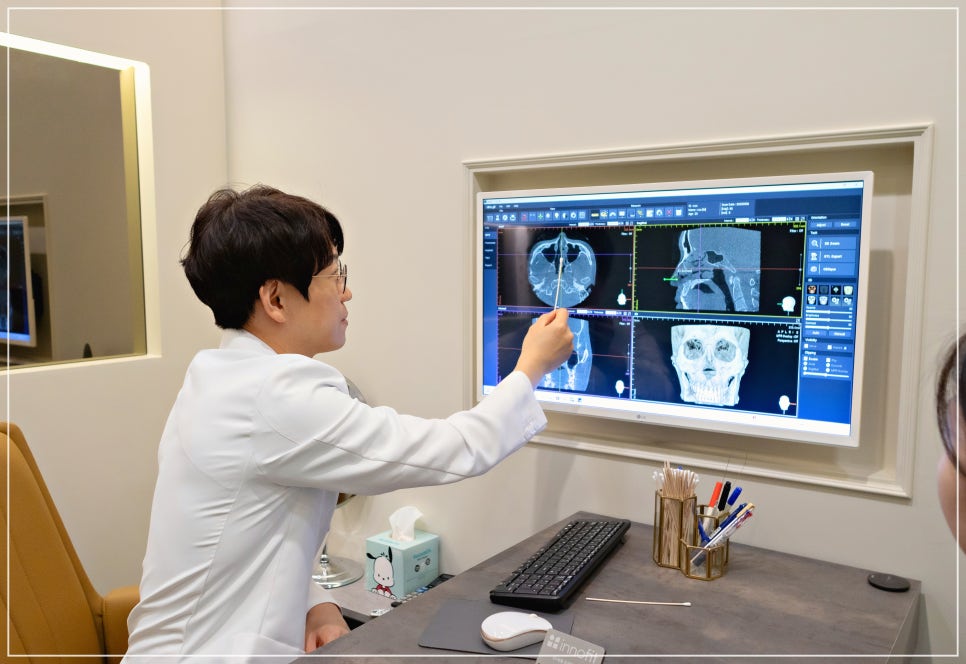
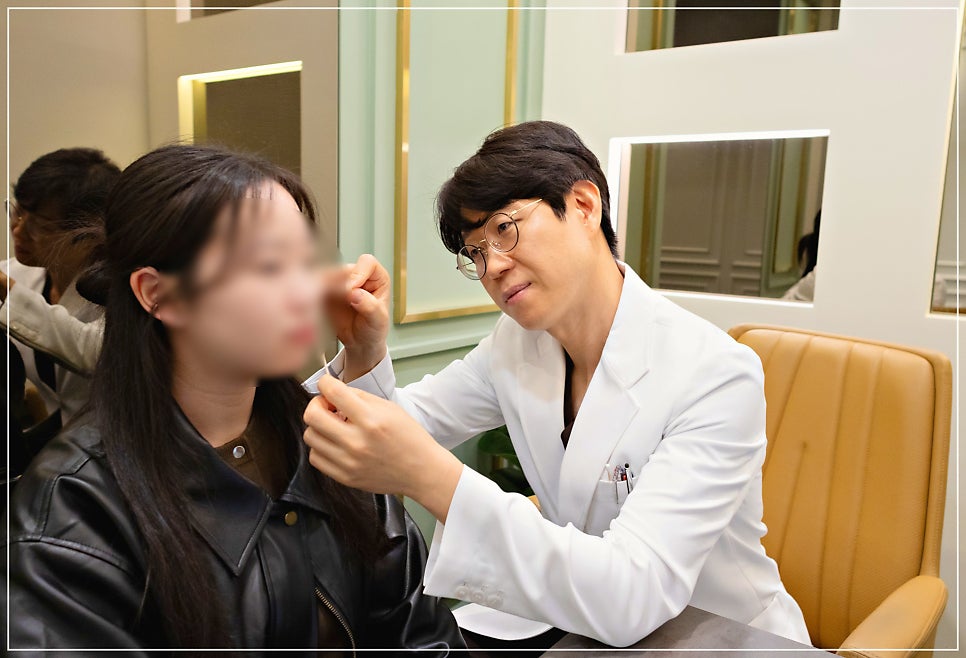
Using 3D CT and palpation, we carefully evaluate any remaining filler, scar tissue, and the condition of the cartilage.
 Nasal tip filler spreading
We also analyze how the nasal tip moves when smiling or speaking, and in which direction it is being pulled.
Only after this process can we maintain a natural expression in everyday life even after surgery.
- Removal of filler and scar tissue – the first step toward a new design
During surgery, we directly remove not only the spread filler but also the fibrotic scar tissue created by the filler.
If this tissue remains, the flexibility of the nasal tip decreases and it becomes difficult to restore the shape.
The process of releasing scar tissue becomes the foundation for later cartilage repositioning and line restoration.
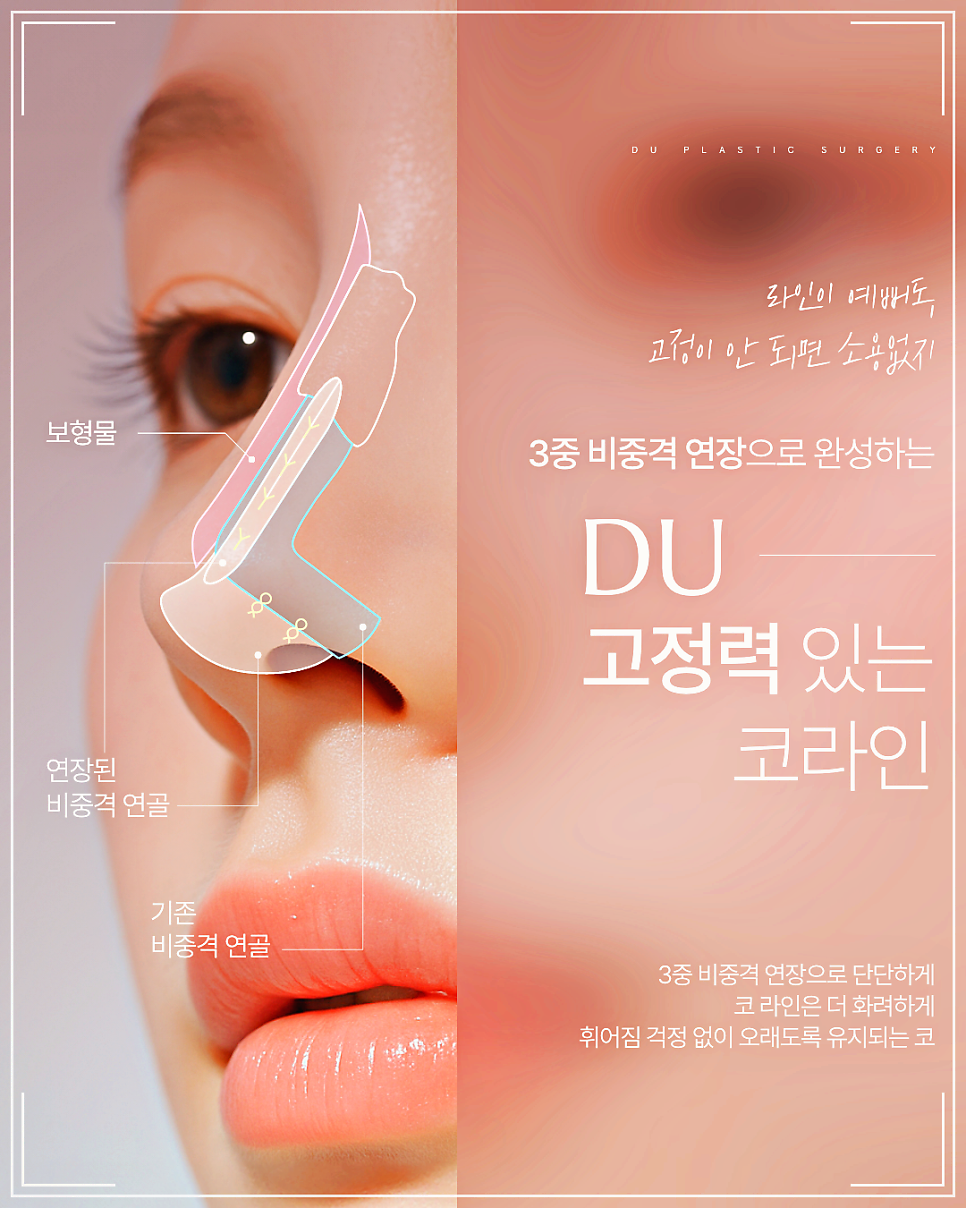
- Structure reconstruction based on autologous cartilage – creating a center that will not collapse
 Nasal tip filler spreading
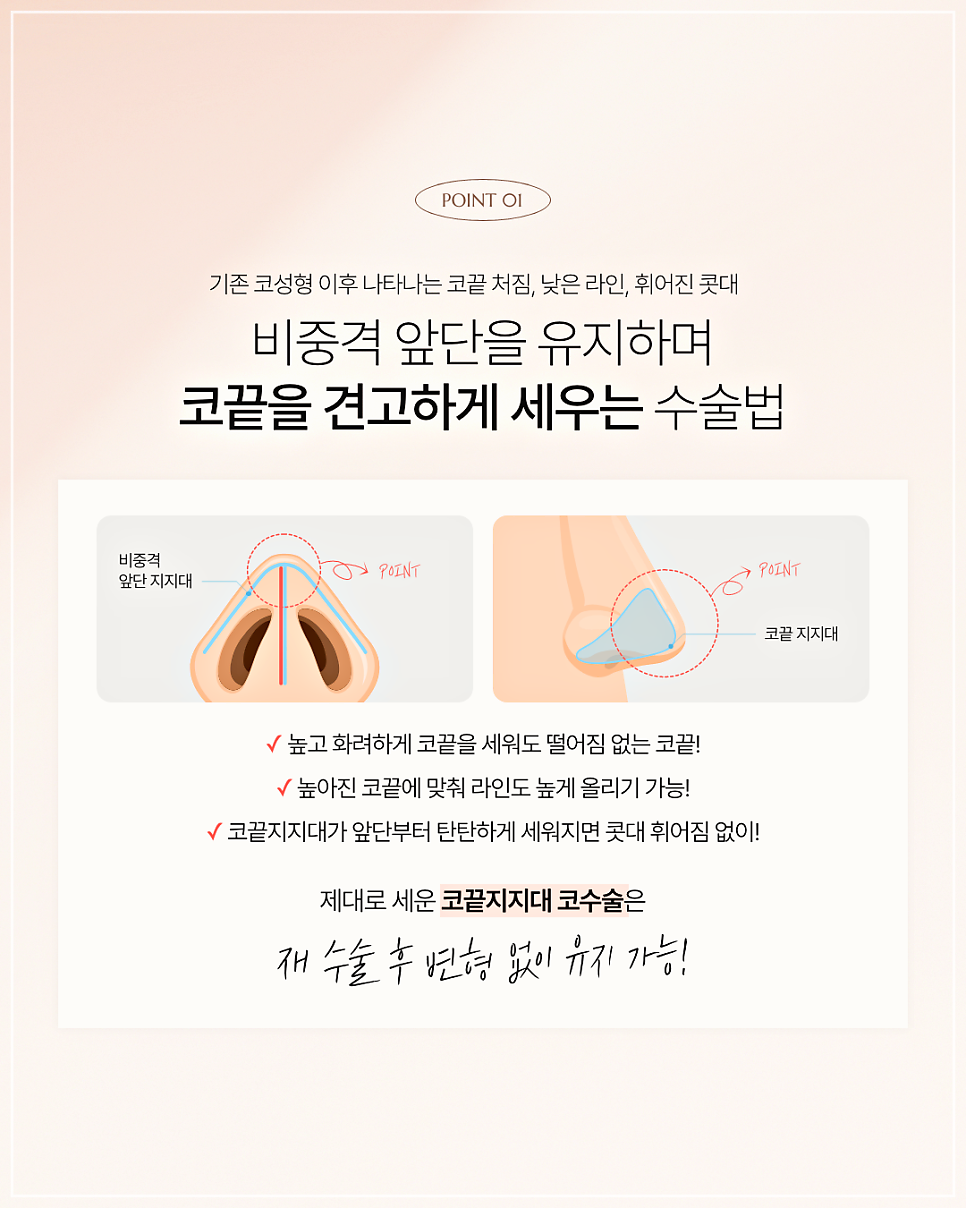
If necessary, septal cartilage, ear cartilage, or rib cartilage is used to rebuild the weakened support structure.
The goal is not simply to raise the nose, but to create a solid structure that can maintain its shape over time.
The reconstructed structure at this stage is the key factor that determines the future angle, length, and stability of the nasal tip line.
- Relieving the pull of facial muscles – natural even when smiling
Because the nose is not a fixed structure, its shape changes depending on the movement of facial muscles.
To prevent the nasal tip from lifting or collapsing when smiling, the cartilage is positioned with the direction of muscle pull in mind.
This allows us to create a nose that looks natural not only from the front, but also when smiling and when viewed from the side.
- Adjusting skin thickness and adhesions – restoring a sharper line
Skin that has become thick and firm due to spread filler is released from adhesions, and its thickness is adjusted as needed.
Through this process, the nasal tip regains a finer and more refined line.
If the height is increased without considering the skin condition, a heavy appearance may remain, so this step is very important.

In summary, when nasal tip filler spreading is severe, simply dissolving the filler has its limits.
To create a stable nose that will not deform over time, filler removal, scar tissue management, support structure reconstruction, movement design, and improvement of skin adhesions must all be performed together.
So far, I have explained the causes of nasal tip filler spreading and how it can be resolved through nose surgery.
Nasal tip filler spreading is not just a matter of looking unattractive; it can also involve tissue deformation, weakening of the support structure, and changes in facial expression.
Therefore, rather than repeatedly undergoing short-term procedures, the fundamental solution is to remove the filler and restore the structure at the same time.
During consultations, we accurately explain the current condition and limitations, and establish a customized restoration plan tailored to each person’s facial and tissue characteristics.




Previous image
Next image
If your nose tip filler is making you look awkward when you smile, or if the shape of your nose is gradually spreading, I recommend considering surgery that fundamentally restores the structure rather than a procedure that only changes the outer appearance.
That process is the safest and most reliable way to regain a confident smile.
The following post will discuss filler side effects and how to resolve them in more detail, so please refer to it if helpful.
Thank you for reading this long post.