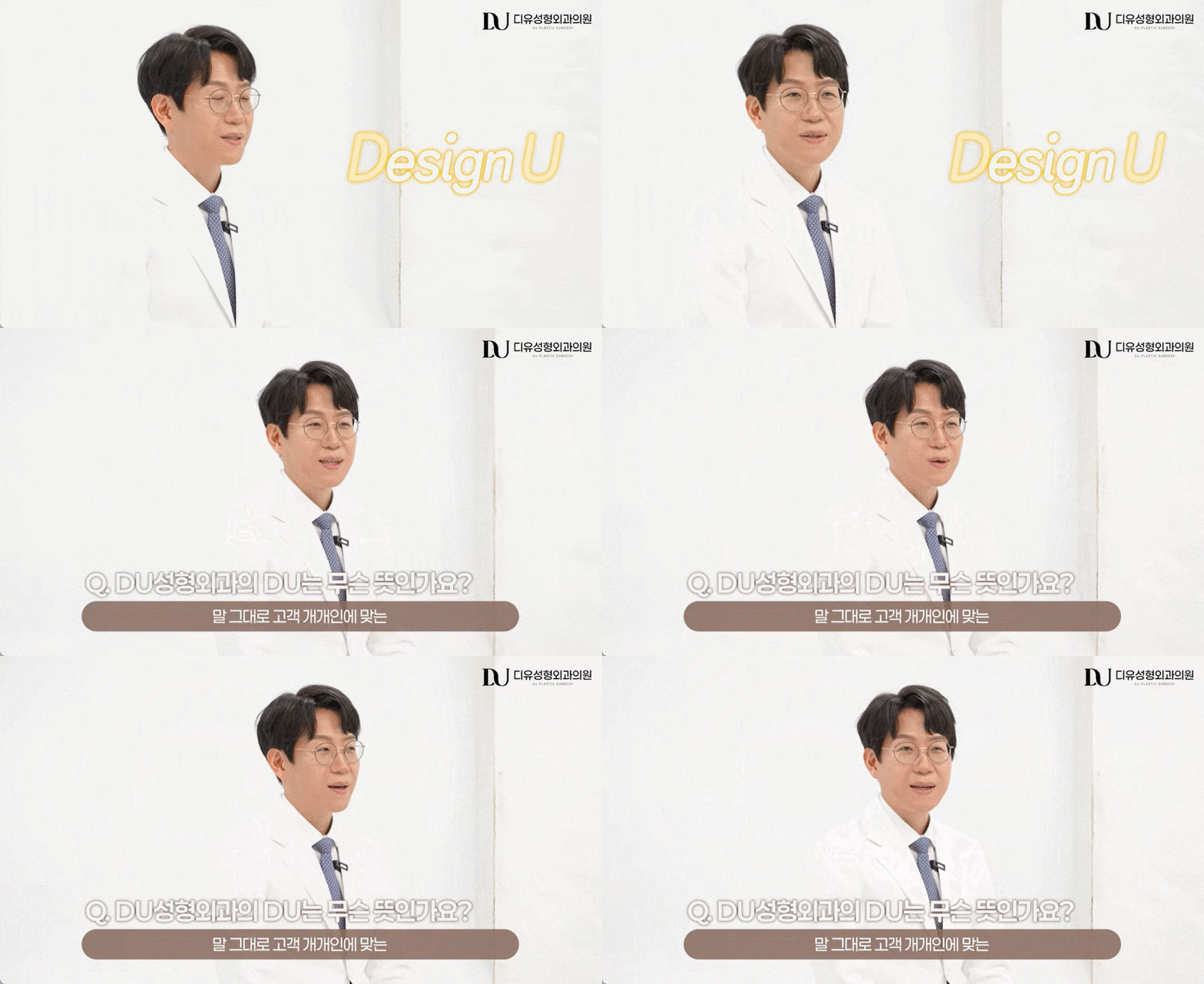
Hello. I am Oh Se-won, CEO of D+ Plastic Surgery.
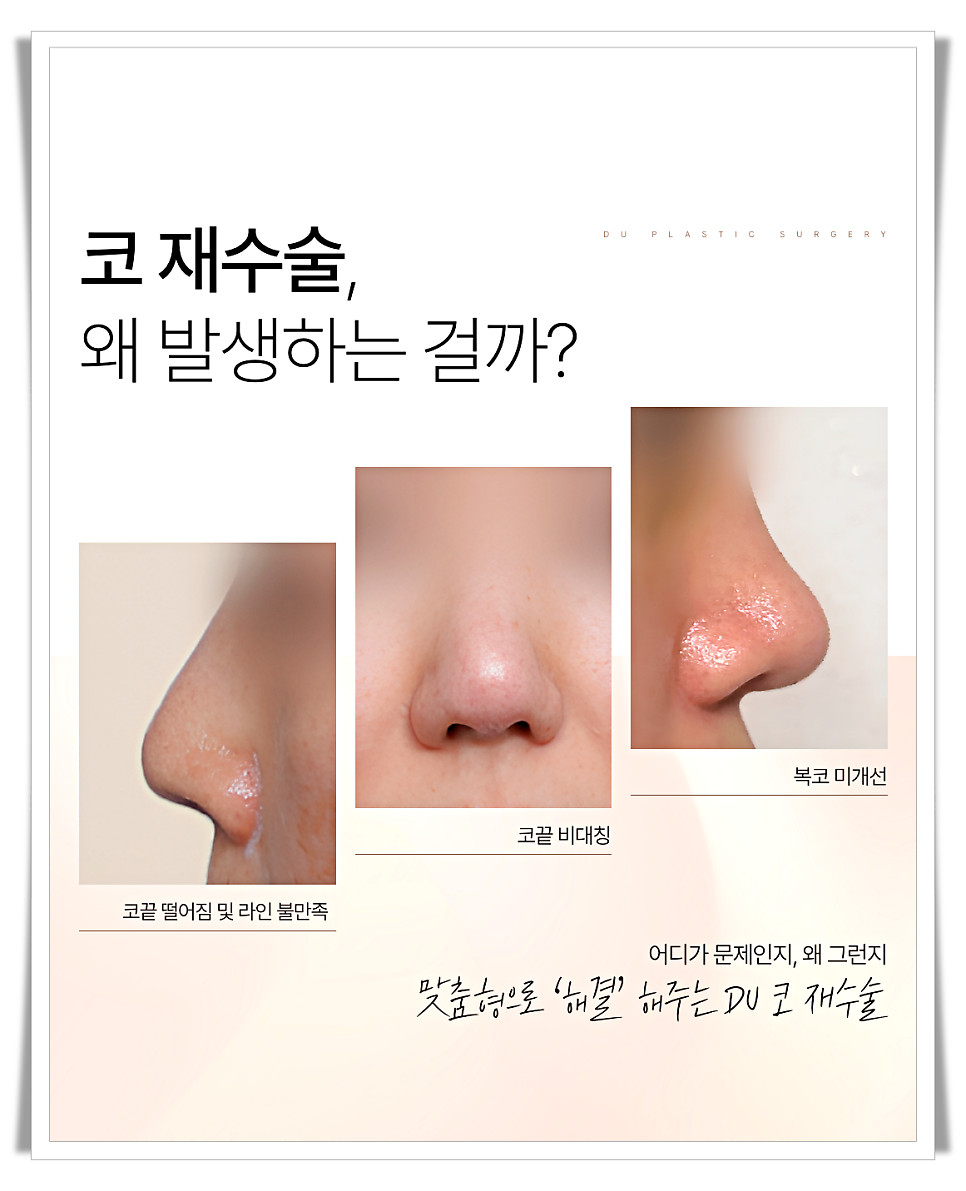
One of the most common concerns we hear over time after rhinoplasty is tip drooping.
Right after surgery, the height and shape may seem satisfactory, but after a few months, the tip gradually appears to be pushed downward and droops, and in many cases people eventually feel that there is not much difference from before the surgery.
In particular, when the tip appears to collapse or changes into an upturned-nose-like impression, many people complain not only about appearance but also about functional discomfort.
Tip drooping does not end as a purely aesthetic issue.
As time passes, the skin pulls and the internal nasal structure is compressed, which can affect breathing.
That is why many of the patients who visit us have already undergone rhinoplasty at least once, but are now considering revision surgery because the tip shape has drooped again.
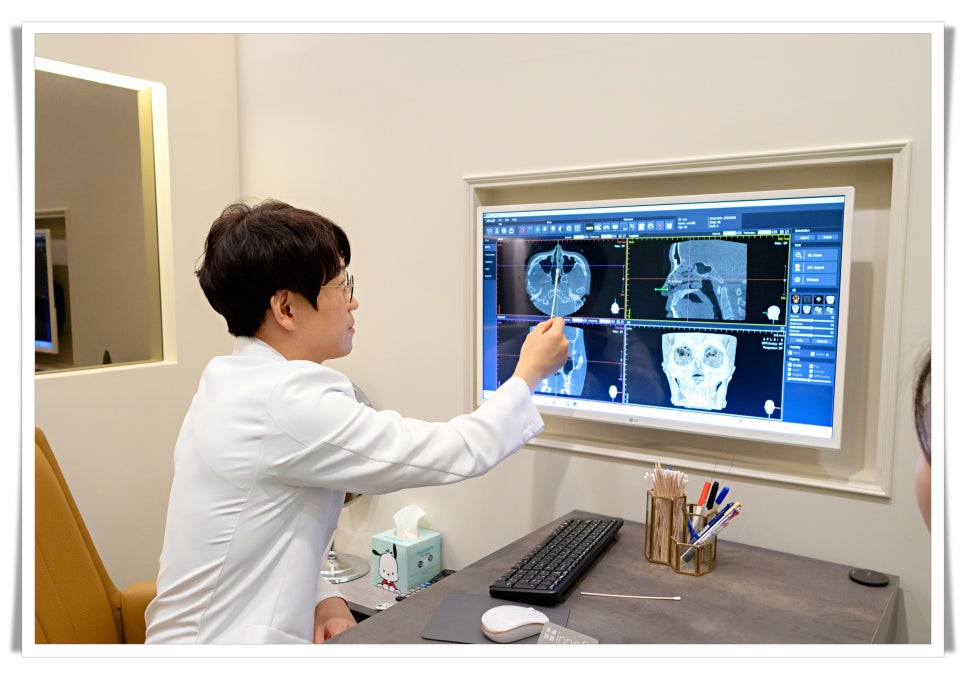
Today, I will explain in detail why tip drooping occurs, how it can be corrected, and the most important design points in revision surgery.
Main causes of tip drooping
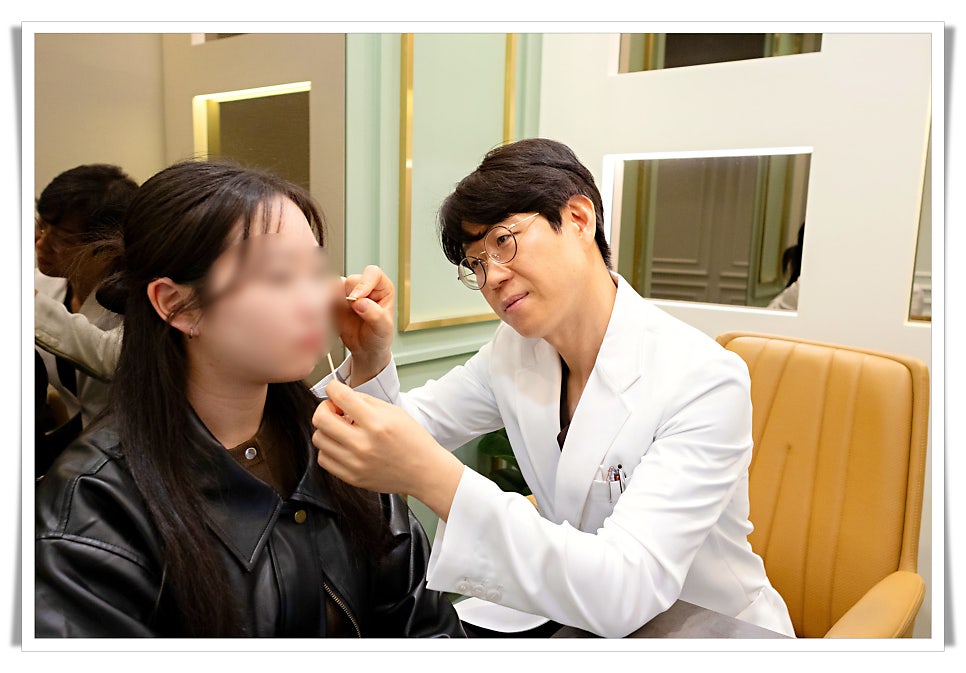
Tip drooping is not simply a natural downward change that happens with time.
There are several clear underlying causes.
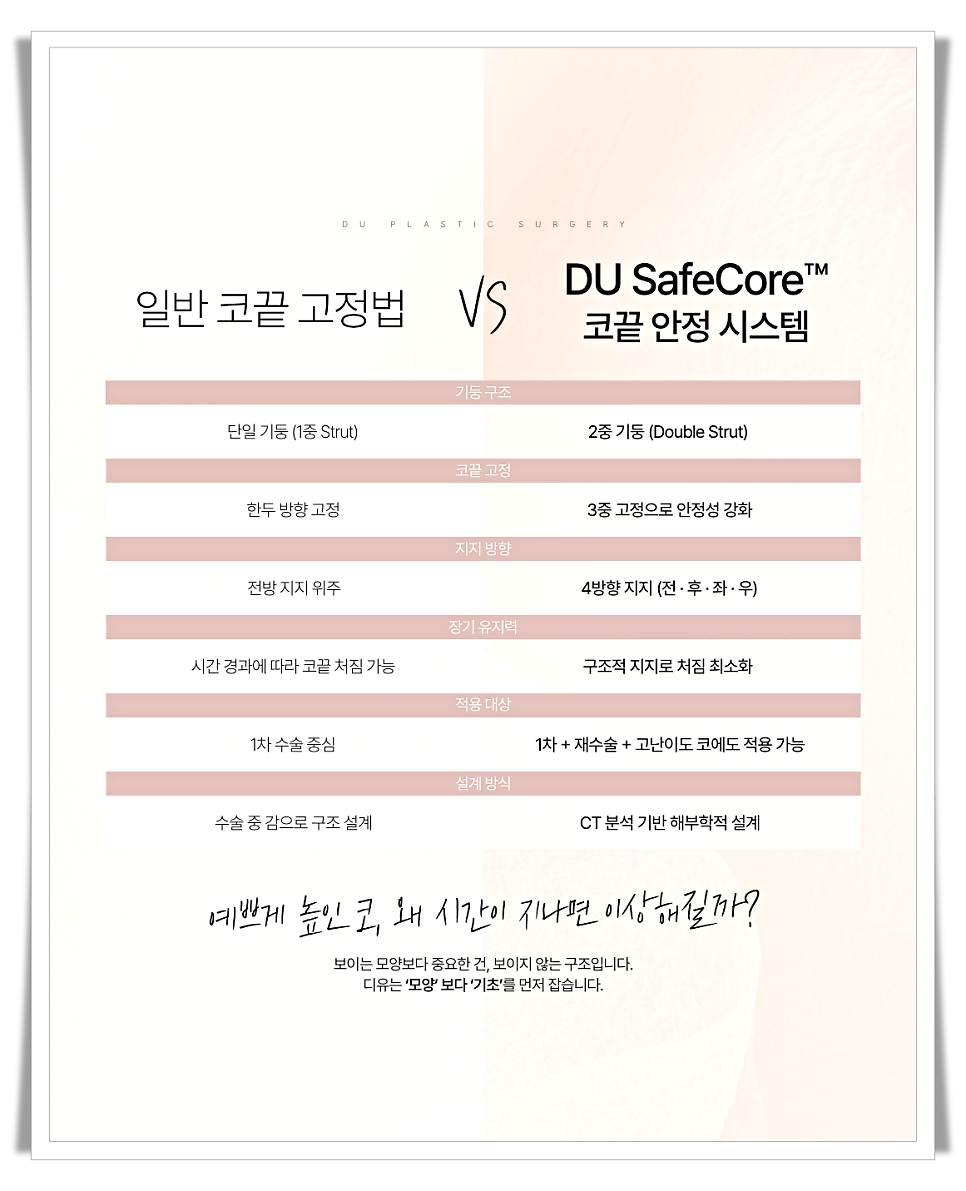
First, it is due to a lack of support structure.
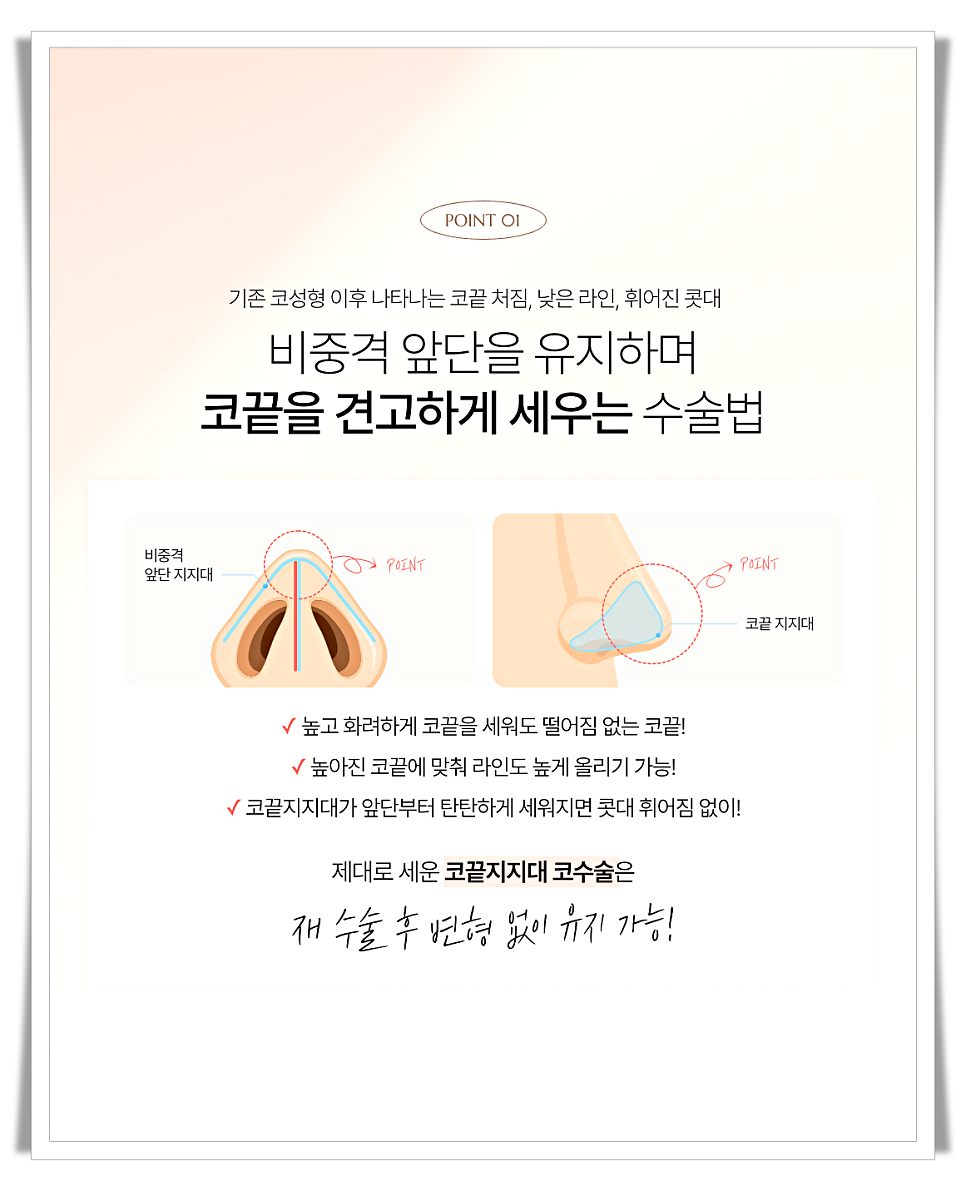
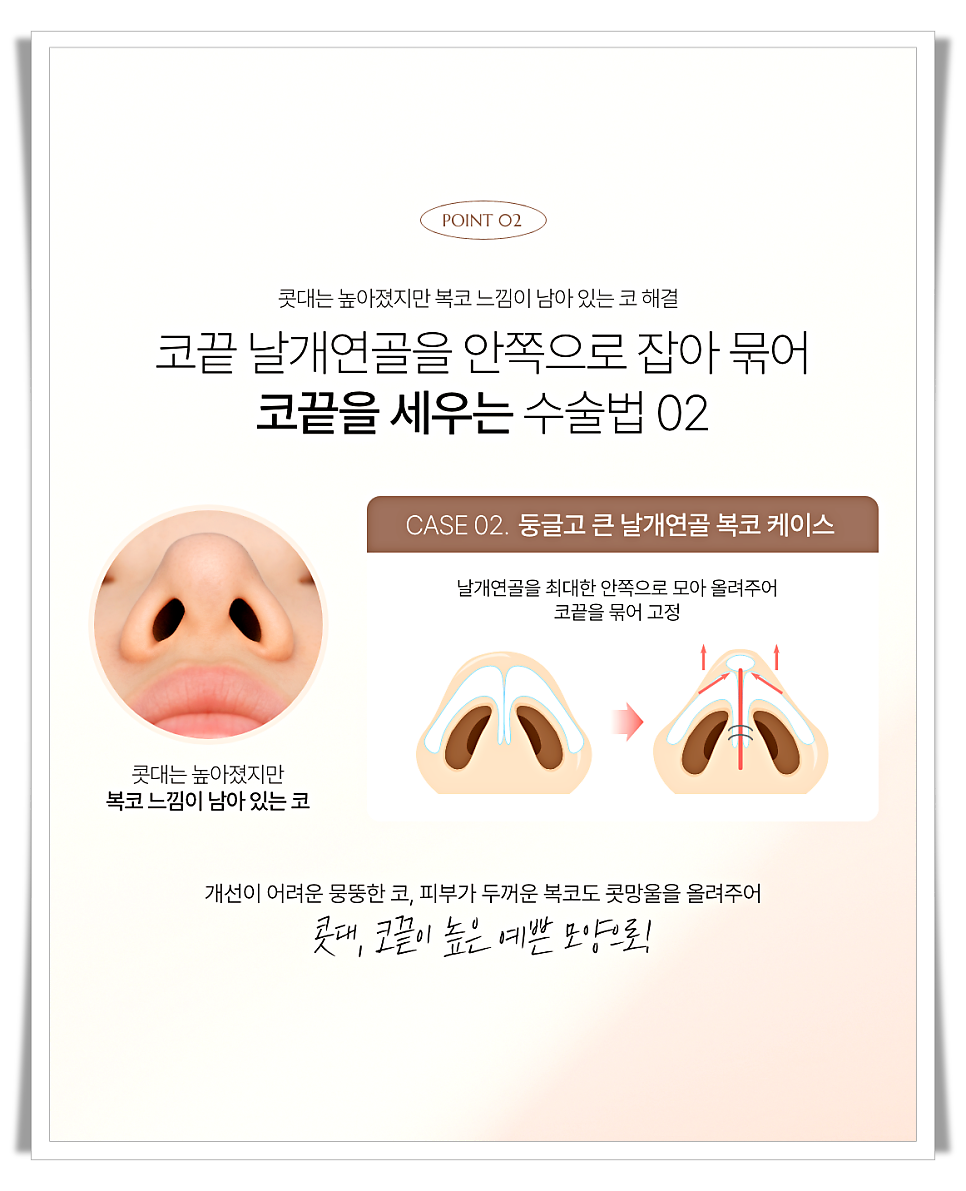
The tip is supported by the septal cartilage and the alar cartilage (the cartilage of the nostrils). If these are not sufficiently reinforced during surgery, they may not be able to bear the weight over time and the tip will droop downward.
 Previous image
Next image
Previous image
Next image
Second, it is caused by excessive cartilage resection.
If too much cartilage is removed in order to create a refined shape, it may look sleek at first, but in the long term the support weakens and the tip collapses.
Third, it depends on differences in skin thickness and elasticity.
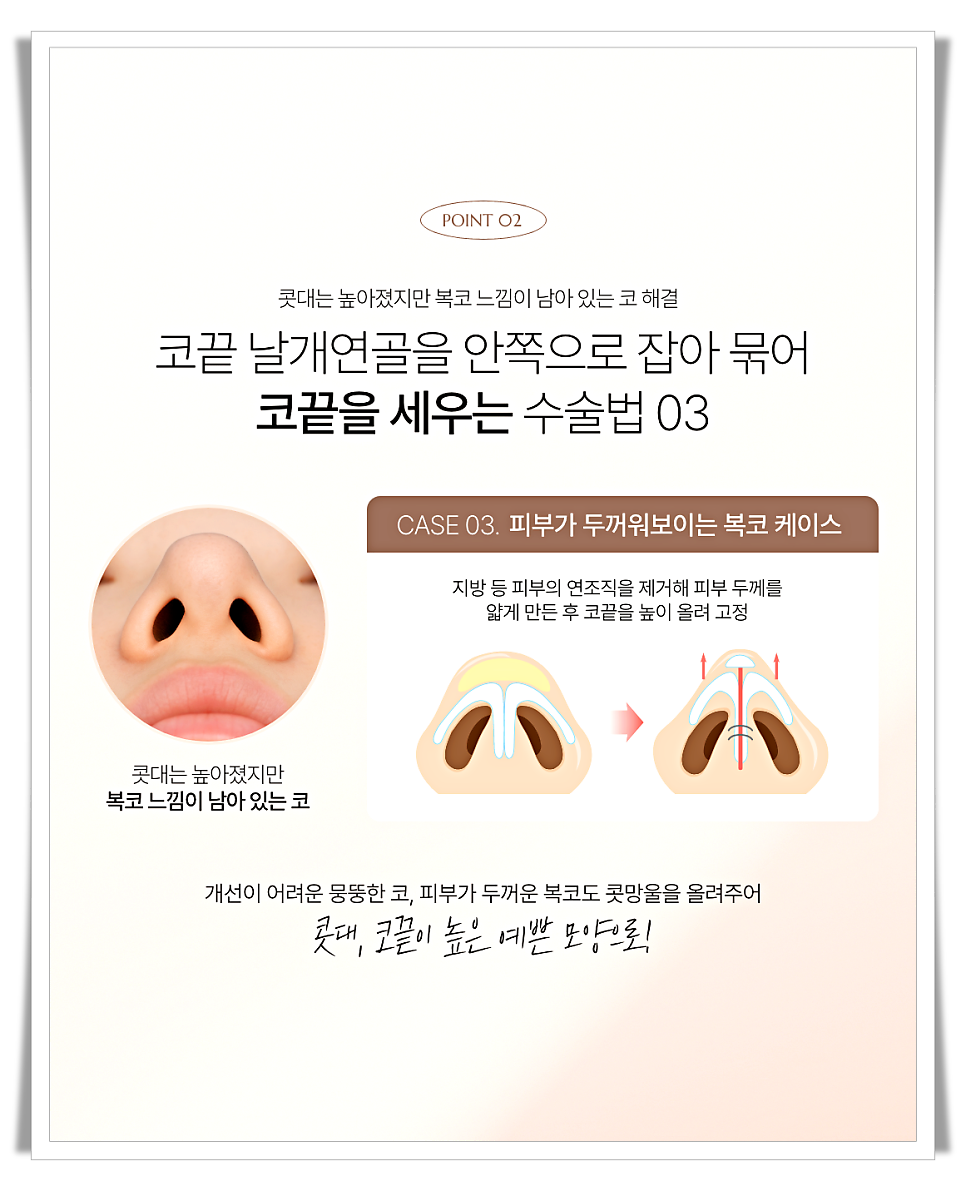
In particular, when the skin is thick and heavy, weak support structures make it difficult to prevent drooping as time goes by.
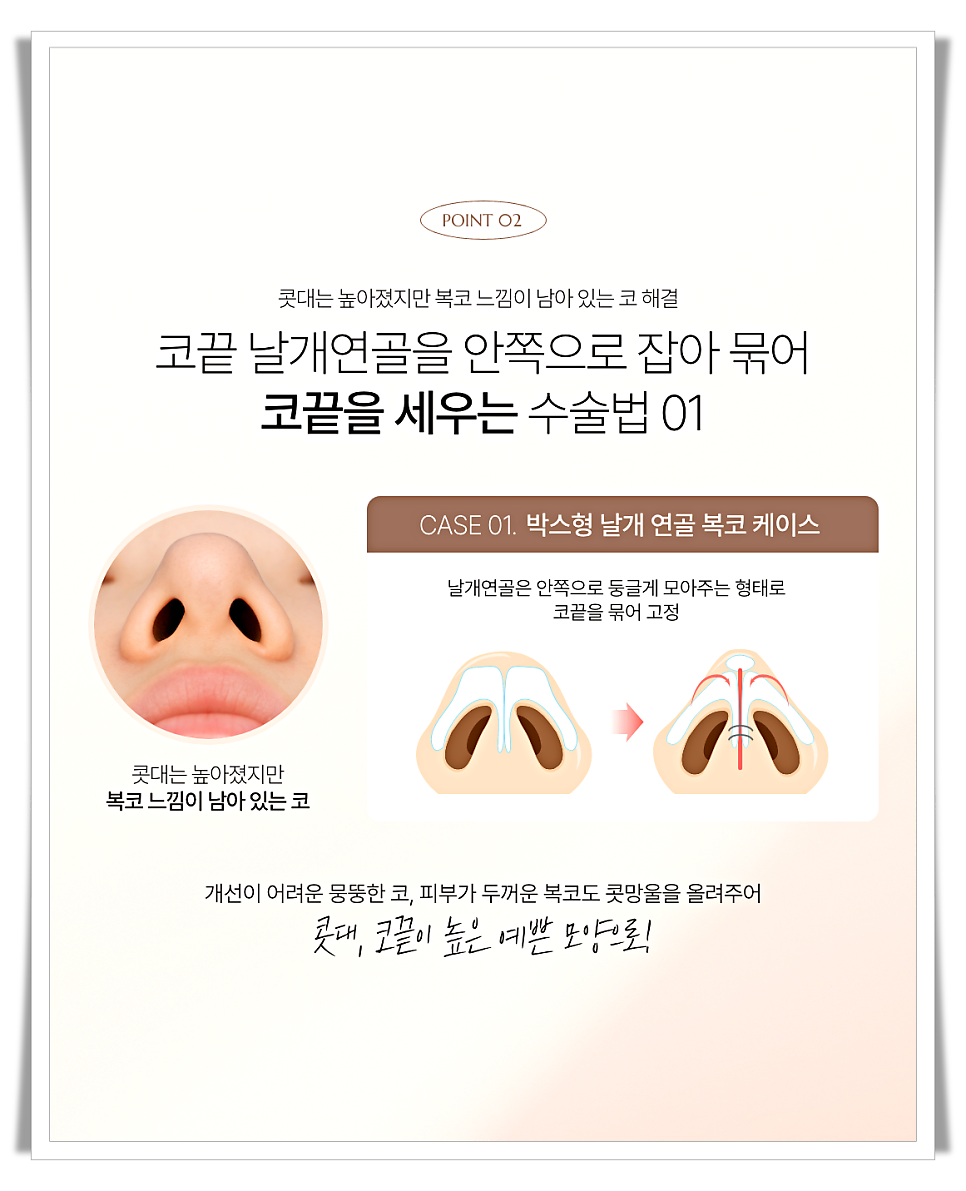
Conversely, when the skin is thin, the internal cartilage may show through as is, leading to asymmetry or bending.
Why simple fillers or implants are difficult solutions
 Previous image
Next image
Previous image
Next image
When tip drooping occurs, many people consider a simple tip filler.
However, although fillers can temporarily restore height, they cannot fundamentally restore a collapsed support structure.
On the contrary, over time fillers often spread sideways or make the skin thinner, which can increase the difficulty of revision surgery.
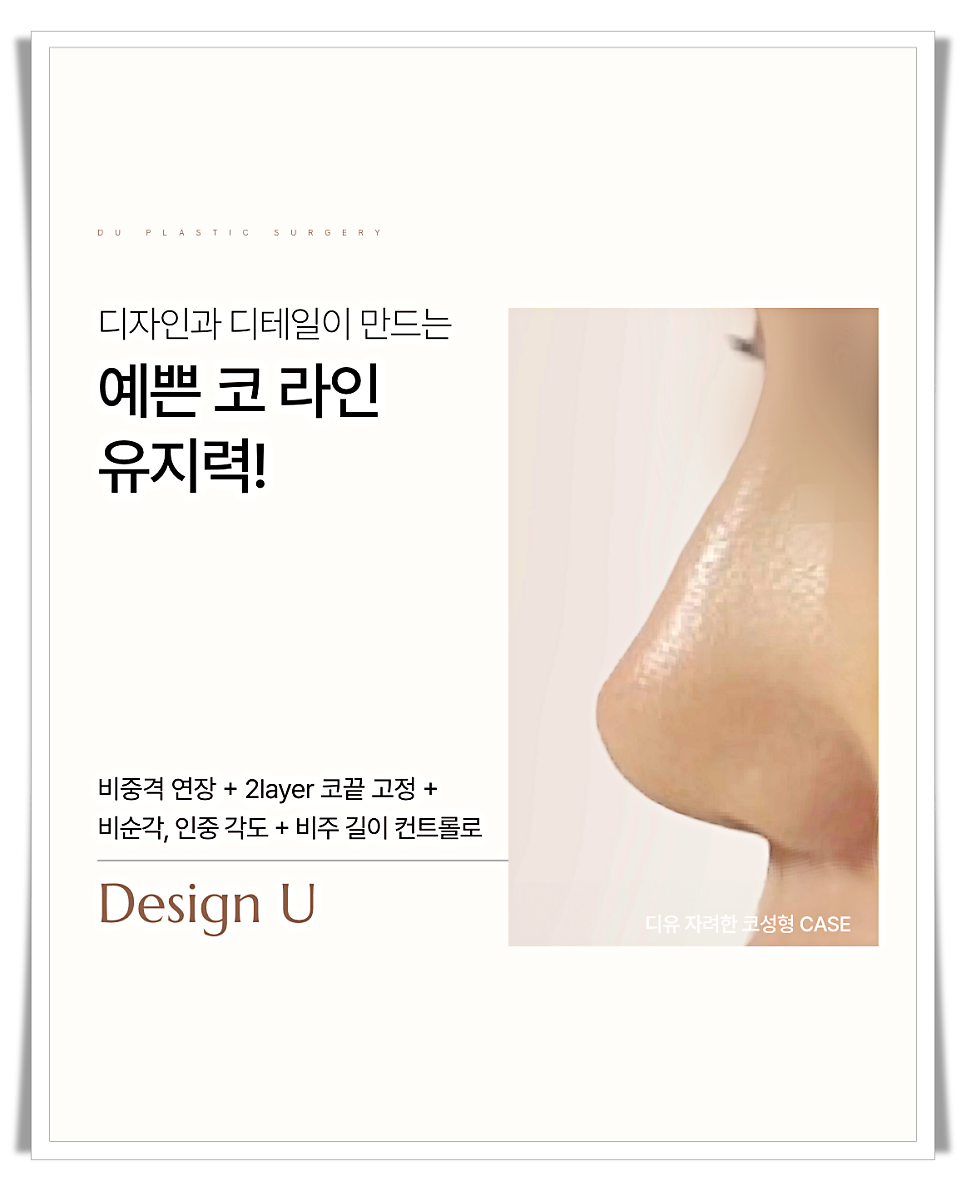
Likewise, using only a silicone implant alone does not guarantee long-term stability.

 Previous image
Next image
Previous image
Next image
An implant may be suitable for the nasal bridge, but the tip is a highly mobile area, so when it is subjected to strong pressure it can instead make the skin thinner or increase the risk of an upturned nose and necrosis.
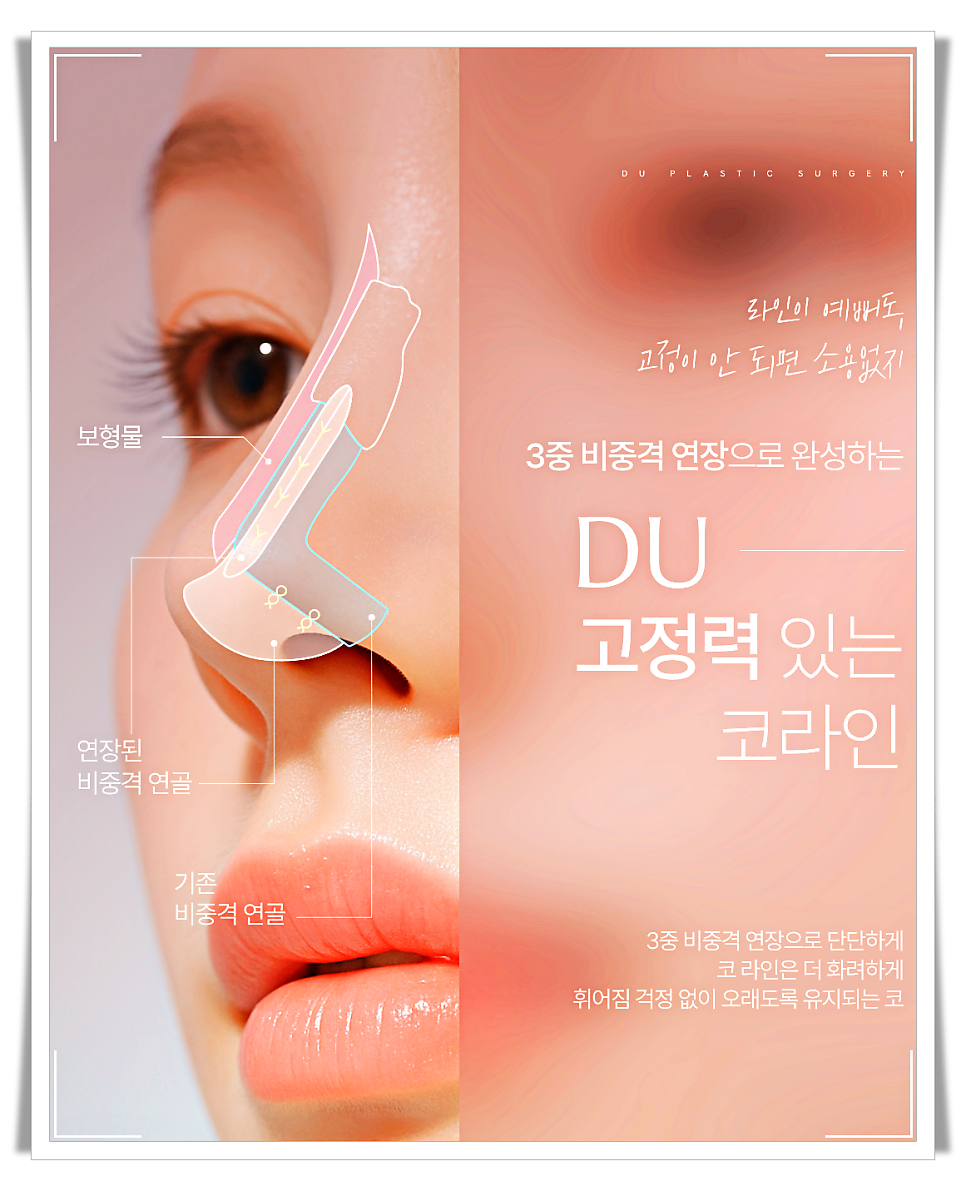
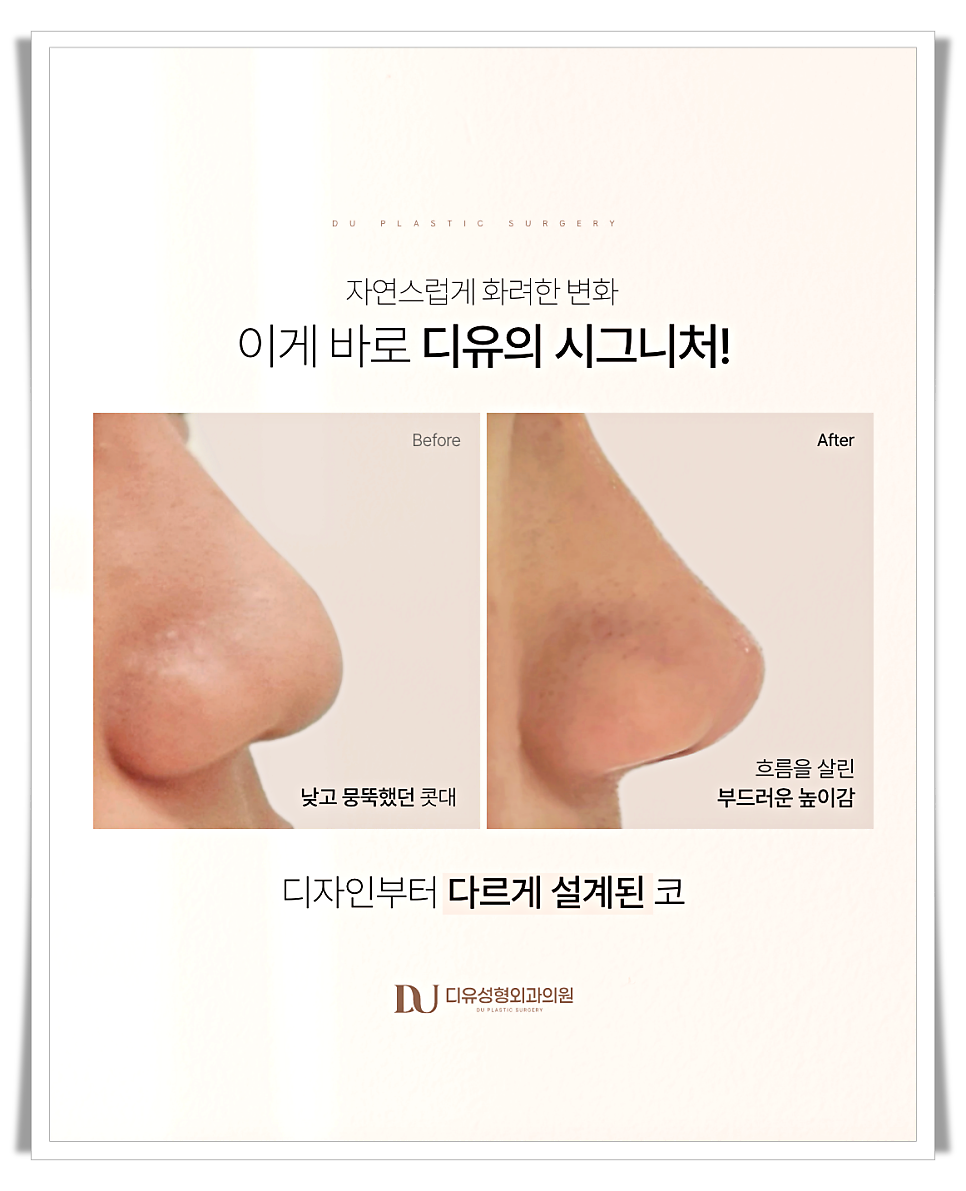
For this reason, correcting tip drooping requires not simple volume augmentation, but a precise revision surgery that rebuilds the support structure.
The material most often used in this process is autologous rib cartilage.
Autologous rib cartilage is autologous tissue taken from part of one’s own rib, and because it is strong and less likely to deform, it is optimized for firmly supporting a collapsed tip structure.
 Previous image
Next image
Previous image
Next image
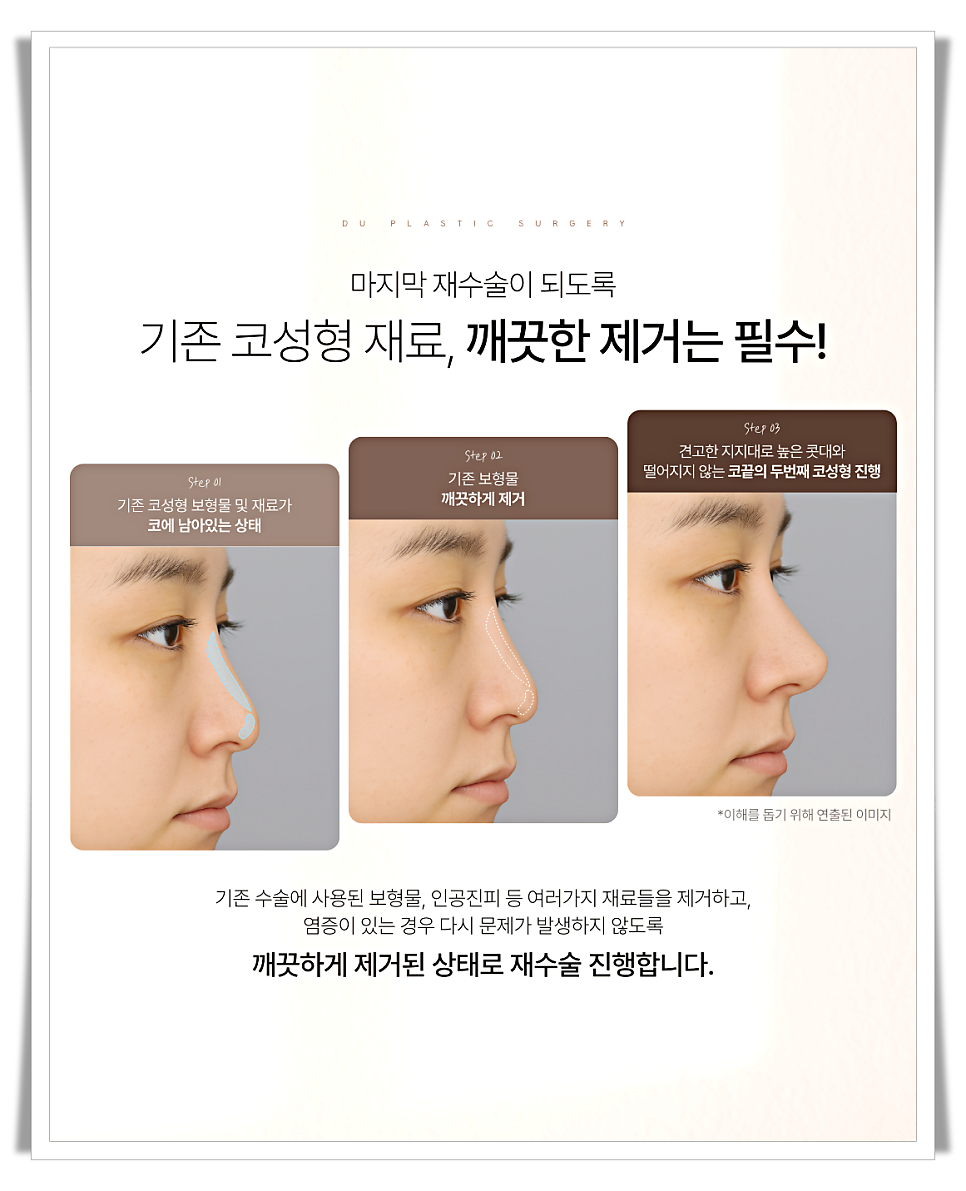
In revision surgery in particular, the existing tissue is often weakened or heavily scarred, so ear cartilage or septal cartilage alone may not provide enough support.
At such times, autologous rib cartilage allows enough volume to be secured, making stable results more likely.
In other words, correcting tip drooping is not simply about ‘making it higher’; only when structural reconstruction using autologous rib cartilage is performed together can long-term stable and natural results be achieved.
The key to revision surgery for tip drooping
Anatomical design
The most important principle in correcting tip drooping is reconstruction of the cartilage support.
It is not enough to simply raise the tip; structural stability must be secured so that it does not collapse over time.
To this end, I approach surgery with the following criteria.
Septal cartilage reinforcement
: The weakened septum is reinforced, or a new pillar is created using autologous cartilage (ear cartilage, rib cartilage).
Cartilage repositioning
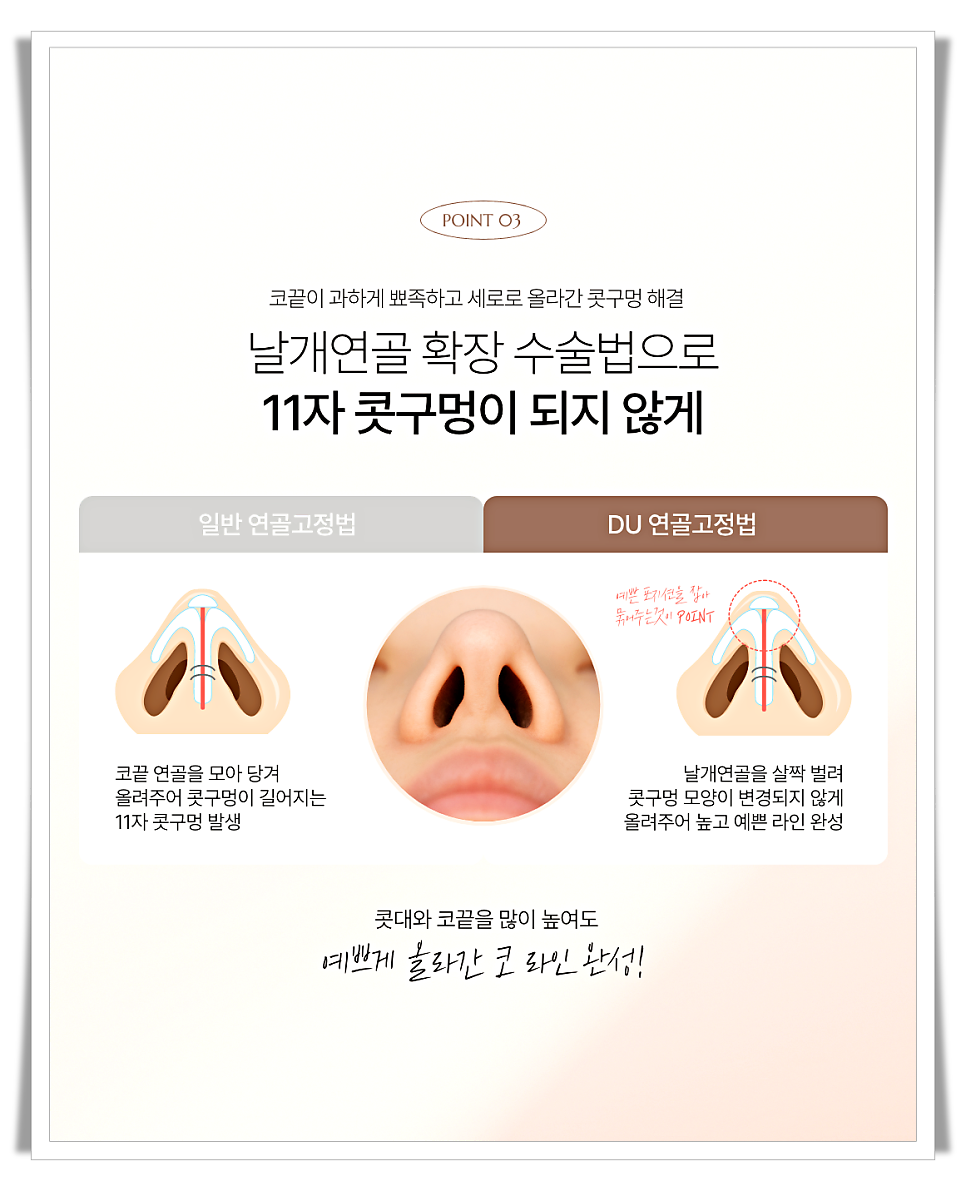
: Rather than simply removing the remaining alar cartilage, its position and angle are adjusted to support the tip stably.
Consideration of skin condition
: In the case of thick skin, stronger internal support must be designed, and in thin skin, techniques are needed to cover it gently to prevent cartilage from protruding.
Movement and facial expressions reflected
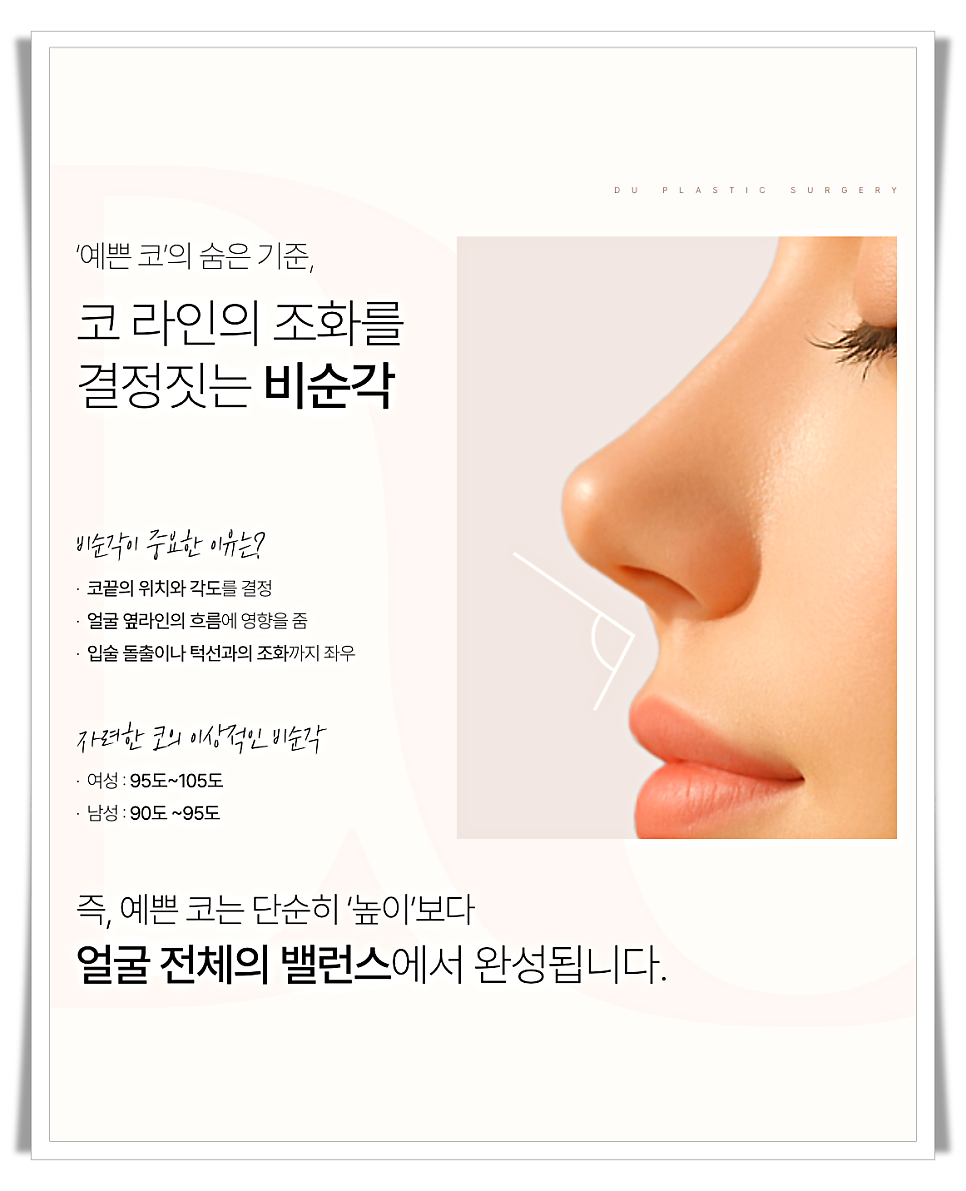
: We design not only how it looks from the front, but also how the tip responds when smiling or speaking. This is key to achieving a natural and long-lasting result.
Revision surgery for tip drooping is not just for cosmetic purposes; it can be seen as a process of restoring the anatomical balance of the nose.
How precisely this process is designed greatly affects the stability and satisfaction of the result.


 Previous image
Next image
Previous image
Next image
So far, I have discussed the causes of tip drooping, why autologous rib cartilage is important in revision surgery, and the key criteria for rhinoplasty that does not require further revision.
Tip drooping is not simply a change that occurs as time passes.
Behind it are complex causes such as a lack of support structure, cartilage resection, and skin characteristics.
Therefore, correction also has limitations with simple fillers or implant augmentation, and revision surgery to rebuild the anatomical structure is necessary.
D+ Plastic Surgery is carrying out customized revision surgery that takes cartilage design and skin characteristics into account in order to structurally resolve the tip drooping issues experienced by many people.
Not simply making it higher and prettier,
but creating a tip that does not collapse over time
That is the direction of surgery we pursue.
If your nasal tip is gradually drooping now, or if you have already undergone surgery several times but are still not satisfied, we recommend visiting a medical institution that meets the above criteria and receiving a consultation.
Thank you for reading this long post.
[Articles you may also find helpful]