
A “double chin” that settles in layers beneath the jaw is one of the most common concerns that can take away confidence in photos.
At first, many people think of double chin Botox as a relatively simple option.
But in reality, many people who have tried double chin Botox find that their face returns to its original state again within a few months.
That naturally leads to questions like these.
Why does the effect not last very long?
Why does the jawline still look blurred even after getting Botox?
The reason is clear.
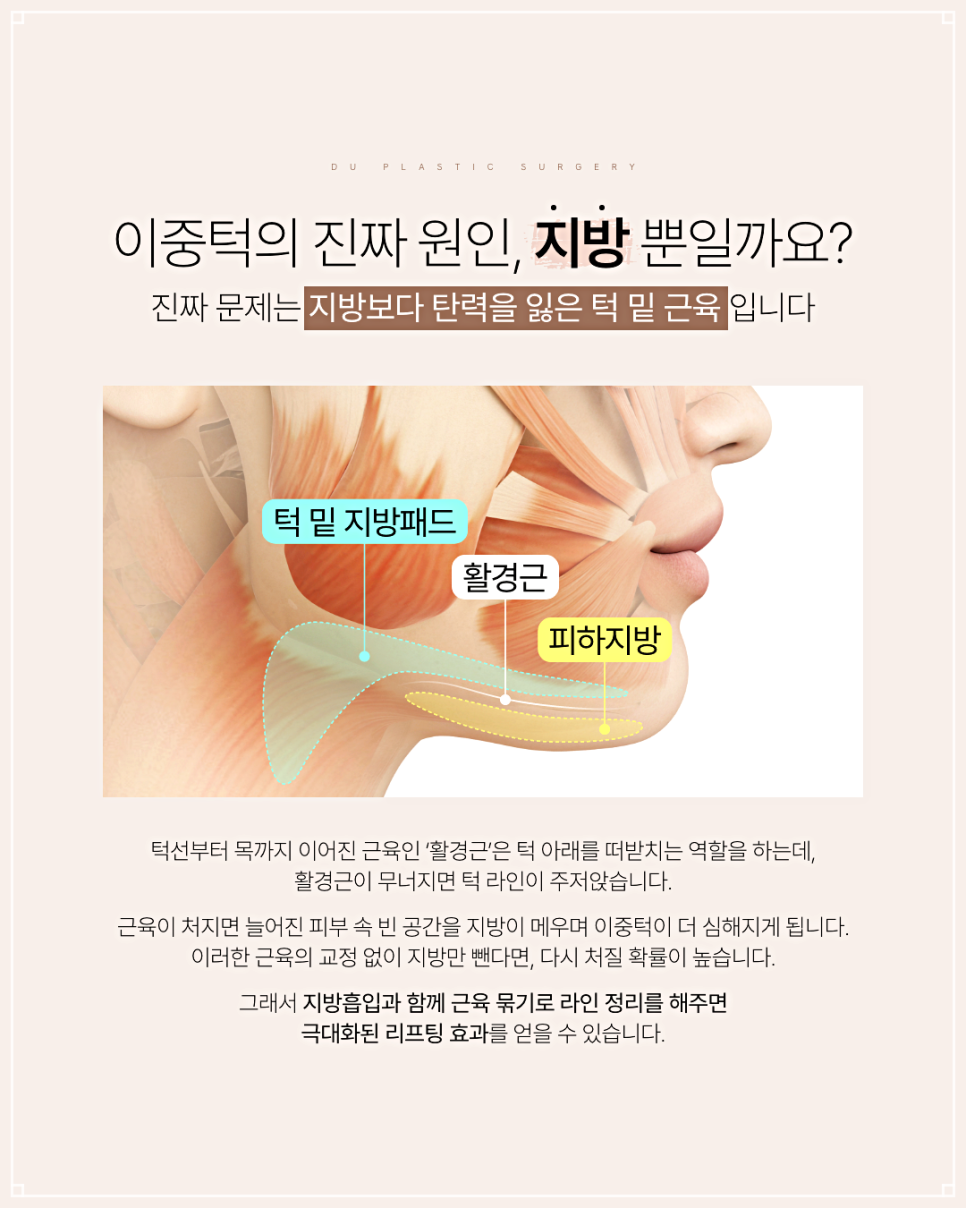
A double chin is not caused by submental fat alone.
It forms through a combination of loose muscle, reduced skin elasticity, and deep-set fat, so a more structural approach is needed for a fundamental improvement.
Today, I will talk about the limitations of double chin Botox and why submental liposuction + muscle tightening is necessary to clearly restore the jawline.
The limitations of double chin Botox

Previous image
Next image
When concerns about a double chin begin, one of the first methods people think of is double chin Botox.
Botox temporarily weakens the muscle’s strength, helping to reduce the appearance of a less defined jawline.
Because of this, after some time following the procedure, you may feel that the area under the chin looks smoother.
However, this method is closer to temporarily covering up the visible symptom than to solving the underlying problem.
Temporary effect
: On average, after 3 to 6 months,
the muscle returns to its original state.
Fat cannot be improved
: Since Botox acts on the muscle,
it does not reduce already accumulated fat at all.
Loss of elasticity cannot be resolved
: Sagging skin or lymphatic circulation issues remain unchanged.

In the end, double chin Botox only offers temporary relief in appearance, and over time it is highly likely to return to the original double chin.
That is why, in consultation rooms, we often hear the question, “Why does my jawline still look blurred even after Botox?”
So, how can you restore a more defined jawline in a more reliable way?
The answer is a structural surgical approach that considers fat, muscle, and skin together.
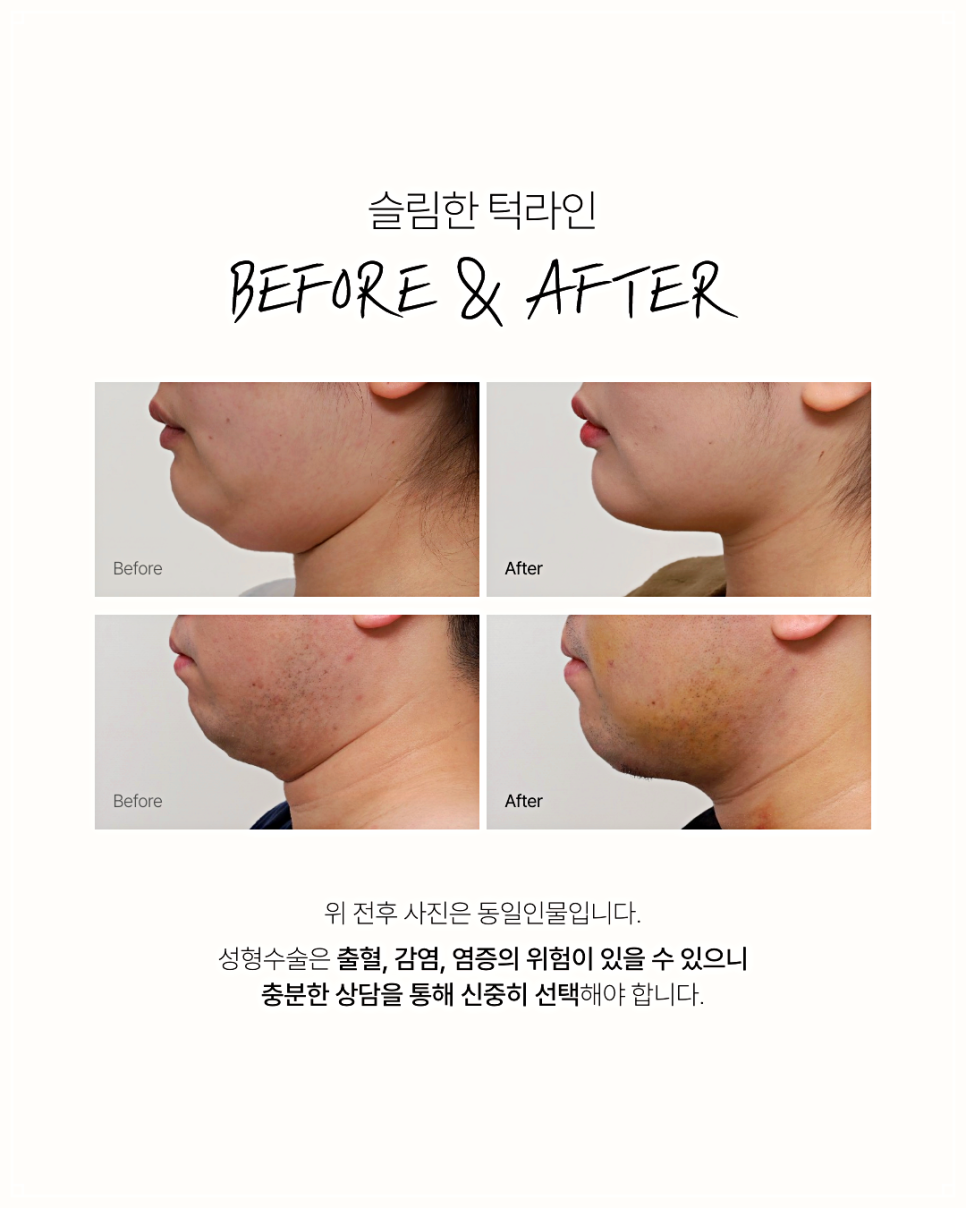
A clearer jawline through liposuction
Previous image
Next image
Double chin Botox
The most visible cause of a double chin is, of course, fat accumulation.
Even if you diet hard, submental fat does not come off as easily as it does in other areas, which leads to complaints like, “I’ve lost weight, but why does my face look the same?”
In such cases, an effective option is submental liposuction.
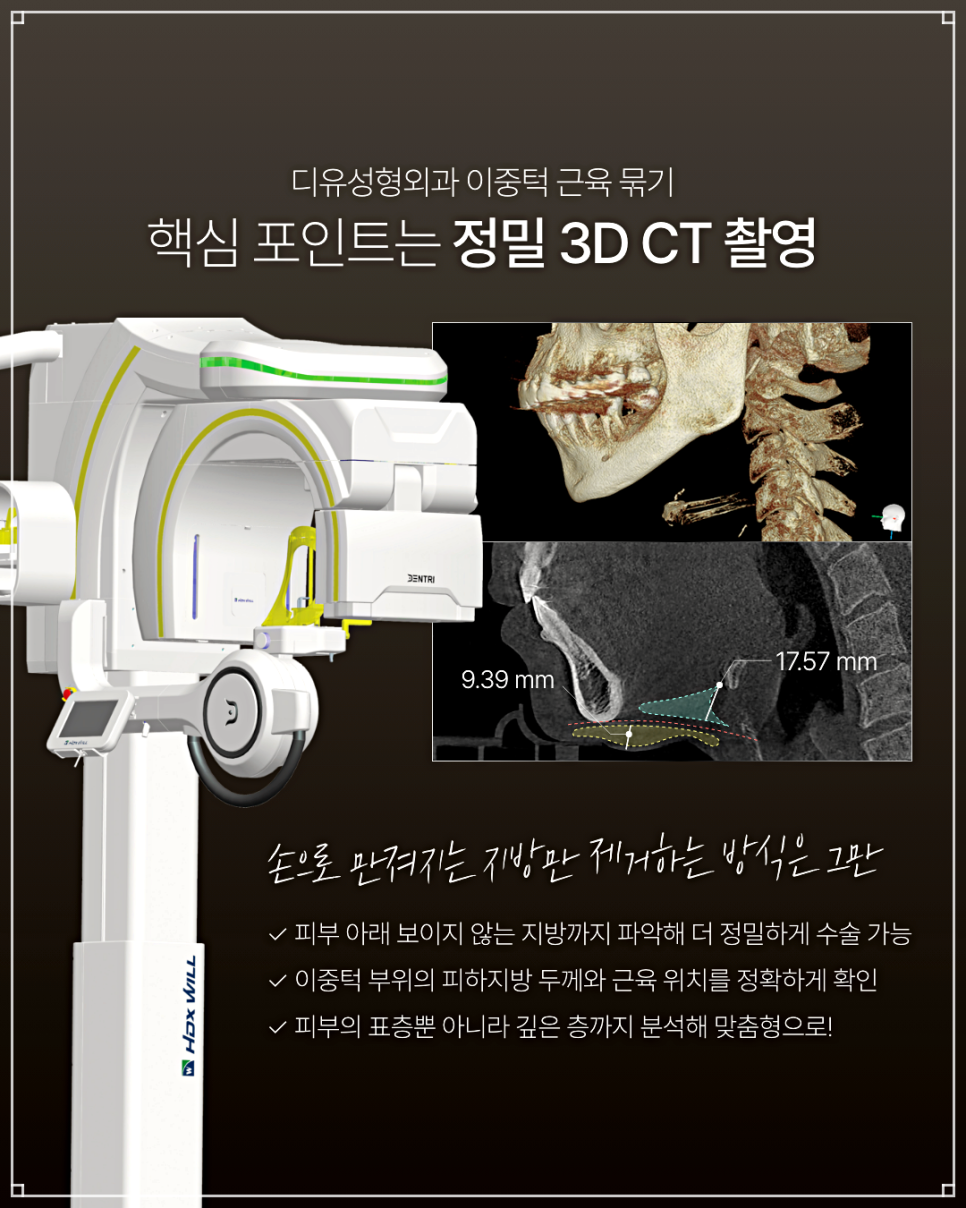
Using a fine cannula, the unnecessary fat under the chin is directly removed, reducing the number of fat cells themselves and creating a contour-refining effect that is difficult to achieve through simple weight loss.
The procedure can also be performed under local anesthesia, and because the incision area is not large, recovery is relatively quick.
Bruising and swelling subside relatively quickly as well, and another advantage is that daily life can usually be resumed in about 1 to 2 weeks.
 Double chin Botox
However, there is a limit here as well.
Removing fat alone leaves the issues of loose skin and separated muscles unresolved.
In fact, in consultations, we often come across cases where someone says, “I had liposuction, but the area under my chin sagged again.”
This happens because if only the fat is removed while the muscle layer remains stretched, the remaining skin sags downward and the double chin appears again.
In other words, liposuction is only the first step in contour refinement, and for a firm jawline that lasts, the muscles must also be addressed.
That is why the next step is muscle tightening.
A line that does not collapse with muscle tightening



Previous image
Next image
Double chin Botox
As mentioned earlier, another key cause of a double chin is an elongated platysma muscle.
This muscle is located at the front of the neck and supports the jawline, but with age or repeated movement, it easily becomes stretched and separated.
Muscle tightening is a procedure that firmly brings the separated platysma muscle together at the center.
It draws the separated muscle inward to restore tension.
It supports the line beneath the chin, so even after liposuction, the skin does not sag and remains smooth.
Over time, the muscle structure is maintained, allowing for long-term results.
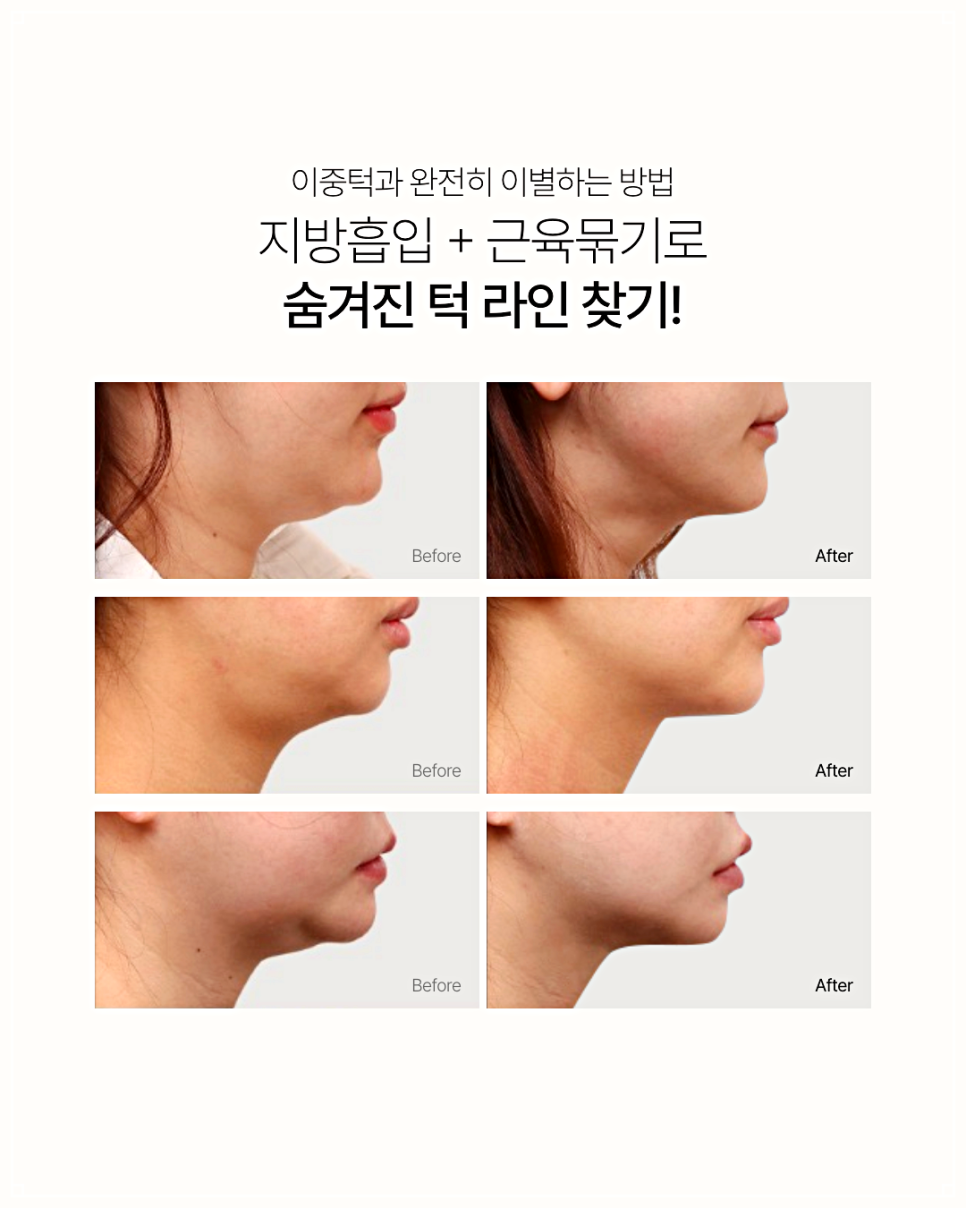
In other words, only by planning liposuction and muscle tightening together can you create a jawline that is not just slimmer, but firm and long-lasting.

Up to this point, I have explained the limitations of double chin Botox and the need for submental liposuction + muscle tightening as a more fundamental solution.
Botox has the advantage of being a simple and quick procedure, but its effects are temporary, and it has limitations when it comes to addressing fat, skin, and muscle issues.
That is why, over time, the jawline often looks collapsed again.

 Previous image
Next image
Previous image
Next image
On the other hand, when liposuction and muscle tightening are performed together, it goes beyond simply correcting the appearance and addresses all three structural causes at once: fat, muscle, and sagging skin.
Unnecessary fat is removed, the separated platysma muscle is firmly tightened and lifted, and the skin is allowed to settle firmly as well, making it possible to complete a clear jawline that does not collapse over time.
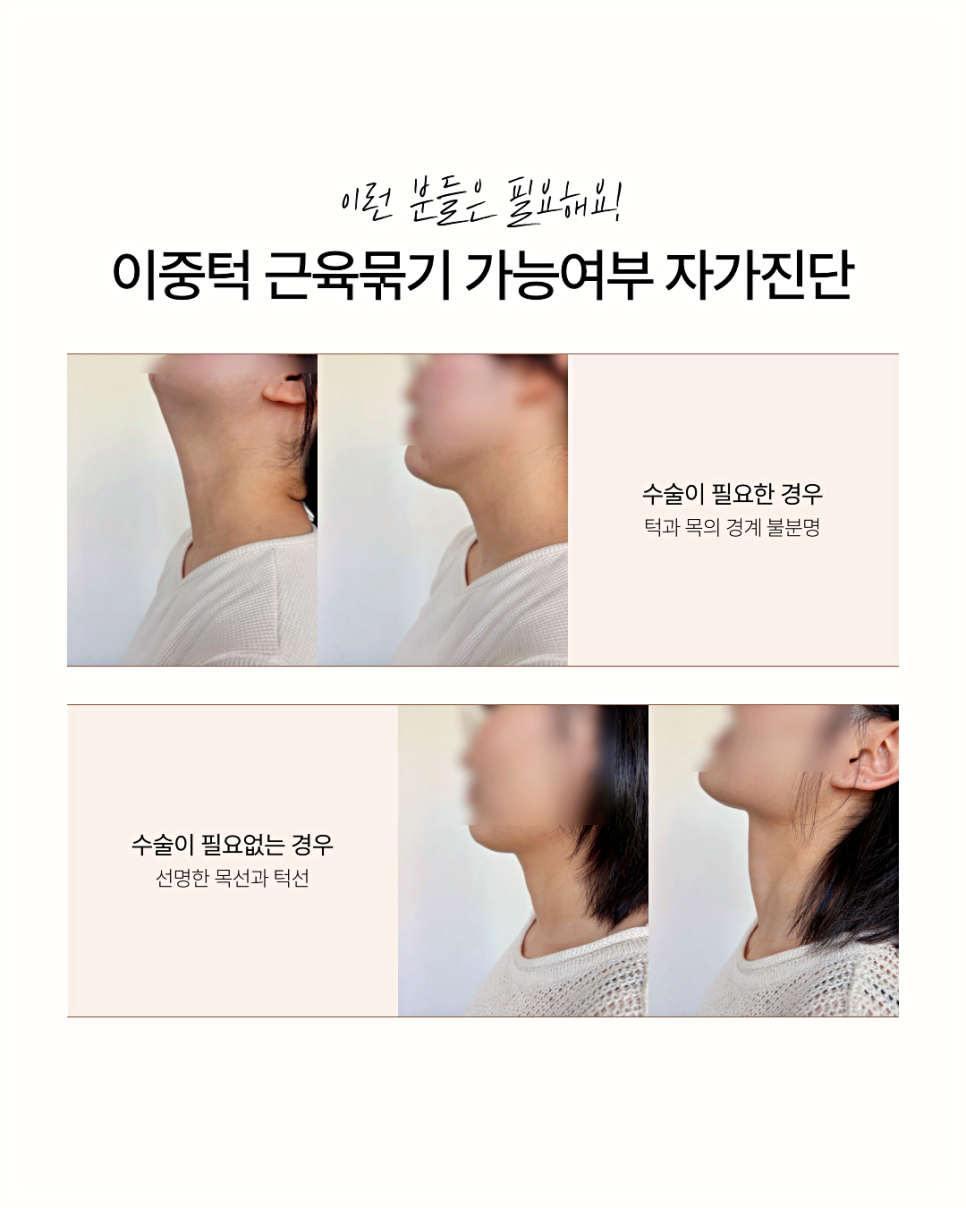
Therefore, if a double chin keeps recurring or does not improve with dieting or Botox, what is needed now is not just a simple symptomatic procedure, but a fundamental structural correction.



Previous image
Next image
Double chin Botox
I recommend that you consult thoroughly with a medical professional who can accurately diagnose where the cause of your double chin lies and suggest the right solution for you.
In the following article, I will cover in detail the criteria for distinguishing a trustworthy medical institution when you visit one for double chin surgery, so please refer to it if it may help you.