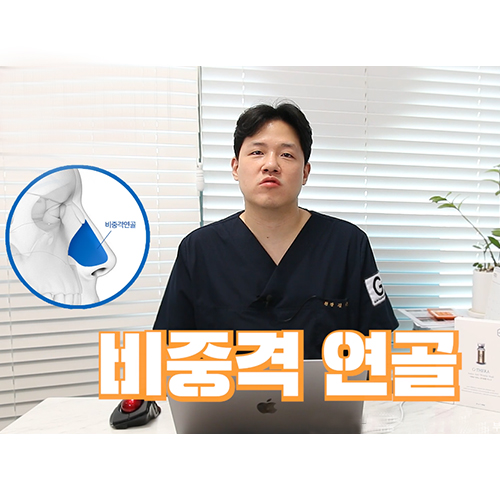
Septal cartilage: Why is it used most often in tip rhinoplasty?
If you are planning tip rhinoplasty, you may have heard the term “septal cartilage” at least once.
Septal cartilage is the cartilage located inside the nose, and it is the structure that vertically divides the center of the nose.
Functionally, it separates the left and right nasal passages,
but in plastic surgery, it also plays an important role as material used to support or raise the nasal tip during tip rhinoplasty.
Today, through an interview with Director Kim Jae-in of Glovi Plastic Surgery Clinic,
we took a detailed look at what septal cartilage is and how it is used in rhinoplasty and tip rhinoplasty.

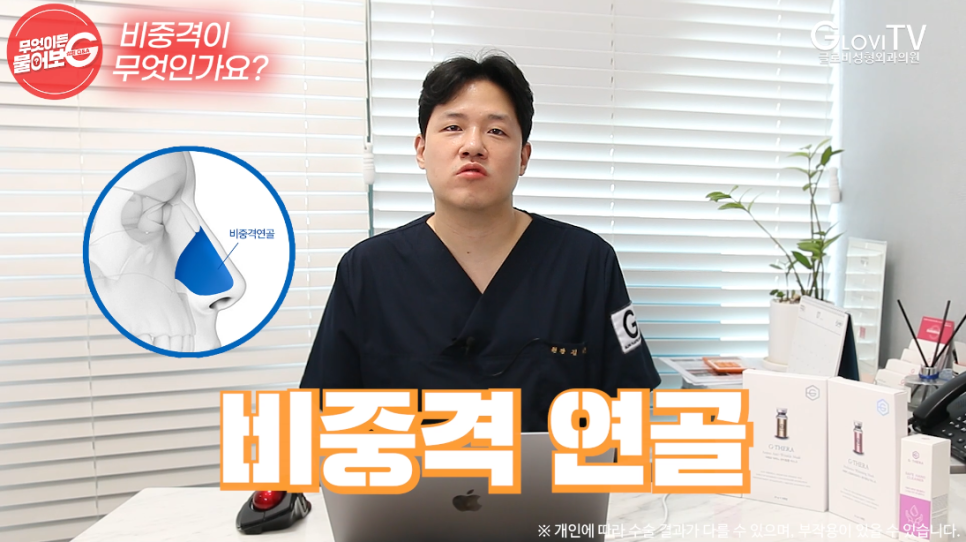
Q. What exactly is septal cartilage?
A.
In tip rhinoplasty, cartilage is mainly used as material to refine the tip and maintain its shape.
The most commonly used one is septal cartilage.
When septal cartilage is handled or used, it is also called septoplasty.
It is the cartilage inside the nose, shaped like a thin plate that divides the space between the two nostrils.
Because using this cartilage can create a natural and firm nasal tip line, it is preferred in tip rhinoplasty.

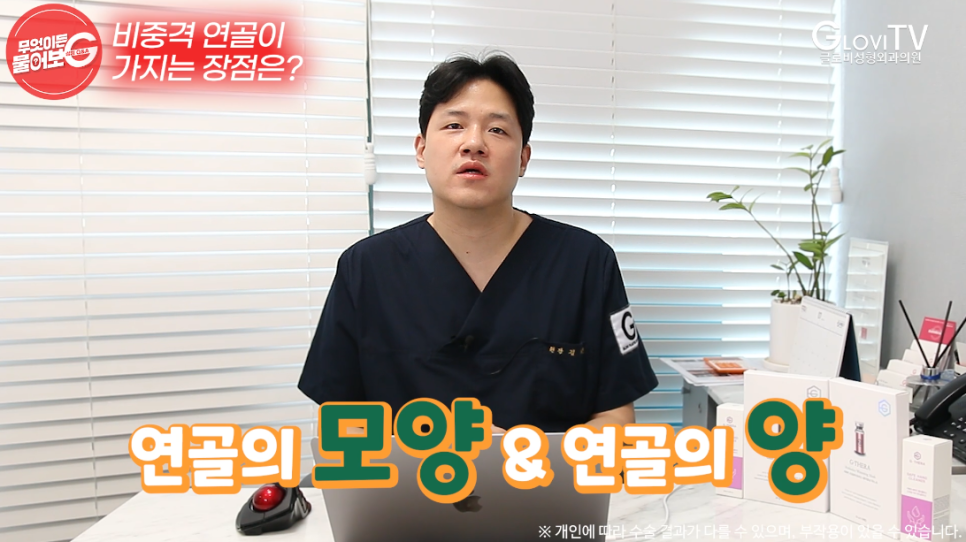
Q. What are the advantages of septal cartilage?
A.
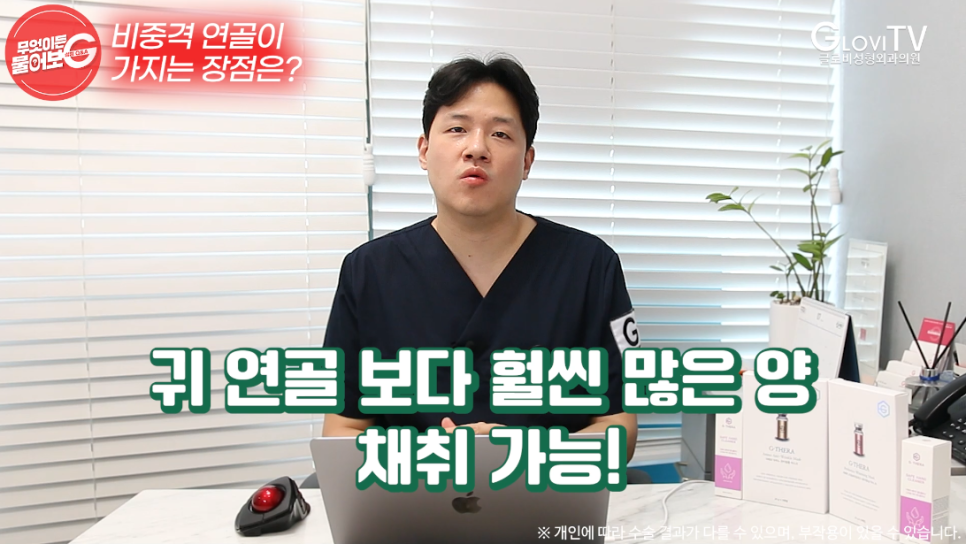
The biggest advantages are the shape of the cartilage and the amount that can be harvested.
Although it varies slightly from person to person, in general it has the advantage that more can be harvested at once than ear cartilage.
In addition, septal cartilage is straight and flat in shape, so it is easy to process.
This is very advantageous during surgery when the cartilage needs to be set up like a pillar or its direction needs to be precisely adjusted.
By contrast, ear cartilage has a curved, dish-like shape, so it is somewhat limited when used as a flat support structure.
Moreover, because ear cartilage is harvested from an external area, some people feel 부담 about the possibility of a separate scar remaining.

Q. There are many other kinds of cartilage, so why use septal cartilage in particular?
A.
Septal cartilage is the first material considered in nasal surgery. The reason is clear.
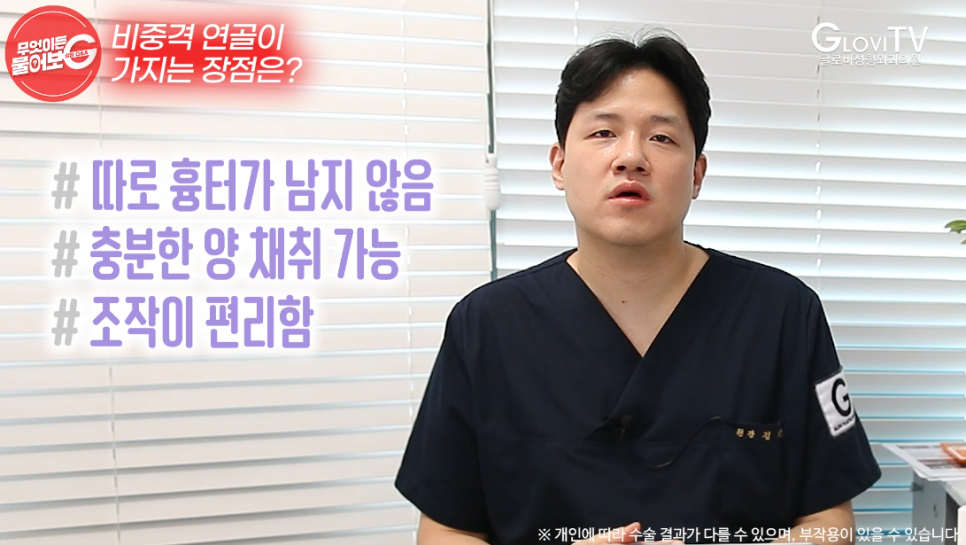
First, because it can be harvested directly from the same surgical area (inside the nose),
it can be used without a separate incision or scar, which is its biggest advantage.
Second, because the cartilage structure is firm and straight, precise surgical design is possible.
It is especially useful when raising the nasal tip or adjusting the angle of the nose.
Of course, if septal cartilage has already been used or if the amount is naturally small,
cartilage may also be harvested from other areas such as the ear cartilage or rib cartilage.
However, in principle, septal cartilage is the material considered first.

Q. How is septal cartilage used in rhinoplasty?
A.
There are various methods.
A representative method is to build a structure that supports the nasal tip by setting septal cartilage up like a pillar.
This pillar plays an important role in determining the shape and height of the nasal tip.
Another method is surgery to lengthen the nasal tip by grafting cartilage when the nose is short.
In this case as well, septal cartilage can be used as graft material.
Also, when the nasal tip appears lifted, or conversely, too drooped,
its direction is adjusted by using septal cartilage through a rotation graft technique.
In other words, septal cartilage plays a key role not only as a simple support structure,
but also in finely adjusting lines, angles, and proportions.
Septal cartilage is the most commonly used and first considered material in rhinoplasty.
Because there is no scar from the harvesting process and it can be used from the same location as the surgical area,
it is a material with high satisfaction for both patients and doctors.
In addition, from the perspective of surgical design, its straight and easy-to-process shape
makes it very favorable for achieving natural and stable results.
Plastic surgery is a complex procedure that must consider more than simply raising and beautifying the nose;
it must comprehensively account for harmony with the face, functional aspects, and the recovery process.
If you are considering rhinoplasty, we recommend discussing the possible use of septal cartilage
in detail with your attending medical professional.
If you have any questions about rhinoplasty or tip rhinoplasty using septal cartilage,
feel free to leave a comment anytime!
Glovi Plastic Surgery Clinic is located a 1-minute walk from Exit 4 of Apgujeong Station on Subway Line 3,
on the 5th and 6th floors of EGI Building, 843 Nonhyeon-ro, Gangnam-gu, Seoul.










Previous image
Next image
Consultation reservations are available on both weekdays and weekends.
All consultations are conducted privately one-on-one.
For detailed inquiries and reservations, please leave a message through the channel below.