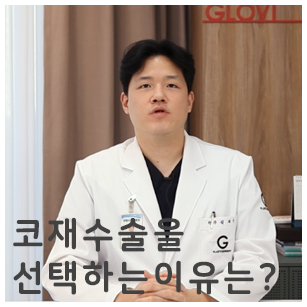
Rhinoplasty Revision: If You’re Considering It, Is It Only for Failed Surgeries?
Some people who have had nose surgery visit the hospital again after some time. This is due to rhinoplasty revision.
Many people mistakenly think revision surgery is only the result of a failed operation, but in reality, it is decided for a variety of reasons.
In this post, we have summarized a Q&A interview about rhinoplasty revision with Director Kim Jae-in of Globi Plastic Surgery Clinic.
We hope this provides practical information for those considering surgery or dissatisfied with their results after surgery.


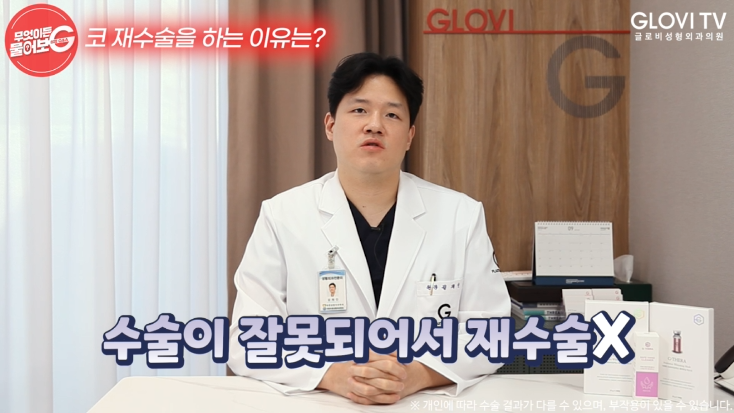
Q. What is the most common reason for rhinoplasty revision?
A. Dissatisfaction with the shape is the most common reason.
Director Kim Jae-in said the most common reason for rhinoplasty revision is dissatisfaction with the shape.
It can take as little as 3 months, or as long as 6 months, for post-surgery swelling to go down.
During that time, as they watch the shape of the nose change, people may feel that the nose is higher or lower than expected, or that the tip has lifted or dropped.
In other words, rather than the surgery having failed,
when “the image they wanted and the actual result are different,”
people consider rhinoplasty revision to make subtle adjustments.
This is often less about a poorly performed operation and more about redesigning according to an individual’s aesthetic standards.
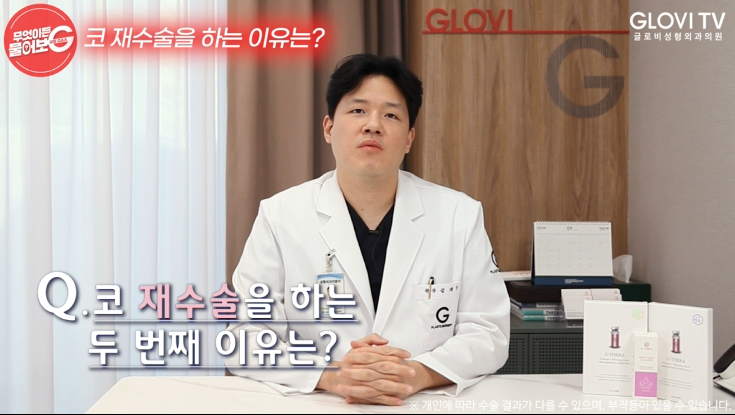
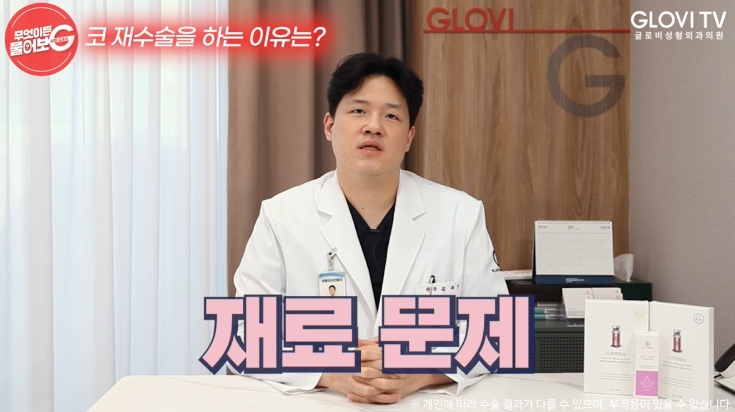
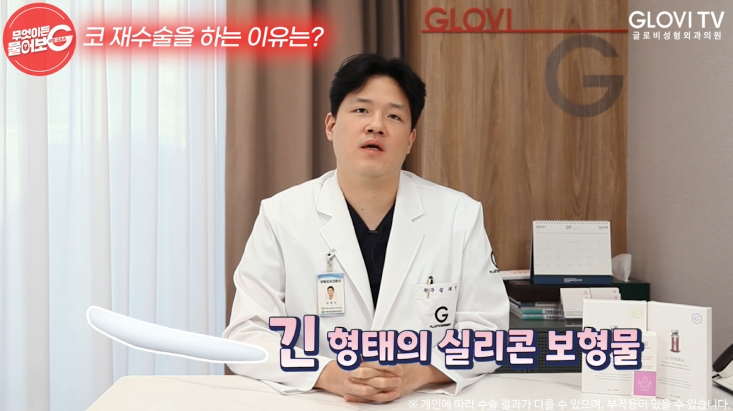
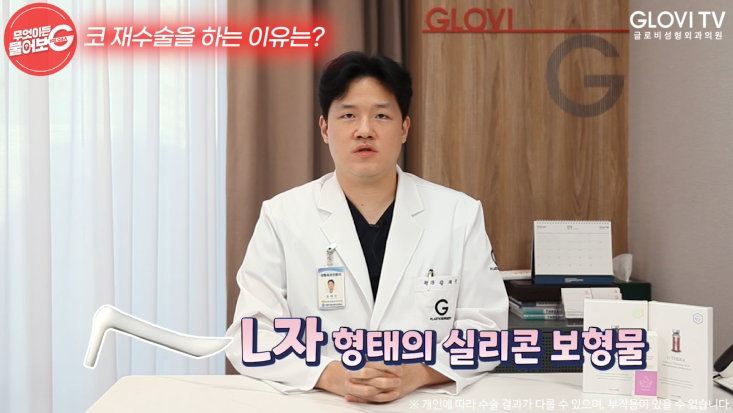
Q. What is the second most common reason for rhinoplasty revision?
A. Problems with the implant used in the past.
In the past, L-shaped silicone implants or long silicone implants that covered the bridge and tip of the nose in one piece were often used.
Over time, these implants can press on or deform the tip of the nose,
especially because the tip may droop, or in some cases become lifted upward due to contracture.
These physical changes gradually become apparent over time and are a major reason people consider rhinoplasty revision.
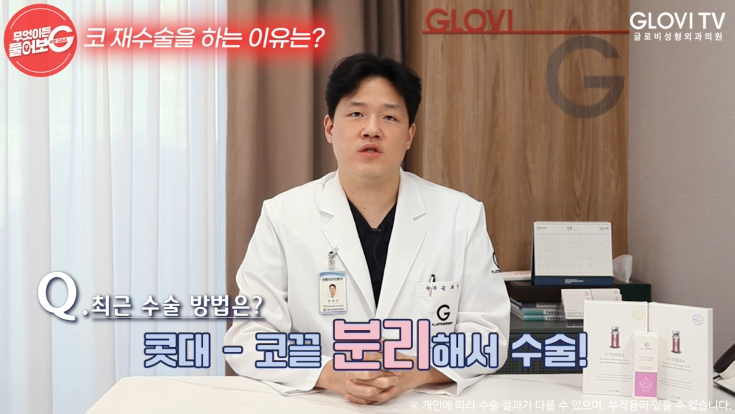
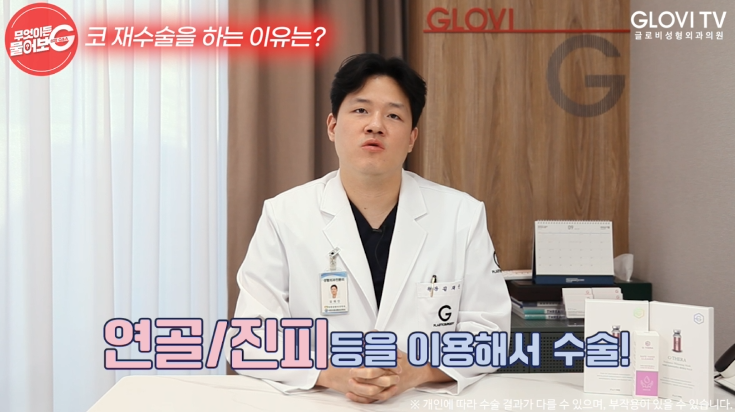
Q. What is rhinoplasty like these days?
A. Surgery that separates the bridge and the tip is now the mainstream approach.
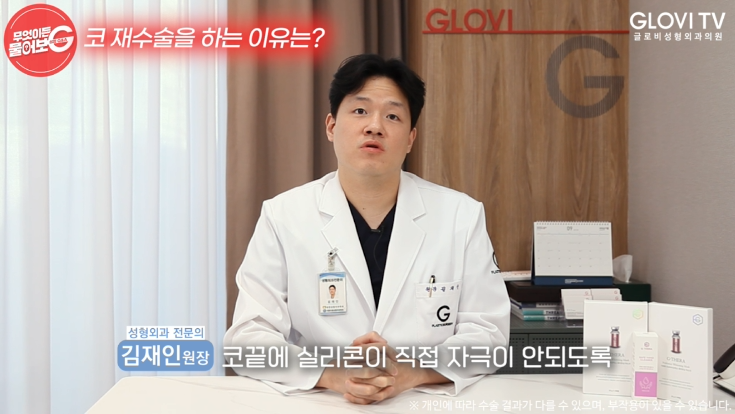
Director Kim Jae-in explained that recently, the bridge and tip of the nose are treated separately and operated on using methods suited to each area.
In particular, silicone is not used directly in the tip; instead, tissues such as the patient’s own cartilage and dermis are used to reduce side effects.
“This way, the tip does not become stiff, and its shape is maintained well over time.
The old method of covering the entire nose with a single implant is gradually decreasing.”
As a result, the frequency of rhinoplasty revision due to tip deformation has also been declining compared with the past.
Q. Are there any other causes of rhinoplasty revision?
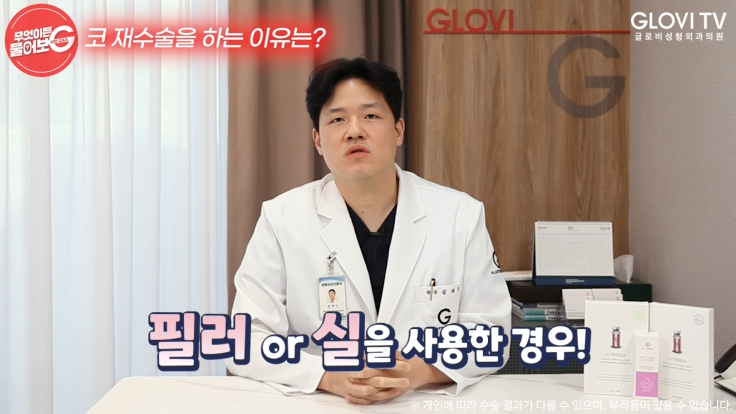
A. Problems that occur after procedures using fillers or threads.
These days, non-surgical procedures to raise the nose are popular, and many people have received filler or thread lifting treatments.
However, with these methods, deformities or unexpected side effects can occur over time.
“If the tip of the nose was lifted with filler or threads, that area must be removed before revision surgery can be performed.”
These cases fall into the broader category of “revision surgery,” and in these instances too, it is not simply for cosmetic purposes,
but rhinoplasty revision to remove and improve side effects caused by previous procedures.
Q. Should rhinoplasty revision always be avoided?
Many people feel burdened by the word revision.
But the points above show that it is not necessarily performed only because the surgery failed.
Subtle design adjustments
Physical effects of older implants
Removal of previous fillers and threads
In this way, rhinoplasty revision is also a process that improves the completeness of the surgery.
Most importantly, it is essential to clearly identify the cause and approach it at the right time and in the right way.
If you are thinking about rhinoplasty revision, a specialist’s diagnosis comes first.
If you are considering rhinoplasty revision, the most important first step is to receive an accurate diagnosis of your current nose condition.
In some cases, time is needed, and in others, simple correction may be enough.
Based on Director Kim Jae-in’s experience diagnosing and performing surgery on a wide range of cases, Globi Plastic Surgery Clinic develops surgical plans tailored to each patient’s condition.








Previous image
Next image










Previous image
Next image
If you have any questions about rhinoplasty revision, please leave a comment anytime ♥
Globi Plastic Surgery Clinic is located a 1-minute walk from Exit 4 of Apgujeong Station on Subway Line 3,
at 5th and 6th floors of EGI Building, 843 Nonhyeon-ro, Gangnam-gu, Seoul.
Consultation appointments are available on both weekdays and weekends.
All consultations are conducted privately, one-on-one.
For detailed inquiries and reservations, please leave a message through the channel below.