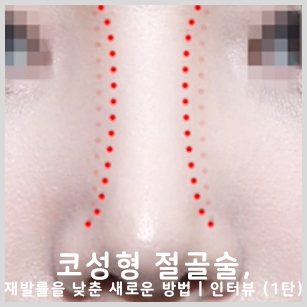
Nasal Osteotomy in Rhinoplasty, a New Method to Lower Recurrence Rates | Interview (Part 1)
�a0
In rhinoplasty, osteotomy is an essential procedure that is considered when reducing the width of the nose or correcting a deviated nose.
However, since rhinoplasty osteotomy involves working with bone, the surgical method and precision greatly affect the outcome.
In this interview, Dr. Nobongil and Dr. Kim Jaein of Globi Plastic Surgery Clinic will take a detailed look at the indications for rhinoplasty osteotomy,
the limitations of conventional methods, and a new rhinoplasty osteotomy technique that lowers recurrence rates.
�a0
�a0
�a0
�a0
�a0
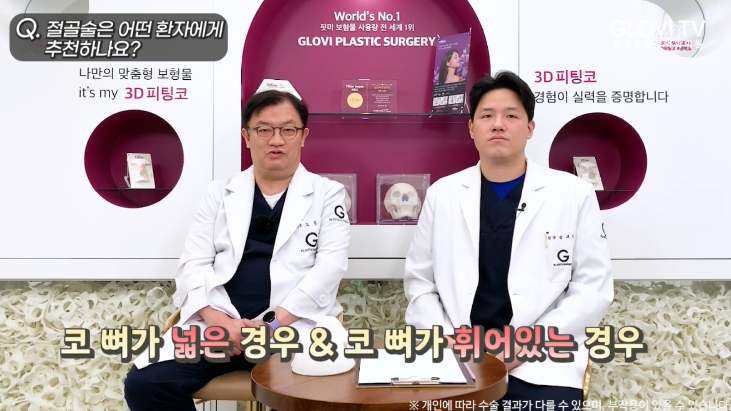
Q. Which patients is rhinoplasty osteotomy recommended for?
Dr. Nobongil said, "Osteotomy is mainly recommended for patients whose nasal bones are wide or whose nasal bones are crooked.
In particular, among East Asians, including Koreans, many people have a wide nasal bone width,
and cases caused by trauma or congenital reasons are also common.
These two cases are the representative situations in which osteotomy is performed most often."
�a0
�a0
�a0
�a0
�a0
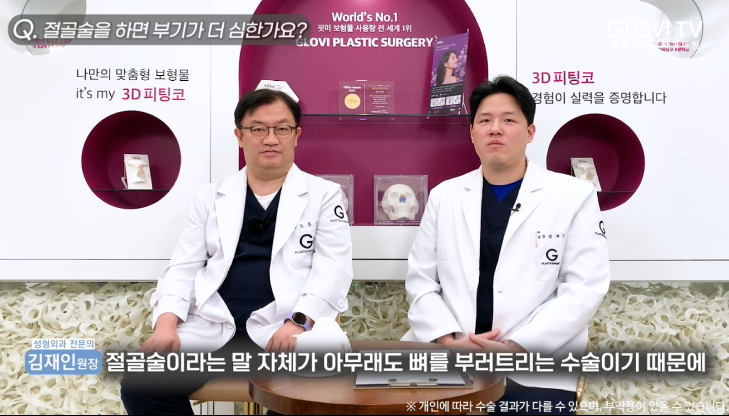
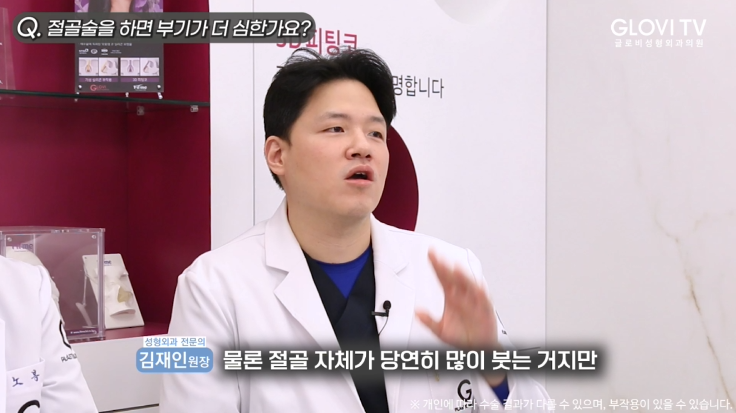
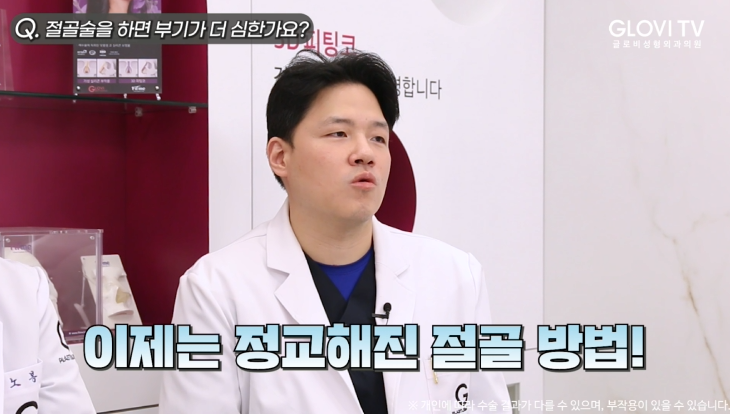
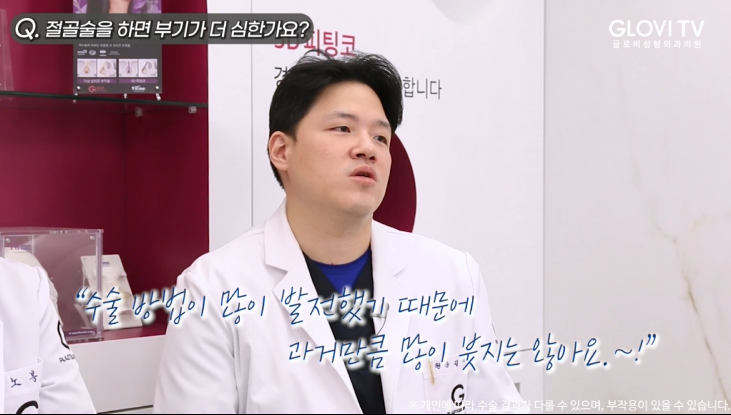
Q. Does rhinoplasty osteotomy cause more swelling?
Dr. Kim Jaein explained, "The word osteotomy itself means breaking bone,
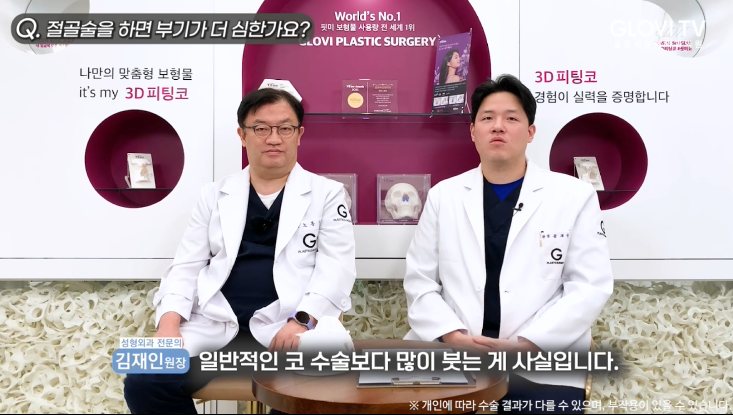
so it is true that swelling is more severe than with a standard nose surgery. In the past, because the bone was often cut by estimation
without directly seeing it, or by guessing the position before performing the osteotomy, swelling was greater and recovery took longer.
However, recently the osteotomy methods have become more precise and surgical techniques have advanced, so the swelling is not as severe as it used to be."
�a0
�a0
�a0
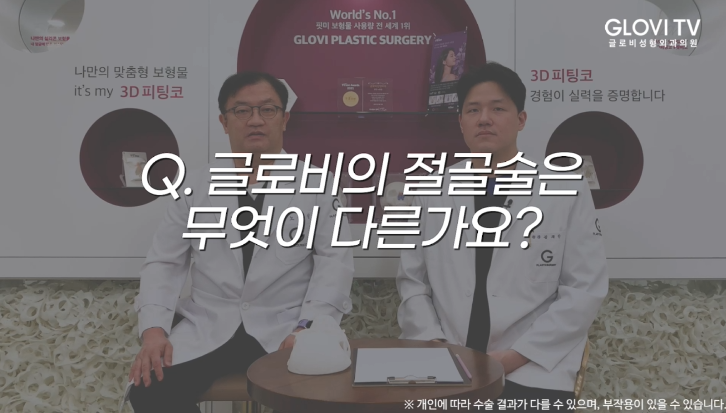
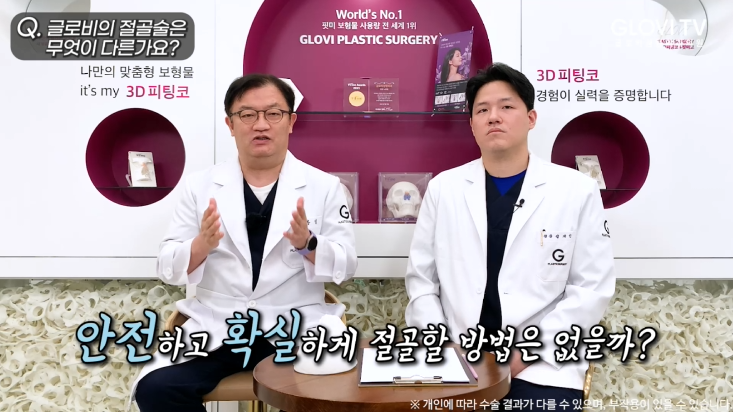
Q. What makes the rhinoplasty osteotomy at Globi Plastic Surgery Clinic different?
Dr. Nobongil said, "There are several stages in the development of osteotomy methods.
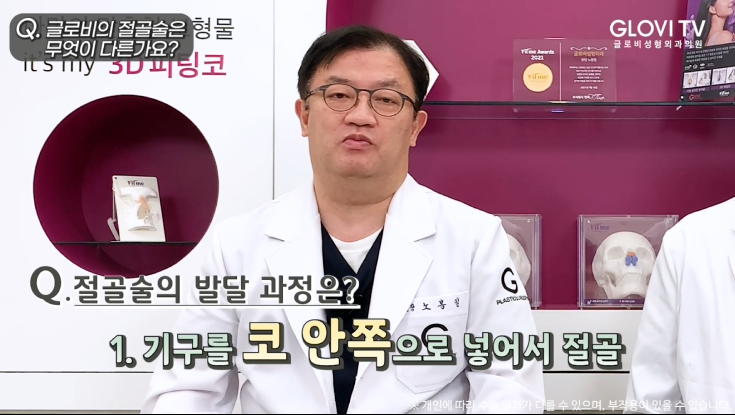
The most traditional method was to insert an instrument through the inside of the nose and perform the osteotomy,
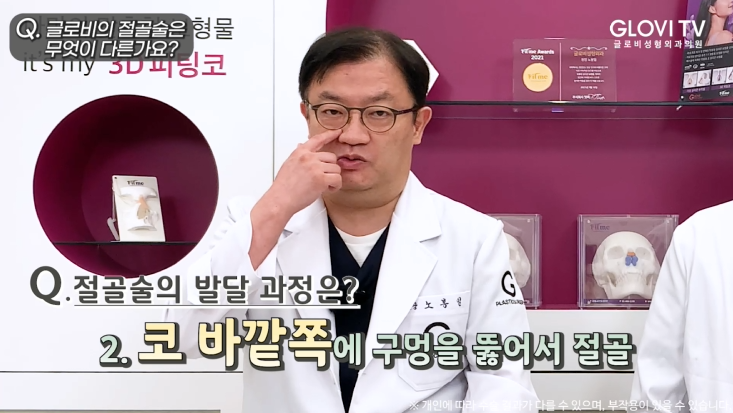
but it was difficult because of a lot of bleeding. Later, a method emerged in which a small opening was made on the outside of the nose
and the osteotomy was performed, but although bleeding was reduced, the drawback was that scars could form.
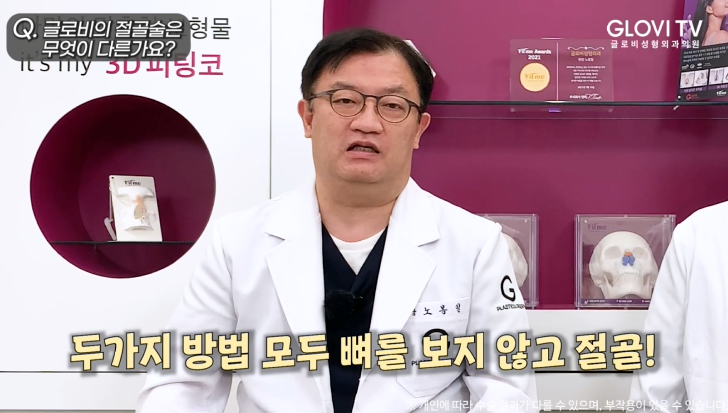
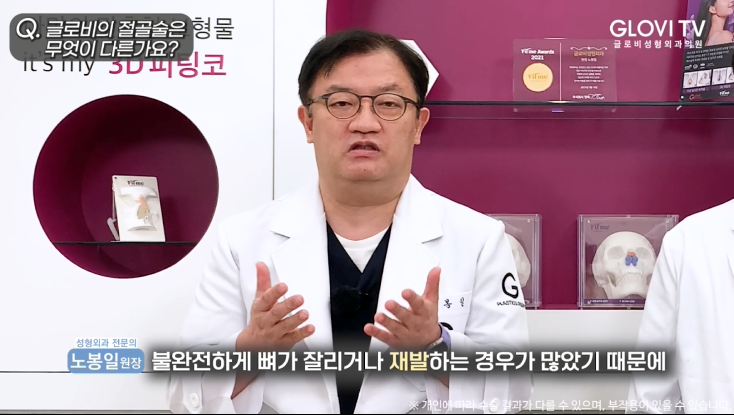
And because both methods are performed without directly seeing the bone, the chances of incomplete osteotomy or recurrence were high."
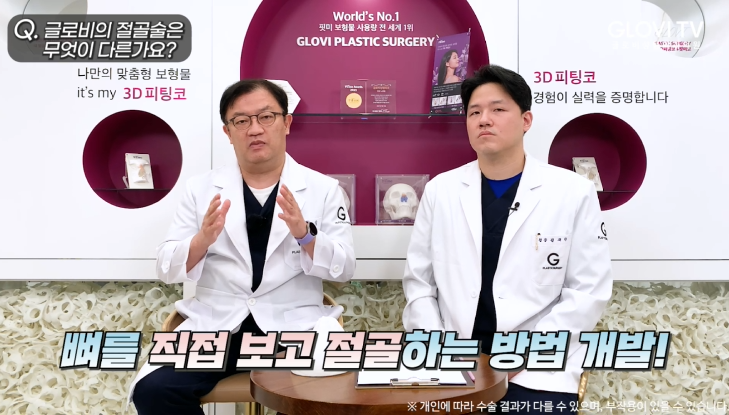
He continued, "Since 2009, we have introduced a method that allows direct visualization of the bone before osteotomy.
Through an open incision, we fully expose not only the cartilage but also the nasal bone in the field of view,
so we can significantly reduce the possibility of incomplete osteotomy or recurrence.
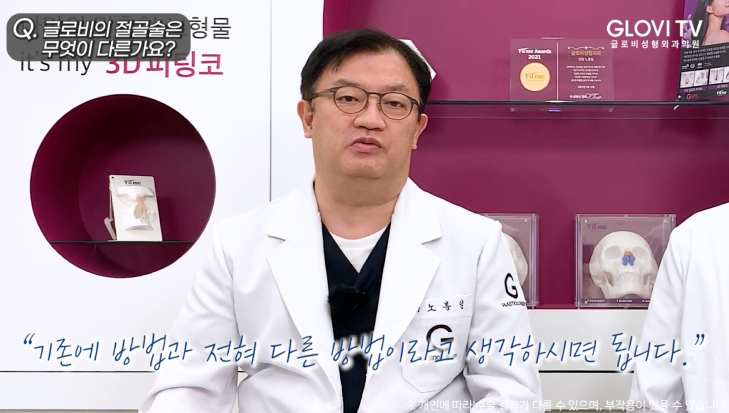
This method is completely different from conventional osteotomy. It is not simply cutting by inserting an instrument and estimating the position,
but performing osteotomy after confirming the exact location. Therefore, it has advantages in terms of safety, accuracy, and recurrence prevention."
�a0
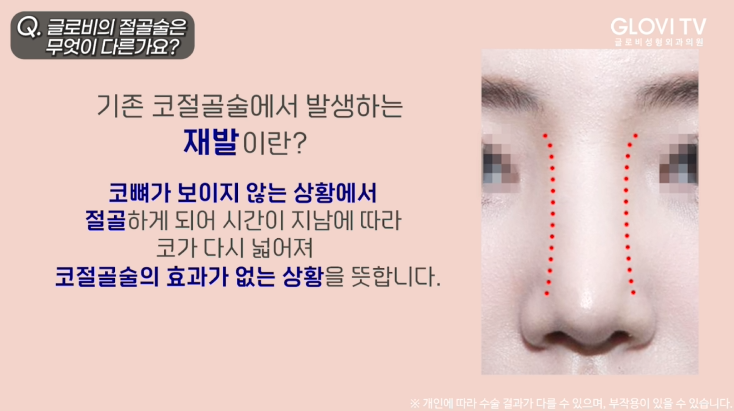
Wait, then what does recurrence mean in conventional rhinoplasty osteotomy?
In conventional methods, because the bone could not be seen directly, the osteotomy was incomplete or,
over time, the nasal bone could return to its original width.
This is called recurrence, and it is a major reason why the surgical effect disappears.
�a0
�a0
�a0
�a0
�a0
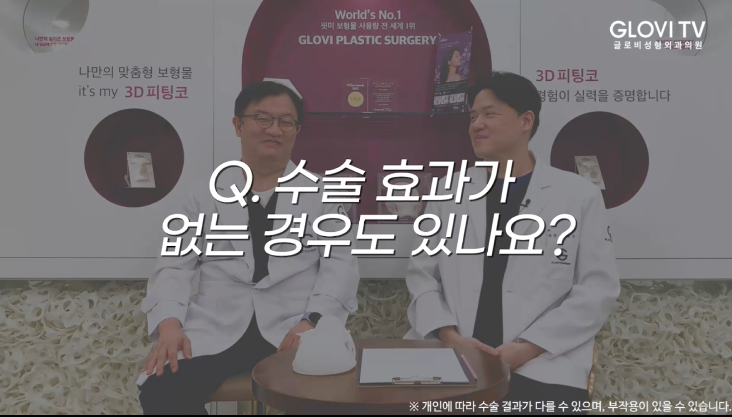
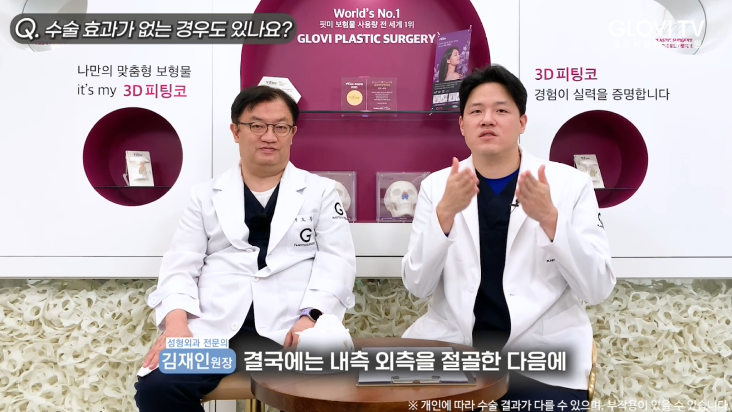
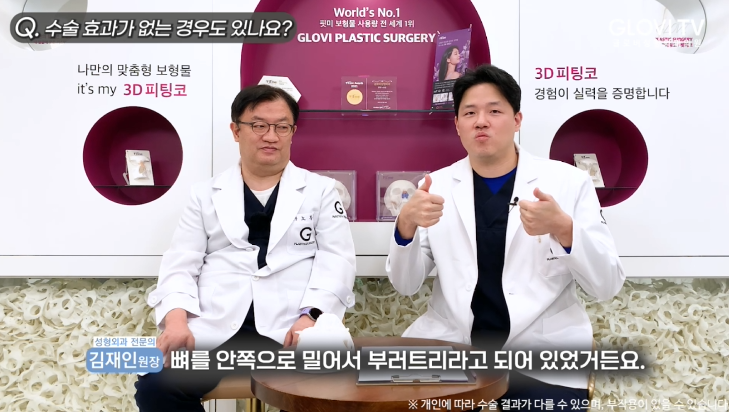
Q. Are there cases where rhinoplasty osteotomy has no effect?
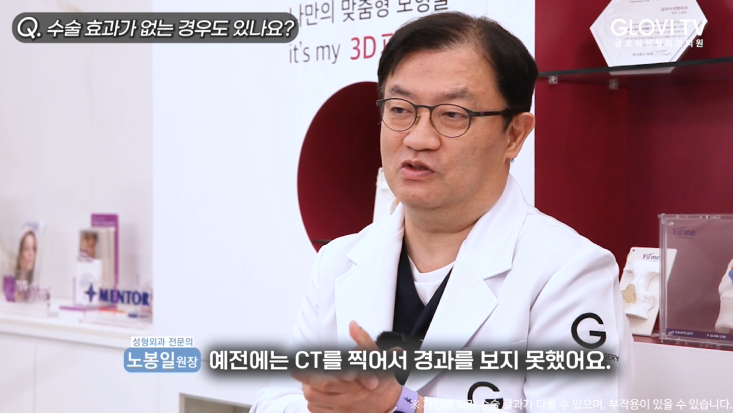
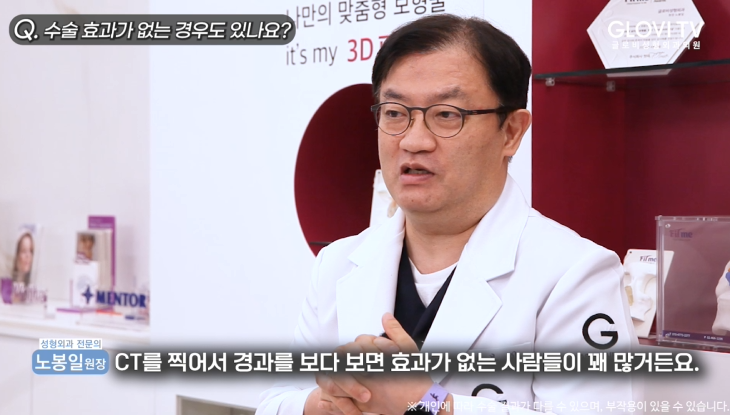
Dr. Nobongil explained, "In the past, because follow-up was not checked with CT, there were quite a few cases where the surgical effect was insufficient.
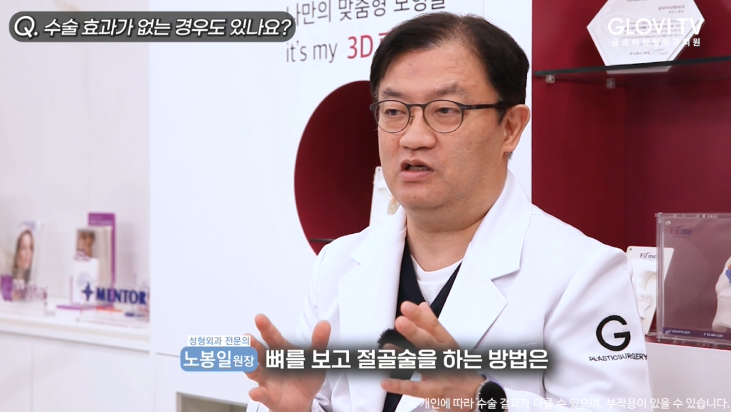
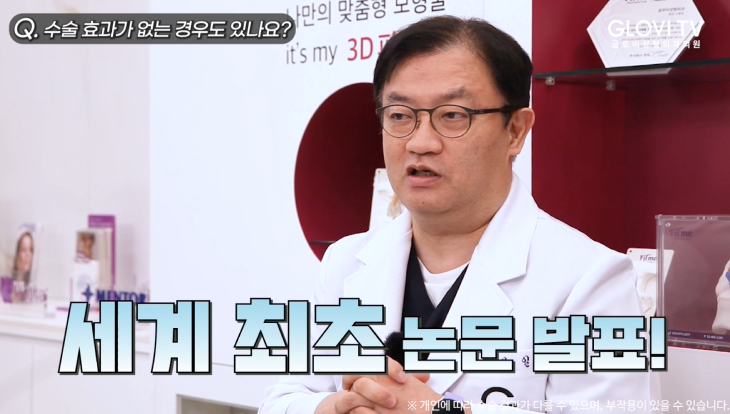
The osteotomy method for which I published the world's first paper has as its core the precise identification and cutting of the bone.
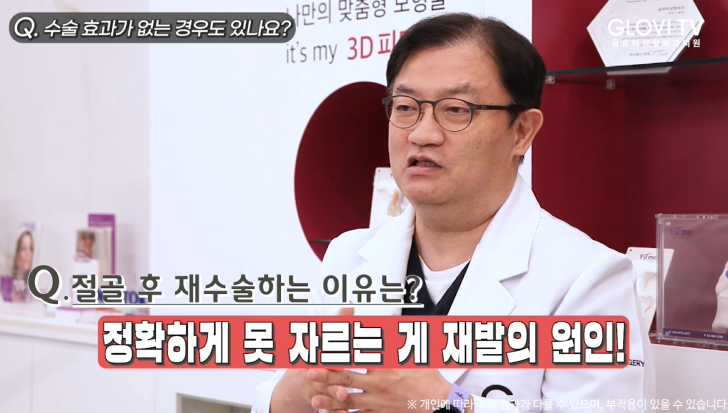
Most causes of revision surgery are cases where the bone was not properly osteotomized or was osteotomized at the wrong location,
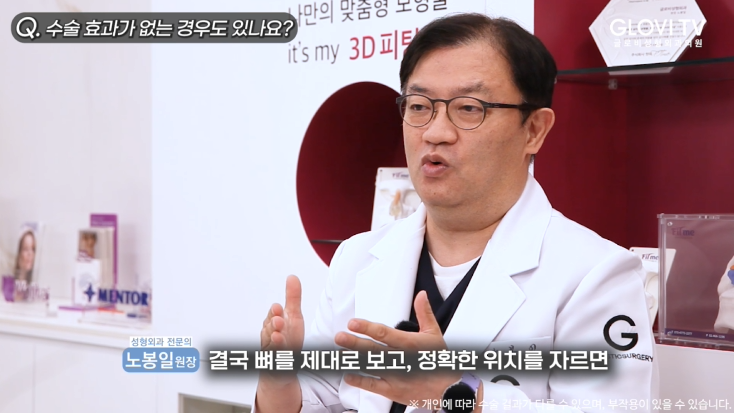
and to prevent this, the bone must be directly seen and cut accurately."
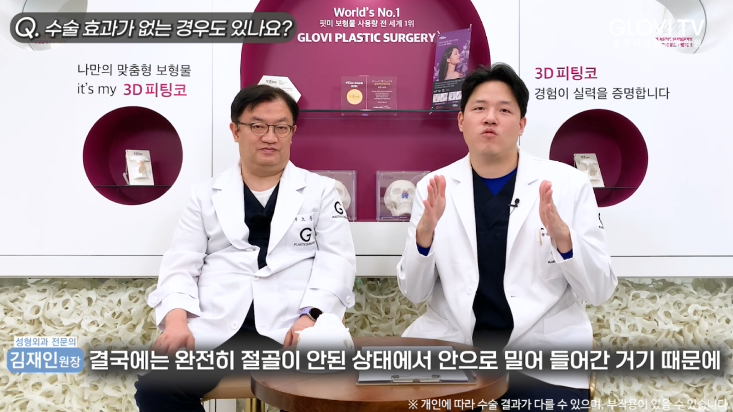
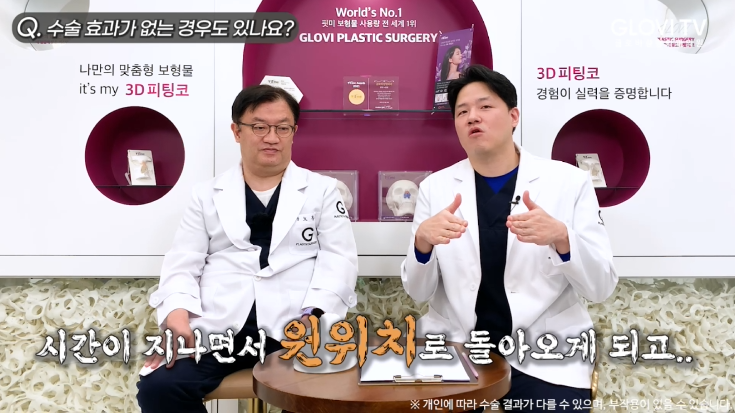
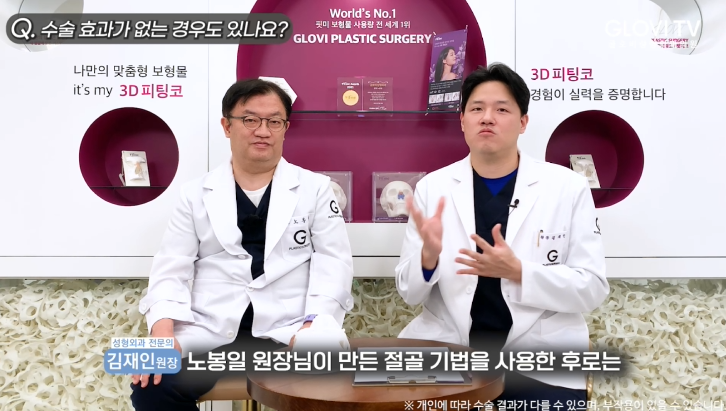
Dr. Kim Jaein added, "In older textbooks, it only said to osteotomize the medial and lateral sides and then push the bone inward to break it.
But if you do that, the bone is positioned before a complete osteotomy is achieved, and eventually it can return to its original state over time.
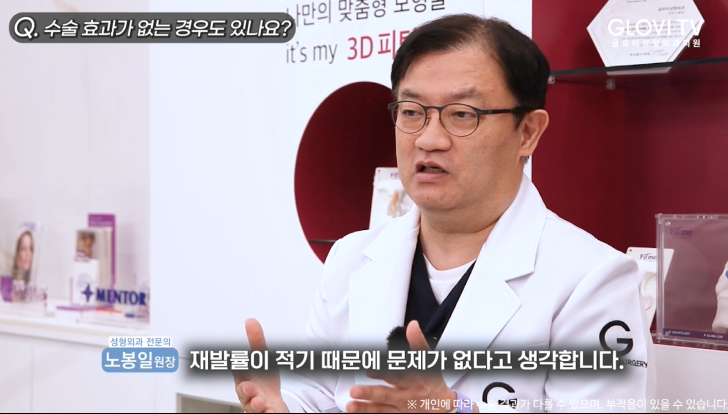
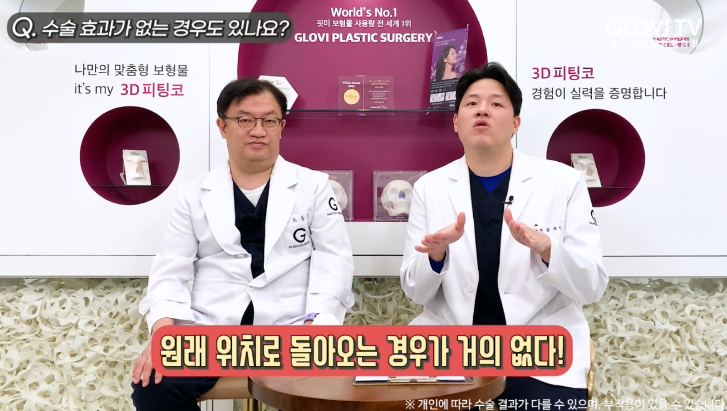
After applying Dr. Nobongil's method, we can accurately perform the osteotomy at the desired location, so recurrence is almost nonexistent.
Using this method gave us confidence in the results of osteotomy."
�a0
�a0
Rhinoplasty osteotomy is not simply a procedure for cutting bone; it requires a precise process of osteotomizing at the correct location and preventing recurrence.
The rhinoplasty osteotomy at Globi Plastic Surgery Clinic is an open osteotomy that directly confirms the bone,
overcoming the limitations of conventional methods and providing stable results.
Continued in Part 2. Please look forward to Part 2 as well!
�a0
�a0
�a0
�a0
�a0
Globi Plastic Surgery Clinic is located a 1-minute walk from Exit 4 of Apgujeong Station on Subway Line 3,
at 5F and 6F, EGI Building, 843 Nonhyeon-ro, Gangnam-gu, Seoul.
�a0
Consultation appointments are available on both weekdays and weekends.
All consultations are conducted privately, one-on-one.
For detailed inquiries and reservations, please leave a message through the channel below.
�a0




�a0