It’s because this “one thing” wasn’t addressed
Hello.
We are Globi Plastic Surgery, where a doctor who has written books related to thread lifting and has extensive clinical experience is available.

Apgujeong Thread Lift
| A hospital that follows the principles of plastic surgery, Globi Plastic Surgery |
|---|
| Plastic surgery is most important when the basics are followed. Plastic surgery must be designed with a patient’s entire life in mind. Both the process and the results of plastic surgery must be safe. Globi always puts the patient first. |
| Consultation is an important step that leads to surgery. To help ensure that you are satisfied with your surgical results, we promise personalized consultations with medical staff who have extensive clinical experience. |
| Aftercare can also be considered an extension of surgery. To help patients recover quickly, we provide customized care programs. |
If you are reading this, you have probably experienced a thread lift at least once.
When you first had it, there was clearly an effect,
but as time passed, did it seem to loosen much sooner than expected,
or did it feel like the effect was weaker than last time?
Have you ever felt that way?
That feeling may not actually be an illusion.
The duration of a thread lift’s effect depends not only on
the number of procedures and the amount of thread used,
but also on
which layer the threads are placed in and in what direction.
And if you repeat the procedure without knowing this difference,
you may end up spending the same amount of money while experiencing results that last for less and less time.
So in this post,
I will explain the real reason why thread lift maintenance periods become shorter, and
share the two key points you must know if you want a procedure that lasts longer.
If you spend just 3 minutes reading,
your next thread lift may deliver a much more satisfying result for the cost.
- The key to longevity: You need to lift the
'SMAS layer,' not just the skin surface.
Apgujeong Thread Lift
Why does one person’s result last more than a year,
while another’s loosens in just 3 months?
After analyzing thousands of clinical cases,
a common pattern was found.
Between people whose results last a long time
and those whose results do not,
it is not only the number of procedures and the number of threads,
but also how deep the threads are placed
that makes the decisive difference.
Let me explain this in a slightly more technical way.
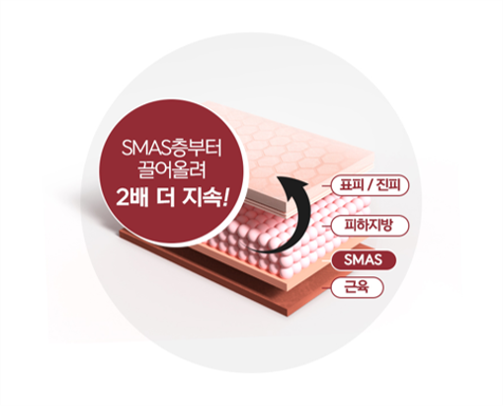
Our skin is made up of the epidermis, dermis, subcutaneous fat,
and beneath that, a fascial structure called the SMAS layer.
This SMAS layer
is the layer that is directly responsible for facial sagging.
In simple terms, as we age and the face
drops downward due to gravity,
the structure that actually moves is this SMAS layer.
Even the surgical facelift performed by plastic surgeons
ultimately works by directly addressing this layer.
That is how important it is in lifting.
The problem is what happens when, during a thread lift,
the threads do not reach the SMAS layer.
The layer that causes sagging remains unchanged,
and only the tissue above it may be pulled slightly.
If the procedure is done this way,
the skin may temporarily look lifted,
but since the fundamental structure was not addressed,
it is only a matter of time before the tissue sags again.
Just as a rubber band quickly becomes loose
when you only tug lightly on one end,
this can be seen as a result of addressing only the surface without solving the underlying cause.
In fact, among the people who come in for consultations,
there are quite a few who say that the effect seems to last for a shorter and shorter time each time they receive it.

This phenomenon does not occur for just one reason,
but the first thing to check is whether the insertion depth may have been insufficient.
At Globi Plastic Surgery,
we design the insertion depth so that the threads can adequately reach the SMAS layer.
This is a method of lifting the layer itself, which is the source of sagging,
rather than the superficial tissue, and of course it is much more difficult than placing the threads shallowly.
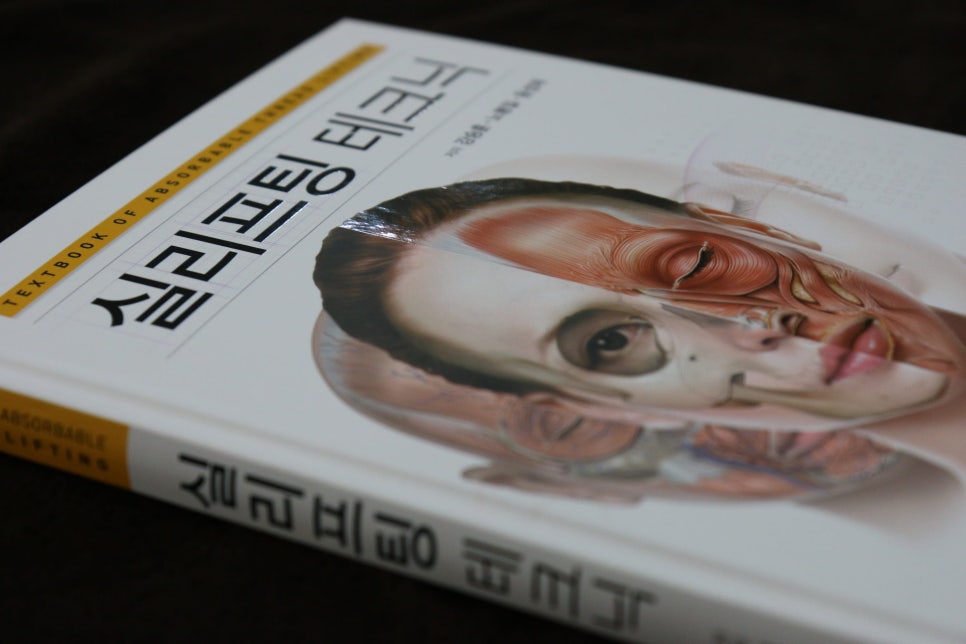
The reason our director has gone so deeply into this field that he wrote books related to thread lifting
is ultimately to learn these detailed points.
So when looking into a thread lift,
I recommend checking the insertion depth first.
Even if you do not choose us,
I hope you will at least make sure to ask about this point before deciding on a procedure.
- Differences in design can change the outcome.
Apgujeong Thread Lift
Now that I have talked about depth,
let’s talk about direction.
In fact, this is something that even people who have had thread lifts several times
often do not fully understand.
After the procedure,
you can usually only tell whether the face was lifted or not,
not the exact direction in which the threads were pulled.
Apgujeong Thread Lift
But this directional design
has a fairly large impact on the final result.
And because that directional design
determines the difference in how long the results last,
we consider this as important as insertion depth.
If the threads are pulled diagonally,
the tissue shifts sideways instead of upward.
The lifting effect may still occur,
but in the process, the volume around the cheekbones may become more prominent,
or the face may appear to spread outward.
So if you felt that your skin did become firmer after a thread lift,
but for some reason your cheekbones seemed more pronounced,
there may be a connection to the directional design.
In contrast, when the threads are pulled vertically,
the sagging tissue rises straight upward from below.
This is the approach that most faithfully reflects the idea of
returning tissue that has dropped due to gravity
back upward against gravity,
and
it can produce a natural lifting result without emphasizing the cheekbones.
This is also why Globi Plastic Surgery uses vertical lifting as the standard.
We avoid results that leave an awkward appearance after the procedure.
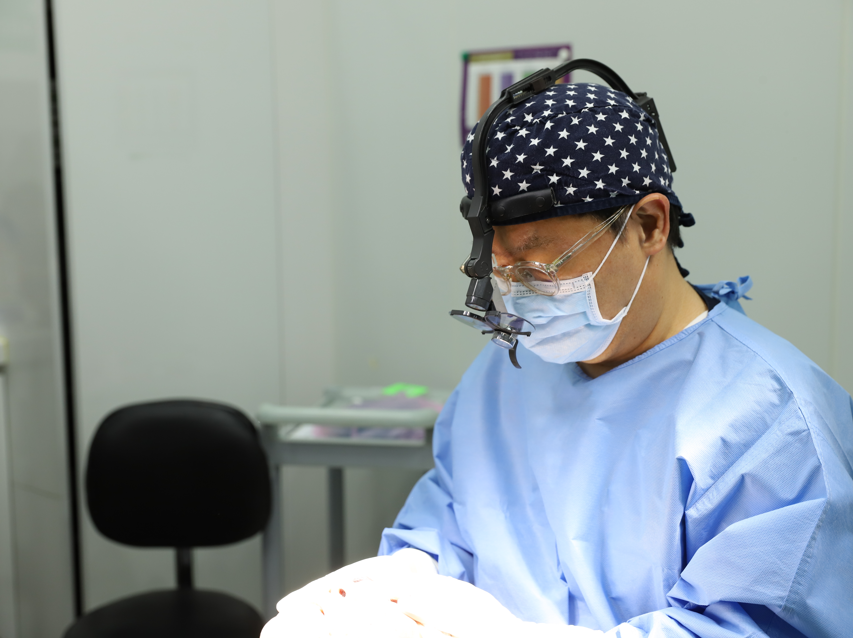
We aim to restore your natural lines and create a change that looks like “my face has always been this way.”
Many people believe that the best result is one that does not visibly show signs of a procedure.
That is why we spend so much time on this directional design alone.
Of course, it cannot be said that vertical direction is the correct answer for everyone.
Because facial structure and the pattern of sagging differ from person to person,
directional design should also be determined after first understanding the individual’s condition.
So during consultation, I recommend asking directly which direction the lift will take,
and why.
Even if you do not come to us,
this one question alone can help you gauge how carefully the clinic designs the procedure.
I hope this post is of some help to those of you reconsidering thread lifts.
Even with the same procedure, the result can differ depending on which layer is targeted
and in what direction it is designed,
and we have proven through long-term clinical outcomes
that this directly affects how long the results last.
That is why we believe that if just these two points are properly designed,
satisfaction with a thread lift can change.
If you are looking into a thread lift,
find out right now through Globi’s detailed diagnosis
which direction would be best for your face shape.
Even a consultation alone can change your 기준 for lifting.
*The effectiveness and side effects of all procedures may vary depending on the individual.
< Related posts you may also want to read >
Globi Plastic Surgery is located at EGI Building, 5th and 6th floors, 843 Nonhyeon-ro, Gangnam-gu, Seoul,
1 minute on foot from Exit 4 of Apgujeong Station on Subway Line 3.
Consultation reservations are available on both weekdays and weekends.
All consultations are conducted privately one-on-one.
For detailed inquiries and reservations, please leave a message through the channel below.


Apgujeong Thread Lift