How to Get Bruising to Fade Quickly After Thread Lifting,
If You Don’t Know 'This,' It Can Last More Than 2 Weeks
Hello.
This is Globi Plastic Surgery Clinic.

| A clinic that follows the principles of plastic surgery, Globi Plastic Surgery Clinic |
|---|
| The most important thing in plastic surgery is to follow the basics. Plastic surgery should be designed with the client’s lifetime in mind. Both the process and the results of plastic surgery must be safe. Globi always puts the client first. |
| Consultation is an important step that leads to surgery. To help you feel satisfied with the surgical results, we promise personalized consultations with medical staff who have extensive clinical experience. |
| Aftercare can also be considered an extension of surgery. To help patients recover quickly, we provide customized care programs. |
When considering thread lifting,
one of the biggest concerns, along with the results, is bruising.
Especially for people who work and socialize,
recovery time can be a key factor in deciding whether to undergo the procedure.
However, some people simply think,
'It’ll go away in a few days,' only to be surprised when it remains longer than expected.
That is not uncommon.
The truth is, bruising may be unavoidable, but it can be reduced.
And the factors that make that difference are
more clear than you might think.
Since we know this well too,
Today, we’ll start by looking at why bruising occurs after thread lifting,
then organize the methods that actually help recovery,
one by one.
You’ll get a much more concrete idea of what to pay attention to and how,
and your vague worries should ease quite a bit.
Bruising may be unavoidable, but it can be reduced
How to Get Bruising to Fade Quickly After Thread Lifting
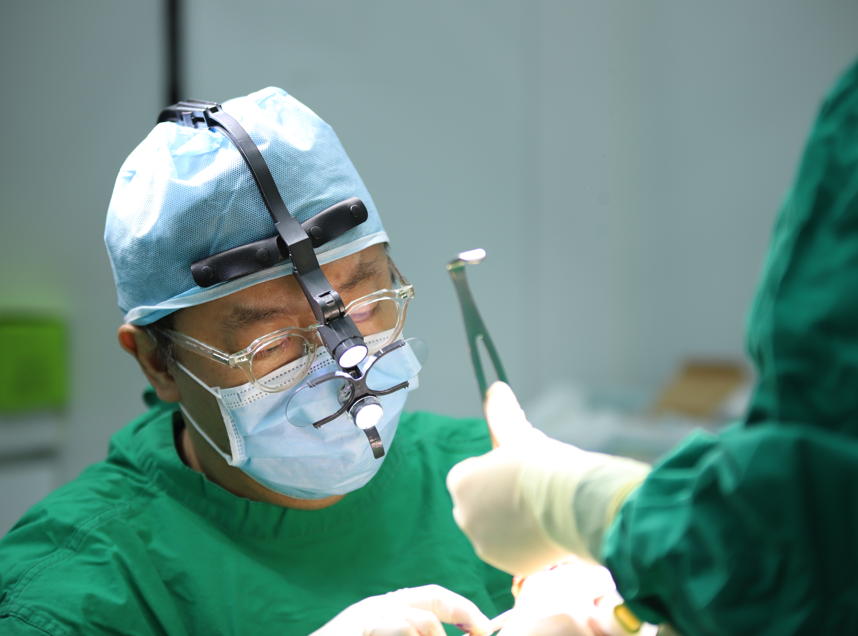
Bruising after thread lifting is a natural result
of the procedure’s structure.
It happens when microbleeding cannot be discharged outside the skin
and instead accumulates within the tissue.
So if you get bruising,
it does not mean the procedure was done incorrectly.
It is something that can happen during recovery,
and for most people it naturally fades over time.
However, even with the same procedure,
some people have almost no bruising,
while others may have it for 1–2 weeks.
One of the factors that creates this difference is
the care before and after the procedure.

Before the procedure, it is important to stop ingredients that thin the blood.
In actual consultations,
many people say they were taking omega-3 or health supplements
right up until just before the procedure.
Since they had been taking them regularly for their health,
they did not pay separate attention to them.
However, ingredients such as omega-3, vitamin E, and red ginseng
that thin the blood
reduce platelet aggregation function.
Simply put, if bleeding occurs,
it means hemostasis is slower.
As a result, bruising spreads more widely from the same刺激,
and remains longer.

Aspirin, ibuprofen-type pain relievers,
and alcohol are the same.
Alcohol expands blood vessels,
increasing the amount of bleeding itself,
so it is best to avoid it for at least 3 days beforehand.
For all of these ingredients,
we recommend stopping them at least 1–2 weeks before the procedure.
For effective bruise care,
the right timing for compresses is essential.
Up to 48 hours after the procedure, cold compresses are recommended.
This is because the cold temperature temporarily constricts blood vessels
and helps prevent the bleeding from spreading further.
However, if ice is applied directly to the skin,
it may cause frostbite or irritation instead,
so it is better to place an ice pack wrapped in a towel
for 10–15 minute intervals.
After 48 hours, we recommend switching to warm compresses.
The warm temperature promotes blood circulation,
helping the blood pooled in the tissue to be absorbed more quickly.
This is why we carefully explain this part
during consultations without missing anything.
Things you should definitely pay attention to in daily life after the procedure
How to Get Bruising to Fade Quickly After Thread Lifting
Just because the bruising has started to subside does not mean it is completely over.
From immediately after the procedure through the recovery period,
how you go about your daily life
directly affects how quickly the bruising fades.
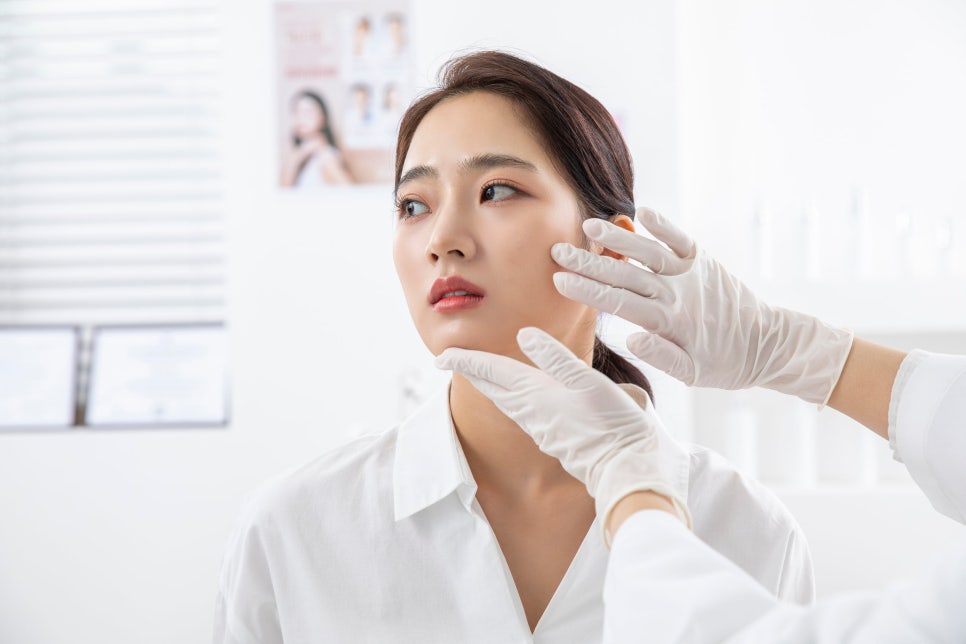
First, posture.
For a few days after the procedure, it is best to avoid bending your head down often
or staying face-down for long periods.
If blood rushes to the face,
the bruising that has already formed may become more visible
or spread over a wider area.
When sleeping, prop your pillow a little higher
so that your face stays above heart level,
which can help reduce swelling and bruising.
Food is another thing to pay attention to.
Spicy and irritating foods can expand blood vessels
and increase inflammatory reactions,
so it is best to avoid them as much as possible in the early recovery stage.
On the other hand, protein, which helps damaged tissue regenerate,
and vitamin C, which helps strengthen blood vessel walls and supports collagen synthesis,
directly contribute to faster recovery.
Since everything you eat is directly connected to recovery during this period,
please pay a little more attention during this time.
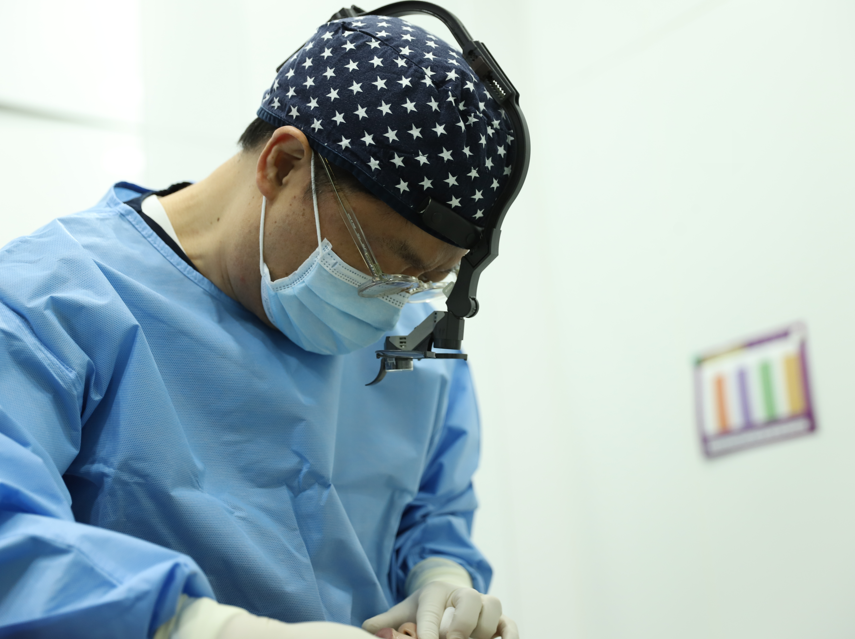
And there is one thing many people overlook.
That is touching the treatment area with your hands
or pressing on it firmly.
It is understandable to want to check the area
because the bruising is bothering you,
but stimulating it may actually slow recovery.
Extra caution is especially needed in the early stage,
before the threads have fully settled.
Excessive facial expressions or self-massage
should also be avoided for the same reason.
Some people apply makeup directly over the treatment area
because they want to cover the bruising,
but this should also be avoided as much as possible in the early stage.
If stimulation continues, the bruising may
remain even longer.
These small habits in daily life
can actually make a big difference in the recovery period.
After thread lifting, bruising cannot be completely avoided,
but it is definitely possible to reduce it and make it fade faster.
If you stop blood-thinning ingredients in advance before the procedure,
get the timing of compresses right,
and pay a little attention even to posture and diet,
it can help during the recovery period.
If bruising is making daily life inconvenient for you,
we recommend having a consultation at least once.
If you ask directly what to take care of during recovery,
your vague worries will ease quite a bit.
Our Globi Plastic Surgery Clinic
is always happy to help, so please feel free to contact us.
If you have questions before deciding on a procedure,
we will guide you sincerely.
Caution: After the procedure, depending on the individual,
side effects such as inflammation, bleeding, and asymmetry may occur,
and the above content is general care guidance.
For details, please consult a specialist.
< Other helpful articles >
Globi Plastic Surgery Clinic
is located 1 minute on foot from Exit 4 of Apgujeong Station on Subway Line 3,
on the 5th and 6th floors of the EGI Building, 843 Nonhyeon-ro, Gangnam-gu, Seoul.
Consultation reservations are available on both weekdays and weekends.
All consultations are conducted privately one-on-one.
For detailed inquiries and reservations, please leave a message through the channel below.


How to Get Bruising to Fade Quickly After Thread Lifting