Lip philtrum reduction scar,
There is a surgical method that leaves less behind
Hello,
This is Glovi Plastic Surgery Clinic.

| A hospital that follows the principles of plastic surgery, Glovi Plastic Surgery Clinic |
|---|
| In plastic surgery, it is most important to follow the basics.Plastic surgery must be designed with a patient’s entire life in mind.Both the process and the results of surgery must be safe.Glovi always puts the customer first. |
| Consultation is an important step that leads to surgery.We promise personalized consultations with medical staff who have extensive clinical experience, so you can be satisfied with your surgical results. |
| Postoperative care can also be seen as an extension of surgery.We provide customized care programs to help patients recover quickly. |
Our clinic has spent a long time focusing on surgery for especially delicate areas of the face, such as the lips and philtrum line.
As a result, many people considering lip philtrum reduction request consultations at our clinic.
Every time we conduct a consultation, one question comes up almost without fail.
Won’t the scar be very noticeable?
Since it is right under the nose, won’t it stand out too much?
What if the scar makes it look even more awkward later?
Because it is a scar that forms directly under the nose, right in the center of the face, these concerns are completely natural.
If done incorrectly, it can end up becoming a more noticeable area than it was before surgery.
So in this article, I would like to honestly talk about why lip philtrum reduction scars form,
and what needs to be done to create the most natural and neat result possible.
The two key points covered in this article are the "incision line design" and the "suturing method."
These may feel unfamiliar, but these two factors are essentially what determine the quality of the scar.
If you read to the end, you will be able to go over the key points you should definitely check before choosing a clinic, one by one.
What makes the scar visible
is a matter of "where the cut is made"
Lip philtrum reduction scar
The reason people worry about scars when considering lip philtrum reduction is often because they lack information about the surgical method.

Rather than the surgery itself being the problem, the location of the scar changes completely depending on how the incision is made.
The conventional method mainly makes an incision along the outer boundary where the nose and philtrum meet.
This area receives light directly from the front, so even a faint line can catch a shadow and stand out easily.
So while it has the advantage of being easy to access and relatively simple to work on,
it also has the limitation that the scar is exposed externally.
In particular, because this area looks more pronounced when light hits it,
it is not uncommon for even faint traces to remain after time has passed and the scar has faded.

Lip philtrum reduction scar
When we explain this during consultations,
many people respond that they did not know about it at first.
That is why, at our clinic,
we set the incision line differently from the start.
We make the incision inside the nostril,
and if needed, we extend it naturally along the alar line.
This allows the scar to be hidden inside the nose,
so the incision mark is not noticeable from either the front or the side.
However, because this method requires the incision to go deeper inward,
the difficulty of the surgery increases significantly.
It is harder to secure a clear field of view,
and it requires a much higher level of precision in handling the tissue.
Therefore, simply changing the incision location does not automatically lead to a high-quality result.
How the internal tissue is handled is the next key point,
and I will explain that below.
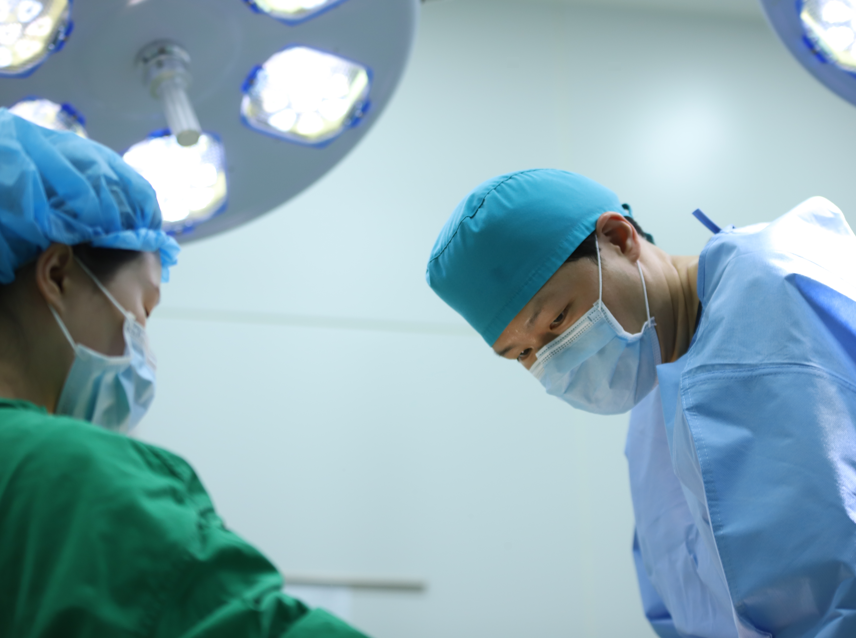
The reason we insist on this method is simple.
We want there to be as little sign as possible that surgery was performed when you stand in front of the mirror afterward.
Even if it is not our clinic,
we recommend that you make sure to check where the incision line will be placed during your consultation.
Where and how noticeably a scar remains is ultimately determined by where the incision is made.
What is just as important as the incision is the suturing method
Lip philtrum reduction scar
Earlier, I mentioned that the location of the incision line determines whether the scar will be visible or not.
But in fact, there is another crucial variable that determines the overall quality of the scar.
That is the suturing,
meaning how the internal tissue is handled.

The philtrum area is constantly moving every time you speak or smile.
In an area with so much movement,
if the suturing is too simple, tension is placed directly on the skin surface.
In other words, the pulling force concentrates there.
If this tension continues to irritate the wound,
a scar medically referred to as a "hypertrophic scar" can form more easily.
In simple terms, this is a phenomenon in which the body overproduces scar tissue in order to resist the force that tries to pull the wound open, causing the scar to rise above the surface.
This kind of response is especially likely to occur in areas with a lot of movement, such as the philtrum.
There is a reason I am explaining this.

To reduce this problem,
tension must first be distributed at the deeper tissue level rather than on the skin surface.
At our clinic,
we combine skin removal with internal suturing to firmly fix the philtrum tissue (the orbicularis oris muscle and the fascial layer).
To put it simply,
we first pull and secure the tissue layers beneath the skin so that the tension placed on the skin surface is absorbed from the inside.
This reduces the burden on the surface suture line,
and also lowers the possibility that the scar will spread or become thick.
In addition, because the internal tissue is pulled upward,
the shortening effect on the philtrum can appear more three-dimensionally than with a method that simply removes skin.
Of course, this method does take longer and makes the procedure more complex.
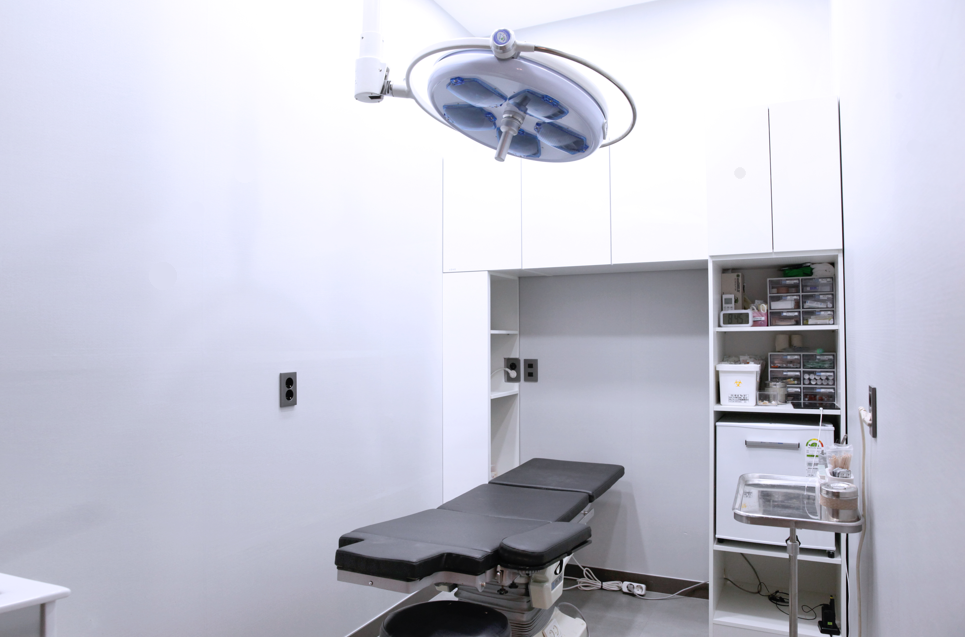
Even so, the reason we stick to this method is clear.
We believe it is the best effort to achieve both hiding the scar and minimizing the scar itself at the same time.
Since it is your precious face,
we recommend that when you have a consultation, you also ask how the internal suturing is performed.
The aesthetic satisfaction of a scar depends not only on how it is stitched from the outside,
but also on what is done inside.
We understand very well how people who are considering lip philtrum reduction feel.
Wanting to look better and worrying about scars at the same time is completely natural.
That is why we approach the procedure by paying attention not only to the surgical result, but also to the traces left behind in the process.
From the location of the incision line to the internal suturing method,
we believe that each seemingly minor choice ultimately shapes the quality of the scar.
If you are considering lip philtrum reduction,
please feel free to leave a consultation inquiry with any questions you may have.
We will carefully review your current condition and guide you toward the most suitable method.
< Other articles worth reading >
Glovi Plastic Surgery Clinic is located at
5th and 6th floors, EGI Building, 843 Nonhyeon-ro, Gangnam-gu, Seoul,
1 minute on foot from Exit 4 of Apgujeong Station on Subway Line 3.
Consultation reservations are available on weekdays and weekends.
All consultations are conducted privately, one on one.
Please leave detailed inquiries and reservation requests through the channel below.


 Lip philtrum reduction scar