Autologous Rib Cartilage Rhinoplasty,
What You Need to Know About the Material Before Surgery
Hello,
This is Globi Plastic Surgery Clinic.

Autologous rib cartilage rhinoplasty
| A clinic that follows the principles of plastic surgery, Globi Plastic Surgery Clinic |
|---|
| In plastic surgery, following the basics is the most important thing. Plastic surgery should be designed with a patient’s entire lifetime in mind. Both the process and the results must be safe. Globi always puts the patient first. |
| Consultation is an important step leading to surgery. To help you feel satisfied with your surgical results, we promise personalized consultations with medical staff who have extensive clinical experience. |
| Postoperative care can also be seen as an extension of surgery. To help patients recover quickly, we provide customized care programs. |
When looking into nose surgery,
you will inevitably come across a term at least once.
That term is “autologous rib cartilage.”
However, it can be difficult to clearly understand the exact characteristics of this material
or how it differs from ear cartilage and septal cartilage,
so many people end up feeling uncertain.
Have you ever had concerns like these?
I know autologous rib cartilage is good,
but I don’t know why it is good.
Chest incisions for harvesting rib cartilage feel burdensome, and I’m worried about scarring.
It’s my first surgery, so I’m not even sure whether I really need it.
In fact, these three questions are
the key reasons why people considering autologous rib cartilage
lose sleep the most, so to speak.
That is why today I want to organize this into two parts:
who needs this material,
and how to deal with the commonly feared issue of warping.
This is not simply a post that ends with “it’s a good material,”
but rather content that can serve as a practical decision-making guide before surgery.
What to look at before the material
Autologous Rib Cartilage Rhinoplasty
When we consult with patients,
there is something we ask before talking about the material itself.
How much change do you want right now,
and how much septal cartilage do you have left?
These are the two key questions.
The material is like the “framework” of a building.
If the structure is not strong,
even the most elaborate design can collapse quickly.
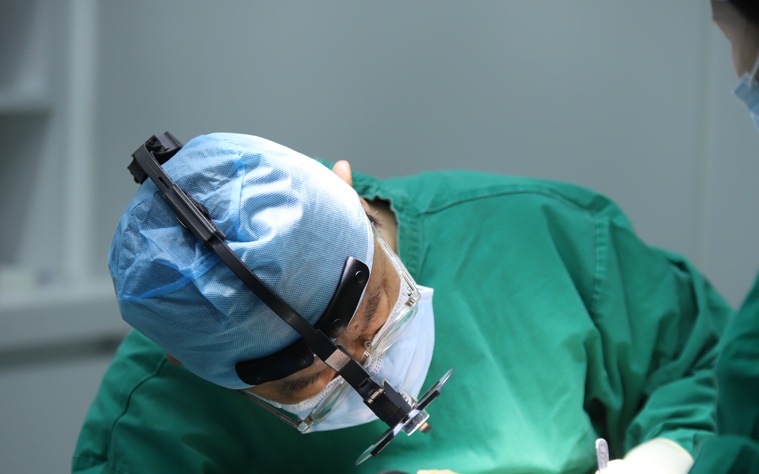
Septal cartilage and ear cartilage are
the first materials considered in nose surgery.
Because they are harvested from inside the nose or from the ear,
there is no need for an additional chest incision,
and the recovery burden is relatively lower.
That said, to be honest,
these materials have limits in quantity.
For people whose noses are especially small, whose skin is thick and tight,
or who want a noticeably higher nasal tip,
it can be difficult to build a sufficient tip support structure using only the septum.
If the support structure is weak,
the lifted shape immediately after surgery may not hold,
and the nasal tip may droop or become lower because it cannot withstand the pressure of the skin.
Because we have seen cases like this countless times,
Globi recommends autologous rib cartilage first in cases where sufficient structural support is needed.
Since autologous rib cartilage is harvested from the rib,
it provides abundant quantity and much stronger support.
This makes it possible not only to firmly build the nasal tip support,
but also to have enough material flexibility to carefully carve and shape it.
We fully understand that a chest incision can feel burdensome.
Especially for women concerned about scars,
we use a minimal incision along the inframammary fold.
Is rib cartilage really a material that bends?
Autologous Rib Cartilage Rhinoplasty
When explaining autologous rib cartilage,
there is always a question that comes up.
Doctor, I heard rib cartilage bends over time.
That is correct.
This is the phenomenon called warping.
In fact, many people undergo surgery without knowing this,
so I would like to explain it in a little more detail today.
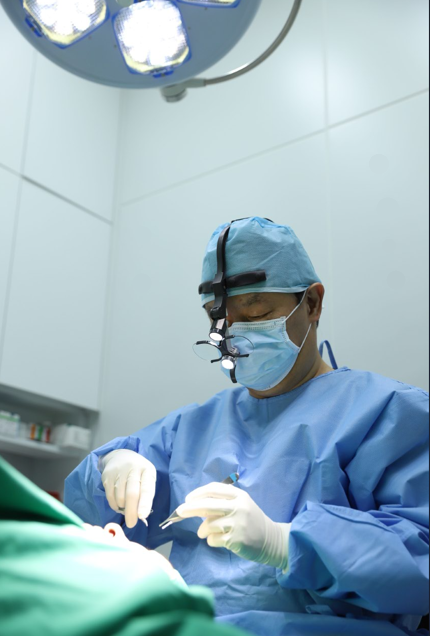
Cartilage naturally has a tendency to return to its original shape
due to internal stress, even after it is processed into the desired form.
In particular, the longer the cartilage is used as a single piece,
the stronger this tendency becomes,
so when it is used for the nasal tip support or nasal lengthening,
a slight deviation of the nose to one side may occur a few months later.
Textbooks say that warping occurs in about 30% of cases,
but in actual clinical practice, we feel it is something that requires even more caution than that.
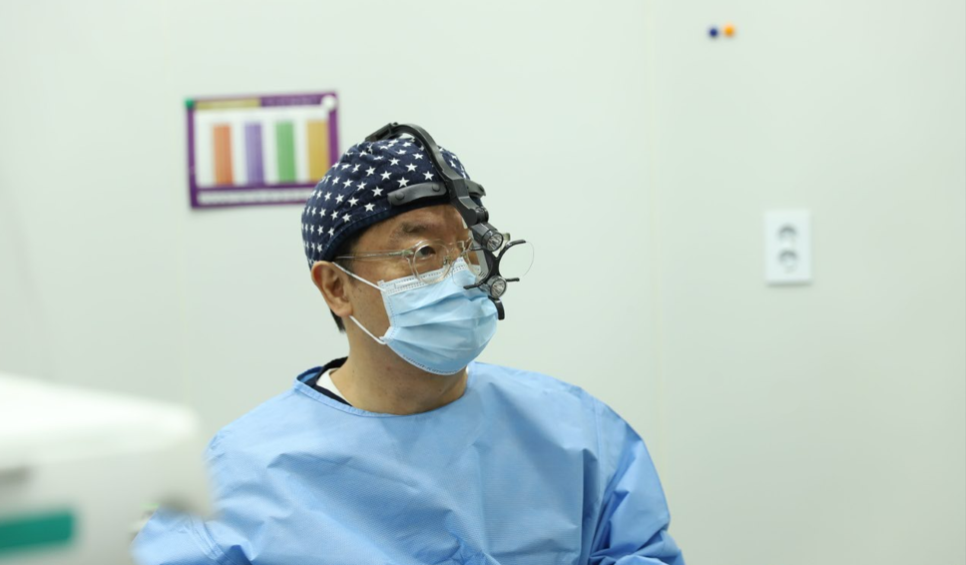
So how can this problem be reduced?
The key lies in treating the perichondrium.
If the perichondrium on the outer and inner sides of the cartilage
is not balanced, a pulling force toward one side is created.
Therefore, when refining cartilage, balancing the treatment of the perichondrium on both sides
is the first step in preventing warping.
On top of that, rather than using the cartilage as one single piece,
we prefer to divide it into appropriately sized sections depending on its purpose
and combine them.
When several pieces are structurally assembled rather than using one lump,
the pieces counterbalance one another’s forces,
creating a more stable overall structure.
When I explain this,
some people worry and ask, “Then isn’t rib cartilage a difficult material to work with?”

However, warping is not a flaw in the material itself,
but rather an issue of processing and design.
With any material, it is important to understand its characteristics
and handle it accordingly.
If you have surgery with a doctor who accurately understands and works with the properties of autologous rib cartilage,
they can carry out careful steps to minimize the possibility of warping.
Autologous rib cartilage is
not simply a “good material.”
Depending on your nasal condition and the results you want,
there are people who truly need it and people who do not.
I hope today’s post serves as a small guide
for making that decision.
No matter what material is used, what matters most is a design suited to your nose,
and finding a doctor who can accurately bring that design to life.
If you have any questions, please feel free to contact us.
< Recommended reading >
Globi Plastic Surgery Clinic is
located at EGI Building, 5th and 6th floors, 843 Nonhyeon-ro, Gangnam-gu, Seoul,
1 minute on foot from Exit 4 of Apgujeong Station on Subway Line 3.
Consultation appointments are available on both weekdays and weekends.
All consultations are conducted privately, one-on-one.
For detailed inquiries and reservations, please leave a message through the channel below.


Autologous rib cartilage rhinoplasty