Hello,
This is Globi Plastic Surgery Clinic.

Thread lifting dimple
| A clinic that follows the principles of plastic surgery, Globi Plastic Surgery Clinic |
|---|
| Plastic surgery is most important when the basics are followed. Plastic surgery must be designed with a person’s entire life in mind. Both the process and the results of plastic surgery must be safe. Globi always puts the client first. |
| Consultation is an important step that leads to surgery. To help you be satisfied with your surgical results, we promise personalized consultations with medical staff who have extensive clinical experience. |
| Aftercare can also be called an extension of surgery. We provide customized care programs to help patients recover quickly. |
If you are searching for thread lifting dimples,
you are probably in one of two situations.
Either after the procedure,
you noticed that part of the skin seems to sink in,
or before the procedure,
you are looking into it in advance because you are worried this might happen.
Either way, it is best to understand dimples properly.
Because even though they are often considered a common occurrence,
there are many cases where people dismiss them too lightly and then later have difficulty correcting them after coming in too late.
In this post, I will explain why dimples occur
and when and how they should be addressed,
step by step.
Whether before or after the procedure, if you read through to the end,
you will have a clear standard for dealing with dimples.
If you understand the cause of dimples,
you will be less startled
Thread lifting dimple
Dimples are a fairly common phenomenon after thread lifting.
If you looked in the mirror after the procedure
and saw that part of the skin had caved in,
it is usually this dimple effect.
It can be surprising at first,
but once you know why it happens,
you may feel a little less alarmed.
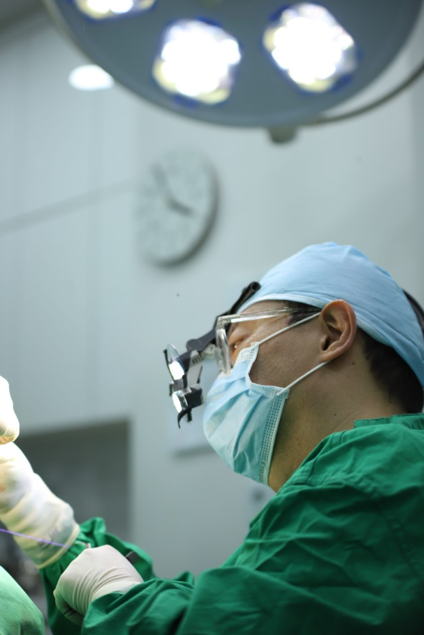
Dimples occur when the barbs on the thread pull too strongly on the tissue in the dermal layer.
As the thread lifts sagging skin,
tissue at a specific point adheres closely to the thread,
causing only that area to appear sunken inward.
This is more likely to appear in people with thinner skin,
because the thinner the layer, the more clearly the effect of the thread’s barbs on the dermis shows through from the surface.
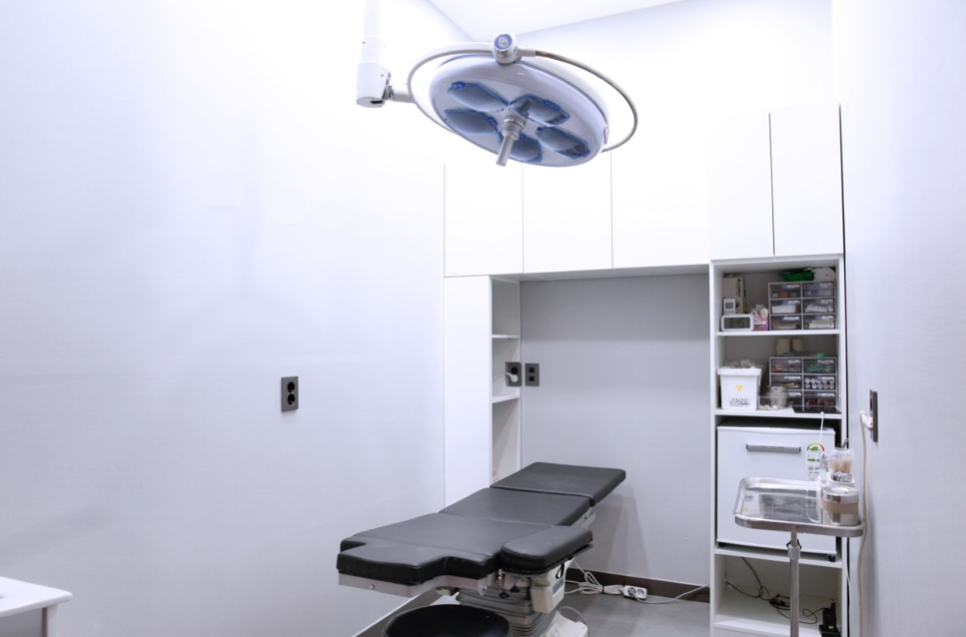
There is one part here that I consider especially important.
That is the insertion depth.
If the thread does not go deep enough into the subcutaneous layer
and passes too close to the boundary between the dermis and the epidermis,
the pulling force acts more directly on the skin.
When that happens, the likelihood of dimples increases,
and in severe cases, the outline of the thread may even be visible through the skin.
These dimples cannot be prevented entirely,
but depending on how the insertion path is planned,
the frequency and severity can be reduced.
That is why, at Globi Plastic Surgery Clinic,
we first check skin thickness before the procedure
and design the insertion depth differently for each person.
This is our own approach to reducing the occurrence of dimples.
This is not to say you must come to us.
Wherever you receive the procedure,
it is helpful to check in advance how insertion depth is managed.
Dimples must be checked within one month
Thread lifting dimple
When a dimple appears, the first thought is usually,
'If I leave it alone, it will go away.'
I hear this very often in consultations.
And to be honest,
it is both true and not true.
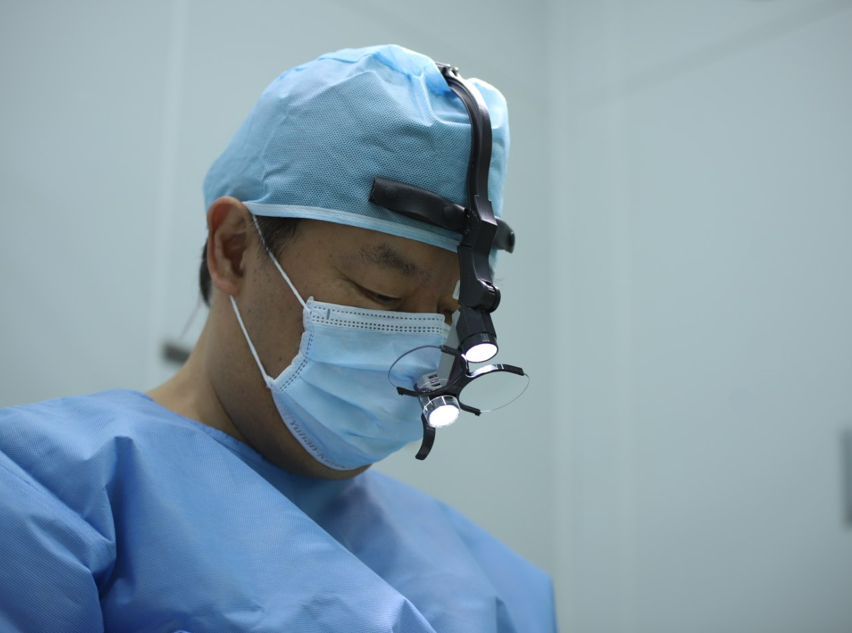
Right after the procedure, swelling can make it look like a dimple,
and as the swelling goes down,
it can naturally disappear.
Usually, this is the period from one week to one month.
However, if the dimple remains after one month,
the story changes.
That is because the tissue around the thread begins to adhere in the dimpled shape as it is.
Adhesion is a phenomenon in which tissue sticks to the thread and hardens,
and once this settles in, it becomes increasingly difficult to loosen with massage.
The longer it is left untreated,
the more the tissue remembers that shape,
and in the end, the dimple can remain permanently.

Thread lifting dimple
This is why we emphasize aftercare so strongly.
Dimples are easier to resolve the earlier they are loosened,
and they become progressively harder to treat as time passes.
At Globi Plastic Surgery Clinic, we check your condition directly the day after the procedure,
and if the dimple is severe, we take immediate action.
Then, at the 4-week mark, you must come in so we can check for any remaining dimples or unevenness
and correct them.
Because we believe this process should not be skipped,
we explain it clearly from before the procedure.
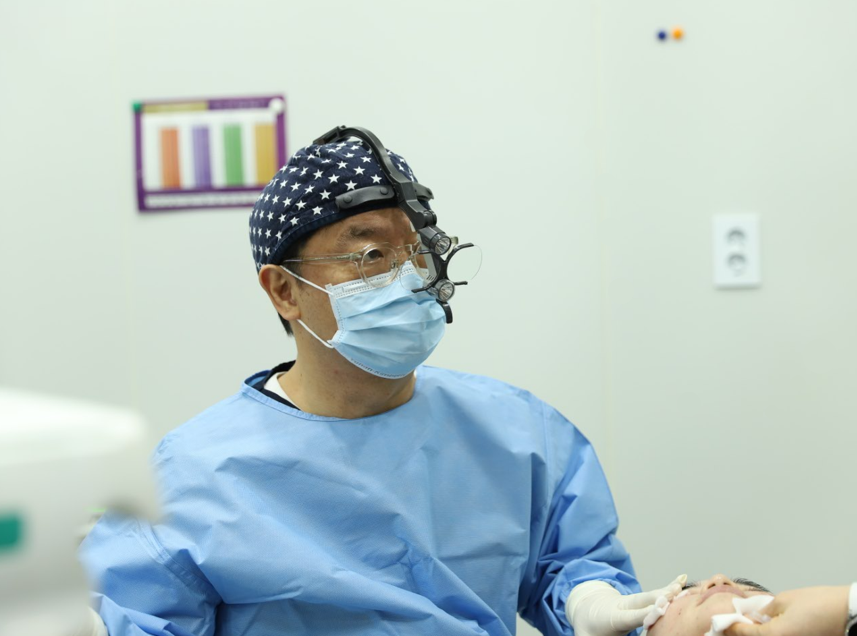
Of course, our method is not the only correct one.
However, wherever you receive the procedure,
we recommend that you make sure in advance how dimples are handled if they occur.
That one check can help prevent later regret you never expected.
What matters more than the dimple itself is how it is handled.
Before the procedure, please check how insertion depth is managed,
and after the procedure, please check what will be done if a dimple appears.
We hope you will review these two points together.
If you have any questions, please feel free to contact us anytime.
Globi Plastic Surgery Clinic will carefully look into it for you.
※ All procedures may cause side effects such as inflammation, bleeding, or nerve damage depending on the individual,
so sufficient consultation with medical staff is necessary.
< Recommended related reading >
Globi Plastic Surgery Clinic is
located 1 minute on foot from Exit 4 of Apgujeong Station on Subway Line 3,
on the 5th and 6th floors of the EGI Building, 843 Nonhyeon-ro, Gangnam-gu, Seoul.
Consultation reservations are available on both weekdays and weekends.
All consultations are conducted privately one-on-one.
For detailed inquiries and reservations, please leave a message through the channel below.


Thread lifting dimple