Middle-aged under-eye fat repositioning,
There is a reason the effect can be different as you get older
Hello.
Even when only the under-eye area changes,
a person can look years younger,
and this is something we confirm firsthand every day at
Glovi Plastic Surgery Clinic.
Middle-aged under-eye fat repositioning
| A clinic that follows the principles of plastic surgery, Glovi Plastic Surgery Clinic |
|---|
| In plastic surgery, following the basics is the most important thing.Plastic surgery should be designed with the patient’s entire life in mind.Both the process and the results of plastic surgery must be safe.Glovi always puts the patient first. |
| Consultation is an important step that leads to surgery.We promise personalized consultations with medical staff rich in clinical experience so that you can be satisfied with your surgical results. |
| Postoperative care can also be considered an extension of surgery.To help patients recover quickly,we provide customized care programs. |
I keep hearing that I look tired,
but I’m not actually tired.
Many people looking into under-eye fat repositioning do so with concerns like this.
But when they search, they often come across statements like
“Middle-aged patients are different” or “Lower blepharoplasty is better for middle-aged patients,”
and then they start getting even more confused about the difference between the two procedures and which one they should choose.
So today, I’d like to clear up that confusion.
If you read to the end, the vague parts will become much clearer.
Middle-aged under-eye fat repositioning,
This is what you should look at before age
Middle-aged under-eye fat repositioning
When searching for under-eye fat repositioning,
you may have come across this phrase at least once somewhere:
“Lower blepharoplasty is better for middle-aged patients.”
That is not entirely wrong.
But it is not the only correct answer either.
Not everyone in middle age needs to have lower blepharoplasty.
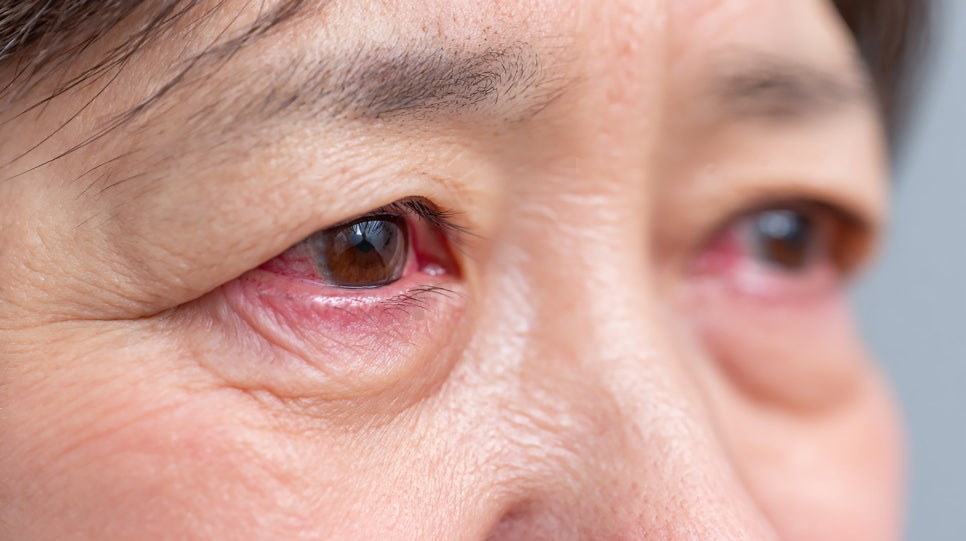
The important thing is not age,
but the degree of skin sagging.
Inside our eyes, there is fat that protects the eyeball.
As we age, the orbital septum that surrounds the under-eye fat weakens,
causing the fat to push forward.
Under-eye fat repositioning is a procedure that does not remove this protruding fat,
but moves it to the hollow area below it
to create a smoother contour.
If the fat is simply removed,
the area may look even more sunken
or the tear trough may become deeper,
so these days, repositioning first and removing only some of the remaining fat
has become the standard approach.

For middle-aged patients, the situation can be a little different.
In people in their 20s and 30s, skin elasticity is usually sufficient,
so even if the procedure is performed through a transconjunctival approach,
the skin naturally adapts.
After the 40s, many people already have loose skin.
In these cases, even if the repositioning is done well,
if the overlying skin remains saggy,
fine wrinkles may remain after surgery,
or the overall result may not look smooth.
During consultation, we first check the skin condition.
Then we decide how to improve it.
Middle-aged under-eye fat repositioning
This is not to say that you must come to us.
However, wherever you receive your consultation,
please make sure to check whether there is skin sagging.
That one check alone can change the choice of method itself.
Under-eye fat repositioning,
This is the process that determines the outcome
Middle-aged under-eye fat repositioning
Once the surgical method has been decided,
what comes next is important.
In fact, the key factor that determines satisfaction is often not the method itself,
but what process is carried out within it.
Among these, there is one important factor that is not widely known.
That is the tear trough ligament.
It may sound unfamiliar,
so let me explain it simply.
There is a ligament under the eye that connects the skin and bone.
This ligament pulls the skin down tightly.
As the fat protrudes more,
the area that the ligament holds appears relatively more deeply hollowed,
and as a result, the under-eye area looks uneven.
Simply repositioning the fat does not completely resolve this hollowing.
This ligament must be sufficiently dissected and released
to remove the force pulling the skin downward.
Only then can the repositioned fat
fill that space without gaps
and create a smooth under-eye contour.
In particular, for middle-aged patients,
this ligament is often hardened over a long period of time,
so a more delicate approach to dissection is needed.
If the dissection is too broad, the tissue may become unstable,
and if it is not released enough,
a sunken look may remain after surgery.
That is why it is important to closely examine the under-eye condition
and decide on the appropriate extent.
At our clinic, we consider adjusting the dissection range
to match the condition of the patient’s under-eye tissue
as a key step.
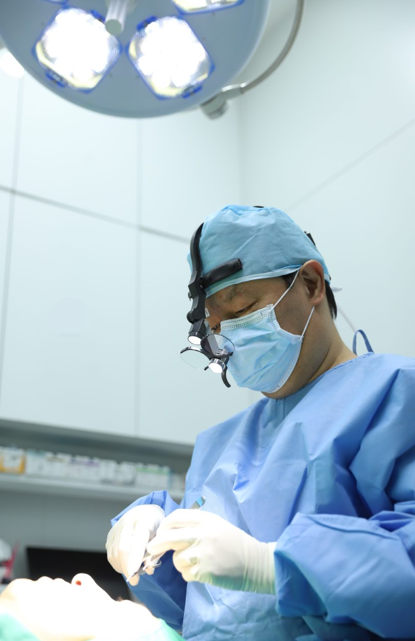
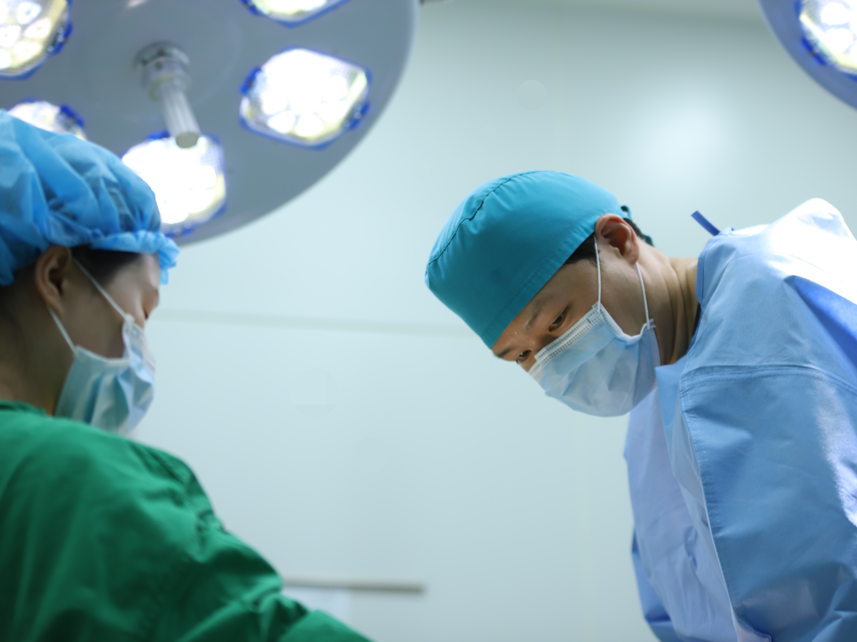
We see every day in the operating room how much a single under-eye area can change a person’s impression.
That is why this is also a process that requires a very careful approach.
Middle-aged under-eye fat repositioning
does not end with simply moving fat.
It involves checking skin sagging, assessing the condition of the ligaments,
and finding the right method to match.
If you have any questions,
please feel free to leave an inquiry.
※ Depending on the individual, side effects such as bleeding, inflammation, or infection may occur after surgery,
and results may vary depending on the condition,
so sufficient consultation with a specialist is necessary.
< Suggested reading >
Glovi Plastic Surgery Clinic is
located 1 minute on foot from Exit 4 of Apgujeong Station on Subway Line 3,
on the 5th and 6th floors of EGI Building, 843 Nonhyeon-ro, Gangnam-gu, Seoul.
Consultation appointments are available on both weekdays and weekends.
All consultations are conducted privately, one-on-one.
For detailed inquiries and reservations, please leave a message through the channel below.


Middle-aged under-eye fat repositioning