Thread Lift Anesthesia,
The procedure experience
depends completely on the method
Hello,
This is Globi Plastic Surgery Clinic.

Thread lift anesthesia
| A clinic that follows the principles of plastic surgery, Globi Plastic Surgery Clinic |
|---|
| In plastic surgery, following the basics is the most important thing. Plastic surgery must be planned with a patient’s entire life in mind. Both the process and the results of plastic surgery must be safe. Globi always puts the patient first. |
| Consultation is an important step that leads to surgery. To help you be satisfied with your surgical results, we promise personalized consultations with medical staff who have extensive clinical experience. |
| Aftercare can also be considered an extension of surgery. To help patients recover quickly, we provide customized care programs. |
Among those looking into thread lifts,
many are worried about “this” as much as the results.
I’ve heard it hurts a lot,
will the anesthesia really work properly?
"I have to go to work tomorrow right away—
won’t my face swell too much?"
"What if the bruising is so severe
that people around me notice right away?" These are
very understandable practical concerns.
In this article, we’ll look at the differences between
anesthesia methods used for thread lifts,
which option is more suitable in which cases,
and how you should prepare on the day of the procedure.
What is the difference between local anesthesia and sedation anesthesia?
Thread lift anesthesia
When explaining thread lift anesthesia,
there is something we always say.
Anesthesia is not simply about whether it hurts or not.
Local anesthesia is a method in which a lidocaine-based
local anesthetic is injected directly into the treatment area
to block sensation in that area.
It may seem simple at first glance,
but you should keep in mind that a thread lift is a procedure
that treats the entire face or a wide area.
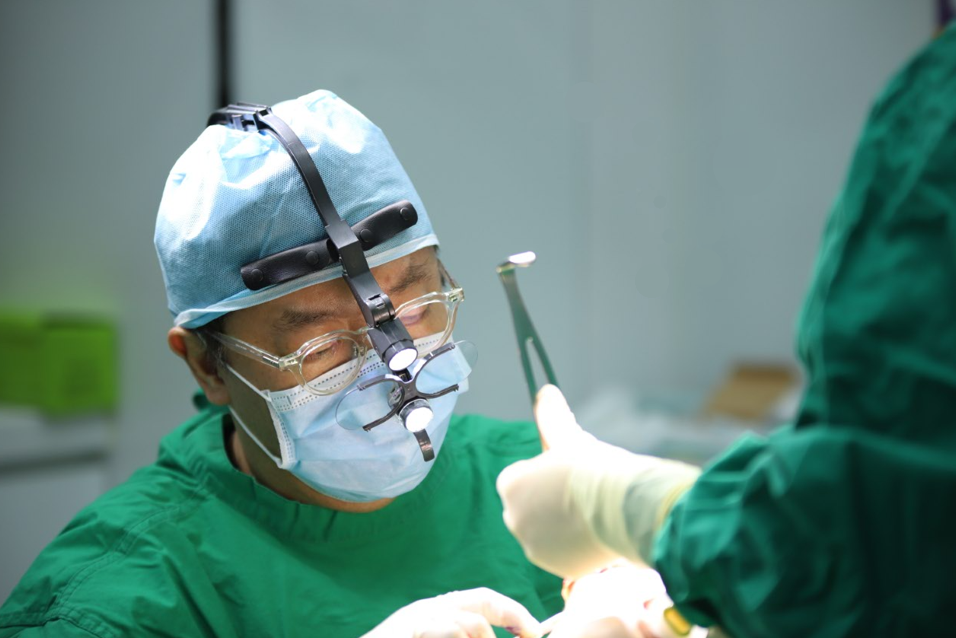
For anesthesia, multiple injections are needed repeatedly
around the front of the ears, the temples, the cheeks,
and the jawline.
Many people say that these anesthesia injections
are more painful and unpleasant than the actual procedure.
There is one more easily overlooked point.
During a thread lift, as the thread passes through the tissue under the skin,
a distinctive sound can be heard.
It sounds like a "grinding" noise, and surprisingly many people say
that this sound was psychologically more difficult to handle than the pain.
Because local anesthesia is performed while you are fully awake,
there is the burden of hearing that sound until the procedure is over.
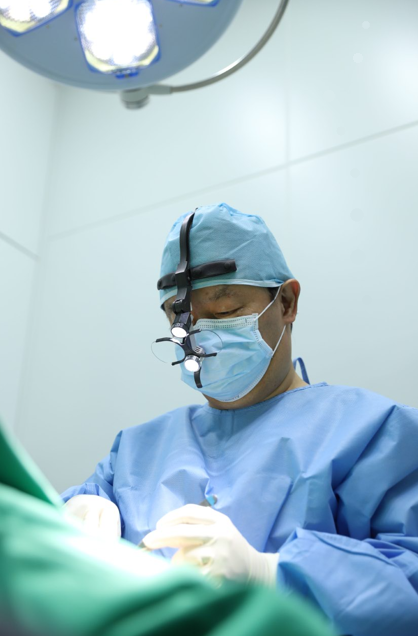
Sedation anesthesia solves both of these issues at the same time.
It is a method in which sedative medication is administered intravenously
to temporarily lower consciousness,
and unlike general anesthesia,
it does not involve fully falling asleep.
Instead, spontaneous breathing is maintained while only the ability to perceive pain
and the level of consciousness are reduced.
As a result, you can finish the procedure without perceiving
not only the pain of the injections but also the sounds
that occur during the procedure.
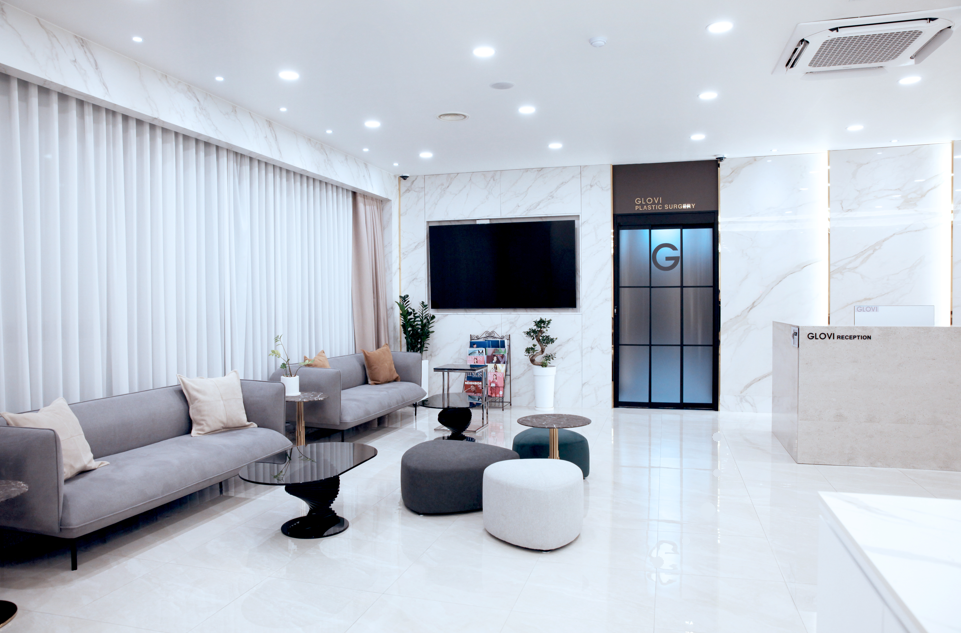
However, Globi does not automatically recommend sedation anesthesia only.
We design the most appropriate and safe plan according to the patient’s health condition,
pain sensitivity, and condition on the day of the procedure.
For example, for someone who says,
"I can tolerate pain pretty well, but I don’t want to hear the sound of the thread passing through,"
we base the procedure on local anesthesia,
but induce a very light sedative state only during the section at the beginning of the procedure
where the sound is heard most strongly,
so that psychological comfort is also considered in the plan.
If you are expected to undergo treatment over a wide area,
or if you are especially sensitive to sound and sensation,
combining the two methods can make the overall experience much more comfortable.
If you chose sedation anesthesia,
make sure to prepare these things on the day
Thread lift anesthesia
Once you have decided on an anesthesia method,
the next step is preparing for the day of the procedure.
Especially if you choose sedation anesthesia,
there are a few things to bring and keep in mind,
so let’s go over them one by one.
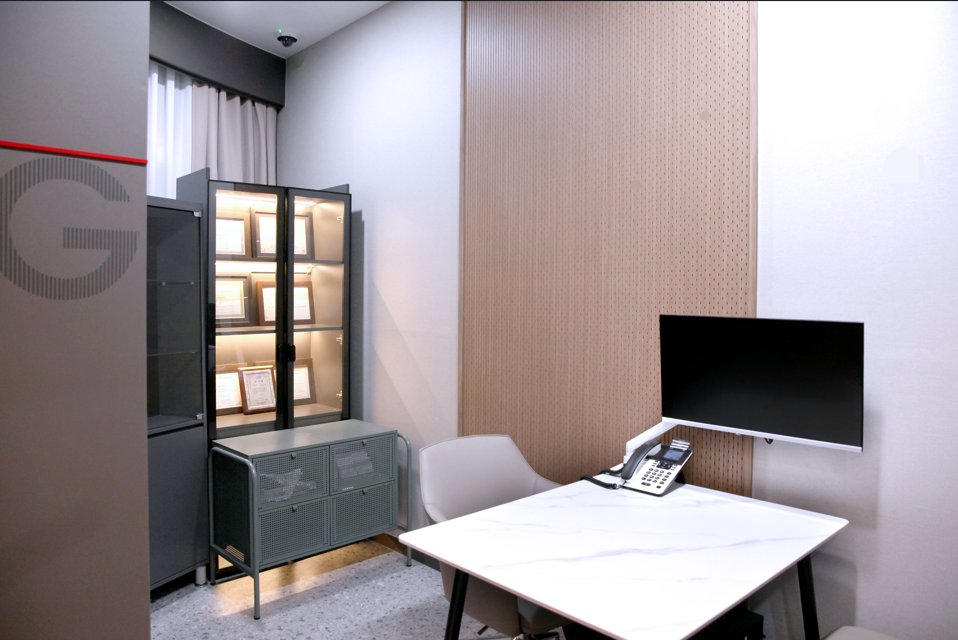
Thread lift anesthesia
First, fasting is required.
For a smooth procedure, you should not eat for 4 to 6 hours before the procedure,
and it is also best to avoid drinking water.
If sedation anesthesia is performed while there is food in the stomach,
a vomiting response may occur,
and
although rare, there can be risks such as aspiration pneumonia,
so this must be followed.
The next thing we strongly recommend is coming with a guardian.
After sedation anesthesia, judgment and reaction speed remain temporarily reduced,
so driving is not recommended, and using public transportation alone is also not recommended.
Even if you feel fine right after the procedure,
your cognitive ability and reaction speed are significantly reduced,
so for safety, please be sure to come with a guardian.

You should also avoid drinking, smoking,
and high-intensity exercise on the day.
If blood flow increases, swelling and bruising can become worse,
so resting lightly is better for recovery.
This also applies equally to those who choose local anesthesia,
so please keep it in mind.
In addition, Globi does not perform the procedure simply because the patient wants it.
If the skin is too thin and thread visibility is a concern,
or if sagging is too severe and satisfactory results are unlikely
from thread lifting alone,
or if there are uncontrolled underlying medical conditions,
we respectfully postpone the procedure or recommend another alternative.
This is because a procedure without guaranteed safety
ultimately leads to lower satisfaction.
Even the anesthesia method alone
requires this much consideration.
That is why it is important to fully understand and decide in advance,
and simply coming prepared on the day can change the procedure experience.
Globi’s principle is to transparently disclose the information
and possible side effects that patients truly need.
If you have any questions,
please feel free to leave an inquiry for consultation.
< Articles worth reading together >
Globi Plastic Surgery Clinic is
located 1 minute on foot from Exit 4 of Apgujeong Station on Subway Line 3
on the 5th and 6th floors of the EGI Building,
843 Nonhyeon-ro, Gangnam-gu, Seoul.
Consultation reservations are available on both weekdays and weekends.
All consultations are conducted privately, one-on-one.
For detailed inquiries and reservations, please leave a message through the channel below.


Thread lift anesthesia