Septal rhinoplasty,
Honestly answering the question,
“Is it okay to remove it?”
Hello,
this is Glovi Plastic Surgery Clinic.

Septal rhinoplasty
| A clinic that follows the principles of aesthetics, Glovi Plastic Surgery Clinic |
|---|
| In aesthetic surgery, following the basics is the most important thing. Aesthetic surgery must be designed with the patient’s lifetime in mind. Both the process and the results must be safe. Glovi always puts the patient first. |
| Consultation is an important step that leads to surgery. To help you feel satisfied with the surgical results, we promise personalized consultations with medical staff who have extensive clinical experience. |
| Aftercare can also be considered an extension of the surgery. To support our patients’ quick recovery, we provide customized care programs. |
When looking into nose surgery,
you will likely hear the term “septal cartilage” at least once.
At that moment, most people have the same first thought.
Is it really okay to remove something from inside the nose?
What if the nose collapses or its shape changes?
Those are the kinds of concerns people have.
We also do not want anyone to go into surgery without a proper explanation.
So today, we want to honestly explain
how septal rhinoplasty is performed,
and what you must know before and after surgery.
By the time you finish reading,
the things you hear in the consultation room
will sound much clearer.
Why the nose does not collapse even if septal cartilage is removed
Septal rhinoplasty
Doctor, if the cartilage inside the nose is removed,
won’t the nose collapse?
This is a question we hear several times a day in the consultation room.
If this is the first time you are hearing about it,
it is only natural to feel worried.

The septum is the central partition of the nose
that separates the left and right nostrils.
Inside it is cartilage tissue,
and the autologous tissue most often considered first in rhinoplasty
is the septal cartilage.
Unlike the ear or the chest,
there is no need to make an additional incision in another part of the body,
and it can be harvested through the existing incision
without any extra cuts.
That is a major advantage.
Because there is no concern about visible scarring,
and because it is thin and flat,
it is easy to use for supporting the nasal tip structure
or refining delicate shapes,
it is considered one of the suitable options for first-time surgical material.
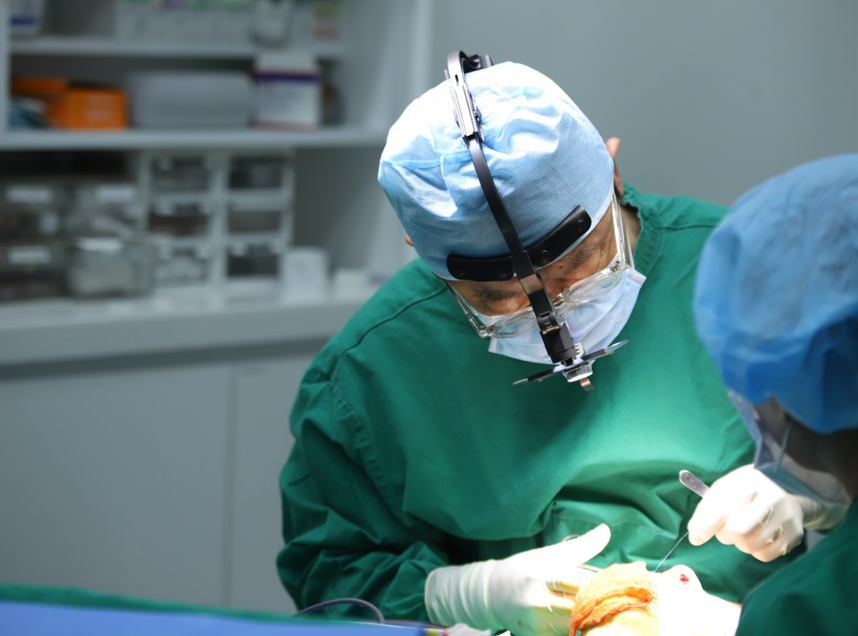
When harvesting septal cartilage,
we do not use the entire structure.
The minimum support pillar that maintains the nose’s structure,
the so-called “L-strut,” must always be left intact,
and only the remaining internal portion is safely harvested
and used to raise the tip of the nose or shape it.
As long as this L-strut remains firmly intact,
the likelihood of the nose collapsing or drooping is low.
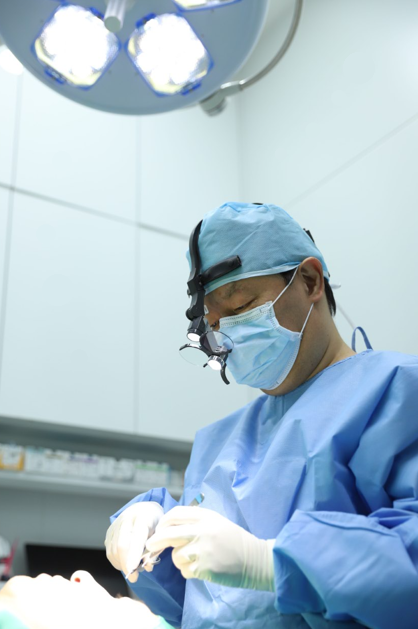
However, how precisely that support pillar is preserved
depends on the surgeon’s skill.
If too much is removed, support weakens,
and if too little is used, it becomes difficult to create the desired shape.
Finding that balance is the core of the surgery,
and it is also why we check the condition of the septum first during consultation.
However, the septum is not the right answer for everyone.
For people with a small nose or a very thin septum,
the amount that can be harvested is limited,
and if it is forced, the support structure can actually be compromised.
In such cases, we honestly say that it is better to switch to ear cartilage or costal cartilage.
Rather than thinking, “We can use it, so let’s use it,”
our standard is to first ask,
“What is the safest material for this person?”
After septal rhinoplasty,
the recovery reality no one tells you about
Septal rhinoplasty
The next thing people ask most often
is the recovery process.
Let’s go over what actually happens after surgery,
step by step.
How long after the surgery can I go outside?
I can’t take too much time off because of work.
When patients ask this, we know that what they worry about most
is “getting back to daily life quickly” and “keeping it private.”

Septal rhinoplasty
Immediately after surgery,
a splint is attached to the nose,
and packing is placed inside the nostrils to control bleeding.
The packing is usually removed within 1 to 2 days,
and many people find this period to be the hardest.
It becomes difficult to breathe through the nose,
and the whole face feels heavy and swollen.
At this time, the most important thing is not to touch the nose at all.
Because the cartilage has not yet settled into place,
even touching it carelessly can shift its position.

When washing your face, the area around the nose should only be lightly touched by water,
and you should not rub it;
instead, gently press and wipe it clean.
The stitches are usually removed around 7 days after surgery.
When people first look in the mirror,
they are sometimes surprised that the swelling is greater than expected,
but this is a normal part of recovery.
The tip of the nose is an area with slow blood circulation,
so the swelling also goes down the slowest.
A nose tip that looks blunt in the first week
is often the one that takes on the most ideal shape
six months later.

When sleeping, you should not lie on your side;
you should lie on your back.
Also, if constant pressure is placed on the nose,
it can affect the settling process.
There may be some variation depending on the extent of surgery,
but we recommend avoiding glasses for about a month if possible.
We understand very well how much searching you did
and how long you may have worried before deciding on nose surgery.
Glovi’s principle is to transparently share the information patients must know
as well as the possibility of side effects.
If you would like to know more about material selection and the recovery process,
please feel free to contact us through the consultation button.
< Other posts worth reading >
Glovi Plastic Surgery Clinic is
located in EGI Building 5F and 6F, 843 Nonhyeon-ro, Gangnam-gu, Seoul,
1 minute on foot from Exit 4 of Apgujeong Station on Subway Line 3.
Consultation reservations are available on both weekdays and weekends.
All consultations are conducted privately, one on one.
For detailed inquiries and reservations, please leave a message through the channel below.


Septal rhinoplasty