Thread lifting bruising,
The difference in procedure method makes the difference
Hello,
This is Glovi Plastic Surgery Clinic.

Thread lifting bruising
| A clinic that follows the principles of plastic surgery, Glovi Plastic Surgery Clinic |
|---|
| In plastic surgery, following the basics is the most important thing.Plastic surgery should be designed with the patient’s entire life in mind.Both the process and the results of plastic surgery must be safe.Glovi always puts the customer first. |
| Consultation is an important step that leads to surgery.We promise personalized consultations with medical staff rich in clinical experience so that you can be satisfied with your surgical results. |
| Aftercare can also be considered an extension of surgery.To help patients recover quickly,we provide customized care programs. |
One of the most common questions people ask before thread lifting is this.
Will there be a lot of bruising after the procedure?
Will it be noticeable while I’m at work?
Many people worry about bruising even before thinking about the results.
Many people think bruising is simply due to their constitution,
but in fact there is an even more decisive variable.
The degree of bruising can differ greatly depending on how the threads are inserted,
that is, depending on the procedure design.
Today, I’ll explain why bruising occurs after thread lifting,
and which factors determine how much bruising appears,
point by point so you can keep these things in mind before the procedure.
Reasons bruising occurs after thread lifting
Thread lifting bruising
“I bruise easily, so I’m even more worried.”
This is something we often hear in the consultation room.
Of course, we cannot say that constitution has no effect at all,
but in fact there is another, more important factor that determines the extent of bruising.
The mechanism behind bruising after thread lifting is this.
As the thread passes through the inside of the skin,
small blood vessels are damaged,
blood leaks into the tissue,
and bruising appears on the skin’s surface.
The face has a much richer blood vessel distribution than other parts of the body,
so there is a high chance that blood vessels lie along the path of the thread.
However, this does not mean this happens severely to everyone.
The most important factor here is the path the thread takes and the insertion angle.
How precisely the procedure avoids areas where blood vessels are concentrated,
and how much unnecessary tissue damage is minimized in the process,
are the key factors that determine the outcome.
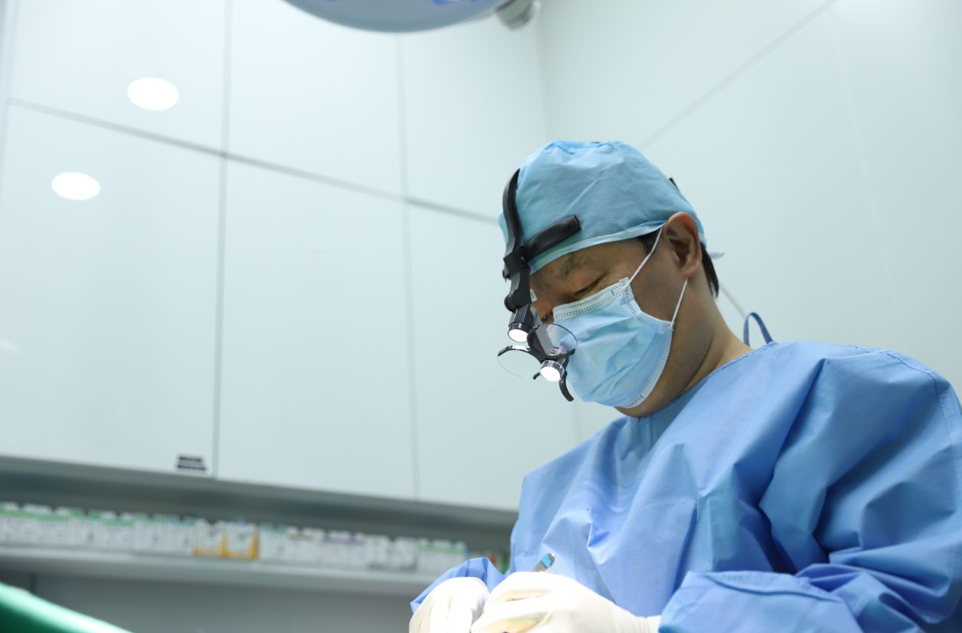
This is not something that depends only on the performance of the equipment,
but an area that requires understanding of anatomical structure and skilled judgment.
In fact, some patients say in the consultation room,
"I had severe bruising when I got it done somewhere else," and in such cases,
it is highly likely that this part was different even though the procedure was the same.
That is how directly the practitioner’s skill can affect the range of bruising in each area.
And there is one more thing I want to point out.
If you are taking blood-thinning medications or supplements such as aspirin, circulation pills, or omega-3,
please be sure to tell us before the procedure.
This is because these ingredients interfere with blood clotting,
making it more likely that bruising will spread more widely or remain for a longer time.
So, what is the best way to manage bruising once it has already appeared?
How should bruising after the procedure be managed so it fades faster?
Thread lifting bruising
I understand that bruising can happen,
but when does it usually go away?
This is one of the most practical concerns for people who are considering their schedule before the procedure.
In general, bruising is most noticeable 2 to 3 days after the procedure,
and then gradually fades,
with most cases settling within 1 to 2 weeks.
However, please keep in mind that, as mentioned earlier,
the recovery speed can vary quite a bit depending on whether you are taking blood-related medications.
Up to 3 days after the procedure,
cold compresses are practically helpful.
The basic method is to apply them for 10 to 15 minutes,
then repeat at 20 to 30 minute intervals.
During this period, cooling the blood vessels can help prevent bruising from spreading more widely.
Even if it is inconvenient, we hope you will make sure to do this for the first 3 days.
On the other hand, there are also precautions that should absolutely be avoided during this period.
 Alcohol expands blood vessels and can make bruising spread more widely,
and activities that rapidly raise body temperature, such as saunas or intense exercise,
should also be avoided for the same reason.
Alcohol expands blood vessels and can make bruising spread more widely,
and activities that rapidly raise body temperature, such as saunas or intense exercise,
should also be avoided for the same reason.
If you have an important appointment,
it is best to keep this in mind and schedule at least 2 weeks after the procedure.
And one more thing, honestly speaking.
Thread lifting bruising
If you have a tendency toward keloids or a blood-related disorder,
please be sure to let us know before the procedure.
In such cases, the procedure itself may not be recommended,
or the approach may need to be adjusted carefully,
and this can only be determined accurately through a consultation.
Rather than saying it can be done unconditionally,
our principle is to first check whether the conditions are safe for the procedure.
Bruising after thread lifting is not only a matter of constitution.
When the procedure design, skill level,
and pre- and post-procedure care are all in place,
the extent of bruising and the recovery speed can change.
Glovi Plastic Surgery Clinic makes it a principle to transparently disclose
possible side effects and precautions that may occur after the procedure.
It is not too late to decide after first confirming accurately
whether the procedure is safe for your condition and which method is suitable.
If you have any questions, please feel free to contact us anytime.
< Related posts >
Glovi Plastic Surgery Clinic is
located on the 5th and 6th floors of the EGI Building, 843 Nonhyeon-ro, Gangnam-gu, Seoul,
1 minute on foot from Exit 4 of Apgujeong Station on Subway Line 3.
Consultation reservations are available on both weekdays and weekends.
All consultations are conducted privately, one-on-one.
For detailed inquiries and reservations, please leave a message through the channel below.



Thread lifting bruising