Custom implant rhinoplasty,
A complete guide to the differences from autologous rib cartilage
Hello,
This is Globi Plastic Surgery Clinic.

Custom implant rhinoplasty
| A hospital that follows the principles of plastic surgery, Globi Plastic Surgery Clinic |
|---|
| Plastic surgery is most important when the basics are followed.Plastic surgery should be designed with a view to the patient’s entire life.Both the process and the results of plastic surgery must be safe.Glowbi always puts the customer first. |
| Consultation is an important step that leads to surgery.We promise customized consultations with medical staff who have extensive clinical experience so that you can be satisfied with your surgical results. |
| Postoperative care can be considered an extension of the surgery.We provide customized care programs to help patients recover quickly. |
When you are considering rhinoplasty,
there is a crossroads you will inevitably face at some point.
Should you choose a custom implant,
or should you use autologous rib cartilage?
People who ask this question usually have one thing in common.
They have already gathered quite a lot of information,
but they are not sure what the difference between the two actually is,
or which option is right for their nose.
The two methods each have different purposes and uses.
It is not about which one is better,
but about understanding which method is suitable for which case,
so that you do not regret the result later.
You need to understand that custom implants and autologous rib cartilage
do different jobs
Custom implant rhinoplasty
Which is better, a custom implant or autologous rib cartilage?
I don’t know which one I should choose.
I hear this all the time in consultations.
Whenever I hear this question,
I first ask one thing.
“Have you heard what each of the two does in the nose?”
Most people answer,
“Aren’t both just used for rhinoplasty?”
That is where the confusion starts.
The nose is broadly divided into two areas.
In other words, the bridge is the firm bone area (implant),
and the tip is the cartilage area (support structure).
It is easier to understand if you divide the nose into these areas.
The two are not in competition;
their roles are divided from the start.
The decisive difference between a custom implant and a regular implant
lies in the design of the underside.
A standard implant is carved directly in the operating room
with a scalpel to fit the nasal bone,
but the subtle differences in each person’s nasal bone contours
are never easy to match perfectly by hand.
Depending on the situation, gaps can form,
which can cause the implant to shift slowly
or become misaligned.
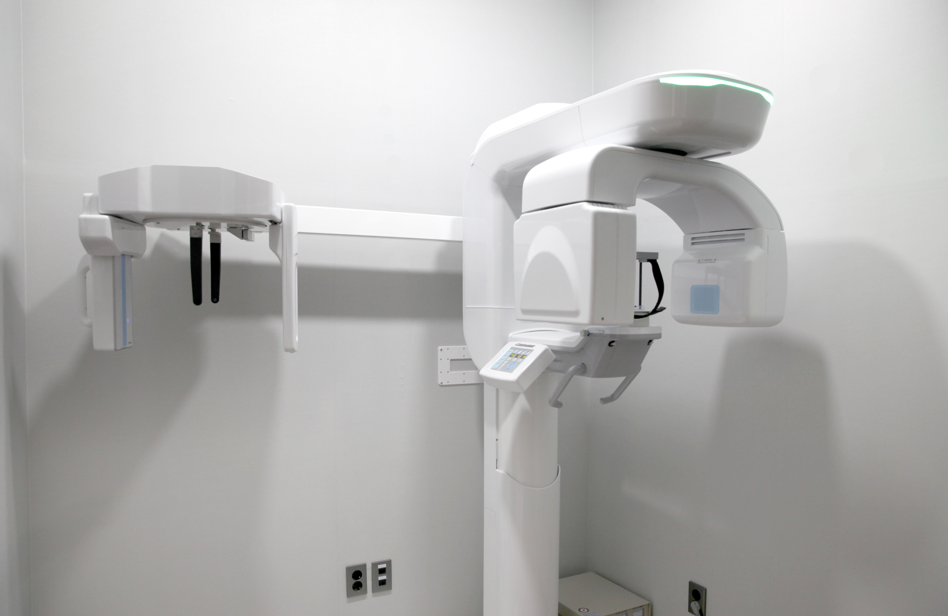
A custom implant is precisely designed to fit closely to the bone structure
after carefully analyzing the nasal bone contours with CT before surgery.
This allows the implant to settle accurately onto the nasal bone,
like puzzle pieces fitting together,
reducing the risk of lifting or displacement.
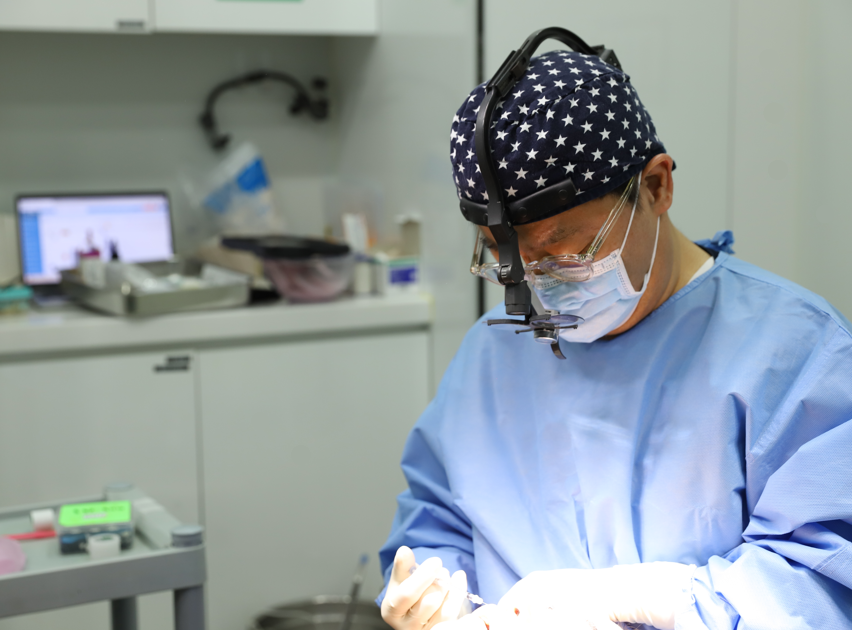
Autologous rib cartilage is the most abundant
and the strongest self-tissue material that can be used in rhinoplasty.
While the amount of septal cartilage or ear cartilage
is limited from the start,
rib cartilage can provide a sufficient quantity,
so it is especially effective when the nasal tip needs to be significantly lengthened
or when strong structural support is required.
In addition, because it is autologous tissue,
it has the advantage of relatively lowering the risk of foreign-body reactions
and inflammation.
Therefore, after understanding the role of each,
you need to approach your own case accordingly.
Which one does my nose need?
Custom implant rhinoplasty
Let me explain with an example.
This is a case where the brow bone is prominent,
making the glabella appear sunken,
and there is a mild hump on the nasal bone.
In the case of a standard implant, noses with a hump or strong curvature
require a detailed carving process
to secure a close fit.
In such cases, the nasal bone contours are quantified with CT,
a custom implant is designed,
and the hump area is finely refined
before the implant is placed on top.
As a result, it is possible to create a smooth side profile
that flows continuously from the forehead to the nasal tip.
On the other hand, cases that require autologous rib cartilage are a little different.
When the nasal tip needs to be raised significantly
or pulled far forward,
septal cartilage or ear cartilage alone
may have difficulty withstanding that load over the long term.
If the support is insufficient, the shape may initially look good,
but over time the nasal tip can gradually droop.
If septal cartilage has already been used up in revision surgery,
or if the nasal tip cartilage is congenitally weak,
rib cartilage becomes the most reliable option.
Custom implant rhinoplasty
However, one thing: I do not recommend autologous rib cartilage for every case.
If the change needed in the nasal tip is not large,
and septal cartilage can provide sufficient support,
there is no reason to harvest rib cartilage
even if it requires an additional incision in the chest.
Nasal swelling typically recovers to a level that allows daily life within one week after surgery,
and it usually takes about 3 to 6 months for the overall contours to settle.
However, recovery speed may vary depending on an individual’s constitution and the extent of surgery.
The most common mistake when choosing rhinoplasty materials is
becoming fixated on the question, “Which is better?”
There are cases where a custom implant is appropriate,
cases where autologous rib cartilage is appropriate,
and cases where the best result is achieved only by designing both together.
Which method is suitable for you can only be accurately determined
after directly checking your individual nasal bone structure and nasal tip condition.
We will help you through consultation so that you can establish
the precise plan you need from among the many sources of information.
※ Because all surgeries and procedures may cause side effects such as bleeding, inflammation, and infection depending on the individual,
caution is required.
< Recommended reading >
Globi Plastic Surgery Clinic is
located 1 minute on foot from Exit 4 of Apgujeong Station on Subway Line 3,
at 843 Nonhyeon-ro, Gangnam-gu, Seoul, EGI Building, 5th and 6th floors.
Consultation reservations are available on weekdays and weekends.
All consultations are conducted privately on a one-on-one basis.
For detailed inquiries and reservations, please leave a message through the channel below.



Custom implant rhinoplasty