Thread-Lifting Revision,
Why It Should Not Be Performed Exactly the Same Way as the First Procedure
Hello,
This is Globie Plastic Surgery Clinic.

Thread-Lifting Revision
| A Clinic That Follows the Principles of Plastic Surgery, Globie Plastic Surgery Clinic |
|---|
| Following the fundamentals is the most important aspect of plastic surgery. Procedures should be designed with the patient's entire lifetime in mind. Both the process and the results must be safe. Globie always puts patients first. |
| Consultation is an important step that leads to surgery. To help you be satisfied with your results, we promise personalized consultations with medical professionals who have extensive clinical experience. |
| Postoperative care can also be considered an extension of the procedure. We provide personalized care programs to help our patients recover quickly. |
Hello, this is Globie Plastic Surgery Clinic.
People who visit us for thread-lifting revision
usually fall into one of two situations.
Some feel that the results of their first procedure were less noticeable than expected
and want to try a different approach this time,
while others return for another procedure
when the effects are beginning to wear off.
In either case,
there is one important point that is easy to overlook.
That is the fact that the condition of our skin is now
completely different from when we first underwent the procedure.
If revision is performed without taking these changes into account,
unnecessary side effects may occur
instead of the results you expected.
In this article, we will summarize the points
that must be reviewed before revision.
Before revision, we must first examine
what has happened inside the skin.
Thread-Lifting Revision
If more threads are inserted,
won't the effects last longer?
This is a question that comes up very often during revision consultations.
The idea that adding more threads will produce better results
is completely understandable.
However, immediately answering, "Yes, we will insert more for you,"
would actually be an irresponsible response.
That is because revision starts from a different point than the first procedure.
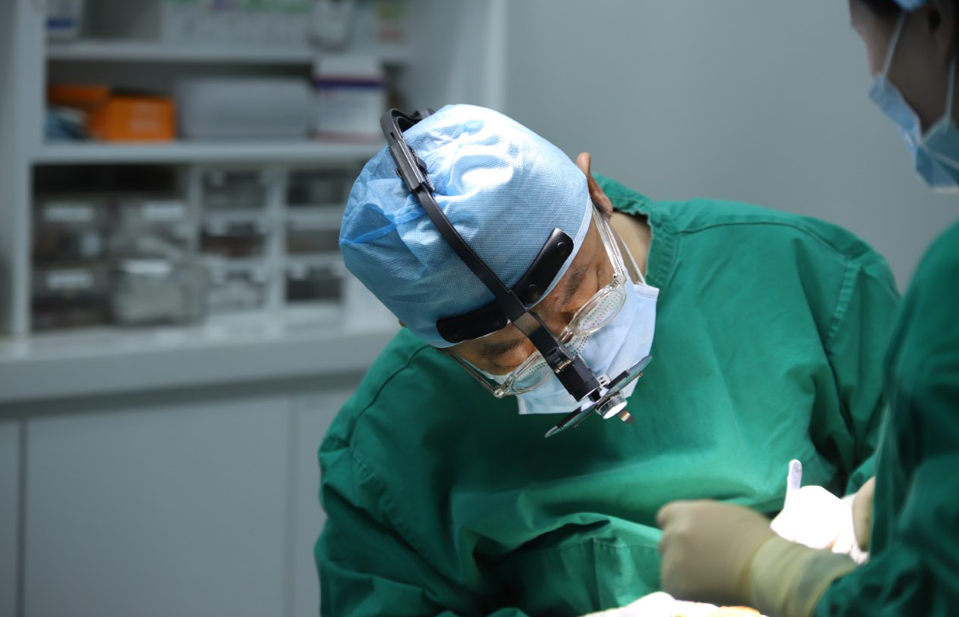
After the first procedure,
adhesive tissue has formed inside the skin.
This is a natural process in which
supportive structures resembling scar tissue form along the paths of the threads,
and this change itself is not necessarily negative.
In fact, even after all the threads have dissolved,
it can help slow the progression of sagging.
However, as more adhesive tissue accumulates,
the internal space available for inserting new threads becomes narrower.
What happens if more threads are inserted indiscriminately
without considering these conditions inside the skin?
The likelihood of noticeable side effects,
such as unevenness or dimples, increases.
In particular, a "dimpling effect," in which the skin sinks inward like a dimple,
occurs when the threads pull excessively on the dermal layer.
If left untreated, the area may adhere in that position
and become hardened.
Therefore, before revision, Globie first reviews the history of previous procedures
and checks the current degree of adhesion.
If excessive adhesion has formed
and we determine that there is not enough space to insert the threads,
we do not recommend revision until the condition has stabilized.
We believe that the first step in revision
is to assess the current condition inside the skin
rather than focusing on performing the procedure immediately.
The Real Reason the First Lift Was Not Satisfactory
Thread-Lifting Revision
Along with checking the condition of the skin,
those who felt that the effects of their first procedure were less noticeable than expected
must first identify the cause.
"The results were not very noticeable when I first had it done.
Could this time be different?"
This is the most common reason people decide to undergo revision.
Whenever we receive this question,
there is one thing we always make sure to ask our patients:
"Do you happen to know how many threads were inserted during your first procedure?"
Most people tell us that they do not know.
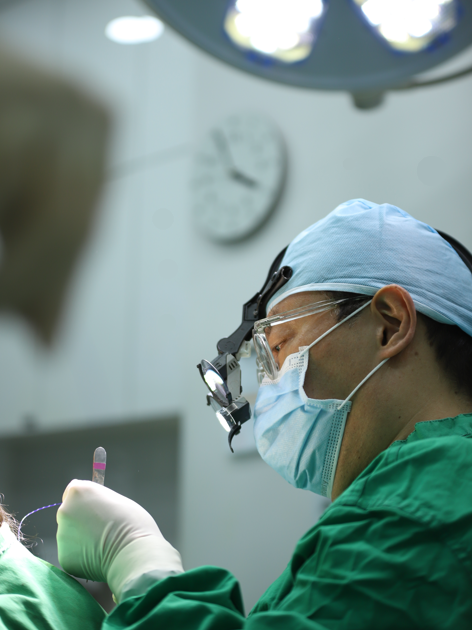
The number of threads is
the most direct factor determining the results.
If an insufficient number of threads is used relative to the degree of sagging,
it can be difficult for a noticeable change to appear,
no matter how much time passes.
For people with thick skin or a fuller face,
the effects may feel somewhat minimal
when a standard number of threads is used.
In such cases, the treatment plan must be redesigned
by switching to molded threads with a higher density of barbs
or adjusting the number of threads itself.
This is why performing revision in exactly the same way as the first procedure
may result in the same outcome being repeated.
Thread-Lifting Revision
In these cases, Globie first reviews the records of the previous procedure,
then directly checks the current direction of sagging and skin thickness
before redesigning the type and number of threads.
Swelling after revision is similar to that after the first procedure:
it is usually at its worst on the third day
and gradually subsides within a week.
Pain can also be adequately controlled
with the medication we prescribe.
However, recovery times vary from person to person,
so Globie also provides systematic postoperative care
to help patients return to their daily routines quickly.
Clearly identifying why the initial results were less satisfactory than expected
is the starting point for making this procedure different.
Revision is not an easier decision simply because it is a repeat procedure.
Rather, because the condition of the skin has changed,
there are more factors that must be examined carefully.
Checking the possibility of side effects and the current condition of the skin
before proceeding—this is how Globie approaches revision procedures.
If you were dissatisfied with the results of a previous procedure
or the time for revision is approaching,
we recommend first confirming a treatment plan suited to the current condition of your skin.
Please feel free to contact us.
< Related Articles You May Also Like >
Globie Plastic Surgery Clinic
is located one minute on foot from Exit 4 of Apgujeong Station on Subway Line 3,
at Floors 5 and 6 of the EGI Building, 843 Nonhyeon-ro, Gangnam-gu, Seoul.
Consultation appointments are available on both weekdays and weekends.
All consultations are conducted privately on a one-on-one basis.
For detailed inquiries and reservations, please leave a message through the channel below.



Thread-Lifting Revision