Middle-Aged Lower-Eyelid Fat Repositioning,
Is Lower Blepharoplasty Always Necessary with Age?
Hello,
This is Glovi Plastic Surgery Clinic.
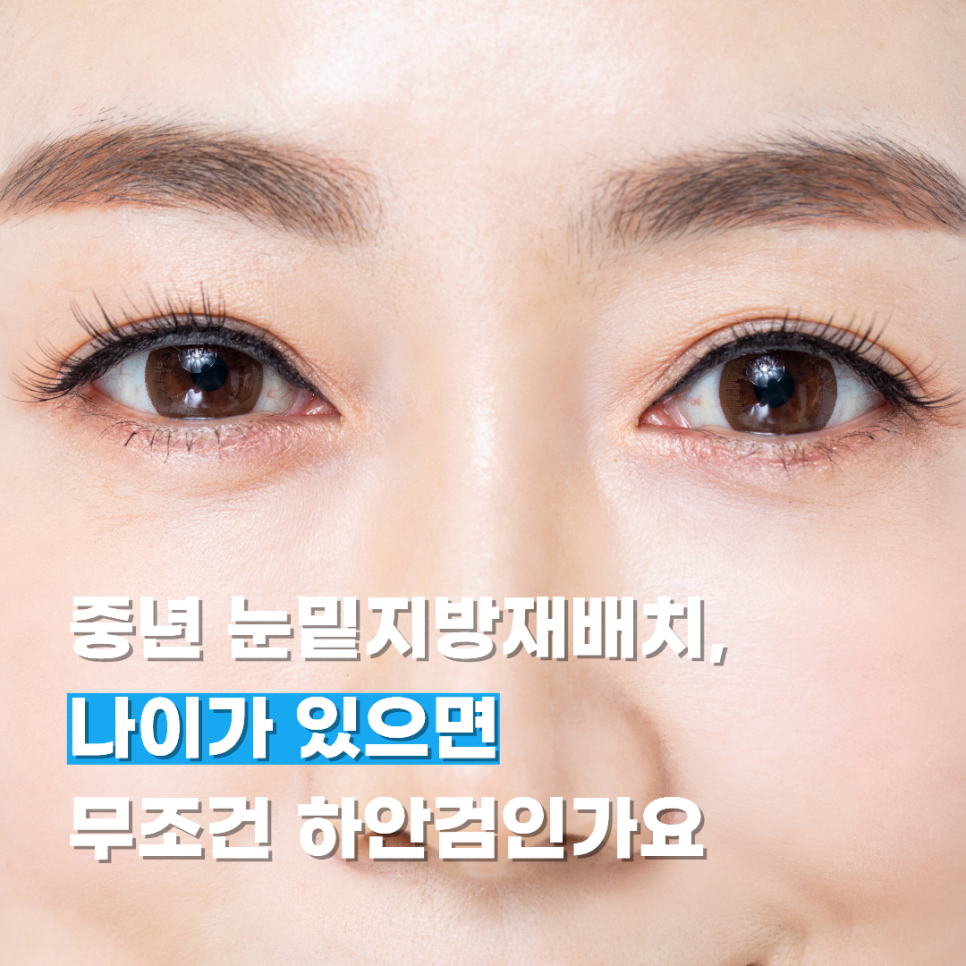
Middle-Aged Lower-Eyelid Fat Repositioning
| A clinic that follows the principles of plastic surgery, Glovi Plastic Surgery Clinic |
|---|
| Following the basics is the most important principle in plastic surgery. Procedures should be designed with the patient’s entire lifetime in mind. Both the process and the results must be safe. At Glovi, our patients always come first. |
| Consultation is an important step that leads to surgery. To help you feel satisfied with your surgical results, we promise personalized consultations with experienced medical professionals. |
| Postoperative care can also be considered an extension of the surgery. We provide personalized care programs to help our patients recover quickly. |
When you look into surgery because of puffiness under the eyes,
one clinic may say, “Fat repositioning is sufficient,”
while another may say,
“Since you are older, you should also consider lower blepharoplasty.”
Why do different clinics make different diagnoses for the same eyes?
We fully understand how confusing this can be.
In this article, we will clearly explain the difference between
middle-aged lower-eyelid fat repositioning and
lower blepharoplasty,
why the choice may vary depending on age,
and when lower blepharoplasty is necessary.
Why Fat Repositioning Alone May Not Be Enough for Middle-Aged Under-Eyes
Middle-Aged Lower-Eyelid Fat Repositioning
Isn’t it enough just to remove the puffiness under the eyes?
Why does lower blepharoplasty also come up?
These are questions we hear very often in the consultation room.
They are perfectly reasonable questions, and to answer them properly,
we first need to look at what causes puffiness under the eyes.
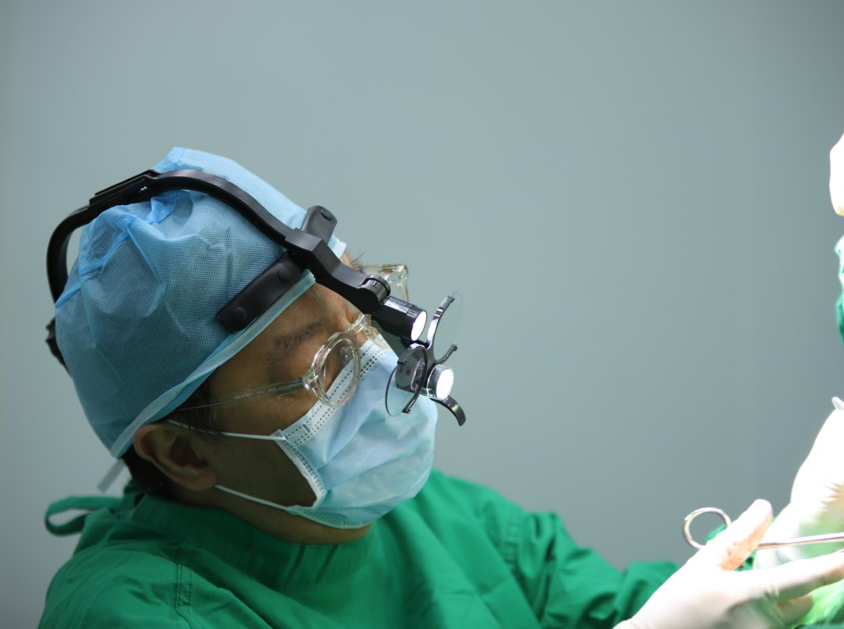
There is fat around the eyes that protects the eyeballs,
and this fat is held in place by a thin membrane called the orbital septum.
As we age, this membrane gradually weakens,
allowing the fat to bulge forward.
This is the cause of puffiness under the eyes.
It works on the same principle as the contents of a balloon pushing outward
when the balloon wall becomes thin.
Lower-eyelid fat repositioning does not remove this fat.
Instead, it moves the fat to the hollow area directly below the eyes—the tear trough—
and uses it to fill the area evenly.
If the fat is simply removed, the area may become hollow,
which can make you look even more tired.
For this reason, fat repositioning, which appropriately moves the fat,
has increasingly been considered first in recent years.
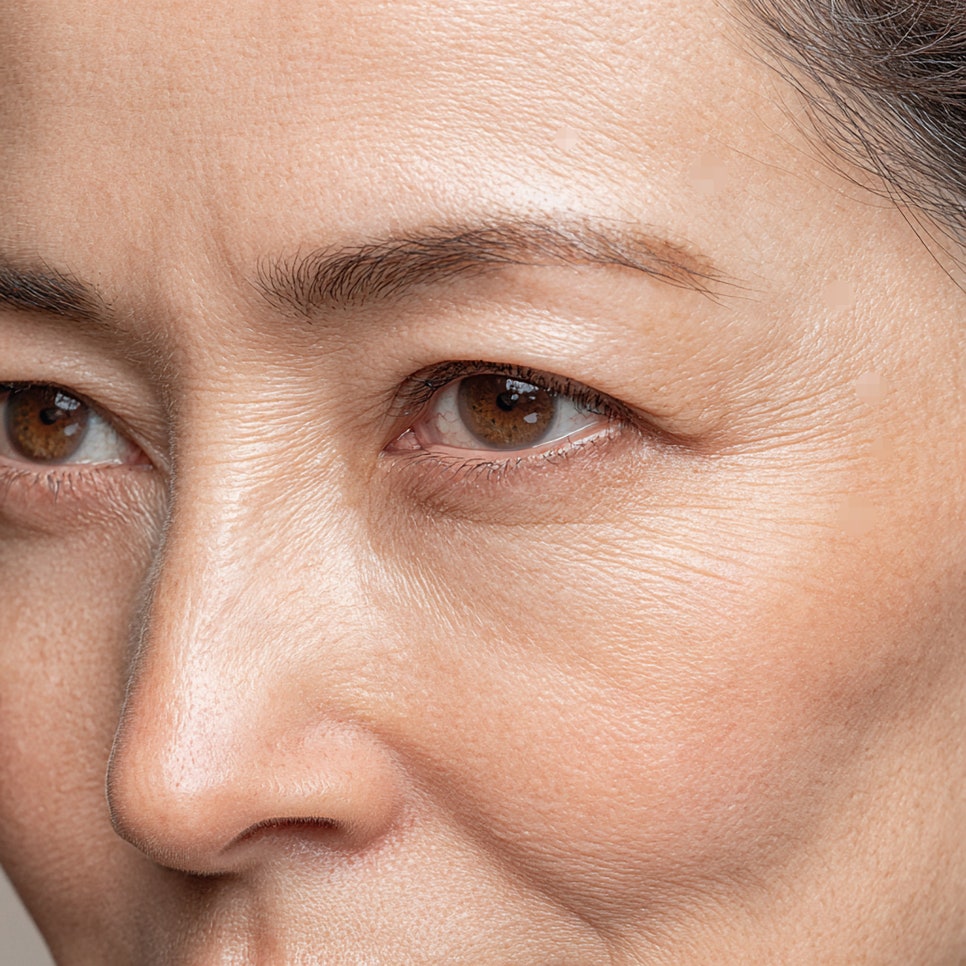
However, after the age of 40, another factor appears:
skin that has lost elasticity and become lax.
In your 20s, even if only the fat is repositioned,
the skin can contract on its own because of its elasticity.
After middle age, however,
skin elasticity itself has already decreased.
Therefore, even if the fat underneath is repositioned,
the loose outer skin remains as it is.
As a result, the puffiness may improve,
but the face can still appear shadowed because of the sagging skin,
leading to a less-than-satisfactory result.
When sagging is present, proceeding with fat repositioning alone
may limit the improvement.
In such cases, lower blepharoplasty may be performed alongside it
to achieve a more satisfactory result.

However, being middle-aged does not automatically mean
that lower blepharoplasty is necessary.
If there is little skin sagging and sufficient elasticity remains,
satisfactory results may be achieved with fat repositioning alone.
Conversely, if the sagging is significant but you insist on fat repositioning alone,
it may be difficult to achieve the changes you want.
Ultimately, the most important thing is to examine your individual skin condition
before making a decision.
Why the Amount of Skin Removed Matters More Than Scarring in Lower Blepharoplasty
Middle-Aged Lower-Eyelid Fat Repositioning
The procedure involves an incision,
so I’m worried that it will leave a noticeable scar.
This concern comes up in almost every consultation.
However, the incision for lower blepharoplasty
runs just beneath the eyelashes,
so it is almost aligned with the direction of the wrinkles under the eyes.
Although results vary from person to person,
the scar often fades over time to the point that it is difficult to see
unless someone looks closely.

In fact, there is another aspect that requires more attention than scarring.
It is how precisely the amount of skin removed is determined.
The most important complication to watch for after lower blepharoplasty
is ectropion, in which the lower eyelid is pulled downward and turns outward.
This can occur when too much skin is removed.
Conversely, if too little skin is removed out of concern that sagging may remain,
wrinkles may still be present after surgery.
Finding the precise amount between overcorrection and undercorrection
is the most delicate part of this procedure.
That is why, at Glovi,
we briefly raise the patient to a seated position during surgery
and directly examine the degree of sagging under the eyes
while adjusting the amount of skin to be removed.
The force and direction with which gravity pulls on the skin
are completely different when a person is lying down versus sitting.
Overlooking these subtle differences could lead to overcorrection,
so we always adhere to this process,
even though it may be somewhat inconvenient.
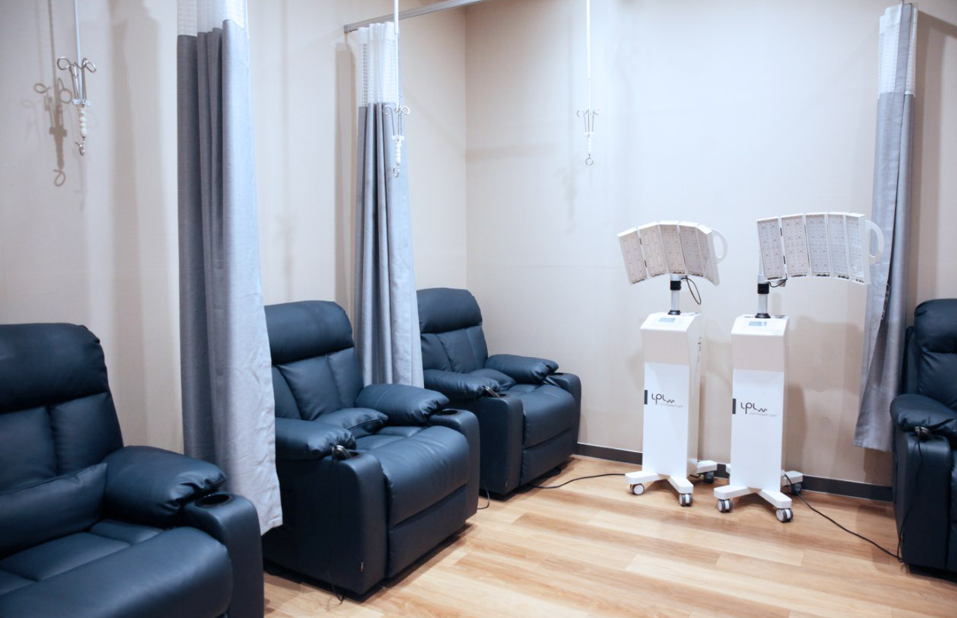
Middle-Aged Lower-Eyelid Fat Repositioning
It may also help to learn about the recovery process in advance.
Pain is often less severe than expected,
and taking the prescribed medication properly
usually allows patients to carry on with daily activities without major difficulty.
Swelling is generally at its worst on postoperative days 2–3.
Applying cold compresses consistently during this period
is most effective.
The stitches are usually removed 5–7 days after surgery.
Redness around the incision may remain for approximately 2–3 weeks,
but it gradually returns to a natural skin tone.
Because the condition under the eyes differs from person to person,
it is necessary to examine it directly
to determine which method is appropriate.
If you are unsure whether fat repositioning alone is sufficient
or whether it should be combined with lower blepharoplasty,
accurately assessing your individual case first
is the quickest way to reduce the chance of trial and error.
It is Glovi’s principle to explain the possibility of complications
and the recovery process exactly as they are.
*Depending on the individual, complications such as bleeding, infection, inflammation, and ectropion may occur after surgery, so caution is required.
< Related Articles You May Also Like >
Glovi Plastic Surgery Clinic
is located a one-minute walk from Exit 4 of Apgujeong Station on Subway Line 3,
at Floors 5 and 6 of the EGI Building, 843 Nonhyeon-ro, Gangnam-gu, Seoul.
Consultation appointments are available on both weekdays and weekends.
All consultations are conducted privately on a one-on-one basis.
For detailed inquiries and reservations, please leave a message through the channel below.



Middle-Aged Lower-Eyelid Fat Repositioning