Philtrum Reduction Revision Surgery,
Identify the Cause Before Undergoing It Again
Hello,
This is Globie Plastic Surgery Clinic.

Philtrum Reduction Revision Surgery
| A Clinic That Upholds the Principles of Plastic Surgery: Globie Plastic Surgery Clinic |
|---|
| The most important thing in plastic surgery is adhering to the fundamentals. Procedures should be designed with the patient's entire lifetime in mind. Both the process and the results must be safe. Globie always puts patients first. |
| Consultation is an important step that leads to surgery. To help you achieve satisfactory results, we promise personalized consultations with experienced medical professionals. |
| Postoperative care can also be considered an extension of the surgery. We provide personalized care programs to support our patients' prompt recovery. |
Some people have undergone philtrum reduction surgery once,
but were dissatisfied with the results
and are now looking into having it done again.
The reasons vary: the effect may have been less than expected, a scar may have remained,
or one side may appear more pulled than the other.
However, a common feeling lies beneath all these concerns:
I want to have it done properly this time, at the right clinic.
That feeling is completely understandable.
However, revision surgery must be approached
more carefully than the initial procedure.
In this article,
we will explain what you must check before revision surgery.
If you have decided to undergo revision surgery,
start by asking yourself this question:
Philtrum Reduction Revision Surgery
There is one question we ask first
when people come in for a revision consultation:
What exactly are you dissatisfied with
about the first surgery?
This is not simply to assess your current condition.
Before revision surgery,
we must identify the underlying cause.
A philtrum that appears long
does not necessarily indicate a problem with the philtrum itself.
Depending on the structure of the mouth, the alignment of the teeth, or the height of the nasal tip,
there are more cases than you might expect
in which the philtrum appears relatively longer.
In such cases, even undergoing philtrum reduction revision surgery
may not lead to the fundamental change in appearance you are hoping for.
When you visit us for a consultation
and we determine that this applies to you,
we first explain other fundamental solutions
rather than recommending revision surgery.
We know this may not be what you want to hear,
but we bring it up first because
we believe preventing an unnecessary procedure
is more important.
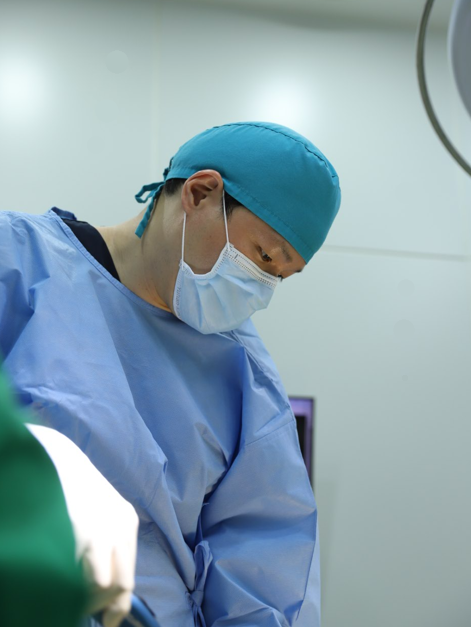
On the other hand, if the amount of tissue removed during the first surgery was insufficient,
or if the internal tissue fixation was weak
and the effect quickly diminished,
improvement through revision surgery may be possible.
The same applies when a noticeable scar remains
because the incision was made externally beneath the nose.
In such cases, if we consider using the existing scar line
or redesigning the incision to be inside the nostrils,
there may be a possibility of restoring the effect
while reducing the burden of scarring.
Rather than first asking whether revision surgery is needed,
understanding “why this result occurred”
is the starting point for achieving a different result this time.
The Real Reason Revision Surgery Is More Challenging Than the Initial Procedure
Philtrum Reduction Revision Surgery
Once the cause has been identified, the question we hear most often
naturally follows:
Isn’t revision surgery more dangerous than the initial procedure?
To answer honestly,
the conditions are indeed more complicated.
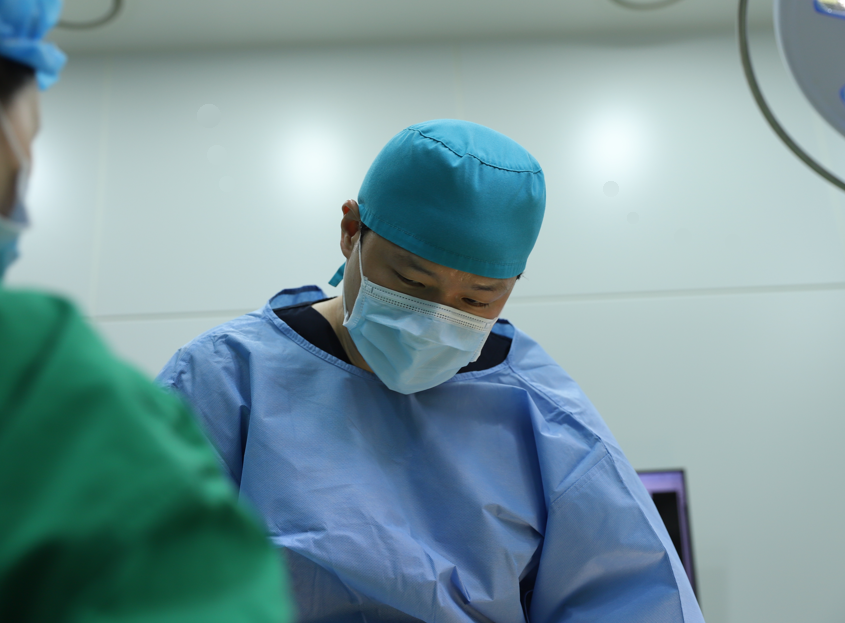
As time passes after the first surgery,
the tissue in the surgical area becomes adhered.
The tissues around an area that has been incised and sutured once
become stuck together,
and separating this adhered tissue
is the key part of revision surgery.
Unlike during the initial incision,
the tissue layers are not clearly distinguishable,
which increases the possibility of affecting the surrounding tissue
during the separation process.
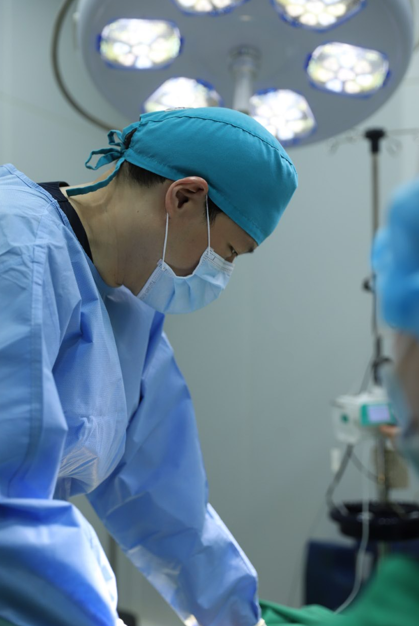
Some people want early revision surgery,
believing that the first procedure was ineffective
while residual swelling has not yet completely subsided
(three to four months after surgery).
However, the area around the philtrum requires
at least six months to a year or longer
for the swelling to subside and the tissue to fully stabilize.
After this period,
the tissue often gradually becomes softer,
and the length of the philtrum naturally settles.
Therefore,
the general principle is to wait at least six months to a year or longer after the initial surgery
before evaluating the condition for revision surgery.

Philtrum Reduction Revision Surgery
The same applies to scar management.
Making another incision over the existing scar line
may cause the scar to become wider,
so whenever possible, we prioritize designing the incision along the existing line
rather than creating an additional scar.
Because revision surgery requires more caution than the initial procedure,
this is precisely why we spend more time during the consultation.
Revision surgery requires more caution than the initial procedure,
but if the cause is accurately identified and the procedure is designed accordingly,
improvement may be possible.
However, revision surgery is not the answer in every case.
At Globie Plastic Surgery Clinic,
our principle is to tell patients first when revision surgery is not necessary.
Being transparent about the possibility of complications and realistic limitations
is also part of that principle.
Please first confirm accurately whether revision surgery is suitable for your case,
and, if it is suitable, how it should be approached.
※ All plastic surgery procedures may result in side effects such as
reduced sensation after surgery, asymmetry,
excessive scar growth (keloids and hypertrophic scars), or inflammation,
depending on the individual's constitution and condition.
Therefore, sufficient consultation with a specialist
and a thorough understanding of the precautions are required before surgery.
<Recommended Related Reading>
Globie Plastic Surgery Clinic
is located one minute on foot from Exit 4 of Apgujeong Station on Subway Line 3,
on Floors 5 and 6 of the EGI Building,
843 Nonhyeon-ro, Gangnam-gu, Seoul.
Consultation appointments are available on both weekdays and weekends.
All consultations are conducted privately on a one-on-one basis.
For detailed inquiries and appointments, please leave a message through the channel below.



Philtrum Reduction Revision Surgery