Postoperative Care After Breast Fat Grafting,
This Period Completes the Results More Than the Surgery Itself
Hello,
This is Glovi Plastic Surgery Clinic.

Postoperative Care After Breast Fat Grafting
| A Clinic That Follows the Principles of Plastic Surgery, Glovi Plastic Surgery Clinic |
|---|
| The most important thing in plastic surgery is following the fundamentals. Plastic surgery should be planned with the patient's lifetime in mind. Both the process and the results of plastic surgery must be safe. Glovi always puts patients first. |
| Consultation is an important step that leads to surgery. To help you be satisfied with your surgical results, we promise personalized consultations with experienced medical professionals. |
| Postoperative care can also be considered an extension of the surgery. We provide personalized care programs to help our patients recover quickly. |
After surgery is over, many people relax and feel,
"It's all done now."
We fully understand that feeling,
but in fact, breast fat grafting
truly begins after you leave the operating room.
It takes at least three months for the grafted fat cells
to fully establish themselves in their new location.
Depending on how you care for yourself during that time,
the recovery speed and
final satisfaction can differ even among people who underwent the same surgery.
We often hear people say in the consultation room,
"I didn't know there was anything in particular to be careful about after surgery,
so I just went about my life."
In this article, we will explain the essential care principles
for each period after surgery,
together with the reasons why the actual fat graft survival rate can be affected.
From immediately after surgery through the first week,
this is when most people feel the most flustered
Postoperative Care After Breast Fat Grafting
The morning after surgery, I tried to get up
but was surprised because my breasts and thighs
felt so stiff and sore. Is this normal?
Yes, it is normal.
In fact, few people come to surgery
having anticipated this soreness,
so the first few days after surgery are often
the most psychologically difficult period.
This is because the grafted area and the thighs
from which the fat was harvested begin recovering at the same time.
As a result, during the first few days,
the pain may feel stronger, heavier, and more uncomfortable than expected.
To avoid feeling alarmed,
it is important to know in advance what changes may occur.
Swelling is usually at its worst by the third day
and then gradually subsides.
However, there is one point that many people overlook.
In the thighs from which fat was harvested,
there may be another period when they appear even more swollen
around days 5 to 10 as the fluid administered during surgery drains out.
If you are unaware of this, you may worry unnecessarily,
thinking, "Why did it suddenly become more swollen?"
but this is a normal drainage process, so there is no need to be alarmed.
For one to two days after surgery,
blood-tinged tumescent solution may also flow from the harvest sites,
which is another natural part of the recovery process.
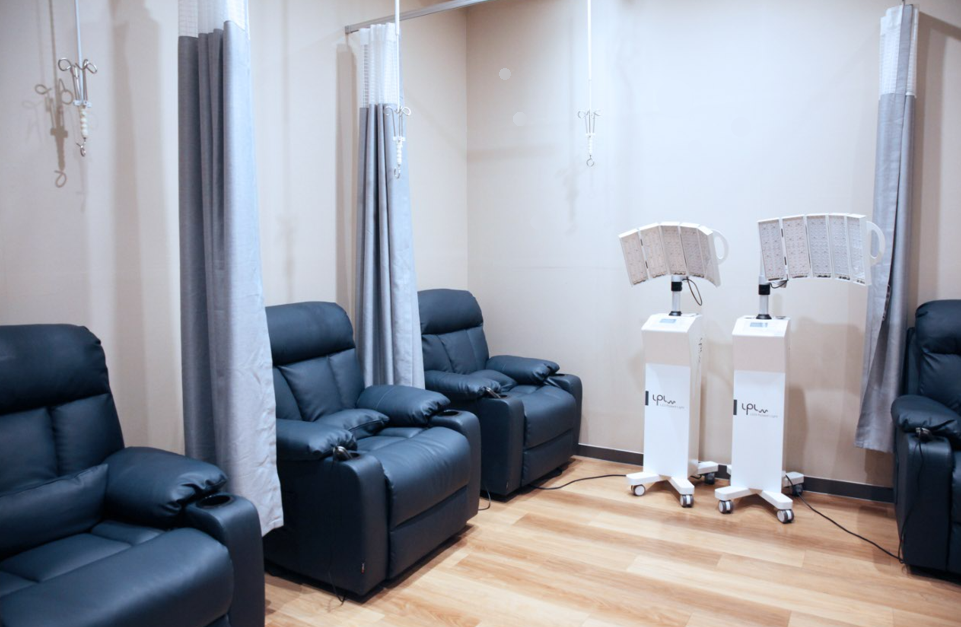
Your sleeping position during this period
can affect the shape of the breasts and fat graft survival
more than you might expect.
Because the grafted fat has not yet fully connected to the blood vessels,
it is vulnerable to external pressure.
Sleeping on your side or stomach can continuously press on the grafted area
and alter its shape.
For at least one week, it is best to sleep on your back
while keeping your upper body slightly elevated.
Simply placing a pillow under your back
to raise your upper body by about 15–30 degrees
may also help reduce swelling.
It may seem minor, but because it is a position repeated every night,
it becomes a hidden key to maintaining the shape of the breasts.
Light showers are possible starting on the third day,
and the stitches are removed during a clinic visit on the seventh day.
You should wait until after one month
before taking baths or using saunas,
because high temperatures can rapidly dilate the blood vessels
and increase the risk of swelling and bleeding.
During the early recovery period, there may be a moment when you think,
"It should be fine just this once,"
but we have seen many cases where that one occasion
prolonged the recovery period.
From one month to three months,
the most decisive choices for completing fat graft survival
Postoperative Care After Breast Fat Grafting
Once the initial swelling has subsided and you return to your daily routine,
many people actually begin to relax their postoperative care too much.
When can I start dieting after surgery?
I'm very worried about gaining weight.
We are asked this question very often.
There have also been actual cases of people who began restricting their diet too aggressively during this period
and did not achieve the expected fat graft survival rate.
We fully understand your concern
about gaining weight after surgery,
but there is a clear reason why we do not recommend extreme dieting
for at least two to three months.
For grafted fat cells to survive,
new blood vessels must grow into the area
and supply nutrients.
It takes two to three months for this process to become established,
and if calorie intake is reduced drastically during this period,
there may not be enough energy for the cells to survive.
This can result in the carefully grafted fat being lost
before it has had a chance to become established.
If you are concerned about your weight,
rather than sharply reducing your diet,
it is much more beneficial for both recovery and fat graft survival
to maintain light activity that promotes circulation,
such as taking gentle walks.
Postoperative Care After Breast Fat Grafting
Smoking is the most influential factor
in care during this period.
When nicotine constricts peripheral blood vessels,
blood flow to the grafted area decreases,
and if inflammation occurs, antibiotics may not be properly delivered
to the affected area.
This can cause a minor problem to become more serious.
Alcohol may be consumed gradually in small amounts
after two months,
but smoking should be strictly avoided for more than two months,
including secondhand smoke.
The choice of underwear is another detail that is easy to overlook.
Bras with underwire or firm padding may continuously press on the grafted area
and interfere with blood flow,
so we recommend wearing soft, non-compressive materials
for up to one month
and then switching gradually.
You may also feel like kneading or massaging the grafted area with your hands,
but it is best to avoid this during the two months
when the fat is becoming established.
This is because unnecessary stimulation may be applied
to cells that are trying to settle into place.
However, if you are in an environment where quitting smoking immediately is difficult,
or if returning to high-intensity work soon after surgery
is unavoidable, we generally recommend adjusting the timing of the surgery itself first.
This is because undergoing surgery when recovery conditions are not in place
is less favorable for final satisfaction
than having the procedure when you are properly prepared.
Breast fat grafting is a three-month period after leaving the operating room
during which the medical team and the patient work together with care.
The efforts made during this period create a difference
in maintaining a beautiful body line for a long time.
Providing transparent information about possible complications and the recovery process,
and continuing to care for patients through to the end even after surgery
are the principles that Glovi strives to uphold.
If you find it difficult to determine on your own
whether your condition is within the normal range after surgery,
or what you should be careful about at this stage,
please contact us at any time.
We will review an accurate recovery plan together
that is suited to your individual case.
※ Depending on the individual, plastic surgery may cause
side effects such as bleeding, inflammation, infection, poor fat graft survival, or calcification,
so a thorough consultation with a specialist is necessary.
< Recommended reading >
Glovi Plastic Surgery Clinic
is located at 5th and 6th floors of the EGI Building,
843 Nonhyeon-ro, Gangnam-gu, Seoul,
just a one-minute walk from Exit 4 of Apgujeong Station on Subway Line 3.
Consultation appointments are available on both weekdays and weekends.
All consultations are conducted privately on a one-on-one basis.
For detailed inquiries and reservations, please leave a message through the channel below.
Postoperative Care After Breast Fat Grafting