Lower Eyid Fat Repositioning and Lower Blepharoplasty,
Choosing the Right Surgery for You
Hello,
This is Glovi Plastic Surgery Clinic.
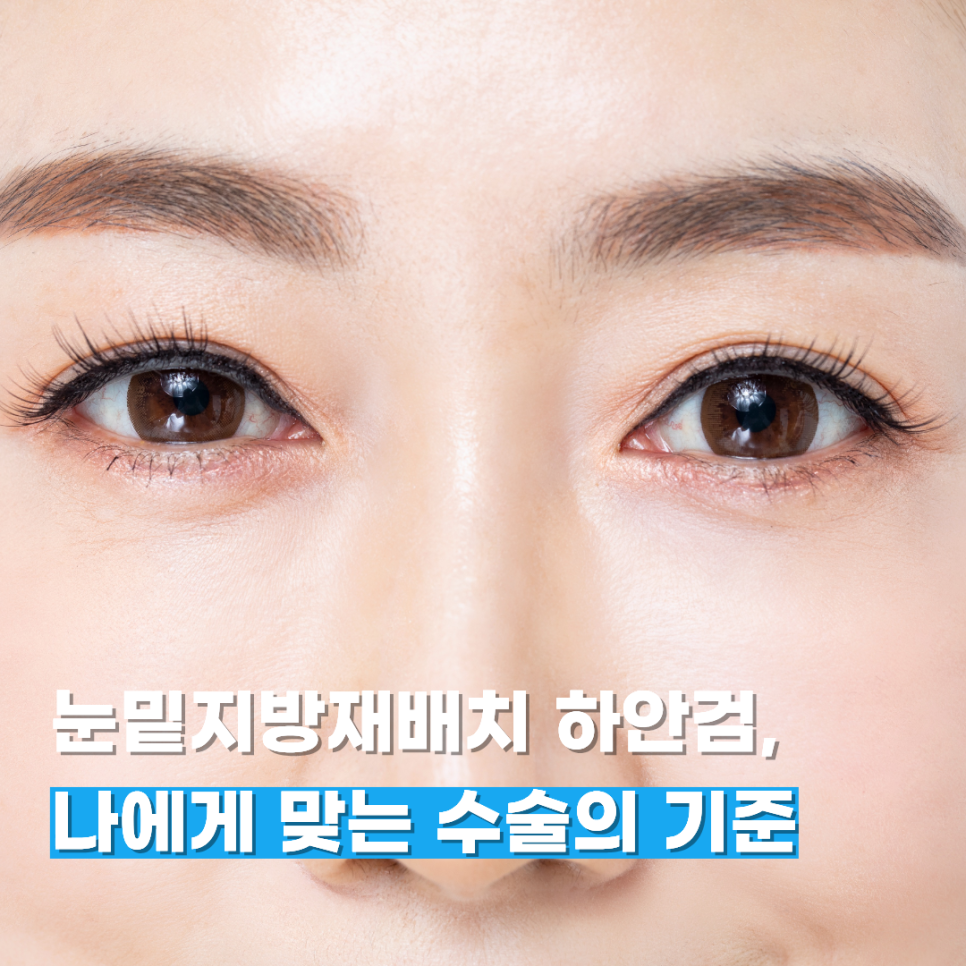
Lower Eyid Fat Repositioning and Lower Blepharoplasty
| A clinic that follows the principles of plastic surgery, Glovi Plastic Surgery Clinic |
|---|
| Following the basics is the most important aspect of plastic surgery. Procedures should be planned with the patient's lifetime in mind. Both the process and the results must be safe. Glovi always puts patients first. |
| Consultation is an important step that leads to surgery. To help you achieve results you will be satisfied with, we promise personalized consultations with experienced medical professionals. |
| Postoperative care can also be considered an extension of the surgery. We provide personalized care programs to help our patients recover quickly. |
When considering lower eyelid surgery,
there is one major question that people encounter first.
Aren't both procedures just about removing lower eyelid fat?
What's the difference?
We hear this question several times a day in our consultation rooms.
Although these two procedures may look similar,
choosing incorrectly can lengthen the recovery period
and lead to unsatisfactory results.
That is why it is important to understand
the exact criteria for choosing the procedure that is right for you.
We will go over the differences and selection criteria
step by step.
What is the difference between the two procedures?
Lower Eyelid Fat Repositioning and Lower Blepharoplasty
The names are different, but aren't both procedures
just about removing lower eyelid fat?
To put it simply,
both procedures use the same basic principle:
moving bulging lower eyelid fat to hollow areas below
to create a smoother, flatter appearance.
However, there is one decisive difference:
whether or not loose skin is removed.
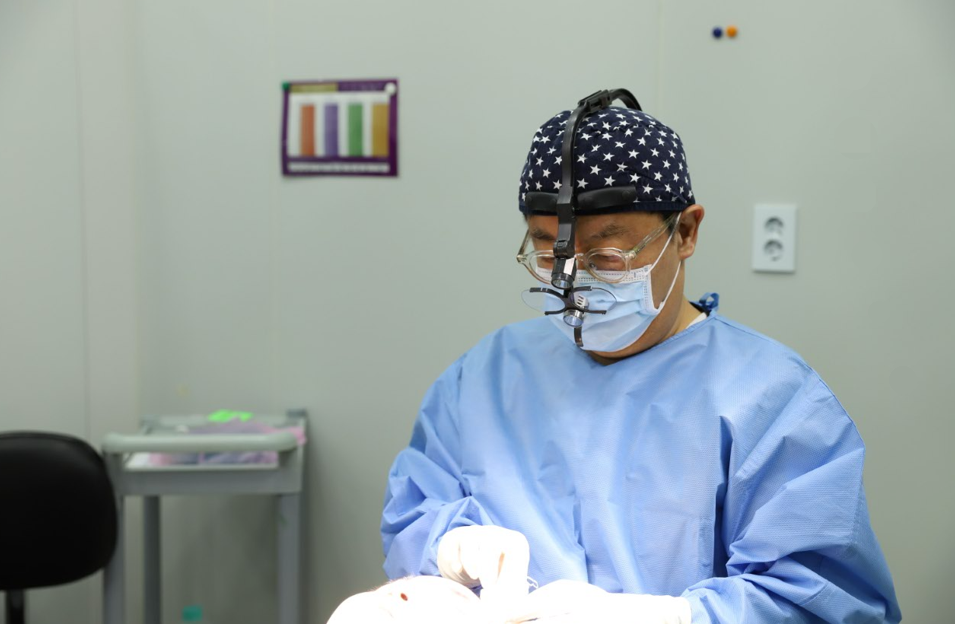
Lower eyelid fat repositioning moves only the fat
through the inner conjunctiva, so there is no external incision line.
Lower blepharoplasty, on the other hand, involves an incision
just below the eyelashes and removes loose skin as well.
To put it simply,
lower eyelid fat repositioning is like evenly spreading out
the filling inside a lumpy quilt,
while lower blepharoplasty is like spreading out the filling
and replacing the quilt cover that has become loose over time
with a new one.

Lower Eyelid Fat Repositioning and Lower Blepharoplasty
As a result, the recovery process also
differs naturally because of this distinction.
Because fat repositioning does not involve an external incision,
many patients can return to their daily activities in 2–3 days,
with relatively mild bruising.
Lower blepharoplasty, however, involves skin removal and suturing,
so you should allow about a week for the major swelling to subside,
and bruising may last around two weeks.
That said, because the incision follows the direction of the crease
just below the eyelashes, it heals naturally and becomes difficult to notice
unless viewed closely once the sutures are removed,
usually 5–7 days after surgery.
How we determine which procedure is right for you
Lower Eyelid Fat Repositioning and Lower Blepharoplasty
If I am in my 40s, does that automatically mean I need lower blepharoplasty?
We always give the same answer to this question.
Your current skin condition comes first—not your age.
During an examination, the first thing we check
is the condition of the orbital septum,
the thin membrane inside the eye that holds the fat in place.
As we age or accumulate fatigue,
this membrane can weaken, allowing the fat to bulge forward.
At this stage, however, the skin itself
may still retain considerable elasticity in many cases.
When this is the case, smooth results may be achieved
with fat repositioning alone.
On the other hand, if the lower eyelid skin slowly returns
or remains sagging after being gently pulled and released,
the situation is different.
A slow response indicates
that the skin has already lost elasticity.
If fat repositioning alone is performed in such cases,
sagging skin may fill the space left by the reduced fat,
which can instead make fine lines appear more pronounced.
The same applies to people with a prominent,
deep tear trough between the lower eyelid and cheek.
Because this area is firmly anchored by a ligament,
repositioning the fat alone may not sufficiently fill the hollow.
Lower blepharoplasty, however, includes a process
that releases this ligament directly,
so its effects are often more pronounced
for people with deep tear troughs.
Conversely, if your skin has sufficient elasticity but you choose
lower blepharoplasty unnecessarily, you may only experience
an additional recovery burden.
Therefore, we do not recommend lower blepharoplasty
for patients who can achieve sufficient results with fat repositioning.
Because the surgical approach is determined by considering
all of these factors together,
it is natural for the treatment plan to vary from person to person,
even when they have similar lower eyelid concerns.
Lower eyelid surgery is a procedure for which
two people with the same concern may have different right answers.
For this reason, Glovi Plastic Surgery Clinic makes it a principle
to explain everything thoroughly, including the recovery period,
the possibility of complications, and the limitations
based on each patient's skin condition.
If you would first like to find out “which type of case you are,”
please consult with us to confirm the precise approach
that is right for you.
We hope you make the right choice from the beginning,
without trial and error caused by inaccurate information.
※ Plastic surgery may cause complications such as bleeding, inflammation,
infection, or ectropion, depending on the individual,
so caution is required.
< Recommended related reading >
Glovi Plastic Surgery Clinic
is located a one-minute walk from Exit 4 of Apgujeong Station on Subway Line 3,
on the 5th and 6th floors of the EGI Building,
843 Nonhyeon-ro, Gangnam-gu, Seoul.
Consultation appointments are available on weekdays and weekends.
All consultations are conducted privately on a one-on-one basis.
For detailed inquiries and reservations, please leave a message through the channel below.



Lower Eyelid Fat Repositioning and Lower Blepharoplasty