Thread Lifting in Sinsa-dong,
Why You Shouldn’t Have It Done Exactly the Same Way as Before
Hello,
This is 글로비성형외과의원.

Thread Lifting in Sinsa-dong
| A Clinic That Upholds the Principles of Plastic Surgery, 글로비성형외과의원 |
|---|
| The most important thing in plastic surgery is adhering to the fundamentals. Procedures should be designed with the customer’s entire lifetime in mind. Both the process and the results must be safe. 글로비 always puts its customers first. |
| Consultation is an important step that leads to surgery. To help you be satisfied with your surgical results, we promise personalized consultations with experienced medical professionals. |
| Postoperative care can also be considered an extension of surgery. We provide personalized care programs to help our patients recover quickly. |
People who have had thread lifting for the first time
sometimes say this when considering a repeat procedure:
Please do it exactly the same way as last time.
At first glance, this may sound like a natural request,
but in fact, these few words can cause the results
to deviate significantly from expectations.
The skin changes little by little each time it undergoes a procedure,
and if the same method as before is repeated
without reflecting those changes, the desired effect may not be achieved.
Today, along with the reasons for this, we will also organize
the criteria for taking a different approach each time.
Please spare just three minutes.
Why the environment beneath the skin changes
as procedures are repeated
Thread Lifting in Sinsa-dong
The results were good after the first procedure,
so why does the effect feel less noticeable the second time?
This is a question we hear quite often in the consultation room.
To be honest, when first encountering this question,
many people may assume that it is simply
a “subjective issue caused by the patient’s expectations being too high.”
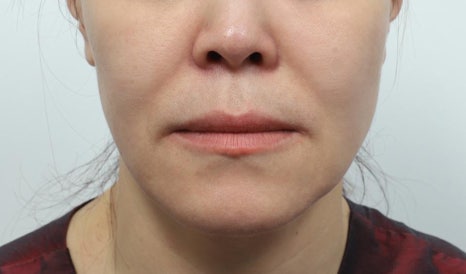
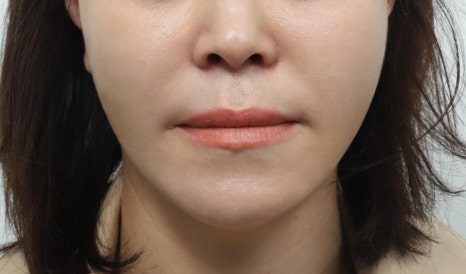
However, when we actually examine the condition,
in most cases, the environment beneath the skin itself
has changed.
After thread lifting, the tissue around the threads hardens
and adhesions form.
Although this may commonly sound like a side effect,
these adhesions instead serve as
a support structure for the skin.
If the first procedure involves directly lifting the tissue with threads,
from the time of a repeat procedure onward,
the tissue that has formed in that area itself
acts as a supporting structure.
However, this adhesive tissue can also gradually harden
the paths through which the threads pass.
If threads are inserted along the same paths as before during a repeat procedure,
increased tissue resistance can make it difficult for the threads
to settle accurately in the desired locations.
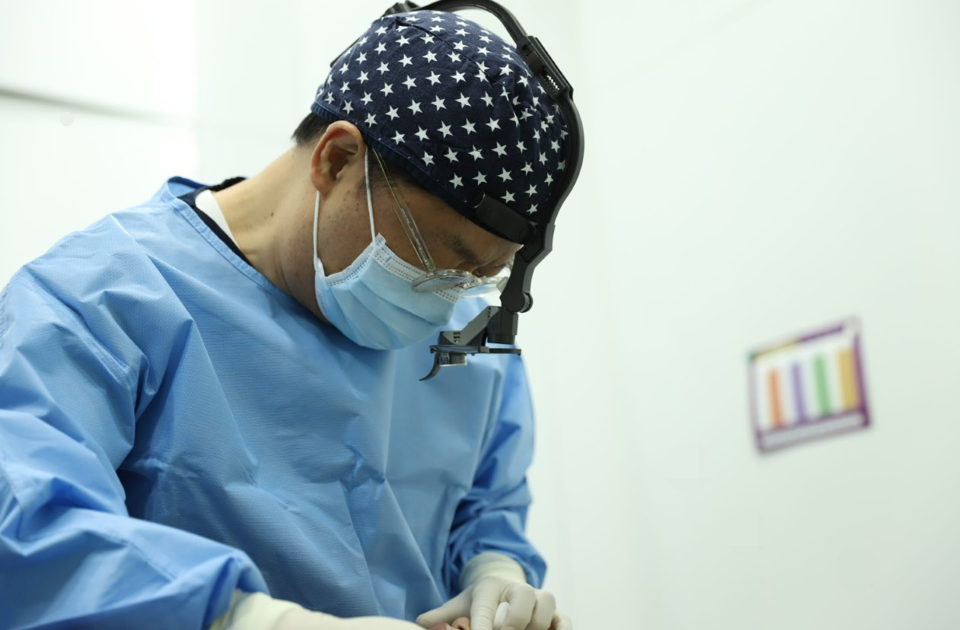
This is why repeating the same method
can make the effect feel less noticeable.
In cases where patients visit us because of insufficient results
after repeated procedures, we often find that adhesions
are concentrated in particular areas.
In such cases, designing a new direction while avoiding the existing paths
can lead to more satisfactory results.
It is not that repeat procedures are ineffective in themselves.
The problem is repeating the exact same method as before.
The current condition of the skin and the extent of the adhesions
must first be assessed precisely, after which the type and path of the threads
must be redesigned.
Why you need to reassess your current face
before a repeat procedure
Thread Lifting in Sinsa-dong
Then what should be viewed differently
when having a repeat procedure?
As mentioned earlier, changing the path is key,
and to do that, we must first determine
how the face has changed by now.
That is why this process must always come before
changing the number or type of threads.
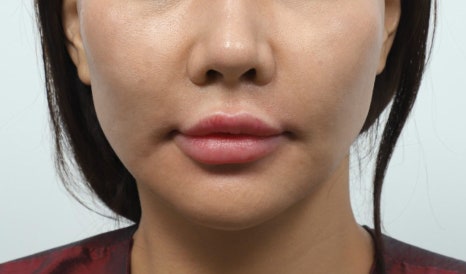
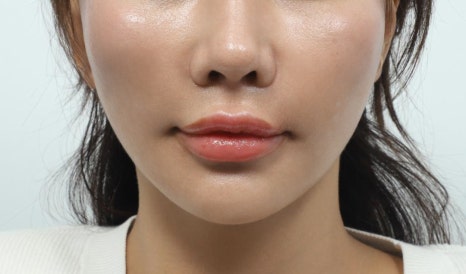
Your face at the time of the first procedure
is not the same as it is now.
As time passes, the fullness of the cheeks settles downward with gravity,
and areas such as the jawline or beneath the cheeks
that initially seemed fine may become more noticeably sagging.
For example, even if nasolabial folds were the concern in the past,
the areas around the mouth or the jawline
may now require more immediate attention.
If these changes are overlooked and threads are placed in the same locations
based solely on past data, the areas that need lifting right now
may remain unimproved.
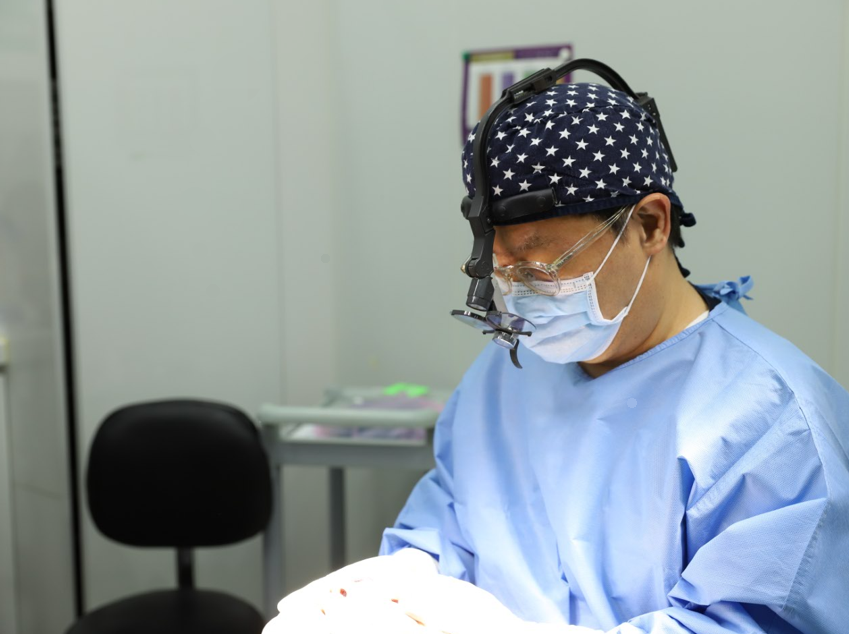
There is one more thing that needs to be considered.
Skin that has undergone repeated procedures may, due to reduced elasticity,
make the threads feel closer to the surface.
If the insertion depth is kept the same, the skin surface
may appear uneven after the procedure,
so the depth must also be adjusted.
Although it may seem minor, this detail determines
how natural the results look after the procedure.
For people with adhesions that have formed over an excessively wide area,
or those whose skin elasticity has already declined considerably,
the range of results that can reasonably be expected from thread lifting
may be limited.
We explain this honestly during the consultation.
Rather than saying that anything is unconditionally possible,
글로비’s approach has always been to accurately explain
the results that can realistically be expected
based on the current condition.
Ultimately, the correct order is to first assess the changes in your current face
and then newly design an approach suited to them
in order to achieve safer and more satisfactory results.
If you are concerned because the results differ from those in the past,
it may be time for a new design suited to your current skin condition.
Please feel free to visit us at any time and carefully assess
the “current condition” of your face first
together with our experienced medical professionals.
< More Articles Worth Reading >
글로비성형외과의원
is located at 5th and 6th floors of the EGI Building,
843 Nonhyeon-ro, Gangnam-gu, Seoul,
just a one-minute walk from Exit 4 of Apgujeong Station on Subway Line 3.
Consultation reservations are available on both weekdays and weekends.
All consultations are conducted privately on a one-to-one basis.
For detailed inquiries and reservations, please leave a message through the channel below.



Thread Lifting in Sinsa-dong