Post-Thread-Lifting Care,
Habits for Maintaining Results Longer
Hello,
This is Globie Plastic Surgery Clinic.

Post-Thread-Lifting Care
| A Clinic That Follows the Principles of Plastic Surgery, Globie Plastic Surgery Clinic |
|---|
| Following the fundamentals is the most important principle in plastic surgery. Procedures should be designed with the patient's lifelong well-being in mind. Both the process and the results must be safe. Globie always puts its patients first. |
| Consultation is an important step that leads to surgery. To help you feel satisfied with your results, we promise personalized consultations with experienced medical professionals. |
| Post-procedure care can also be considered an extension of the procedure. We provide personalized care programs to help our patients recover quickly. |
After receiving a thread-lifting procedure,
some people say:
You said the procedure went well,
but I feel like the results disappeared sooner than expected.
In most cases, the procedure itself was not necessarily the problem;
rather, post-procedure care was lacking.
How you spend the period before the threads become fully established in the tissue
can have a greater-than-expected
impact on the results.
Today, we will summarize the care habits you should know
to preserve the full effects of the procedure.
Please take just three minutes.
The First Four Weeks After the Procedure,
The Critical Period for the Threads to Settle
Post-Thread-Lifting Care
Can I return to my daily activities
immediately from the day after the procedure?
This is a question that comes up frequently in the consultation room.
We explain that light daily activities are possible,
but we always add one important point:
These four weeks can have a considerable impact on the results.
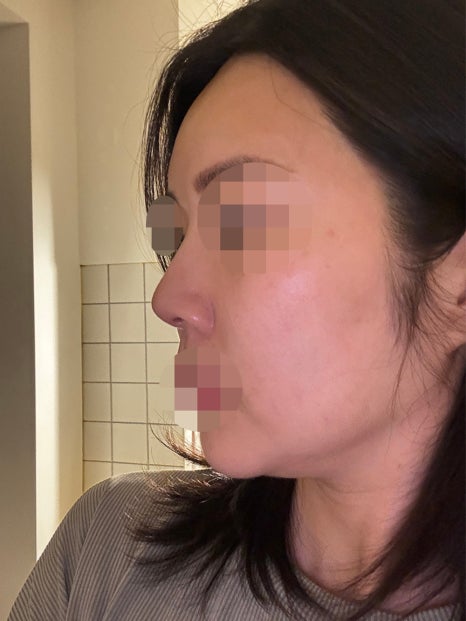
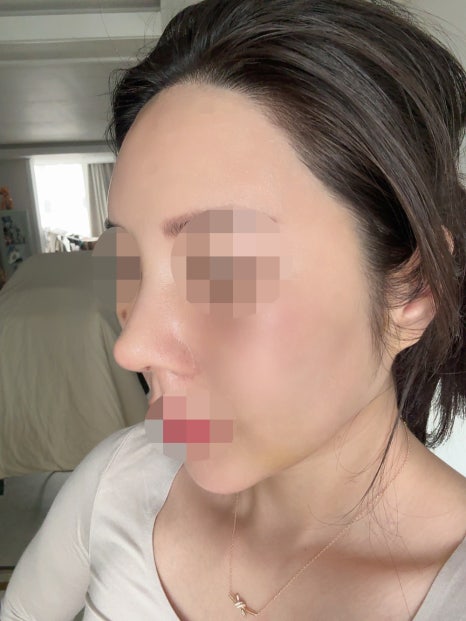
The threads used for thread lifting
have barbed projections.
The lifting effect is achieved by using these projections
to catch and secure the tissue beneath the skin,
and it takes approximately four weeks
for them to become fully established.
Just as a newly planted tree is vulnerable to movement
before its roots take hold,
the threads are also sensitive to external stimulation
before they settle into the tissue.
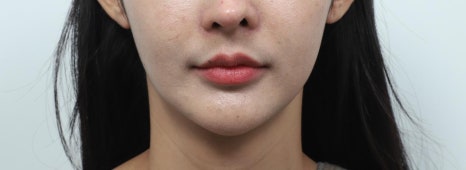
The action that requires the most caution during this period
is opening your mouth wide.
Yawning widely or chewing hard, tough foods
applies force in a direction that pulls the thread projections
against the tissue.
If this stimulation is repeated before fixation is complete,
the lifting effect may weaken,
so it is better to focus on soft foods
for four weeks.
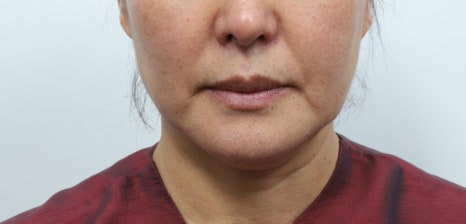
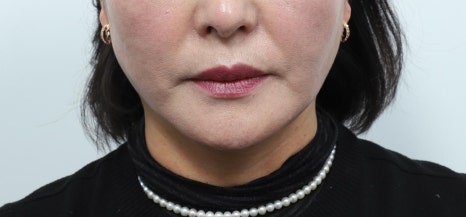
Sleeping position is also more important than you might expect.
Sleeping on your stomach places pressure on the entire face,
which may affect the position of the threads.
For four weeks after the procedure, try to sleep on your back,
and using a higher pillow than usual
may also help with swelling management.
These habits may seem minor,
but the difference created by the accumulation
of these details can be greater than expected.
Why You Should Not Ignore Dimpling
Post-Thread-Lifting Care
A small indentation has appeared in my skin
after the procedure.
Can I just leave it as it is?
Even if you have carefully followed the care habits we introduced,
unexpected changes may occur depending on your skin type
and the characteristics of your tissue.
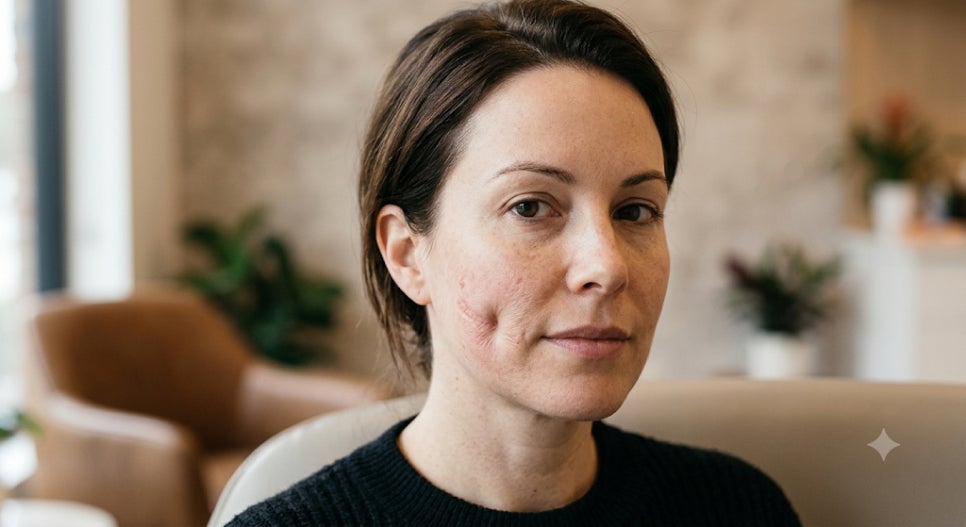
This is called dimpling.
To begin with, if it is still early after the procedure,
there is usually no need for major concern,
but it should never be left unattended.
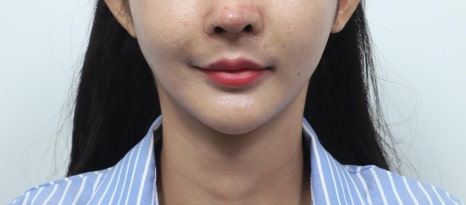
Dimpling refers to an indentation on the skin's surface
that resembles a dimple after the procedure.
As the thread passes through, its projections
pull on the dermal layer, causing the area to become indented.
It is not uncommon after thread lifting.
People seeing it for the first time may be very surprised,
but if they visit the clinic early and the thread is released
with a gentle massage (molding),
it can usually be resolved neatly.
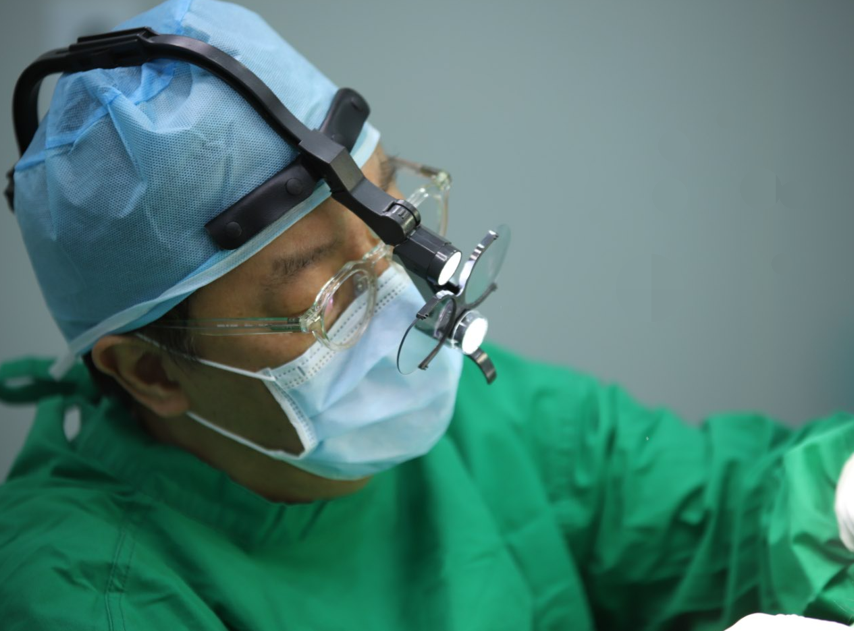
The problem occurs when it is simply left alone.
If neglected, the area may adhere
and harden in its indented state.
Once the adhesion becomes fixed,
it is much more difficult to correct later.
In fact, one patient visited us more than a month later
without realizing that dimpling had occurred.
The area had already become quite firm,
and although massage improved it to some extent,
we regretted that it would have been much easier
to resolve if the patient had come in earlier.
This is why Globie always checks the progress
one month after the procedure.
If dimpling remains even after the swelling has subsided,
we examine it carefully and provide correction promptly.
Taking care of the period after the procedure
just as carefully as the day of the procedure itself
is something we consider important.
With thread lifting, the four weeks afterward,
rather than the day of the procedure,
are the period that influences the results.
A small habit can help protect the outcome,
while a single neglected area of dimpling can leave you disappointed.
Providing realistic information as it is,
including the possibility of side effects,
is a principle Globie has upheld in its consultations.
If you have questions about post-procedure care,
or need to confirm which aspects require particular attention
for your condition,
please feel free to contact us.
※ Depending on the individual, thread lifting may cause side effects such as infection, inflammation, bleeding, nerve damage, visible threads, or pain after the procedure. You should decide whether to undergo the procedure only after having a thorough consultation with a specialist.
< Recommended Related Reading >
Globie Plastic Surgery Clinic
is located a one-minute walk from Exit 4 of Apgujeong Station on Subway Line 3,
at Floors 5 and 6 of the EGI Building,
843 Nonhyeon-ro, Gangnam-gu, Seoul.
Consultation reservations are available on weekdays and weekends.
All consultations are conducted privately on a one-to-one basis.
For detailed inquiries and reservations, please leave a message through the channel below.



Post-Thread-Lifting Care