Before and After Philtrum Reduction Surgery,
The Most Frequently Searched Questions Before Surgery
Hello,
This is Globie Plastic Surgery Clinic.

Before and After Philtrum Reduction Surgery
| A Clinic That Upholds the Principles of Plastic Surgery, Globie Plastic Surgery Clinic |
|---|
| The most important thing in plastic surgery is adhering to the basics. Plastic surgery should be planned with the patient's entire lifetime in mind. Both the process and the results must be safe. Globie always puts its patients first. |
| A consultation is an important step that leads to surgery. To help you be satisfied with your surgical results, we promise personalized consultations with medical professionals who have extensive clinical experience. |
| Postoperative care can also be considered an extension of the surgery. To help our patients recover quickly, we provide personalized care programs. |
Before undergoing philtrum reduction surgery,
there are certain terms that people type into the search bar most often:
“before-and-after photos,” “scarring,” and “how long will the swelling last?”
Even after booking a consultation, many people stay up at night
looking up this and that.
The truth is, they are often more concerned about the process
of returning to everyday life after surgery
than about the surgery itself.
Today, focusing on the questions
that come up most often in the consultation room,
we will organize the practical information
you should know before surgery.
We hope this helps clarify, even a little,
the things that may have caused you vague anxiety before surgery.
Please take just three minutes.
Can scars really be made unnoticeable?
Before and After Philtrum Reduction Surgery
What if visible marks remain after surgery?
The area beneath the nose is so noticeable.
This is the first concern raised
by people considering philtrum reduction surgery.
Because this is a procedure that involves making an incision in the skin,
it is impossible for there to be no trace at all.
However, the key factor that determines the result
is where and how that trace is left.
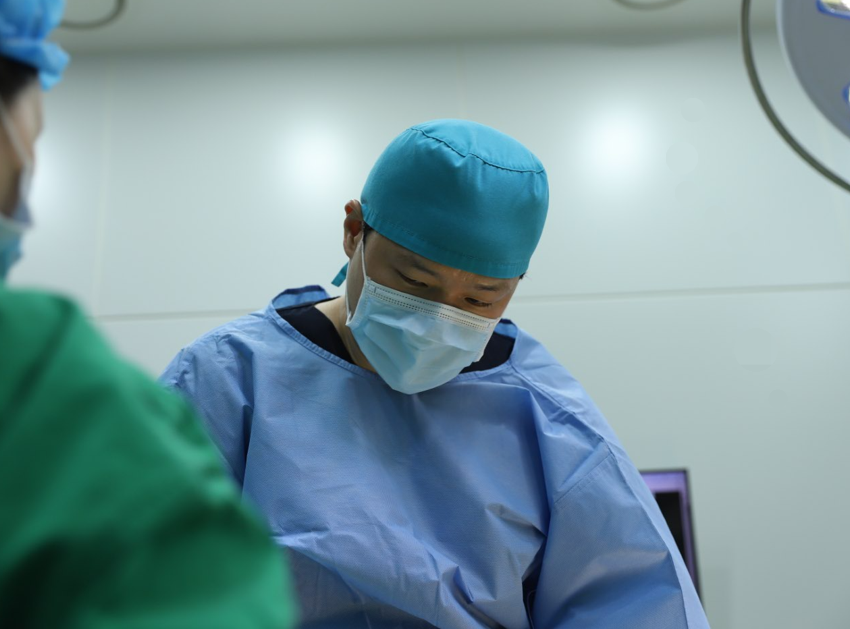
The textbook approach to philtrum reduction surgery
makes one long, continuous incision from the sides of the nose
to beneath the columella.
Although the effect is straightforward,
this method is not well suited to East Asian skin.
Compared with Westerners, East Asians tend to develop scars
that become red or thick more easily.
If such marks remain beneath the nose,
where they are immediately visible from the front,
they can be difficult to conceal in everyday life.
Taking these characteristics of East Asian skin into account,
Globie primarily uses a method that divides the incisions
between the inside of the nostrils and the crease lines of the alar rims
to minimize incision lines that are noticeable from the front.
The inside of the nostrils is not visible from the outside,
and the alar crease lines are locations commonly used
even in conventional alar reduction surgery.
After recovery, they settle in like natural creases.
This is a choice made to eliminate, as much as possible,
incision lines that are noticeable from the front.
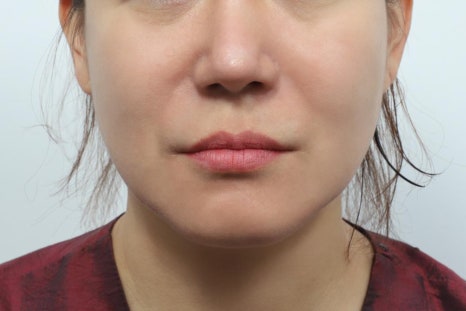
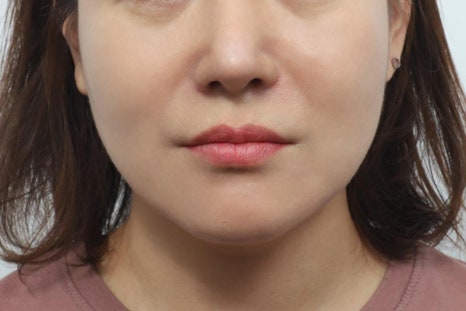
There is something we would like to explain in advance.
For up to six months after surgery, it is normal for scars
to appear red and feel firm.
Medically, this is called an “immature scar.”
It takes more than six months for the color to become closer
to the surrounding skin tone and for the tissue to flatten.
Many people become anxious when they see their scars immediately after surgery,
but please remember that this is still a stage
when healing is in progress.
When will the swelling go down,
and when can I return to everyday activities?
Before and After Philtrum Reduction Surgery
Can I have the surgery while continuing to go to work?
It would be difficult if the swelling lasted too long.
This is the question that usually follows
once concerns about scarring have subsided.
When coordinating your work or social schedule after surgery,
the following timeline is generally the most useful reference.

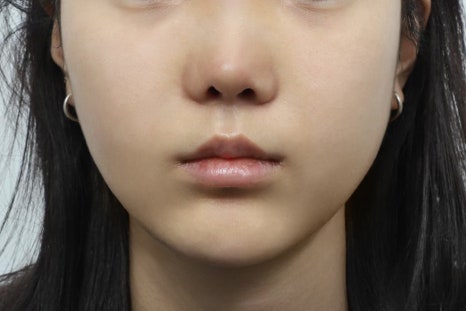
In general, swelling is at its most severe
through the third day after surgery.
After this period, it gradually begins to subside,
and in many cases it has gone down enough after about a week
that going out is not particularly uncomfortable.
The stitches are removed on the seventh day after surgery.
Until the stitches are removed, you must not rub the surgical area
when washing your face.
Instead, gently pat it dry to remove only the moisture.
Makeup can be applied starting the day after
the stitches are removed.
Food intake and movement in everyday life
also have a greater impact than you might expect.
The area around the nose moves constantly
when speaking or eating,
so continuous tension is placed on the surgical site.
It is better to avoid spicy or chewy foods
early in the recovery period,
and you should also refrain from blowing your nose
or sniffing until two weeks after the stitches are removed.
For two months after surgery,
we also recommend applying sunscreen carefully
when going outside.
The surgical area can react sensitively to ultraviolet rays,
which may lead to discoloration.
Those with significantly reduced skin-healing capacity
or a pronounced tendency to develop scars
must have a thorough consultation before surgery.
The gap between the results you expect
and the actual recovery process may be considerable,
so we explain this honestly to such patients
during the consultation.
With philtrum reduction surgery,
understanding the recovery process is just as important
as the surgery itself.
The more prepared you are in advance,
the less anxious you may feel,
and recovery may also become easier.
Providing realistic information as it is,
including the possibility of side effects,
is the principle Globie has upheld in its consultations.
We recommend first confirming whether philtrum reduction surgery
is suitable for your case
and whether there are any specific precautions
you should take during recovery.
※ Depending on an individual's anatomical characteristics,
constitution, and postoperative care,
philtrum reduction surgery may result in side effects
such as bleeding, infection, or inflammation after surgery.
We recommend deciding whether to undergo surgery
after having a thorough consultation with a specialist.
< Other Recommended Articles >
Globie Plastic Surgery Clinic
is located on the 5th and 6th floors of the EGI Building,
843 Nonhyeon-ro, Gangnam-gu, Seoul,
just a one-minute walk from Exit 4 of Apgujeong Station
on Subway Line 3.
Consultation appointments are available on both weekdays and weekends.
All consultations are conducted privately on a one-on-one basis.
For detailed inquiries and reservations, please leave a message
through the channel below.



Before and After Philtrum Reduction Surgery