Lower Eyelid and Upper Eyelid Surgery,
Should They Be Performed Together as You Age?
Hello,
This is 글로비성형외과의원.

Lower Eyelid and Upper Eyelid Surgery
| A clinic that follows the principles of plastic surgery, 글로비성형외과의원 |
|---|
| Following the basics is the most important principle in plastic surgery. Procedures should be designed with the patient's lifelong well-being in mind. Both the process and the results must be safe. 글로비 always puts patients first. |
| Consultation is an important step that leads to surgery. To help you feel satisfied with your surgical results, we promise personalized consultations with medical professionals who have extensive clinical experience. |
| Postoperative care can also be considered an extension of the surgery. We provide personalized care programs to help our patients recover quickly. |
There is something that patients in their 40s and 50s
mention most often in the consultation room:
“My upper and lower eyelids both seem to be sagging.
Do I need to have everything done at once?”
This is not an unreasonable question.
In fact, the upper and lower eyelids often change together
as people age,
so it is natural that more people consider
having both surgeries at the same time.
However, having them done together is not always better,
and having them done separately is not always preferable.
There are specific criteria for making this decision.
Let us go through those criteria one by one.
What are upper eyelid and lower eyelid surgery, respectively?
Lower Eyelid and Upper Eyelid Surgery
Aren’t both procedures eyelid surgeries?
What is the difference?
Whenever I receive this question, I give the following answer:
Although both involve the eyelids, the problems addressed
in the upper and lower eyelids are entirely different.
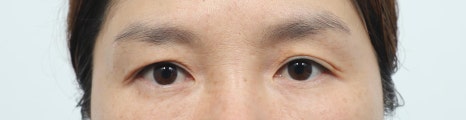
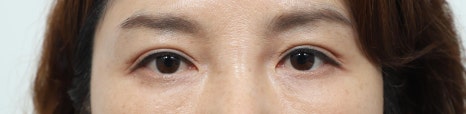
Upper eyelid surgery removes excess, sagging skin
from the upper eyelid.
As the upper eyelid skin becomes loose with age,
it can droop over the eyelashes,
and in severe cases, it may sag enough to obstruct vision.
The problem is that people may unconsciously begin
using their forehead muscles to open their eyes.
As a result, forehead wrinkles can deepen,
and many people may have eyebrows that sit higher than usual.
After upper eyelid surgery, they no longer need to tense
their foreheads as much, allowing their eyebrows to descend naturally.
Many patients say that their overall expression looks
more relaxed as a result.
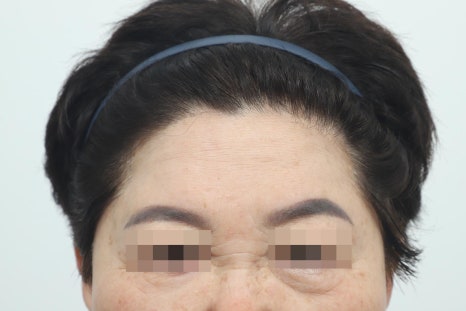
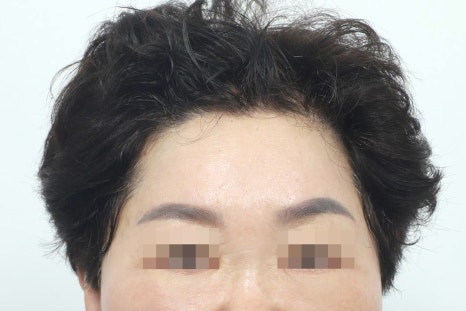
Lower eyelid surgery takes a different approach.
Fat that has bulged forward because of a weakened orbital septum
in the lower eyelid area is repositioned,
and sagging skin is also addressed.
This procedure is mainly considered by people whose under-eye area
looks puffy or shadowed,
who are often told that they look tired,
or who have developed pronounced fine lines under the eyes.
In summary, upper eyelid surgery reduces the weight
above the eyes,
while lower eyelid surgery adjusts the volume and skin
beneath the eyes.
Their purposes are therefore fundamentally different.
To determine which procedure is needed—or whether both are needed—
each area must be diagnosed separately.
Whether to perform them together or in stages
is then decided based on the diagnostic findings.
So, should they be performed together or separately?
Lower Eyelid and Upper Eyelid Surgery
“If I am going to have both anyway,
isn’t it better to do them all at once?”
This may sound reasonable at first,
but there are situations that require closer consideration.
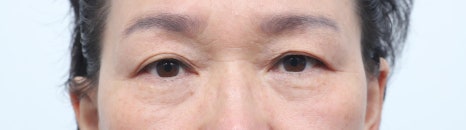

After upper eyelid surgery,
the eyebrows often descend naturally
as the excess upper eyelid skin is addressed.
This change occurs because the habit of lifting the eyebrows
with the forehead muscles to open the eyes disappears after surgery.
When the eyebrows descend in this way,
the downward pulling force is reduced,
which can change how much sagging appears
in the skin beneath the eyes.
Therefore, if the diagnosis suggests that a change
in eyebrow position may significantly affect the under-eye area,
it is safer and more appropriate to perform upper eyelid surgery first,
observe the progress,
and then carefully decide whether lower eyelid surgery is needed.
In fact, after upper eyelid surgery, the area above the eyes may feel more relaxed,
with under-eye tension or sagging improving as well.
There are quite a few cases in which lower eyelid surgery
is postponed for a while as a result.
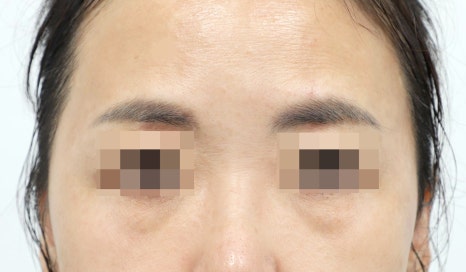
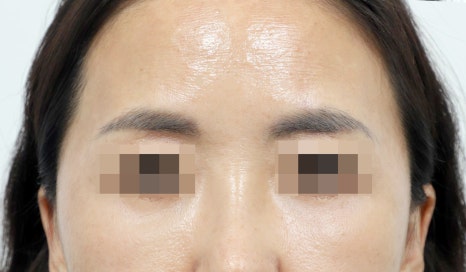
On the other hand, if there is prominent under-eye fat bulging
and clearly sagging skin regardless of the changes from upper eyelid surgery,
performing both procedures together is less likely
to affect the surgical plan.
In this situation, improving both the upper and lower eyelids
through a single anesthesia and recovery period
may be a reasonable choice.
For reference, when both procedures are performed together,
the recovery period is generally only about one or two days longer
than undergoing each procedure separately.
Many patients can return to their daily activities
in about a week after upper eyelid surgery alone,
while it is advisable to allow around ten days
when both procedures are performed together.
Swelling and bruising vary from person to person,
but because the two areas are treated separately above and below the eyes,
the difference is often not as significant as expected.
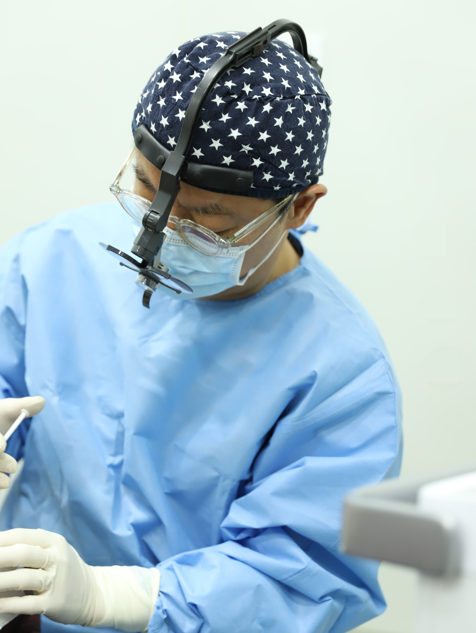
Ultimately, the criteria for choosing between simultaneous
and sequential procedures are not age or the patient's preferences.
The key question is whether a change in eyebrow position
after upper eyelid surgery could affect the lower eyelid plan.
This can only be determined accurately
by directly examining the condition of the eyes.
If you are considering upper and lower eyelid surgery together,
the first step is to determine which area needs treatment more urgently.
글로비성형외과의원 follows the principle of honestly explaining
when it is advantageous to recommend both procedures together
and when they should be performed in stages.
We also share information about possible complications
and the recovery process without omission.
If you would first like to find out,
“Which situation applies to me?”
please schedule a consultation
to determine the appropriate approach
for the condition of your eyes.
- Medical law compliance notice: Depending on the individual, complications such as postoperative bleeding, infection, inflammation, or asymmetry may occur. Please make a careful decision after having a thorough consultation with a doctor.
< Recommended related articles >
글로비성형외과의원
is located one minute on foot from Exit 4 of Apgujeong Station on Subway Line 3,
at 5F and 6F of the EGI Building,
843 Nonhyeon-ro, Gangnam-gu, Seoul.
Consultations can be scheduled on both weekdays and weekends.
All consultations are conducted privately on a one-to-one basis.
For more information or reservations, please contact us through the channel below.




Lower Eyelid and Upper Eyelid Surgery