Septal Cartilage Rhinoplasty
Features and Pros and Cons to Check Before Surgery
Hello,
This is 글로비성형외과의원.

Septal Cartilage Rhinoplasty
| A clinic that follows the principles of plastic surgery, 글로비성형외과의원 |
|---|
| Following the fundamentals is the most important part of plastic surgery. Procedures should be designed with the client’s lifelong well-being in mind. Both the process and the outcome must be safe. Globie always puts its clients first. |
| Consultation is an important step that leads to surgery. To help you feel satisfied with your surgical results, we promise personalized consultations with medical professionals who have extensive clinical experience. |
| Postoperative care can also be considered an extension of the surgery. We provide personalized care programs to help patients recover quickly. |
When you search online before undergoing rhinoplasty,
you will find a great deal of information about the materials used.
Among them, septal cartilage is often discussed with mixed claims such as,
“Apparently, it is safe,”
“They say it cannot be used if there is not enough of it,”
and “They say the nose may collapse if it is harvested.”
With all these statements mixed together,
you may have found the information even more confusing.
In actual consultations, we often meet people who postpone
the decision to undergo surgery because of these concerns,
as well as people who proceed without sufficient information
and later experience disappointing results.
In this article, we will honestly explain what septal cartilage rhinoplasty actually involves,
along with the advantages, disadvantages, and precautions
that you should carefully consider before making a decision.
Will the Nose Really Collapse if Septal Cartilage Is Harvested?
Septal Cartilage Rhinoplasty
If septal cartilage is used for rhinoplasty,
won’t the nose collapse?
This is a concern we hear very often in the consultation room.
The septum is a structure located in the center of the nasal cavity
that supports both the bridge and the tip of the nose.
Therefore, if someone says that cartilage will be removed from this area,
it is natural to wonder,
“Won’t that leave an empty space?”
Many people have exactly the same concern.
To give you the conclusion first,
the likelihood of what you are worried about occurring is extremely low.
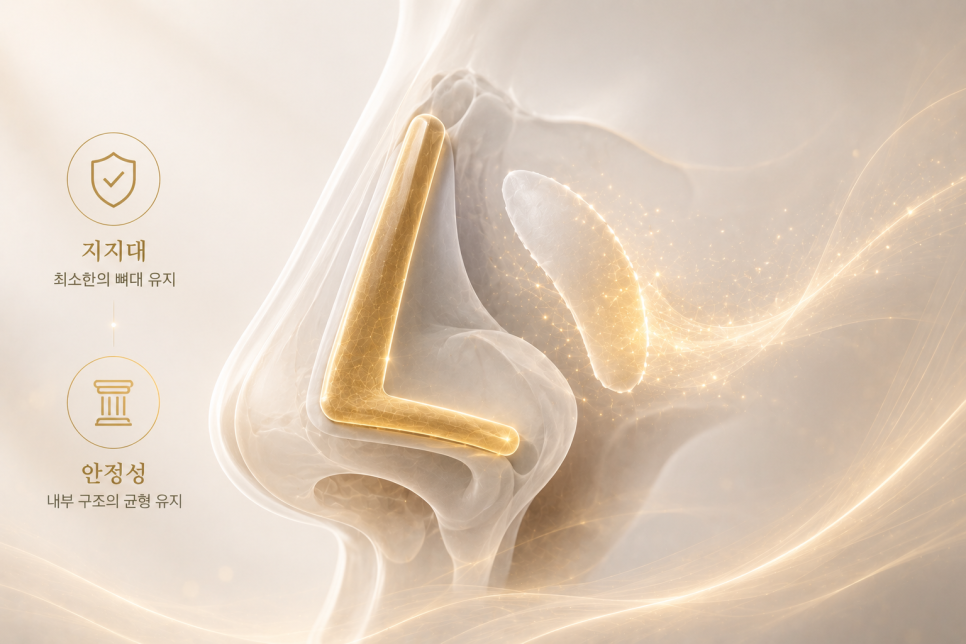
Just as a house remains standing when only one side of a pillar is taken
while the main structure is left intact,
an experienced surgeon harvests the cartilage while preserving
the minimum framework that supports the nose—the “L-shaped strut.”
This supporting structure is left at a minimum of 1–1.5 cm
along both the lower nasal bridge and toward the nasal tip.
Before harvesting, this standard is checked first,
and as long as the principle is followed,
the internal structure remains stable even after surgery.
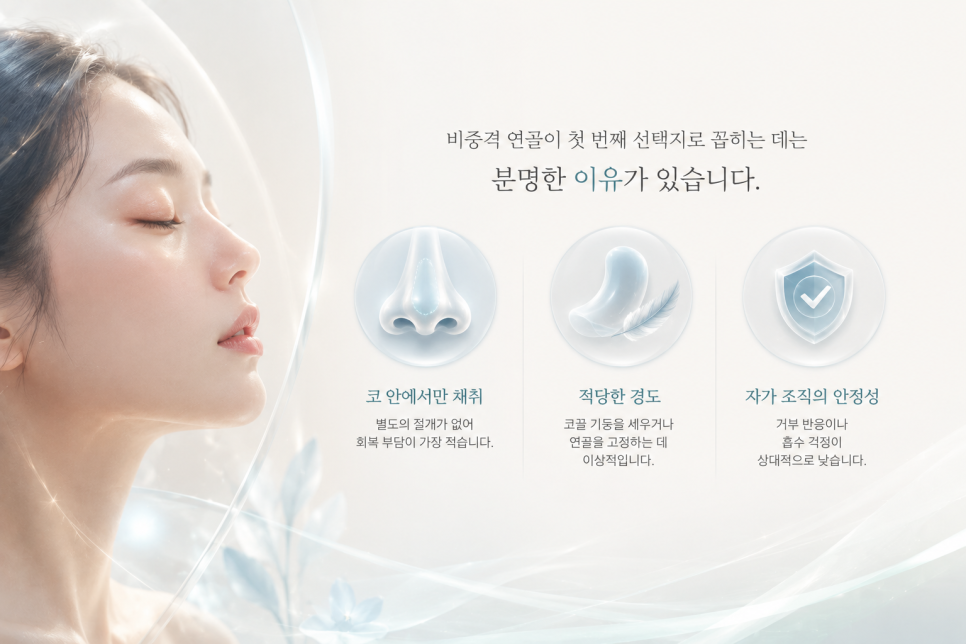
There are clear reasons why septal cartilage
is considered the first choice.
Because it is harvested only from inside the nose
without a separate incision in the chest or ear,
it places the least burden on recovery.
Its moderate firmness makes it well suited
for creating a supporting column for the nasal tip
or for use as a graft to stabilize cartilage,
and because it is the patient’s own tissue,
the concerns about rejection or resorption
are also relatively low.
However, people who have previously undergone surgery for rhinitis,
or whose nose is particularly small,
may not have enough cartilage available for use from the outset.
In such cases, septal cartilage rhinoplasty is generally not recommended,
because using ear cartilage or rib cartilage to establish an appropriate plan
is much safer than forcing the use of an unsuitable material.
Can Septal Cartilage Raise Both the Nasal Tip and Bridge?
Septal Cartilage Rhinoplasty
Then, can septal cartilage alone
raise both the nasal tip and the bridge at once?
This question contains one misconception.
Septal cartilage is a material used to create
and guide the internal support of the nasal tip;
it is not a material used to create the height of the nasal bridge itself.
The nasal bridge is augmented with a silicone implant,
while septal cartilage is used for the structural reconstruction of the nasal tip.

Ultimately, “septal cartilage rhinoplasty” depends on
how precisely these two materials are planned and combined.
There was an actual case like this.
A patient with an overall small nose and tight skin
visited the clinic. Upon directly examining the inside of the nose,
we found that there was not enough septal cartilage available for use.
Even so, if we had insisted on using only septal cartilage,
the support for the nasal tip could have weakened,
potentially causing it to gradually sink over time.
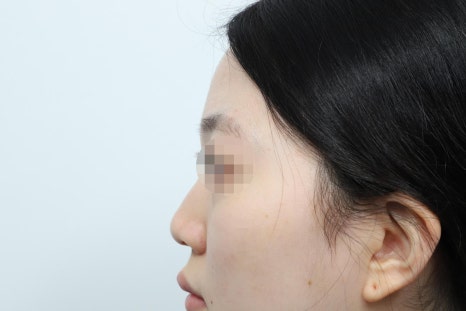
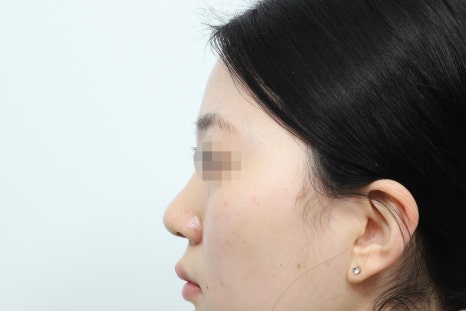
We explained this point honestly first
and adjusted the plan to use ear cartilage as an auxiliary material.
The recovery process also concluded much more stably than expected.
This case clearly demonstrates that making a decision suited to your own condition
should come before choosing a material.
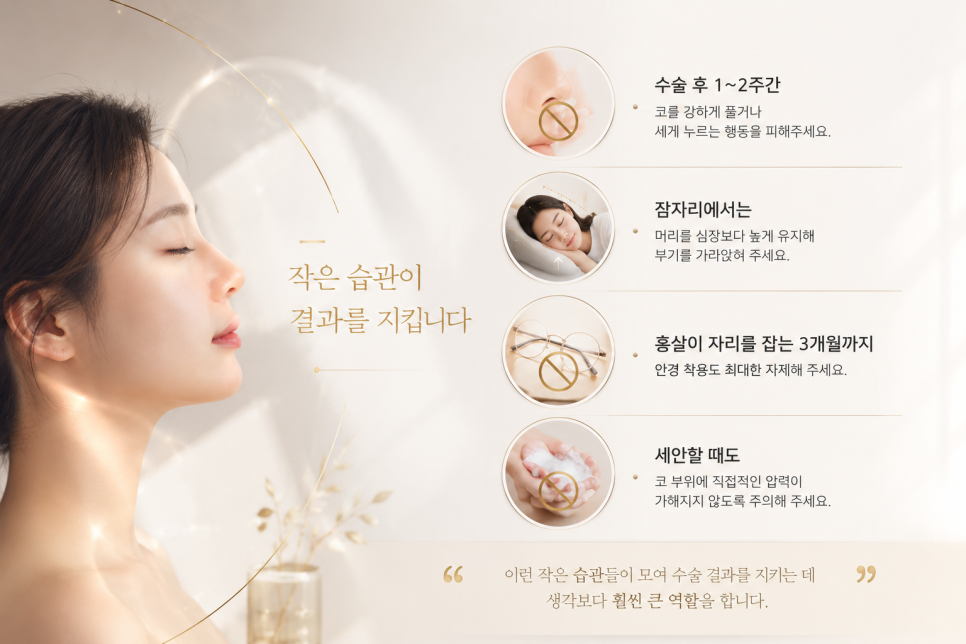
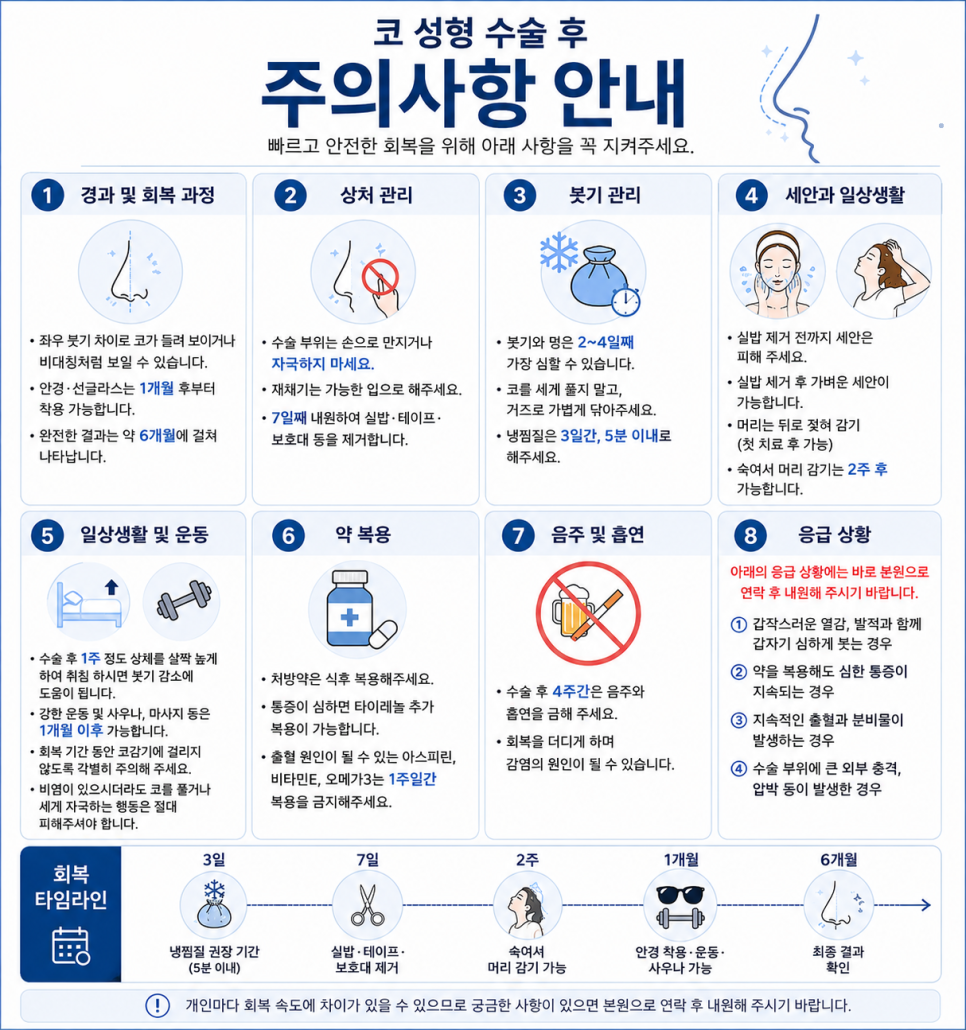
Postoperative care also has a greater impact on the outcome than you might expect.
For the first 1–2 weeks after surgery,
avoid blowing your nose forcefully or applying strong pressure.
While sleeping, keep your head elevated above your heart
to help reduce swelling.
Until scar tissue settles—up to three months—
avoid wearing glasses as much as possible,
and be careful when washing your face
not to apply direct pressure to the nose.
These small habits together play a much greater role than expected
in protecting the surgical results.
With septal cartilage rhinoplasty,
the process of first confirming whether your current condition
is suitable for the material is far more important than the material’s name.
At 글로비성형외과의원, our first principle in consultation
is to honestly explain the possibility of complications after surgery
and the inherent limitations of each material.
If you want to reduce trial and error caused by incorrect information,
we recommend first confirming an accurate plan suited to your condition.
※ Cosmetic surgery may result in complications or reduced satisfaction depending on an individual’s constitution and condition, including postoperative infection, bleeding, inflammation, asymmetry, septal perforation, or drooping of the nasal tip. Caution is required.
| 글로비성형외과의원 |
|---|
| Thank you for taking the time to read this post. When making a reservation or requesting a consultation, please simply mention, “I’m contacting you because I saw your blog.” We will be delighted to assist you with even greater care and attention to detail! |
< Recommended Related Articles >
글로비성형외과의원 is located
one minute on foot from Exit 4 of Apgujeong Station on Subway Line 3,
at 5th and 6th Floors of the EGI Building,
843 Nonhyeon-ro, Gangnam-gu, Seoul.
Consultation reservations are available on weekdays and weekends.
All consultations are conducted privately on a one-to-one basis.
For detailed inquiries and reservations, please leave a message through the channel below.



Septal Cartilage Rhinoplasty