Fat Transfer Breast Augmentation,
How to Create a Natural Contour
Hello,
This is Globie Plastic Surgery Clinic.
Fat Transfer Breast Augmentation
| A Clinic That Follows the Principles of Plastic Surgery: Globie Plastic Surgery Clinic |
|---|
| The most important principle in plastic surgery is adhering to the basics. Procedures should be designed with the patient's entire lifetime in mind. Both the process and the results must be safe. Globie always puts patients first. |
| Consultation is an important step that leads to surgery. To help you feel satisfied with your surgical results, we promise personalized consultations with medical professionals who have extensive clinical experience. |
| Postoperative care can also be considered an extension of the surgery. We provide personalized care programs to help patients recover quickly. |
There is one image that often comes to mind
for those considering fat transfer breast augmentation.
It is a natural-looking breast that does not show through clothing
and feels like part of your own body when touched.
When you search for information, however, you often find an overwhelming amount focused on questions such as, “What is the fat survival rate?”
and “How much larger will my breasts become?”
Information about how to create that natural contour
is much harder to find.
So today, we will explain honestly
how a natural breast contour is created through fat transfer,
the principles behind it,
and the cases in which this procedure may not be suitable.
How natural the results look is largely determined
already during the preoperative planning stage.
A Natural Contour:
Half Is Determined During Preoperative Planning
Fat Transfer Breast Augmentation
There is something we often hear in the consultation room.
“Isn’t fat transfer just a matter of putting the fat in?”
“Is there really a separate planning process?”
There is.
And this process is much more important than many people realize.
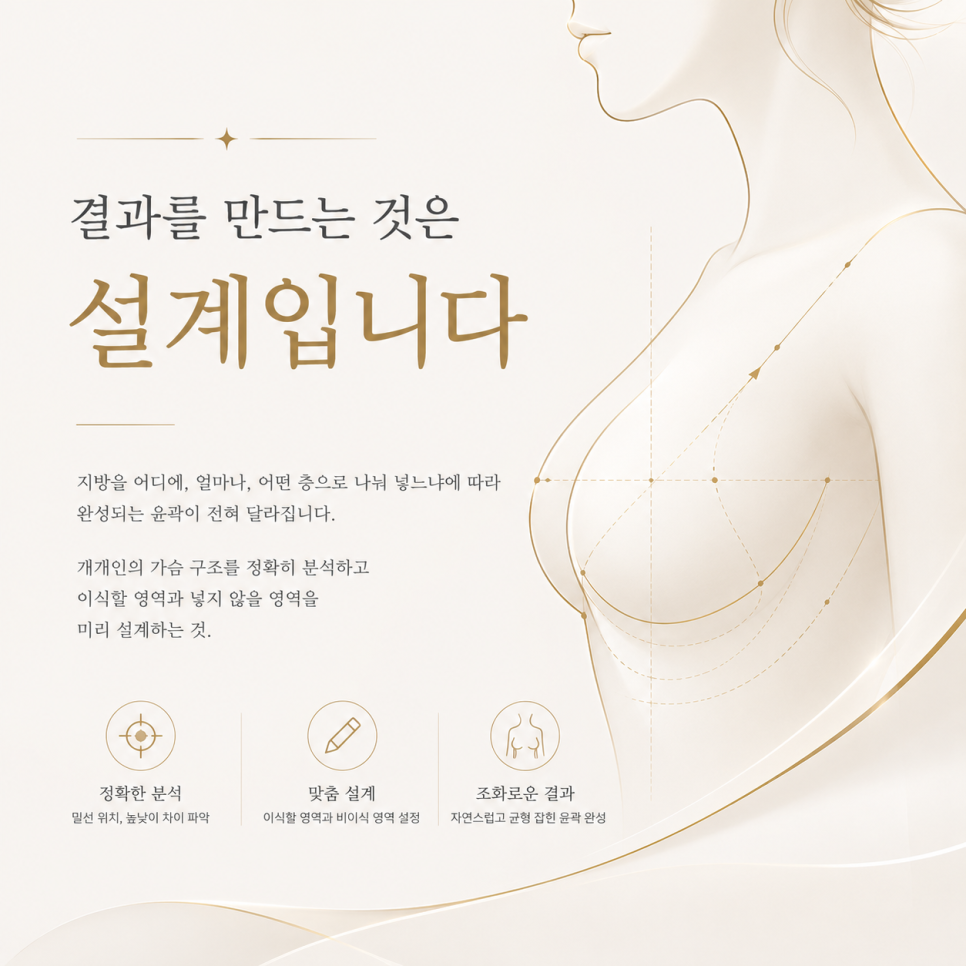
Where the fat is placed, how much is used,
and which tissue layers it is divided among
can result in completely different contours.
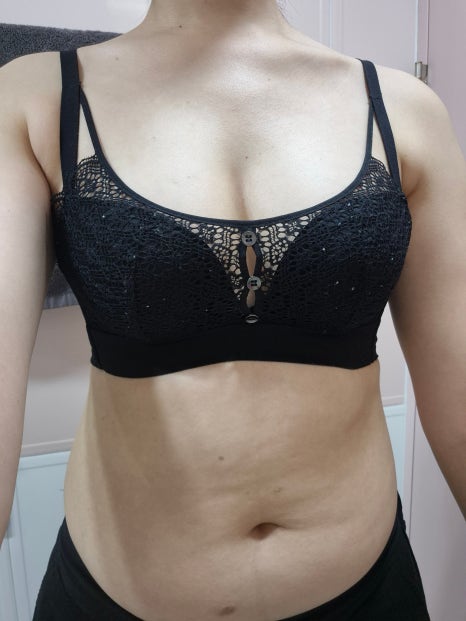
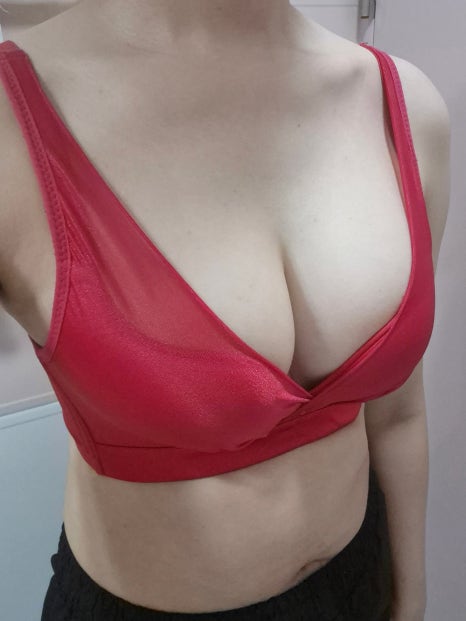
Before surgery, palpation is used to check the position of the inframammary fold
and differences in height between the left and right sides.
Even breasts that appear symmetrical often have subtle differences
in the position of the fold when examined by touch.
If these differences are not identified first,
asymmetry may remain visible even after the transfer.
Therefore, the areas to be grafted and the areas to be left untreated
are marked before surgery begins.
There is one thing you should understand in advance.
Fat transfer is not a procedure that creates a new space.
It fills volume and refines the shape within the breast tissue that is already present,
so there are limits to changing the overall outer framework.
The procedure should be planned with this point understood from the beginning
so that the postoperative results can be viewed realistically
and the gap between expectations and results can be narrowed.
The method of grafting is also a key factor
in determining how natural the contour looks.
If fat is concentrated in a single layer,
the central portion may not receive sufficient blood supply,
which can lead to clumping or necrosis.
This is one of the complications that requires the greatest attention
during the procedure.
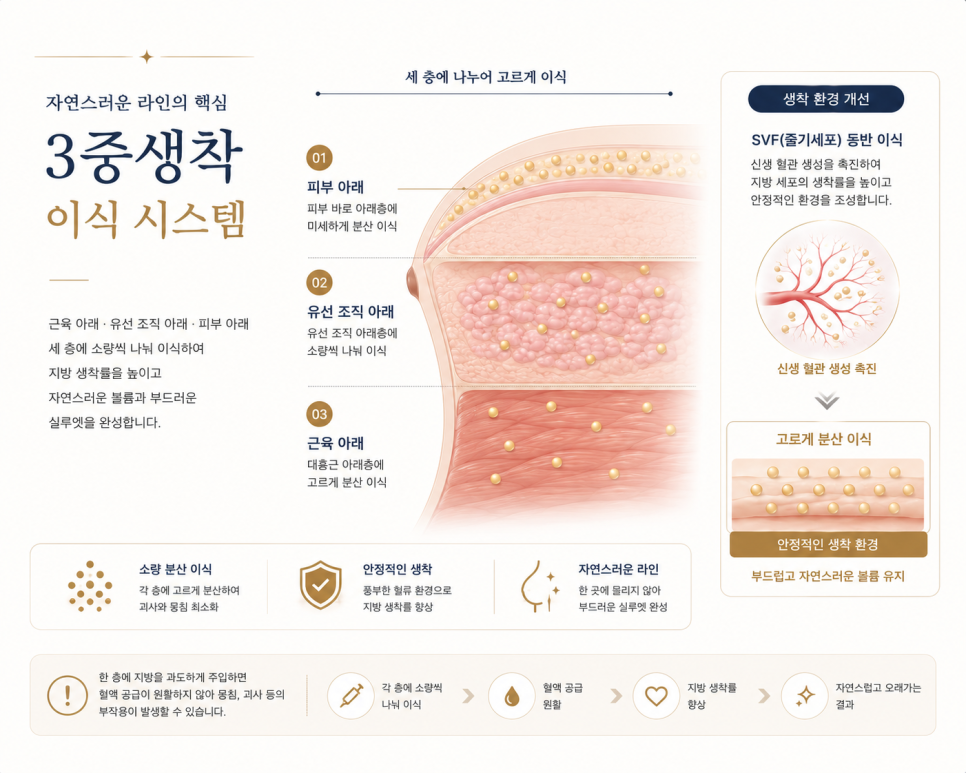
To help prevent this,
we use a three-layer fat survival technique,
dividing the fat into small amounts and grafting it beneath the muscle,
beneath the glandular tissue, and beneath the skin.
When the fat is distributed evenly across each layer,
volume does not become concentrated in one area,
allowing the visible silhouette to flow much more smoothly.
When SVF (stem cells) are grafted together with the fat,
this may help promote the formation of new blood vessels,
improve the survival rate of fat cells,
and create a more stable environment.
Because this procedure is intended to enhance the contour,
it is clearly not suitable for everyone.
Fat Transfer Breast Augmentation
So, does fat transfer produce natural-looking results for everyone?
We will answer honestly.
No, it does not.
Fat transfer is specialized in making subtle improvements to the contour
and enhancing natural texture and feel,
rather than unconditionally increasing breast size.
For example, some people may be concerned that,
after implant surgery,
the contour around the cleavage appears thinly visible
or the line does not look smooth.
In such cases, precisely filling empty spaces around the implant
or areas where the skin layer has become thin with fat
may help create a more natural transition.
In other words, fat transfer is a procedure that excels at making subtle improvements to the contour
and enhancing natural texture and feel,
rather than producing a sudden, significant increase in volume.
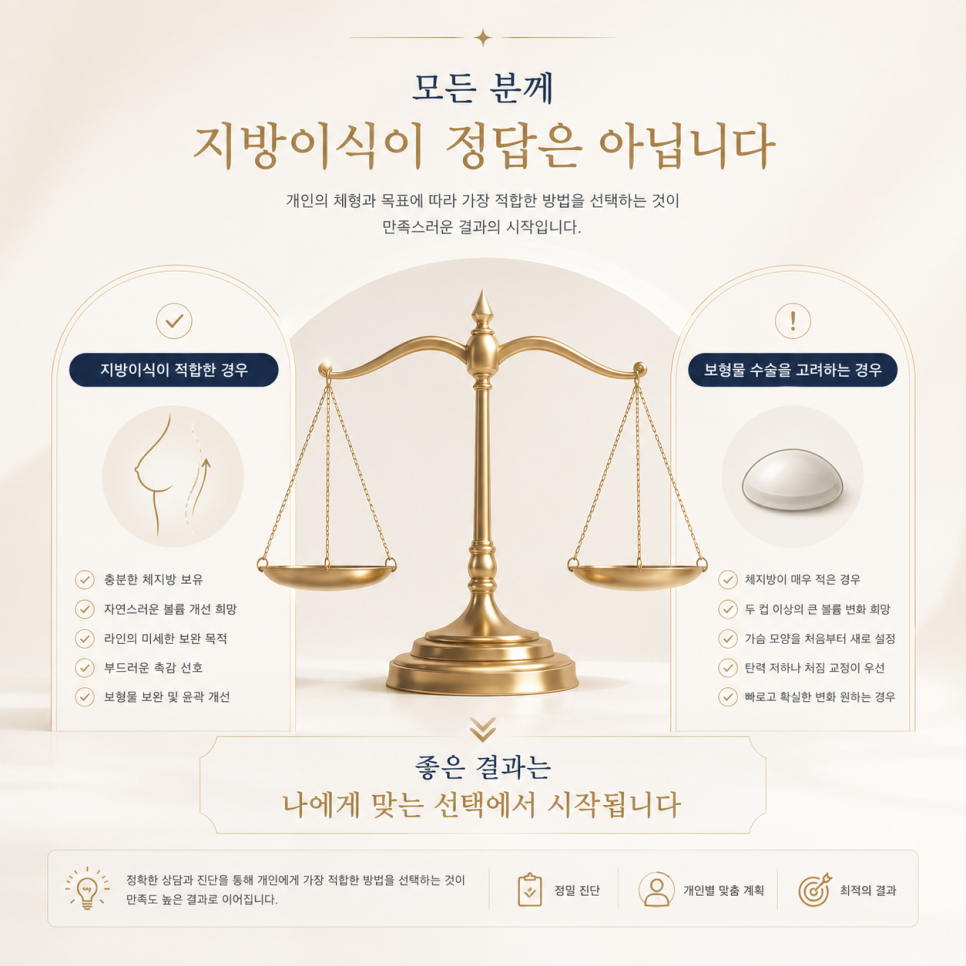
However, some people are not suitable candidates
for this procedure from the outset.
This includes people with very little body fat
who do not have sufficient fat available for harvesting.
When consulting with people who have a slim build,
we also check the estimated amount of fat that can be harvested.
More often than expected, we encounter situations
in which it is difficult to establish a surgical plan in the first place.
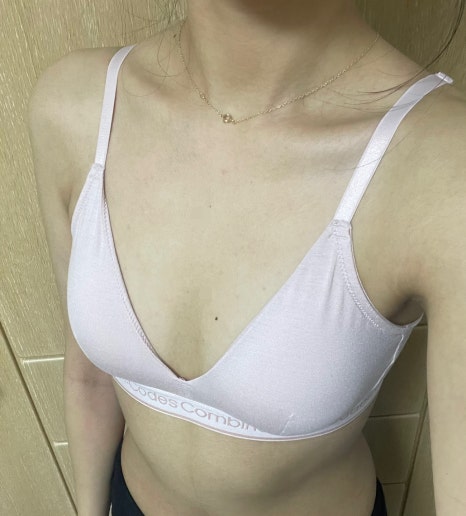
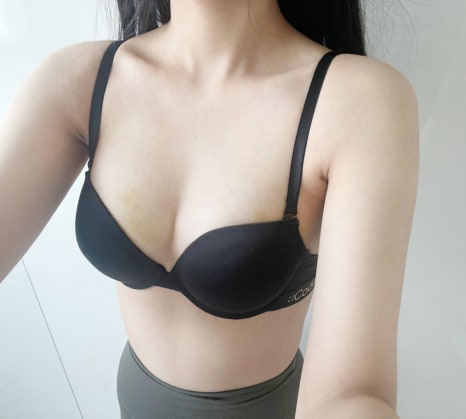
In such cases, rather than recommending fat transfer unconditionally,
we first explain implant surgery as an option.
If the procedure is performed when there is insufficient material,
the desired contour may not be achieved,
leaving the patient to bear the disappointment.
People who want a major change of two or more cup sizes,
or those who want to reshape their breasts completely from the beginning,
will also face limitations with fat transfer alone.

Early care after surgery is also important
for maintaining the contour as fully as possible.
For one month after the transfer, avoid sleeping on your stomach or side
and sleep on your back instead.
Underwear with underwire or firm padding
may press on the grafted areas and interfere with blood flow,
so we recommend wearing underwear made of soft materials.
If you lose weight rapidly during this period,
living fat cells may decrease as well.
Maintaining adequately nutritious meals and taking light walks to support circulation
is practically beneficial for preserving the contour.
It may be helpful to confirm during your consultation
how much of a contour change can realistically be achieved through fat transfer
and what direction is realistic for your body type.
Because it is Globie's principle to share the procedure's precautions and limitations honestly,
please feel free to contact us if you would like to know the precise approach suited to your condition.
| Globie Plastic Surgery Clinic |
|---|
| Thank you for reading this lengthy post. When making an appointment or consultation inquiry, simply mention, “I’m contacting you because I saw your blog.” We will be delighted to assist you with even greater care and attention to detail! |
< Other Posts You May Find Helpful >
Globie Plastic Surgery Clinic
is located a one-minute walk from Exit 4 of Apgujeong Station on Subway Line 3,
at 5th and 6th Floors, EGI Building,
843 Nonhyeon-ro, Gangnam-gu, Seoul.
Consultation appointments are available on both weekdays and weekends.
All consultations are conducted privately on a one-on-one basis.
For detailed inquiries and appointments, please leave a message through the channel below.



Fat Transfer Breast Augmentation