Nose Surgery Checklist,
Be Sure to Check Before Your Consultation
Hello,
This is Globie Plastic Surgery Clinic.

Nose Surgery Checklist
| A Clinic That Follows the Principles of Plastic Surgery: Globie Plastic Surgery Clinic |
|---|
| Following the basics is the most important principle in plastic surgery. Procedures should be designed with the patient's entire life in mind. Both the process and the results must be safe. Globie always puts its patients first. |
| A consultation is an important step that leads to surgery. To help you be satisfied with your surgical results, we promise personalized consultations with medical professionals who have extensive clinical experience. |
| Postoperative care can also be considered an extension of the surgery. We provide personalized care programs to help our patients recover quickly. |
Before scheduling an appointment for rhinoplasty,
if you have spent all night searching for information,
you may have wondered:
“What type of implant should be used? Where will the cartilage come from?
What should I ask in the consultation room so I do not regret my decision?”
The more you know,
the better questions you can ask,
and the more satisfying your consultation can be.
However, much of the information available online
is fragmented, and many people find it
even more confusing as a result.
In this article, focusing on the nose surgery checklist,
we have organized the key information
you should know before your visit.
If you enter the consultation room with
clear and appropriate criteria,
you can receive much more accurate answers
while you are there.
What Is the Difference Between an Implant and Cartilage?
Nose Surgery Checklist
This is the first question most frequently asked
in the consultation room.
It is also the point that causes the most confusion
for people preparing for their first consultation.
In fact, once this one concept is clarified,
the explanations that follow become much easier to understand.
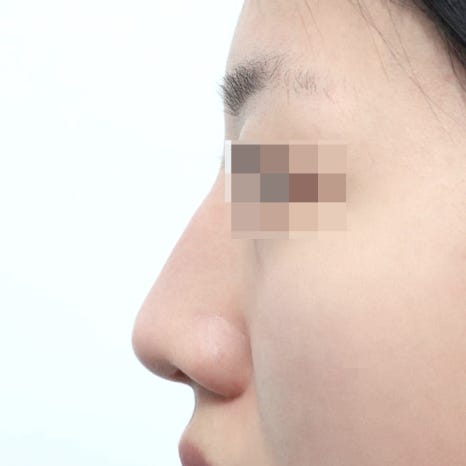
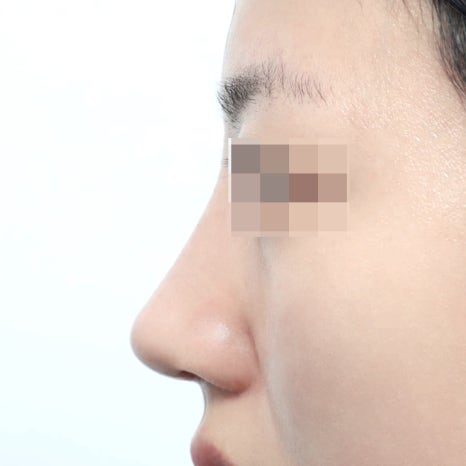
The bridge of the nose and the tip of the nose serve different functions.
The bridge rests on firmly fixed bone,
so a silicone implant is suitable for this area.
Its shape is stable and predictable,
which makes it easier to create the desired height and contour.
The tip of the nose, on the other hand,
is a cartilage area that moves subtly whenever you smile or speak.
If a hard implant is placed against it,
it may look unnaturally stiff when you make facial expressions,
or, over time, it may press against the skin of the nasal tip from the inside,
causing thinning or deformation.

For this reason, using autologous cartilage for the nasal tip
is currently considered the safer standard.
Autologous cartilage is divided into three types according to its source:
septal cartilage taken from the central septum inside the nose,
ear cartilage taken from the ear,
and rib cartilage taken from the area near the ribs.
For a first surgery,
septal or ear cartilage is usually sufficient,
but some people choose rib cartilage from the beginning
when the nasal structure is small or a strong supporting framework is needed.

There is one point you should be sure to check.
If you have previously undergone surgery to correct rhinitis,
some of your septal cartilage may already have been removed.
In such cases, the choice of material can change completely,
so it is important to accurately review your previous surgical history.
The material to be used is determined by considering
the size of the nose, skin thickness, and previous surgical history together;
it is not automatically determined solely by whether this is your first surgery.
What Should I Prepare for My Consultation?
Nose Surgery Checklist
This is the second most frequently asked question,
and to be honest,
it may be more important than the first one.
A consultation is not simply a time to listen to an explanation.
It is a process of accurately identifying the gap
between the current condition of your nose and your goals.

The more prepared you are,
the more you can take away from the consultation.
First, please take and bring photos of your nose
from the front, at a 45-degree angle, and from the side.
The lighting and angles in the consultation room differ from those in everyday life.
Without photos you have taken yourself,
it can be difficult to assess proportions and concerns
based on your usual appearance,
and drooping or asymmetry of the nasal tip
is often accurately revealed only in a side-view photo.
It is also a good idea to bring reference images,
but there is one thing you should know in advance.
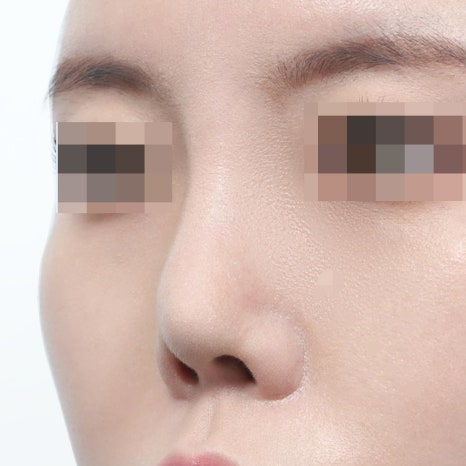
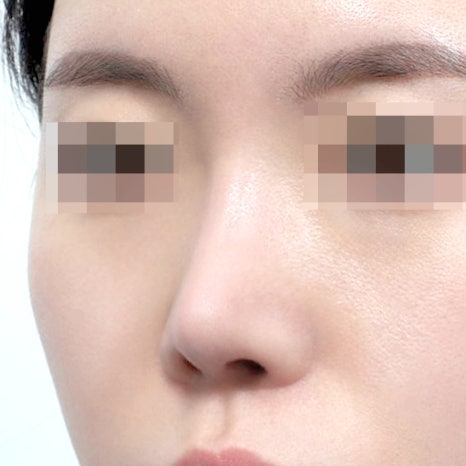
There is no guarantee that the nose in the photo
will suit your face as well.
The nose is determined within the proportions of the entire face.
Depending on the distance between the eyes, the length of the midface, and skin thickness,
the same height can create a completely different impression.
It is best to use images only as reference material
to help establish a general direction.
There are cases that are occasionally concerning in practice.
Some people do not mention their history of filler treatments,
and it is discovered later during the consultation.
If a significant amount of foreign material remains inside
after multiple nose filler injections,
it can be difficult to assess the original structure,
and the removal process may be added,
making the procedure more complicated than expected.
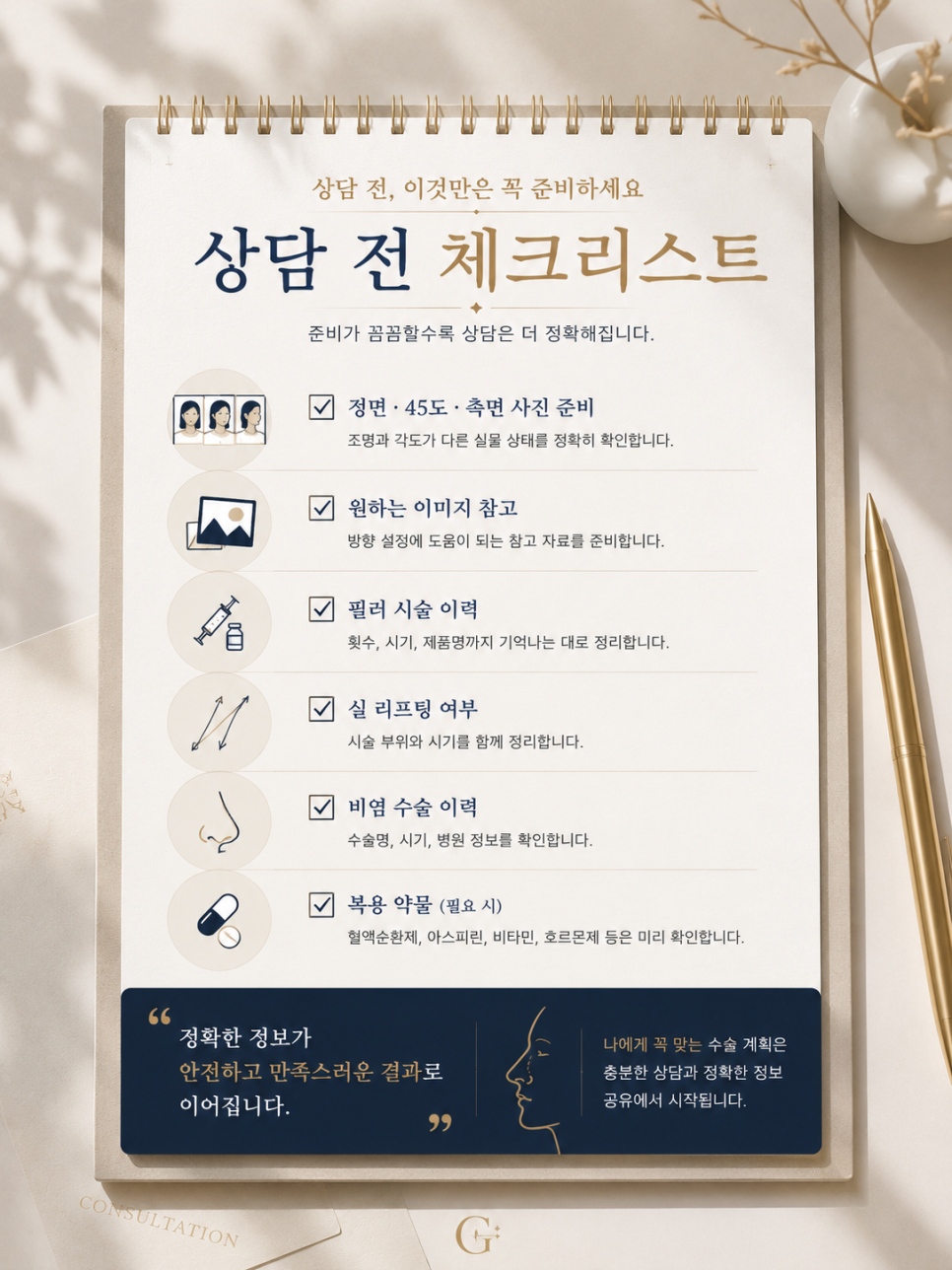
This is why you should organize and bring a complete record
of any previous filler treatments, thread lifting, or rhinitis surgery
before your visit.
It is also helpful to learn about postoperative care in advance.
For the first two weeks immediately after surgery,
you should avoid touching the area around the nose directly
or wiping it forcefully.
When washing your face, rinse gently,
and instead of rubbing away the moisture,
pat it dry so that it is absorbed.

Raising your pillow by one level or keeping your head
higher than your heart can make a practical difference in reducing swelling.
Because glasses apply direct pressure to the surgical area,
we advise avoiding wearing them for at least four weeks.
To undergo rhinoplasty successfully,
a good consultation must come first.
To have a good consultation,
you need to prepare properly before you go.
At Globie, it is our principle not to withhold information
that patients need to know.
We believe that a genuine consultation means transparently sharing
the possibility of side effects, the recovery process,
and even the limitations of the materials.
Please find out for yourself
what the accurate plan is for the condition of your nose.
| Globie Plastic Surgery Clinic |
|---|
| Thank you for reading this long post. When making a reservation or consultation appointment, just casually mention, “I’m contacting you because I saw your blog.” We will be delighted to assist you with even greater care and attention to detail! |
< Other Posts You May Also Enjoy >
Globie Plastic Surgery Clinic
is located one minute on foot from Exit 4 of Apgujeong Station on Subway Line 3,
on the 5th and 6th floors of the EGI Building,
843 Nonhyeon-ro, Gangnam-gu, Seoul.
Consultation appointments are available on both weekdays and weekends.
All consultations are conducted privately on a one-on-one basis.
For detailed inquiries and reservations, please leave a message through the channel below.



Nose Surgery Checklist