Breast Autologous Fat Grafting
Key Factors That Determine Graft Survival Rate
Hello,
This is Globie Plastic Surgery Clinic.
Breast Autologous Fat Grafting
| A Clinic That Upholds the Principles of Plastic Surgery: Globie Plastic Surgery Clinic |
|---|
| Upholding the basics is the most important principle in plastic surgery. Procedures should be designed with the patient's lifelong well-being in mind. Both the process and the results must be safe. At Globie, our patients always come first. |
| Consultation is an important step that leads to surgery. To help you feel satisfied with your surgical results, we promise personalized consultations with medical professionals who have extensive clinical experience. |
| Postoperative care can also be considered an extension of the surgery. We provide personalized care programs to help our patients recover quickly. |
There is one question that people who visit us for breast autologous fat grafting
most commonly ask:
Will all of the grafted fat survive?
Can you predict how much will remain?
To be honest, it is difficult to determine the graft survival rate
precisely before surgery.
According to published studies, individual variation is substantial,
ranging from 15% to 75%, while clinically,
an average of around 50% of the grafted volume is generally reported.
There are reasons why results can differ even when the same amount is grafted,
and conversely, there are clear measures that can be taken
to create more favorable conditions for graft survival,
both through surgical techniques and postoperative care.
At Globie, we will honestly share
the key factors involved.
Graft survival is influenced by technique, individual characteristics,
and care
Breast Autologous Fat Grafting
If the surgery is performed well,
does that mean the graft survival rate will be higher?
Or are a person's natural characteristics more important?
This is a question we often hear in the consultation room.
In fact, this question reflects a sense of anxiety.
You may be worried that the outcome cannot be changed
regardless of the efforts you make.
To give you the conclusion first,
both technique and individual characteristics have an effect,
but there are also variables that patients can directly influence.
First, there is the surgical technique.
For grafted fat cells to survive, they must receive
blood and nutrients in their new location.
If too much fat is concentrated in one area,
blood vessels cannot reach the center of the mass,
and necrosis can begin from the inside.
This is also one of the points we are most cautious about during surgery.
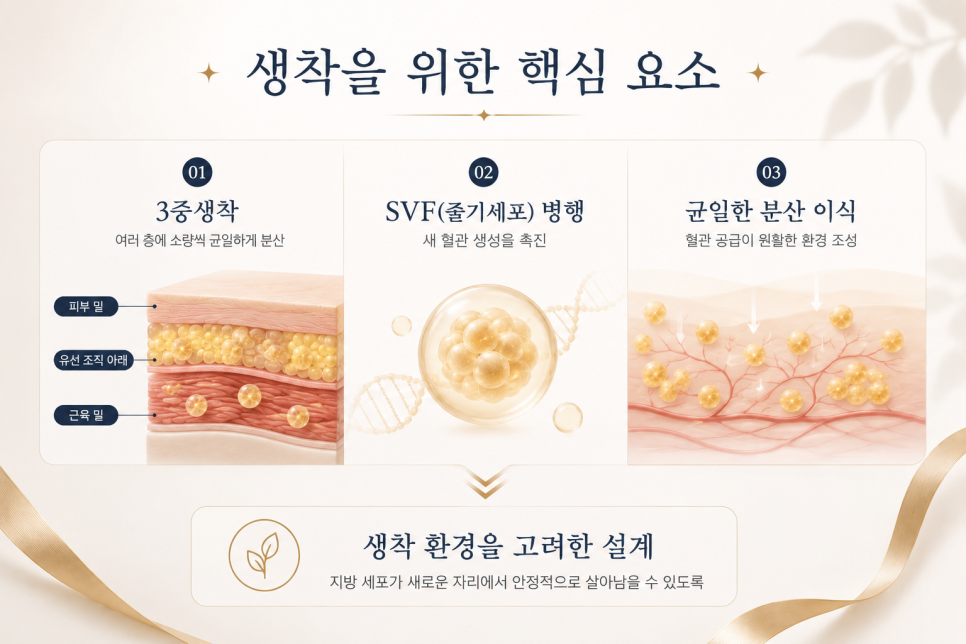
To prevent this, Globie uses a three-layer graft-survival technique,
distributing small amounts evenly across multiple layers,
including beneath the muscle, beneath the mammary gland tissue,
and beneath the skin.
We also use SVF (stem cells) to help create an environment
where new blood vessels can grow in more quickly.
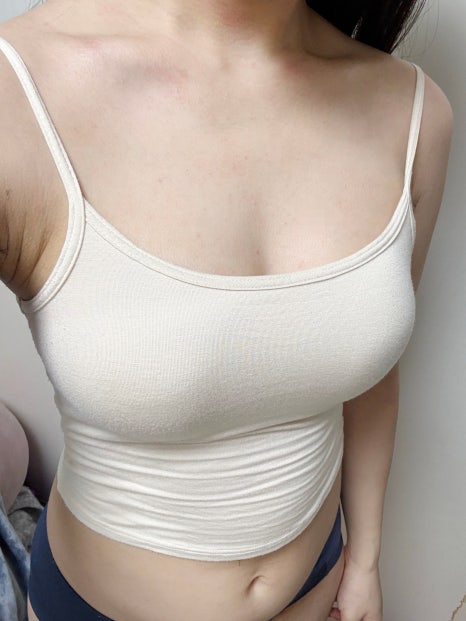
Next are individual characteristics.
When we directly examine skin thickness and the condition of the mammary gland tissue
in the consultation room, we often find that
even people with similar body types
have completely different graft-survival environments
depending on their tissue conditions.
For people with extremely little body fat
or underdeveloped mammary gland tissue,
there may be limits to achieving the desired volume
rather than proceeding with grafting unnecessarily.
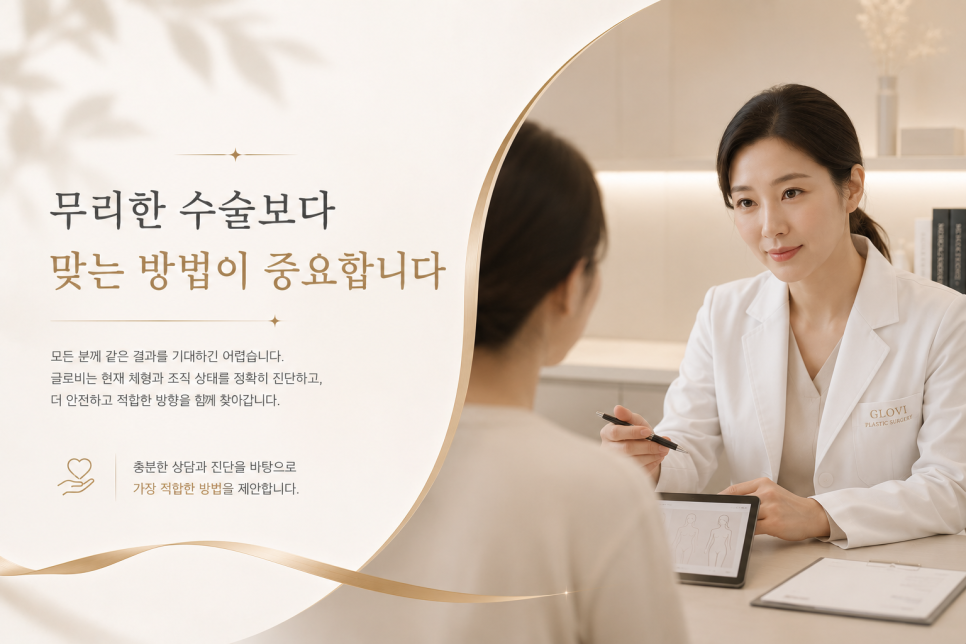
To be honest, when these conditions are identified,
we do not push patients to undergo surgery.
If it would be difficult to achieve the desired result,
we explain this candidly at the consultation
and work together to find an approach that better suits the patient's body type.
That is Globie's approach.
Habits that can reduce the graft survival rate after surgery:
avoid these
Breast Autologous Fat Grafting
If the surgery went well, isn't that the end of it?
Do lifestyle habits really affect graft survival?
This is one of the topics that inevitably comes up
when we check a patient's progress.
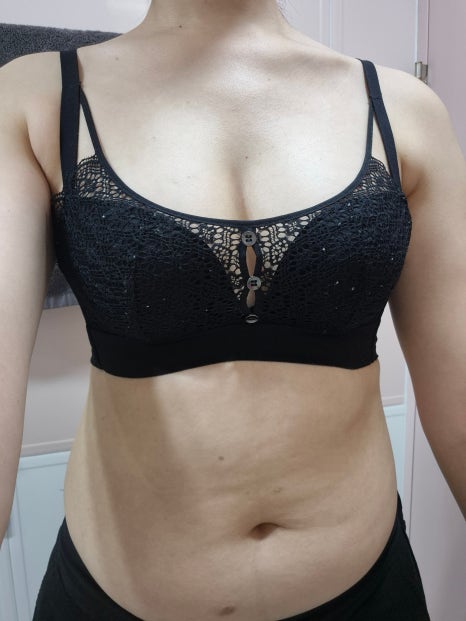
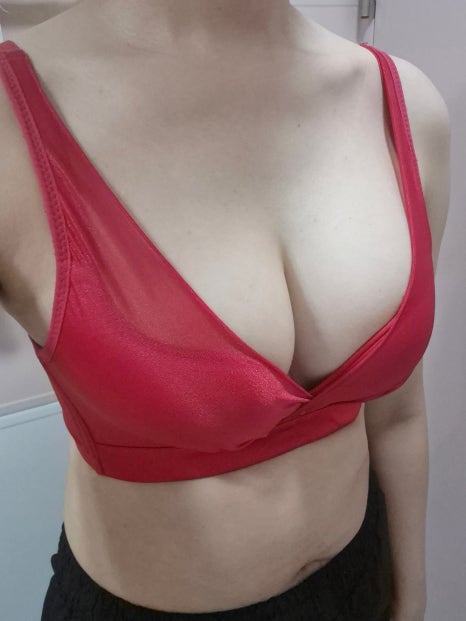
The most unfortunate cases we see are those in which
the surgery went well, but inadequate postoperative care
caused the volume to decrease much more than expected.
It takes at least two to three months
for grafted cells to receive nutrients stably
through new blood vessels,
and daily life during this period essentially determines the final result.
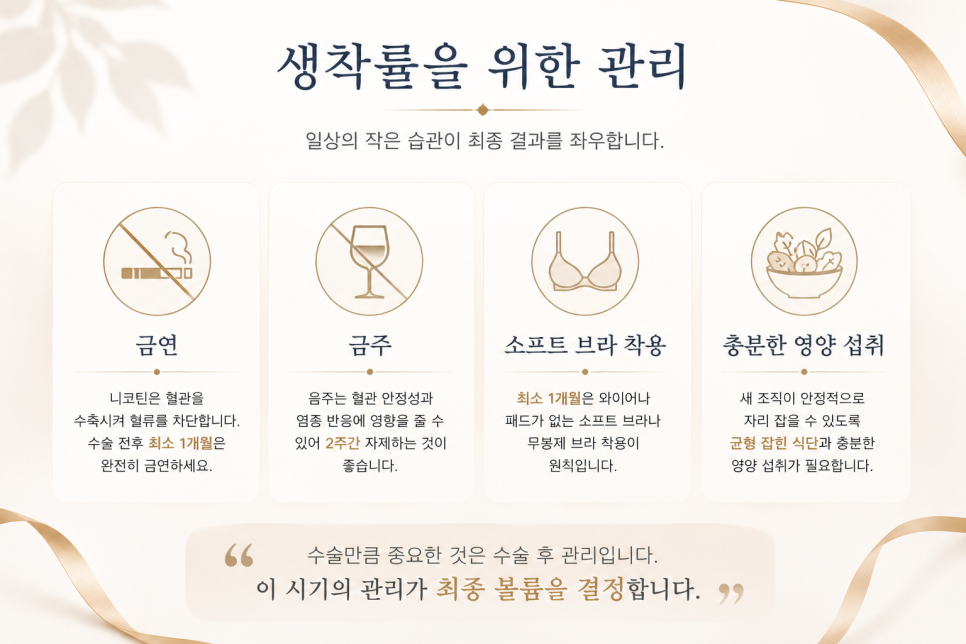
Smoking is the first factor we warn about.
Nicotine constricts peripheral blood vessels
for more than 30 minutes each time a cigarette is smoked.
If blood flow is repeatedly interrupted
while the grafted cells are waiting for vascular supply,
even cells that could have survived may ultimately fail to do so.
Secondhand smoke is no exception,
and smoking and exposure to smoke should be completely avoided
for at least one month before and after surgery.
Alcohol can affect vascular stability and inflammatory responses,
so it is better to avoid it for two weeks.
The choice of underwear can also be a more significant factor than expected.
When the grafted area is directly examined one week after surgery,
the tissue is usually still soft and not yet firmly settled.
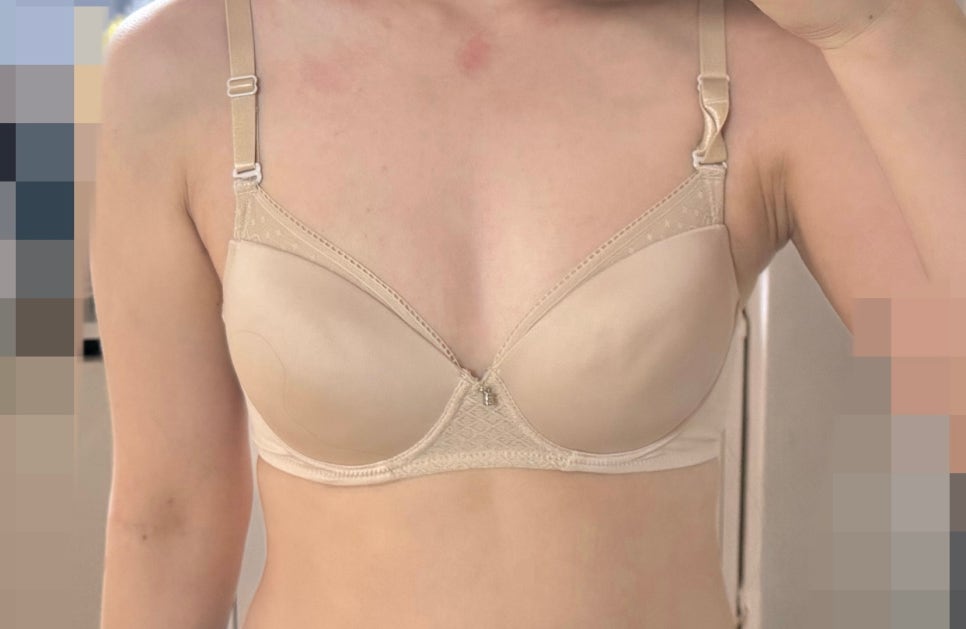
At this point, wearing undergarments with underwires
or firm padding may continuously compress the area
and interfere with blood flow.
As a general rule, wear a soft bra
or a seamless bra for at least one month.
This one month can have a meaningful effect on the final volume.
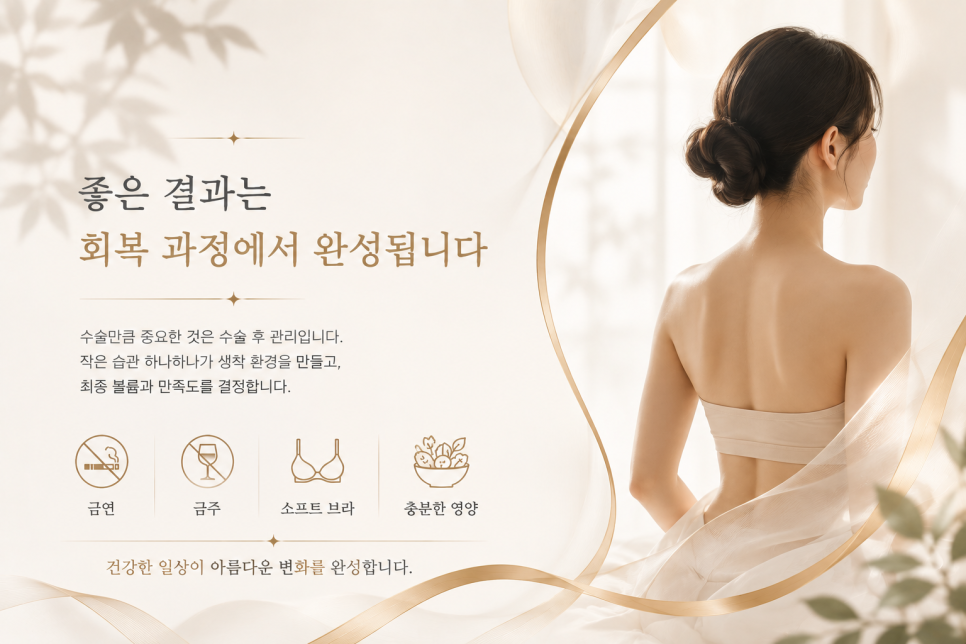
Dietary management is also easy to overlook.
The process of settling into a new location is similar to tissue reconstruction,
so it must be supported by adequate nutritional intake.
Dramatically reducing food intake to change your weight
is a habit that can directly adversely affect the graft survival rate.
Therefore, we recommend safely beginning substantial weight loss
through dietary control only after three months following surgery,
once the grafted fat has fully settled.
The graft survival rate after breast autologous fat grafting
is the result of the surgical technique, individual characteristics,
and daily life afterward working together.
It is Globie's principle to transparently explain
possible side effects and limitations based on each individual's circumstances.
If you are hesitating because you are concerned about the graft survival rate,
first checking what plan is appropriate for your body type and circumstances
is the fastest way to achieve a satisfactory result
without unnecessary trial and error.
Please feel free to contact us for a consultation at any time.
※ With breast autologous fat grafting, the graft survival rate and results may vary
depending on an individual's characteristics,
amount of body fat, lifestyle habits, and surgical method.
Side effects such as inflammation, calcification, and cysts
may occur.
| Globie Plastic Surgery Clinic |
|---|
| Thank you for reading this long post. When making a reservation or consultation appointment, just mention, “I’m contacting you because I saw your blog.” We will be delighted to assist you with even greater care and attention to detail! |
< Recommended articles to read together >
Globie Plastic Surgery Clinic
is located one minute on foot from Exit 4 of Apgujeong Station on Subway Line 3,
at 5th and 6th Floors, EGI Building, 843 Nonhyeon-ro, Gangnam-gu, Seoul.
Consultation reservations are available on weekdays and weekends.
All consultations are conducted privately on a one-to-one basis.
For detailed inquiries and reservations, please leave a message through the channel below.



Breast Autologous Fat Grafting