Revision Rhinoplasty Clinic
2 Essential Things to Check Before Your Consultation
Hello,
This is Glovi Plastic Surgery Clinic.

Revision Rhinoplasty Clinic
| A Clinic That Follows the Principles of Plastic Surgery: Glovi Plastic Surgery Clinic |
|---|
| Following the fundamentals is the most important aspect of plastic surgery. Procedures should be planned with the patient's entire lifetime in mind. Both the process and the results must be safe. At Glovi, we always put our patients first. |
| A consultation is an important step that leads to surgery. To help you be satisfied with your surgical results, we promise personalized consultations with experienced medical professionals. |
| Postoperative care can also be considered an extension of the surgery. We provide personalized care programs to support our patients' speedy recovery. |
If you are looking for a revision rhinoplasty clinic,
you are likely carrying deeper concerns and anxiety
than you did before your first surgery.
Under the pressure of thinking, “I absolutely cannot fail this time,”
you may have read countless reviews but still found it difficult
to find an answer that perfectly fits your situation.
In this post, we will explain two key points
to check before choosing a revision rhinoplasty clinic—
things you can verify directly during your consultation
to significantly reduce the chances of trial and error.
These are not grand or complicated criteria.
They are things you can check directly during your consultation,
and carefully reviewing just these two points
can substantially reduce mistakes when choosing a clinic.
We have organized this information with the hope
that you will not make another decision in the wrong direction.
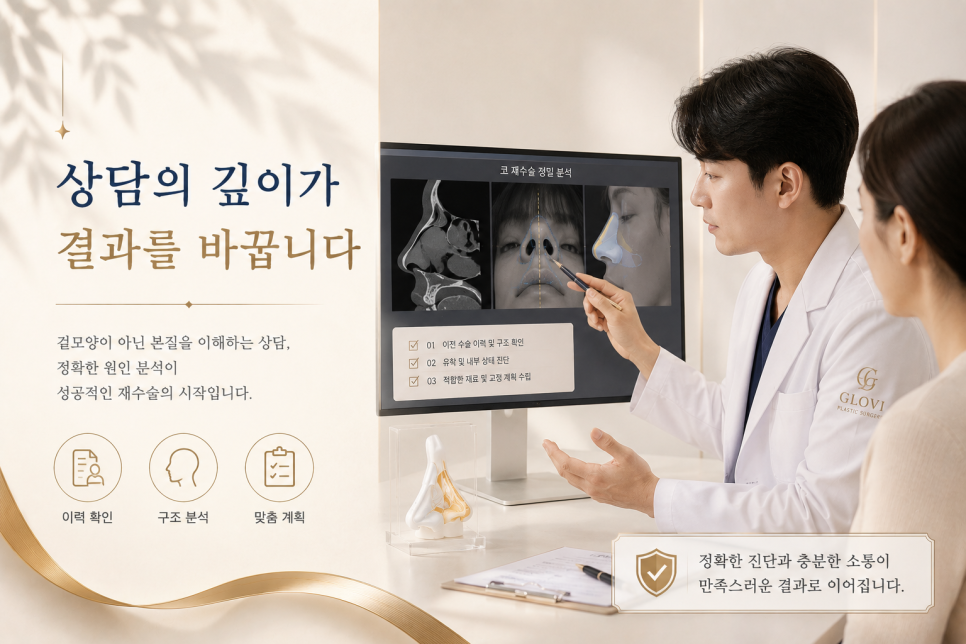
Does the consultation first explain
“what happened inside my nose”?
Revision Rhinoplasty Clinic
When visiting clinics for revision consultations,
some people encounter places that show before-and-after photos
from the very first moment or provide an estimate right away.
If you felt, “Is this really the right clinic?”
that intuition may not have been wrong.
In revision procedures, the first topic that should come up
is not the result.

The first thing to explain should be
what is currently happening inside your nose
and the present condition of your nose.
The reason revision rhinoplasty is
more complicated than primary rhinoplasty
is simple.
The condition of the internal tissues,
which have already been altered at least once,
differs greatly from person to person.
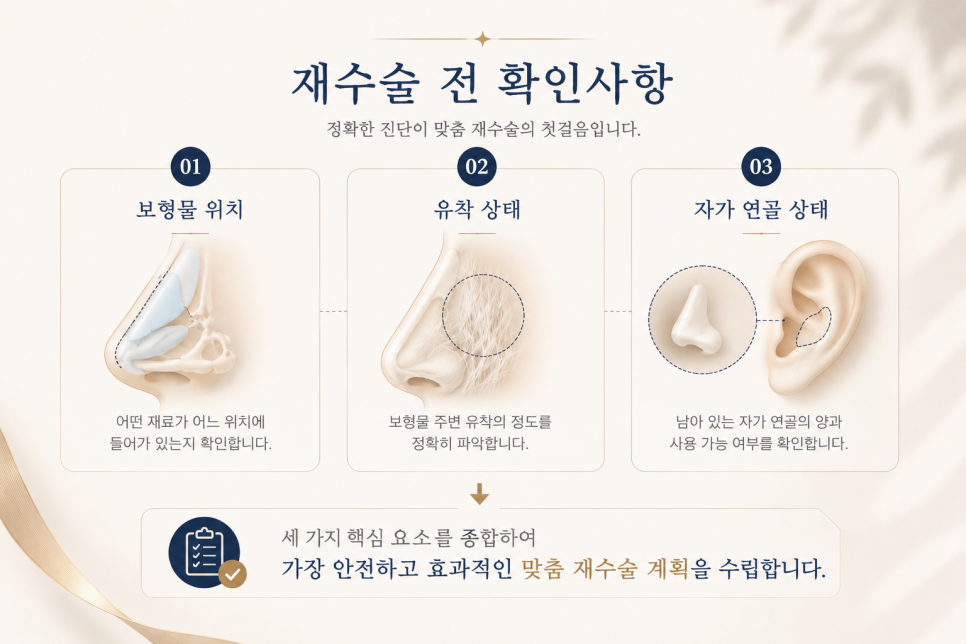
What materials have been placed and where,
how much scar tissue has formed around the implant,
and how much septal cartilage remains—
these three things must be assessed first
before determining what approach is possible.
You should also pay close attention to how thoroughly
the clinic asks about your previous procedures and surgeries
during the consultation.
One situation frequently seen in practice
is when a patient does not mention a history of filler injections
and this is discovered later during the procedure.
If a considerable amount of foreign material remains inside,
the removal process may be added,
which can make the surgery more complicated.
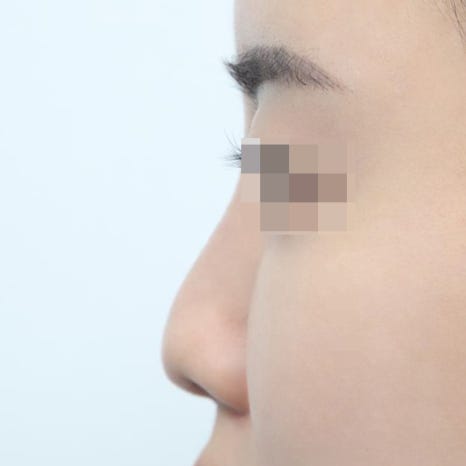
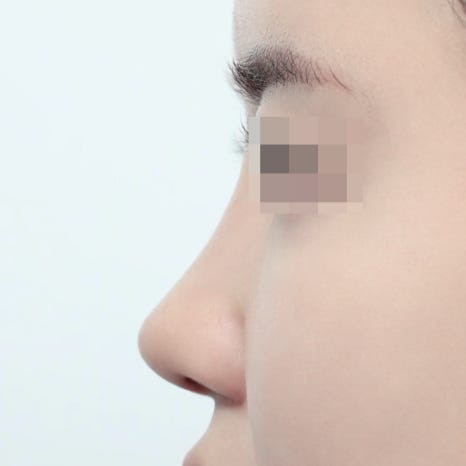
Also, for people who have had surgery for rhinitis,
some of the septal cartilage may already have been removed,
so the choice of materials itself becomes different.
The problem is not that something happens
because you did not mention it at the beginning.
The problem is a clinic that does not ask about it first.
There is one more thing I would like to say candidly.
At Glovi, if we determine after the consultation
that it would be better to observe your current condition
a little longer rather than proceed with revision surgery,
we tell you that first.
If the internal scar tissue has not yet hardened firmly,
there may be a chance for time to resolve the issue on its own.
We do not believe that every dissatisfaction
needs to be resolved through surgery.
Does the clinic explain the reason for choosing the material
in a way you can understand and accept?
Revision Rhinoplasty Clinic
The second item to check is the material.
More precisely, does the clinic explain
“why this material needs to be used”?
One of the questions we hear most often
during revision consultations is,
“Do I have to use rib cartilage for revision?”
Behind this question, there is often a fear
that modifying the ribs would be burdensome.
That concern is completely understandable.
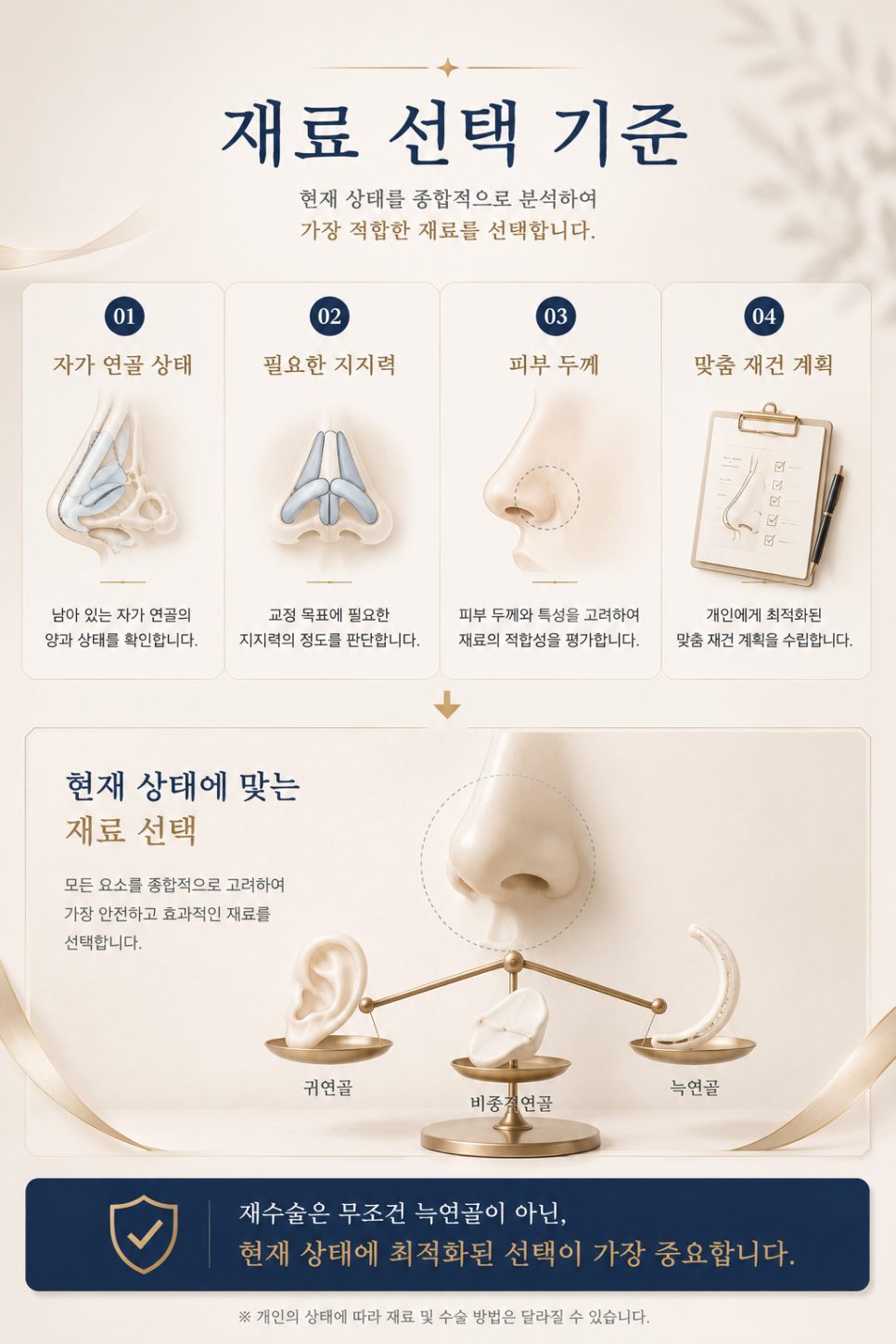
To give you the conclusion first,
revision surgery does not automatically mean
that rib cartilage will be used.
The material is determined by considering
the amount and condition of the patient's remaining cartilage
along with the support required for the current correction.
If enough cartilage remains,
existing material may be reused,
or additional cartilage may be harvested.
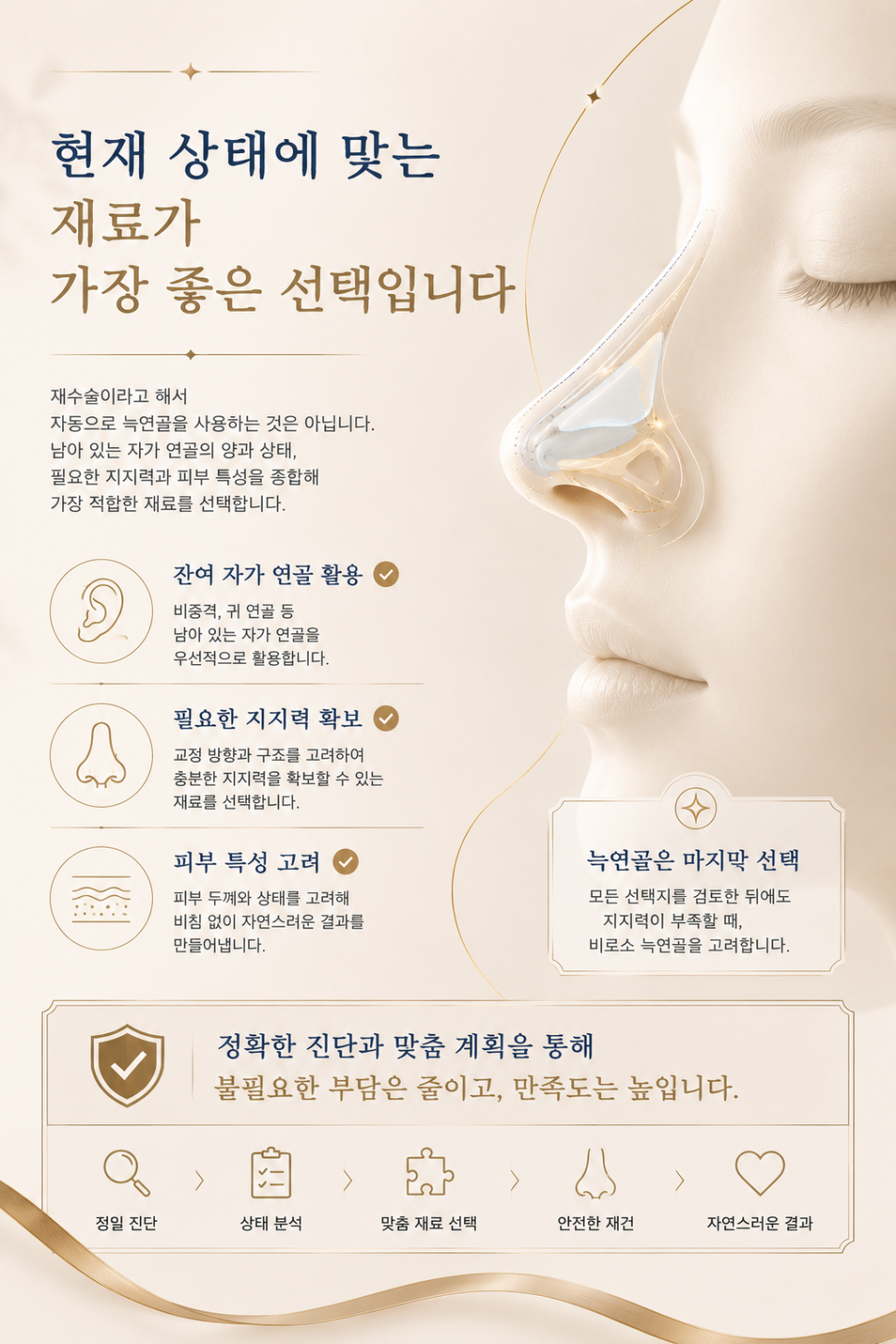
Rib cartilage is used only when support is insufficient
even after all of these options have been considered.
One case remains particularly memorable.
A patient visited us because the implant at the tip of the nose
was showing through.
During the consultation, we directly examined the thickness
of the skin at the nasal tip and found that it was relatively thin,
with the cartilage outline visible beneath the skin.
Only cartilage from one ear had been used previously,
but when we opened the area, the septal cartilage was still intact,
and cartilage from the opposite ear could also be used.
In the end, we reconstructed the nasal tip
using the patient's remaining cartilage without rib cartilage,
and placed a layer of dermal tissue over the cartilage
to address the visibility through the skin.
This avoided leaving an additional scar on the ribs,
and I remember seeing the patient's worried expression
become much more relaxed.

It is also helpful to learn in advance about care after revision surgery.
Because the internal tissues are more sensitive after revision surgery,
you should be especially careful not to press on or touch
the area around the nose forcefully during the first two weeks.
When washing your face, rinse gently,
and absorb moisture by patting rather than rubbing.
Keeping your head higher than your heart while sleeping
can make a difference in reducing swelling.
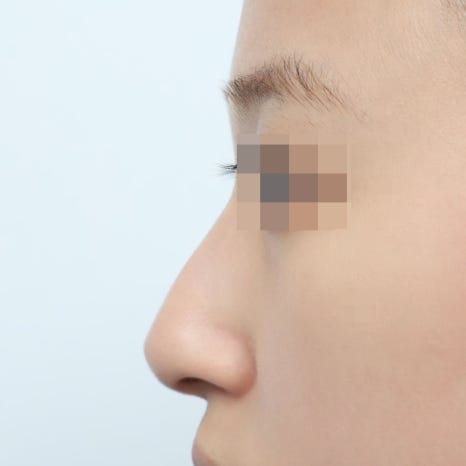
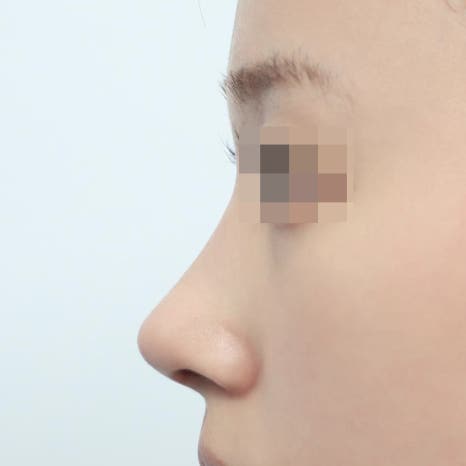
The side effects of greatest concern in practice
are asymmetry and decreased sensation.
Both generally improve over time,
but it typically takes six months
for the final shape to settle.
We also explain this transparently
during the consultation.
The greatest fear before revision rhinoplasty
is probably the thought, “What if I make another mistake?”
The surest way to reduce that concern
is to begin by accurately understanding the condition of your nose
before making a decision.
At Glovi, it is our principle not to withhold
the information patients need to know.
Before going through another trial-and-error experience
in the wrong direction,
please first check an accurate plan suited to the condition of your nose.
| Glovi Plastic Surgery Clinic |
|---|
| Thank you for reading this long post. When making an appointment or consultation, just casually say, “I contacted you after seeing your blog.” We will be happy to assist you with even greater care and attention to detail! |
< Other Posts You May Also Enjoy >
Glovi Plastic Surgery Clinic
is located one minute on foot from Exit 4 of Apgujeong Station on Seoul Subway Line 3,
at Floors 5 and 6 of the EGI Building,
843 Nonhyeon-ro, Gangnam-gu, Seoul.
Consultation appointments are available on both weekdays and weekends.
All consultations are conducted privately on a one-to-one basis.
For detailed inquiries and appointments, please leave a message through the channel below.



Revision Rhinoplasty Clinic