Rib Cartilage Rhinoplasty,
When Rib Cartilage Is Used in Rhinoplasty
Hello,
This is Globie Plastic Surgery Clinic.

Rib Cartilage Rhinoplasty
| A Clinic That Upholds the Principles of Plastic Surgery: Globie Plastic Surgery Clinic |
|---|
| Upholding the fundamentals is the most important principle in plastic surgery. Procedures should be designed with the patient's lifelong well-being in mind. Both the process and the results must be safe. At Globie, our patients always come first. |
| Consultation is an important step that leads to surgery. To help you feel satisfied with your surgical results, we promise personalized consultations with medical professionals who have extensive clinical experience. |
| Postoperative care can also be considered an extension of surgery. We provide personalized care programs to support our patients' prompt recovery. |
If you searched for rib cartilage rhinoplasty,
you may be in one of these situations.
“I was told that material from the ear or septum would not be sufficient.”
Or, “I was told that rib cartilage would be needed this time because this is revision surgery,
but I do not know exactly why.”
The fact that it is harvested from the rib alone
can make the term “rib cartilage” feel quite weighty and burdensome.
However, many people feel frustrated because they have not received a sufficient explanation
of exactly when and why this material is selected.
In this article, we will explain in detail the situations in which
rib cartilage rhinoplasty is actually used,
as well as how situations in which it is essential
differ from those in which it is not.
“Isn’t rib cartilage used only for revision surgery?”
Rib Cartilage Rhinoplasty
This is one of the most common misconceptions.
It often leads to a vague fear that “rib cartilage equals a last resort.”
Rib cartilage is also used fairly often in primary surgery.

It is a material that may be selected from the beginning depending on the circumstances,
and the deciding factor is not whether the surgery is a revision,
but how much usable autologous tissue remains inside the nose.
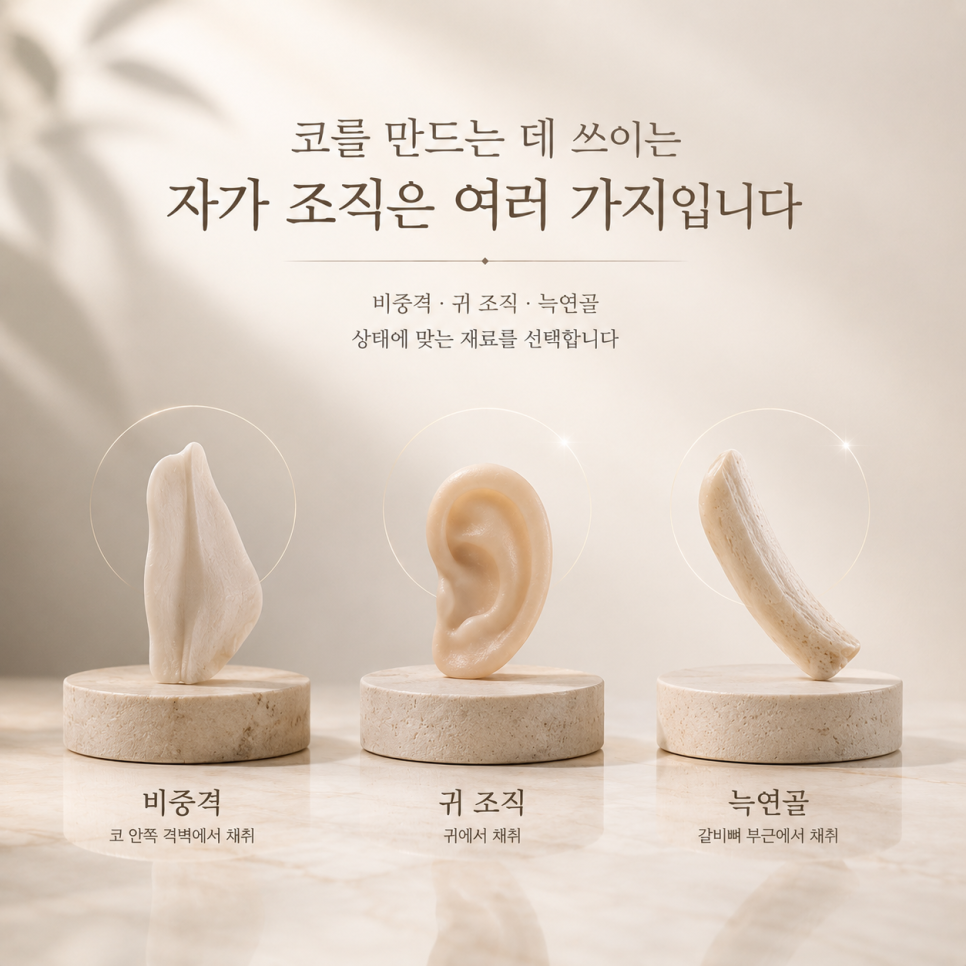
There are three main types of autologous material used in rhinoplasty:
the septum, harvested from the partition inside the nose;
ear tissue, harvested from the ear;
and rib cartilage, harvested near the ribs.
Usually, the septum is considered first,
and ear tissue is used in addition when it is insufficient.
When we directly examine the nasal structure and skin thickness during a consultation,
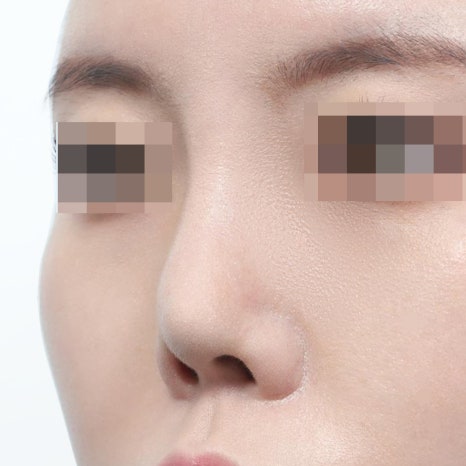
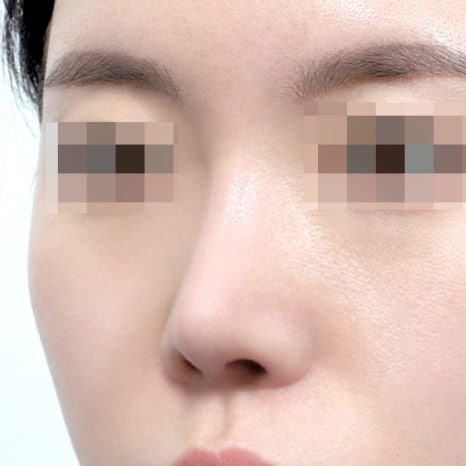
we fairly often encounter cases in which rib cartilage is needed from the outset.
This may be the case when the nose is particularly small or the skin is tight,
making it difficult to achieve the desired height with septal cartilage alone;
when a structurally strong support is needed at once;
or when the septum and ear tissue were both used during previous revision surgery,
requiring a new source of material.
Conversely, if sufficient autologous tissue remains inside the nose,
there is no particular reason to choose rib cartilage.
At Globie, we first review whether the existing material can be reused
and whether additional tissue can be harvested from the ear,
and only then recommend using rib cartilage.
Recommending this material to people who do not need it
would not benefit either the patient or the surgery.

It is also important to distinguish between autologous rib cartilage and donor rib cartilage.
Because autologous rib cartilage is harvested from your own body,
it has a low rate of resorption and maintains its shape firmly.
Donor rib cartilage does not require harvesting from your body,
but it tends to have a higher possibility of resorption or inflammation
than autologous cartilage.
The more suitable option is determined by considering your current nasal condition,
the desired shape, and your history of previous surgeries as a whole.
“I heard that using rib cartilage can cause the nose to bend.
Is that true?”
Rib Cartilage Rhinoplasty
Whenever we receive this question,
there is something we explain first:
that the statement is partly true,
but there are also details that should be understood accurately.
Rib cartilage can undergo a phenomenon called warping.
Because it tends to return to its original shape,
the nose may appear slightly bent over time.
The way the cartilage is carved and fixed to minimize this
has a significant effect on the results.
Placing one long, solid piece along the bridge of the nose
provides good support but carries a higher risk of warping.
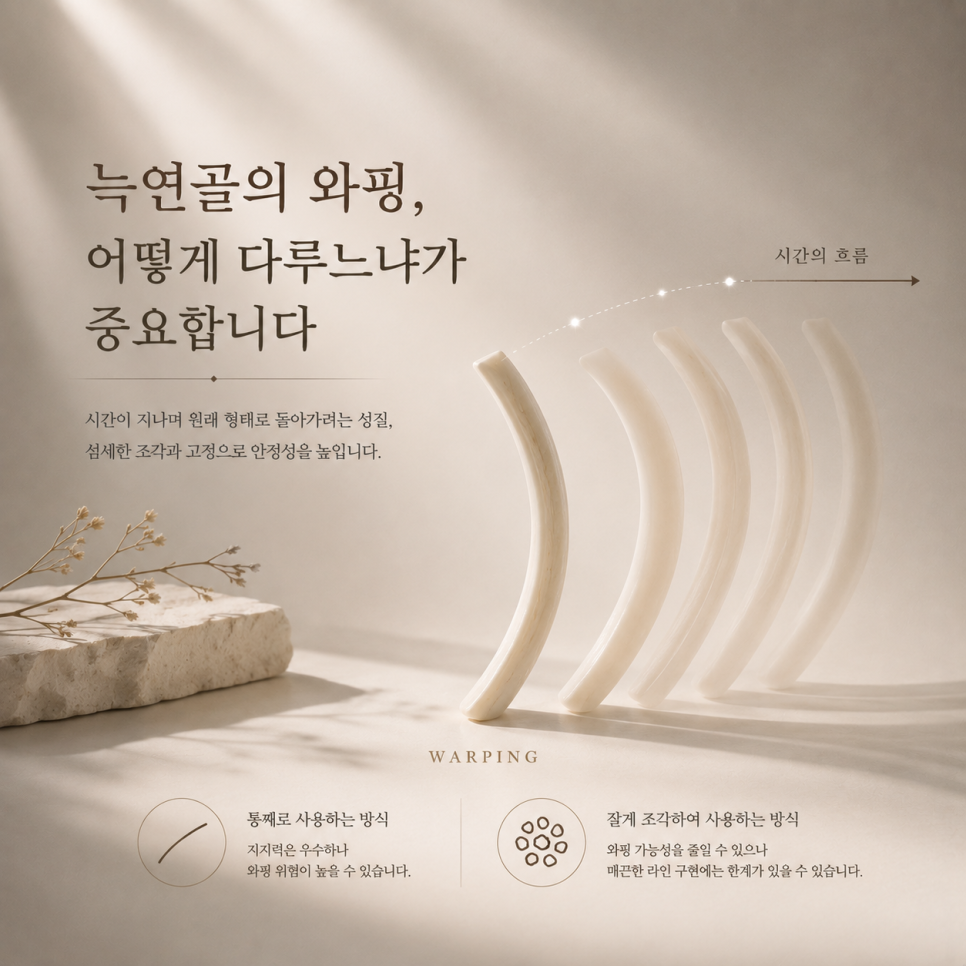
By contrast, using finely diced cartilage is advantageous for preventing bending,
but it may have limitations when creating a smooth line along the nasal dorsum.
It is also helpful to know about the type of anesthesia in advance.
For safety, rib cartilage harvesting is generally performed
under general anesthesia.
This is because the ribs are located close to the lungs,
and general anesthesia allows the surgical team to prepare
for situations requiring immediate treatment, such as a pneumothorax.
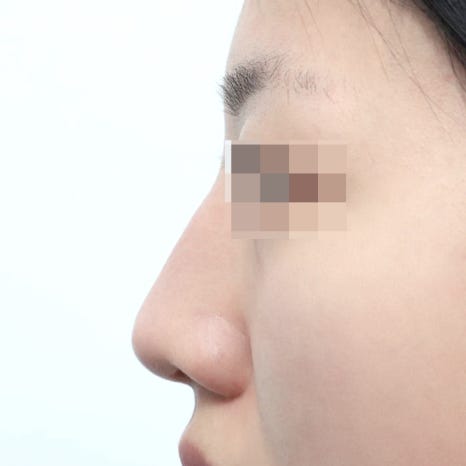
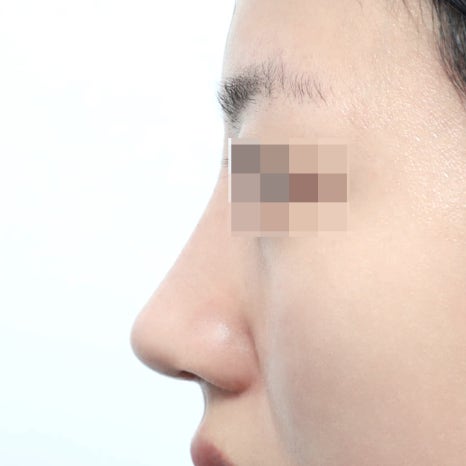
One case has stayed with me.
A patient visited us after primary surgery because the nasal tip was low
and the implant felt as though it was pushing against the skin.
During the previous surgery, both the septum and ear tissue had already been used.
When we pressed the nasal tip skin directly during the consultation,
it appeared to be relatively thin,
and the outline of the implant was visible beneath the skin.

It was difficult to secure enough support to hold up the nasal tip
using only the remaining autologous tissue.
We harvested autologous rib cartilage to reconstruct the columellar strut,
then added a layer of dermal tissue over it
to provide additional skin protection.
The patient was concerned about the incision near the ribs,
so we proceeded only after fully explaining why this method was necessary.
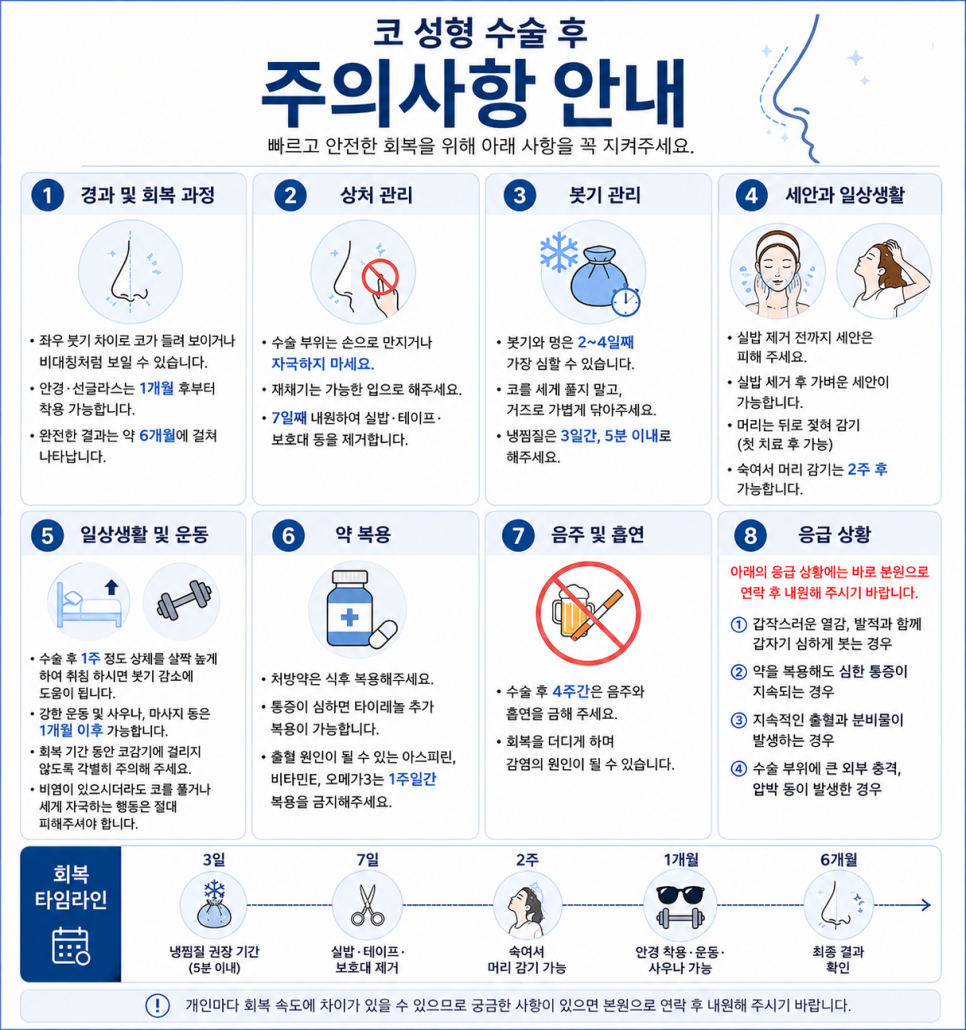
It can also help to know in advance what to expect after surgery.
For two weeks after surgery, avoid strenuous arm movements
and upper-body exercise involving the chest area where the rib cartilage was harvested.
For the nose, avoid alcohol and smoking,
and gently care for the area during face washing
to prevent irritation.
The complications we most frequently discuss in practice
are pain at the harvesting site, asymmetry, and warping.
These three points are explained thoroughly during the preoperative consultation.
The final shape can generally be assessed after six months.
It is natural for rib cartilage rhinoplasty
to feel burdensome.
However, when you understand precisely why this choice is necessary,
you can make your decision with confidence rather than vague fear.
At Globie, our principle is to transparently distinguish
between cases that require rib cartilage and those that do not.
Please first determine accurately which material is most suitable
for the condition of your nose.
| Globie Plastic Surgery Clinic |
|---|
| Thank you for reading this long post. When you make an appointment or schedule a consultation, just mention, “I’m contacting you because I saw your blog.” We will be delighted to assist you with even greater care and attention! |
< Recommended Reading >
Globie Plastic Surgery Clinic
is located one minute on foot from Exit 4 of Apgujeong Station on Subway Line 3,
at 5th and 6th floors of the EGI Building,
843 Nonhyeon-ro, Gangnam-gu, Seoul.
Consultation appointments are available on both weekdays and weekends.
All consultations are conducted privately on a one-on-one basis.
For more information or appointments, please leave a message through the channel below.



Rib Cartilage Rhinoplasty