What comes to mind first when you get a cavity?
Many people probably think of the scary word
'root canal treatment.'
"Drilling a hole in the tooth, removing the nerve cleanly,
and shaving the tooth down even more to put something over it..."
That alone is enough to scare people.
So they put off visiting the dentist, and then bigger problems arise,
which is why we often see cases where the tooth has to be extracted.
But fortunately, not every cavity leads to
root canal treatment.
Even deep cavities that might be diagnosed as
needing root canal treatment can actually
be restored healthily
without root canal treatment.
What matters here is the concept of
minimally invasive.
It is a technique that minimizes damage to the tooth,
preserves as much of the healthy natural tooth as possible,
and restores the decayed area.
Through this minimally invasive resin build-up procedure,
there have been many cases where we were able to ease concerns.
Including my friend, a classmate who is also a dentist,
and even dentist clinic directors.
The key is
how quickly the patient comes to the dental clinic,
and how committed the dentist is to minimally invasive treatment.
Once a tooth is damaged,
it does not return to its original state.
So I personally prefer methods
that avoid touching healthy tooth structure as much as possible.
Many of you who understand that point
have been visiting us often.
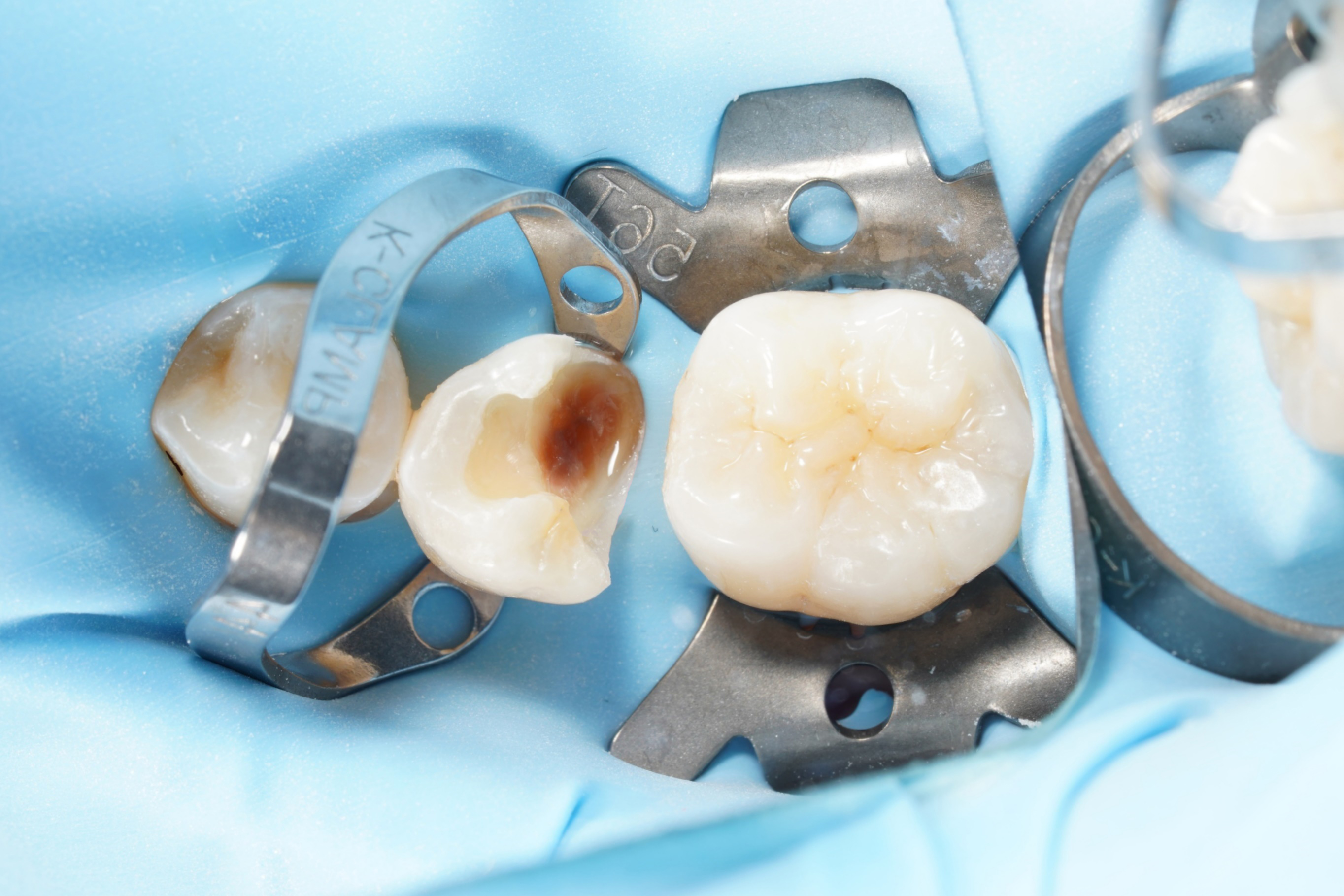
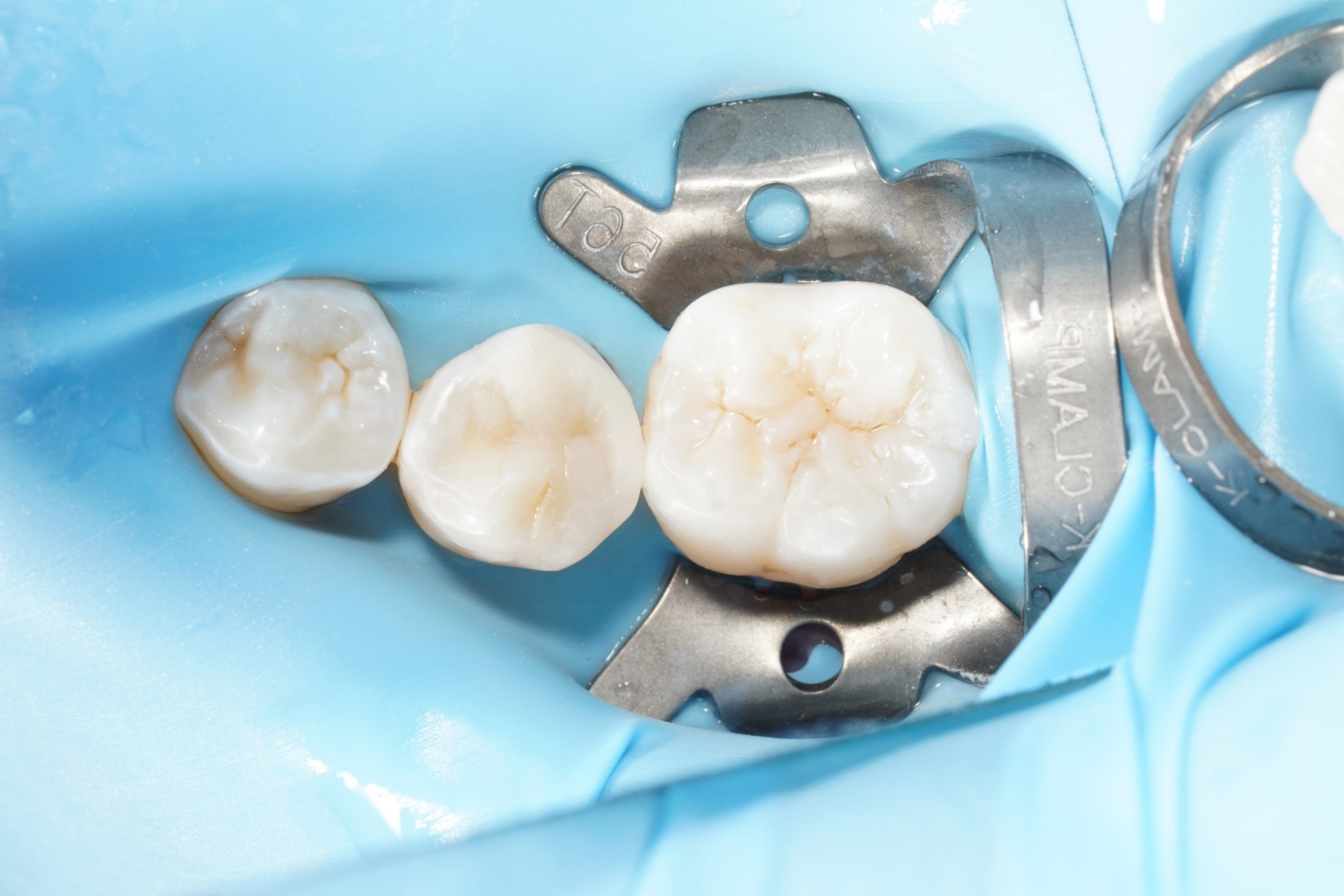
2024.04.02. Treatment completed on the same day / Possible side effects: restoration discoloration, fracture, secondary caries
When there is such a deep cavity,
most dental clinics will recommend root canal treatment.
However, if there is a dentist who knows resin build-up
and is skilled at it,
we will usually try treating it with resin build-up.
Resin build-up is not simply
restoring the tooth shape with resin;
it is a restorative procedure that advances bonding techniques
by making the most of the properties of resin as a material.
That is why, whenever I talk about this method,
I keep emphasizing that using a rubber dam
and paying close attention to bonding
is far more important than simply recreating the tooth shape.
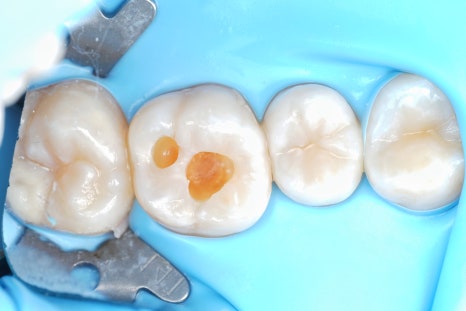
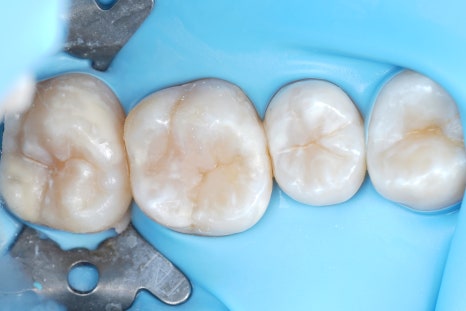
2025.01.04. Treatment completed on the same day / Possible side effects: restoration discoloration, fracture, secondary caries
When performing resin build-up,
the tooth must be isolated with a rubber dam.
I mentioned that bonding is a battle against
'moisture,' right?
To completely isolate the area being bonded
from moisture inside the mouth,
a flexible rubber sheet is placed over the tooth,
and this material is called a 'rubber dam.'
It is uncomfortable, but it is an essential step for bonding.
After treatment, there are no major restrictions
on eating.
You can return to daily life right away,
and there may be some temporary discomfort-
for example, sensitivity may occur,
but it gradually goes away.
Usually, when a deep cavity is restored with resin,
the sensitivity continues,
and then the dental clinic says,
"Ah... you need root canal treatment.
Didn’t I tell you last time?"
and that becomes the end of it,
But when bonding is done using a rubber dam,
that rate is dramatically reduced.
When a cavity appears,
it is natural to worry and feel afraid.
But please remember that not all cavities
lead to root canal treatment.
Minimally invasive resin build-up is
a way to restore cavities effectively
while preserving the tooth.
If you are worried about a cavity,
please visit a dental clinic without 부담
and get a consultation.
Please look into it carefully,
and be sure to visit as soon as possible.
We will always do our best.
Thank you.