Do you use dental floss well?
If you are not using floss,
the likelihood of cavities developing between your teeth
is very high.
Cavities between teeth are usually
not easy to see...
so before symptoms like sensitivity or pain appear,
many people have no idea they are there.
When there is a cavity between teeth,
you may first worry,
'Could I need root canal treatment?'
..
So when you are advised to receive a treatment called an
'inlay,'
you may feel a little relieved by the fact that
root canal treatment is not needed...
and think,
'There is a cavity, so I should get it treated.'
But did you know that instead of inlay treatment,
it can also be treated with resin?
What are the differences between resin and inlay?
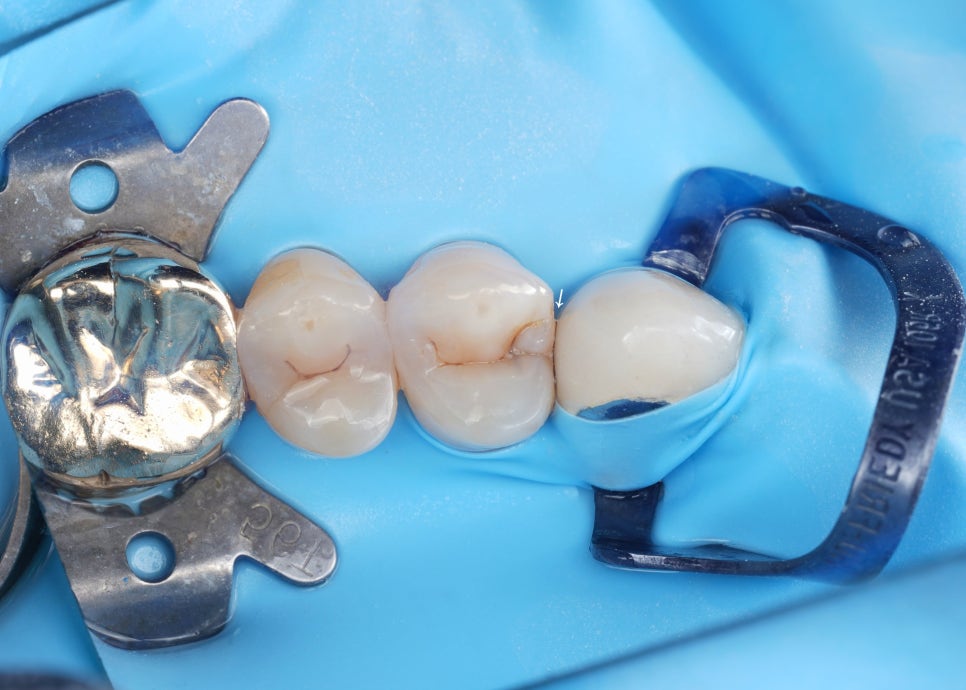 2025.01.14.
A cavity was found on the right side of the small molar in the center of the photo,
at the contact area with the canine prosthesis.
You’re not sure, right?
Whether there is a cavity or not...
Even when a photo is taken this clearly,
it is only natural to wonder whether there is a cavity,
because you are not a specialist.
Then people tend to think,
'It should be fine... probably not...'
and live on like that,
then forget about it,
and eventually visit the dentist only after it starts hurting later.
Then root canal treatment may truly be necessary.
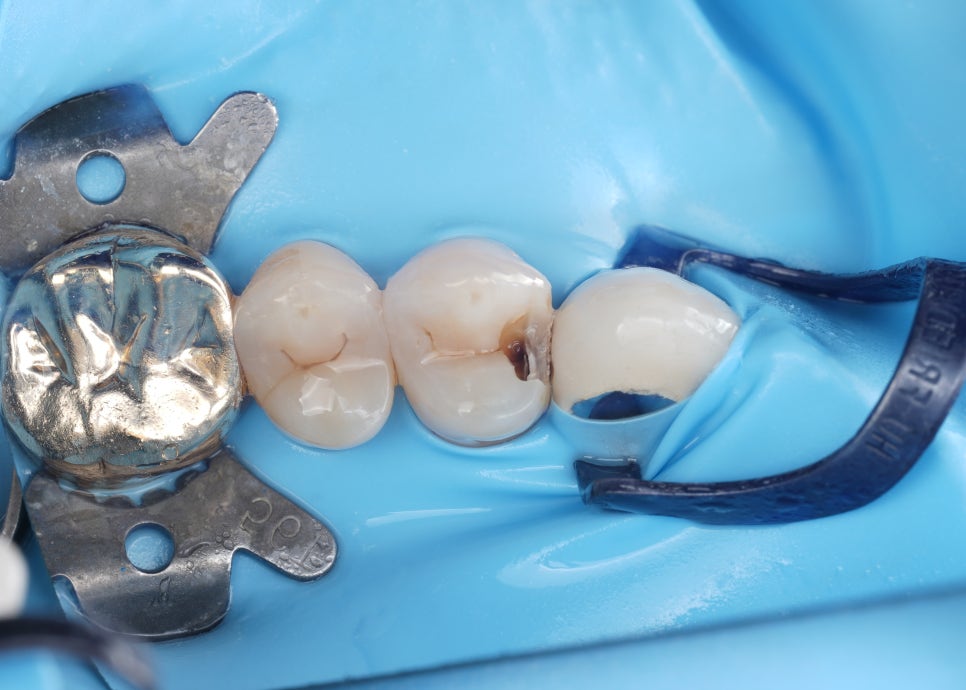 2025.01.14.
To remove the cavity,
the tooth was opened a little.
Now you can see clearly, right?
"Ah... there really was a cavity there ㅠㅠ"
When food gets stuck between prosthetic teeth
and does not come out easily, the space between teeth can decay deeply like this.
I think it should be treated before it hurts.
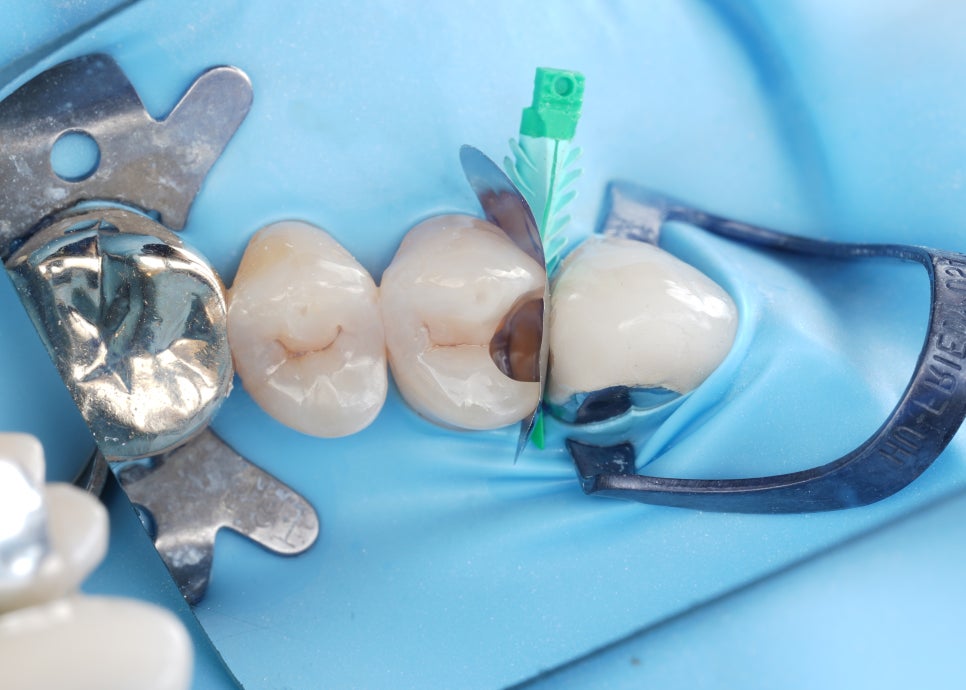 2025.01.14.
After removing all the decay,
a tool was placed for treatment.
But only the decayed part was removed,
and the other areas were not touched?
That is the biggest advantage of resin.
You can remove only the decayed part
and treat it right away!
That is called a "minimally invasive" treatment.
Minimally Invasive Dentistry
It is a concept in dentistry,
called minimally invasive dentistry.
It is also abbreviated as MI Dentistry.
Inlay treatment requires
slight reduction of even healthy tooth structure
to make the inlay block.
Inlay is not an incorrect treatment,
but that part can be a little disappointing.
So in cases like this,
especially for cavities in small molars,
I like treating them with resin buildup.
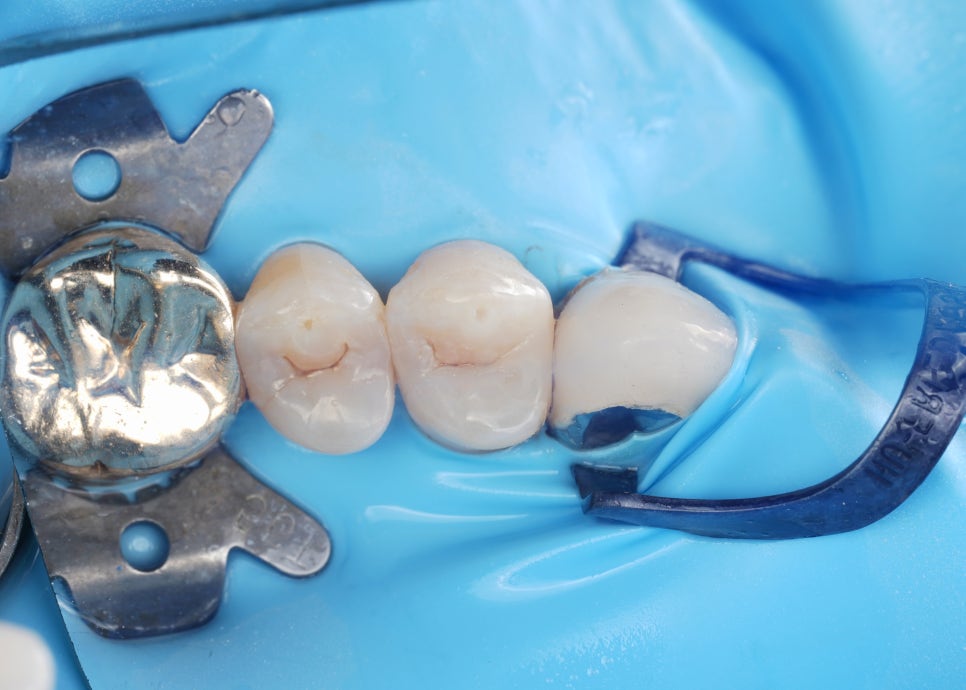 2024.01.14.
The tooth shape was restored well, right?
In fact, this patient is
the father of a dental hygienist who works in our clinic's treatment room.
If you treat like this in a "minimally invasive" way,
many people working in the dental field come to us.
In particular, how sincere you are about "bonding"
is also extremely important.
Oh, and
all of the photos now have a blue background material outside the tooth, right?
That is called a "rubber dam," and by isolating the tooth and the intraoral environment with a rubber dam,
it is an essential material for bonding that protects the area being treated
from moisture, saliva, and blood.
When a rubber dam is placed,
the quality of treatment really improves a lot.
According to a systematic review published in 2016,
there is no statistically significant difference in the longevity of resin and inlay treatments.
It says the choice of treatment method depends on "preference."
(Source_ Direct versus indirect inlay/onlay composite restorations in posterior teeth. A systematic review and meta-analysis)
Resin can be completed in one day
and has the advantage of requiring less tooth reduction,
while
inlay requires two visits to the dentist,
but the total time spent on treatment
may be shorter.
So having to come once more is inconvenient,
but the amount of time spent at the clinic is less.
And the physical properties of the material itself
may be better for inlay materials.
There are many more pros and cons to resin and inlay,
but the most important difference is
how much tooth reduction is needed
and the difference in the concept of time required for treatment.
Please receive a detailed consultation at the dental clinic
and be treated healthily.
Thank you for reading