What Should You Consider If You Are Planning Breast Ptosis Surgery?

The breasts are one of the important areas that symbolize feminine beauty and confidence. However, as time passes, many people experience sagging breasts or a loss of firmness after childbirth or due to weight changes.
This phenomenon becomes more noticeable with age, and many people want to improve it. One of the ways to correct sagging breasts is breast ptosis surgery. Today, let’s take a closer look at this procedure.
What causes breasts to sag?
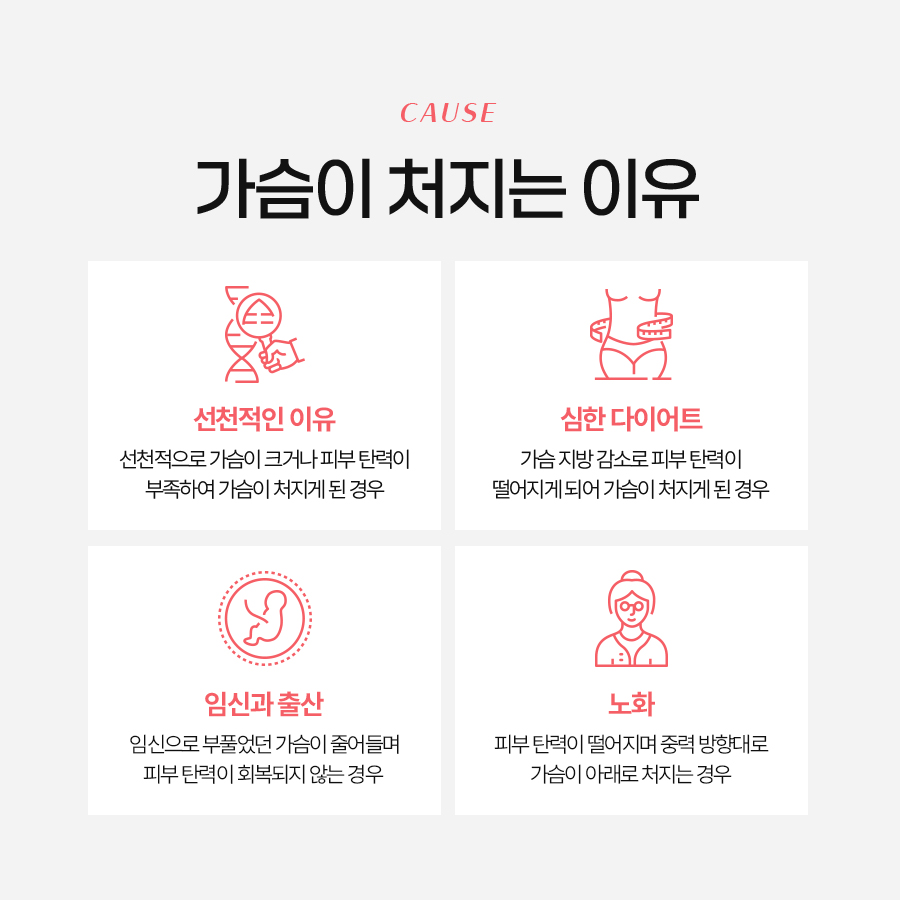
Sagging breasts can occur for various reasons. First, as people age, the skin and tissue lose elasticity, causing the breasts to sag naturally. After childbirth, the breasts often stretch during breastfeeding and then sag as they return to their original size.
Breasts that are naturally large, a lack of skin elasticity, or rapid weight loss or gain can also reduce the firmness of breast skin and cause sagging. If you are stressed by sagging breasts for these reasons, it is a good idea to improve them through breast ptosis surgery.
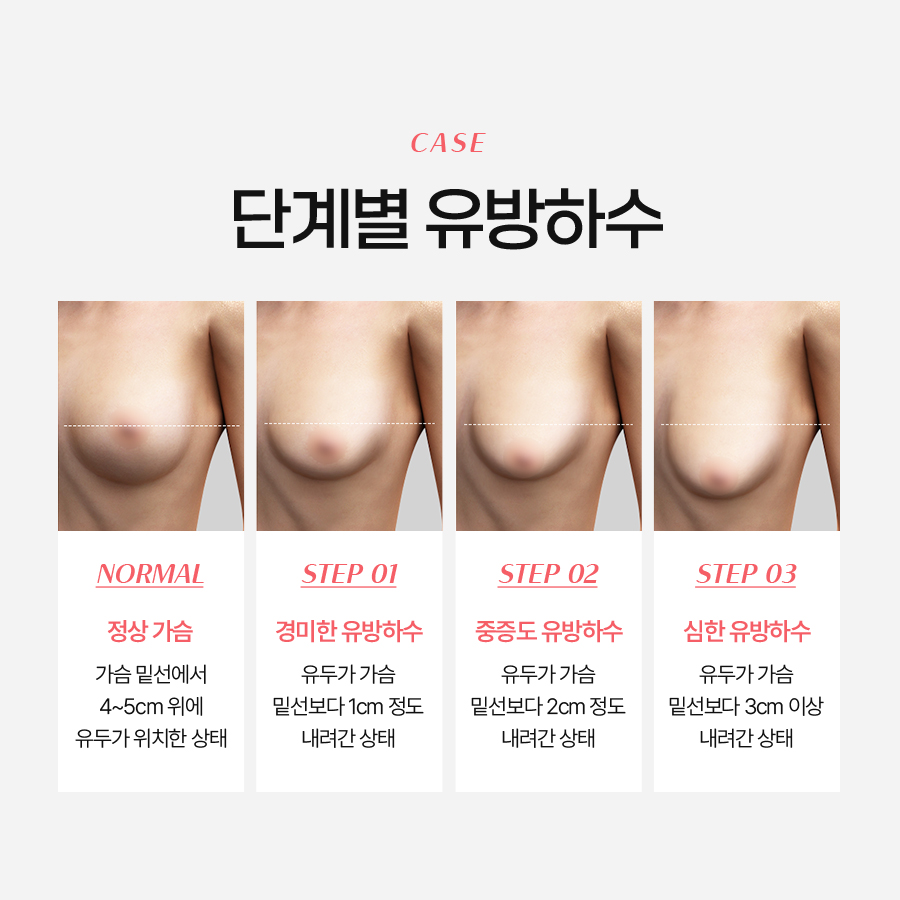
Breast ptosis divided into three stages
Breast ptosis literally means a sagging breast condition. Although breast ptosis can be seen as a cosmetic issue, it becomes an important concern when considering the discomfort and psychological effects women may feel in daily life. Breast ptosis can be broadly divided into three stages.
In a normally positioned breast, the nipple is located about 4 to 5 cm above the inframammary fold. Mild ptosis appears when the nipple is about 1 cm below the inframammary fold. Moderate breast ptosis refers to a slight sagging of the lower part of the breast or a slight downward shift of the nipple. Severe ptosis means the breast sags significantly, and the nipple descends more than 3 cm below the lower part of the breast, with reduced skin elasticity.
Because the surgical method for breast ptosis surgery differs depending on the stage, it is important to create a customized surgical plan suited to each stage.
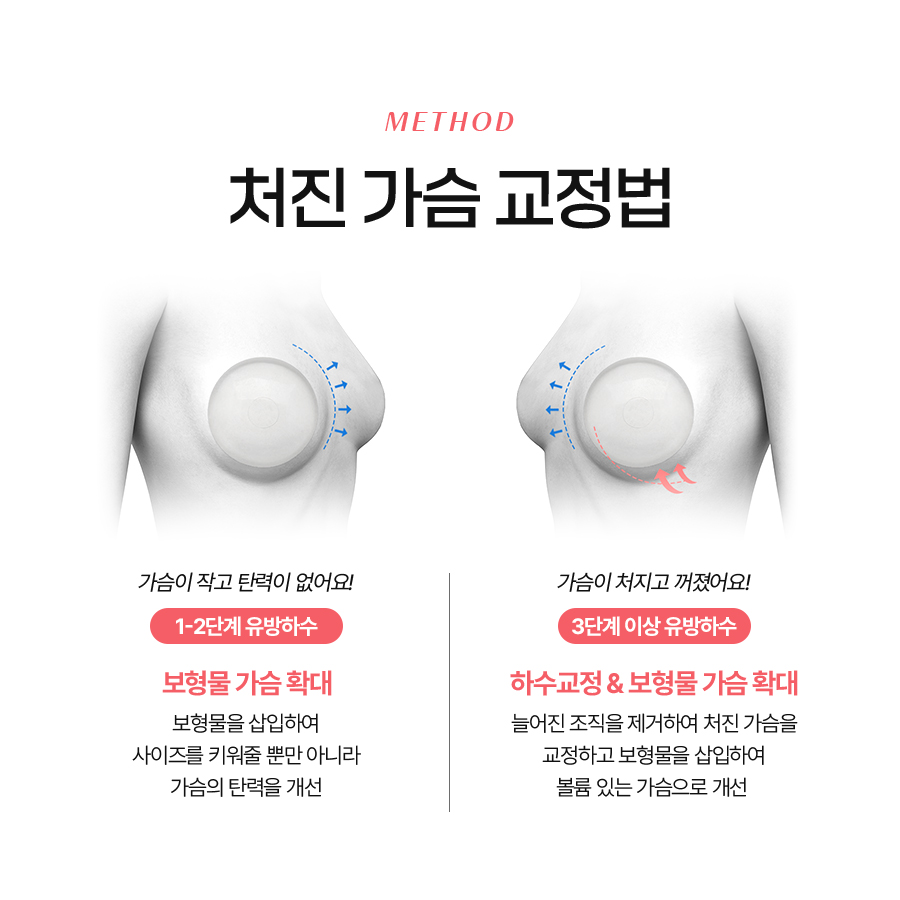
How breast ptosis correction changes by stage
If breast sagging is not severe, at stage 1 or 2, breast augmentation with an appropriate implant can provide an enlargement effect while also improving the sagging appearance. However, if breast augmentation is performed without breast ptosis surgery when some sagging is already present, it may actually worsen the sagging, so caution is needed.
Therefore, if breast ptosis is stage 3 or higher, the stretched tissue is removed and breast ptosis correction is performed first. After that, an implant of an appropriate size and shape can be inserted to improve the breasts into a fuller shape.
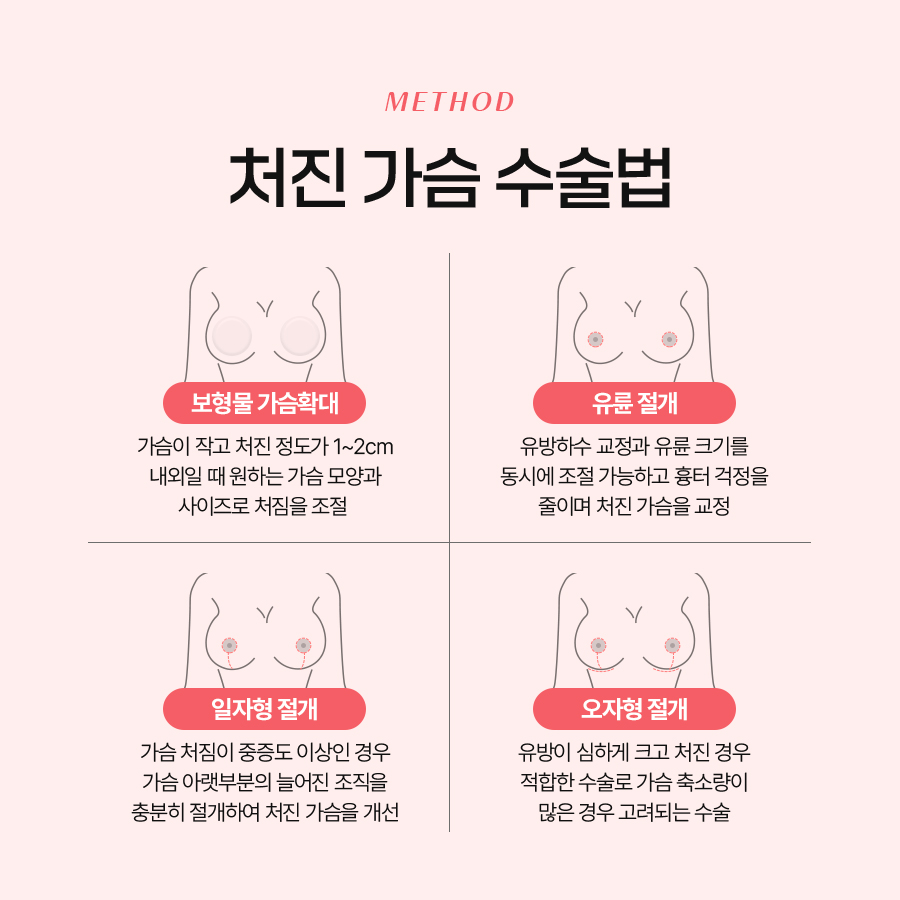
Various breast ptosis surgery methods
There are various types of breast ptosis surgery, including implant-based breast augmentation, periareolar incision, straight-line incision, and O-shaped incision. First, implant-based breast augmentation can adjust sagging to the desired breast shape and size when the breasts are small and the degree of sagging is about 1 to 2 cm.
A periareolar incision is one of the most common incision methods, in which the incision is made along the skin around the nipple. This method is mainly used when breast sagging is mild, and because it does not involve incising the skin under the breast, the advantage is that the scar is not very noticeable.
A straight-line incision is a method that involves making a sufficient incision in the stretched tissue in the lower part of the breast. This incision method is suitable when sagging is moderate or greater and is used when overall lifting of the breast is desired.
Lastly, the O-shaped incision is a variation of the T-shaped incision method, in which additional incisions are made around the areola and down to the lower part of the breast. This incision method is suitable when breast sagging is severe and a large reduction in breast volume is needed.
Breast ptosis surgery is an important procedure that can help women achieve not only external beauty but also physical and psychological stability. Various surgical methods exist, and choosing a customized procedure suited to one’s own condition is the most important thing.
We hope you can achieve safe and satisfying results through sufficient consultation and preparation before surgery. Above all, careful postoperative care is essential for recovery, and following the process well is necessary to achieve the best results.