Areola Reduction Surgery for a Breast Size That Matches Your Proportions

Areola reduction surgery is one of the procedures performed to make a woman’s breasts look more beautiful and balanced. It is mainly carried out when the areola is excessively large or disproportionate. If the areola is too large or stretched out, it can cause aesthetic concerns or psychological discomfort.
To address these issues, many people consider areola reduction surgery. Today, let’s take a closer look at areola reduction surgery.
Solving functional and cosmetic concerns at the same time
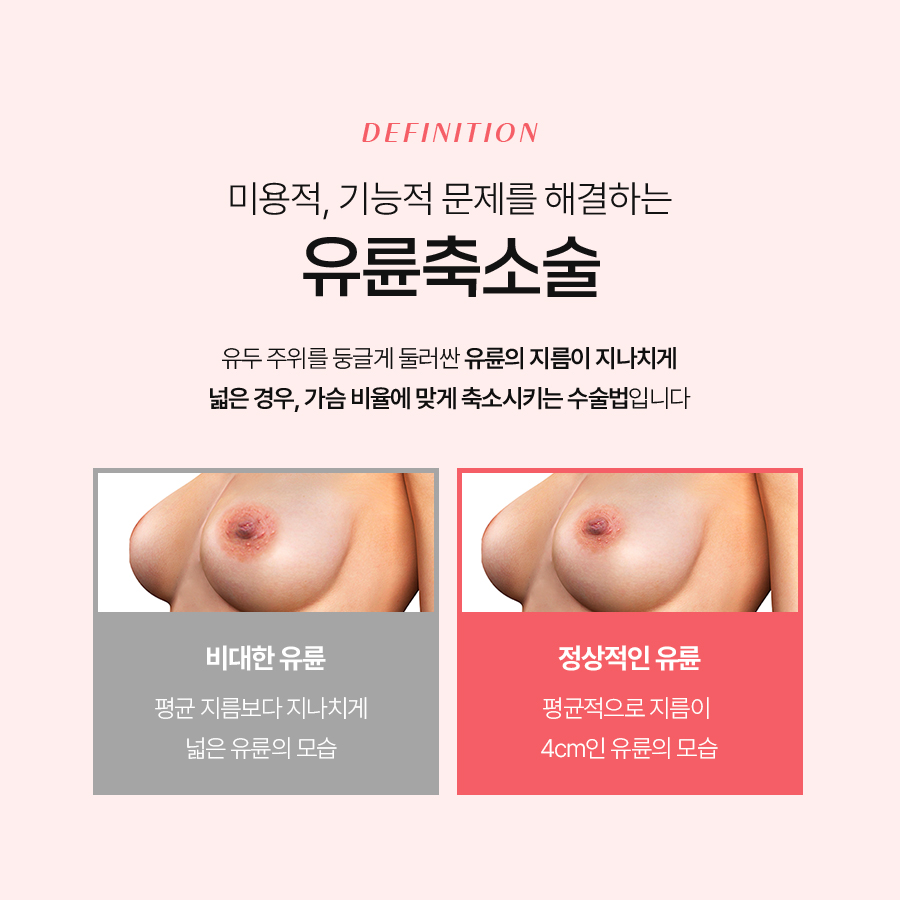
When the areola is large and wide, it can be unsatisfactory from an aesthetic standpoint and sometimes even cause discomfort when wearing clothing. Areola reduction surgery addresses both cosmetic and functional concerns, creating a firmer and more balanced breast line after surgery.
Areola reduction surgery is a procedure that reduces an enlarged areola, which is excessively wide compared with the average diameter, so that it matches breast proportions. In the case of a normal areola, an average diameter of about 4 cm is generally considered appropriate. If you are concerned that the areola surrounding the nipple is too wide, you may want to consider areola reduction surgery.
What is the periareolar incision method?
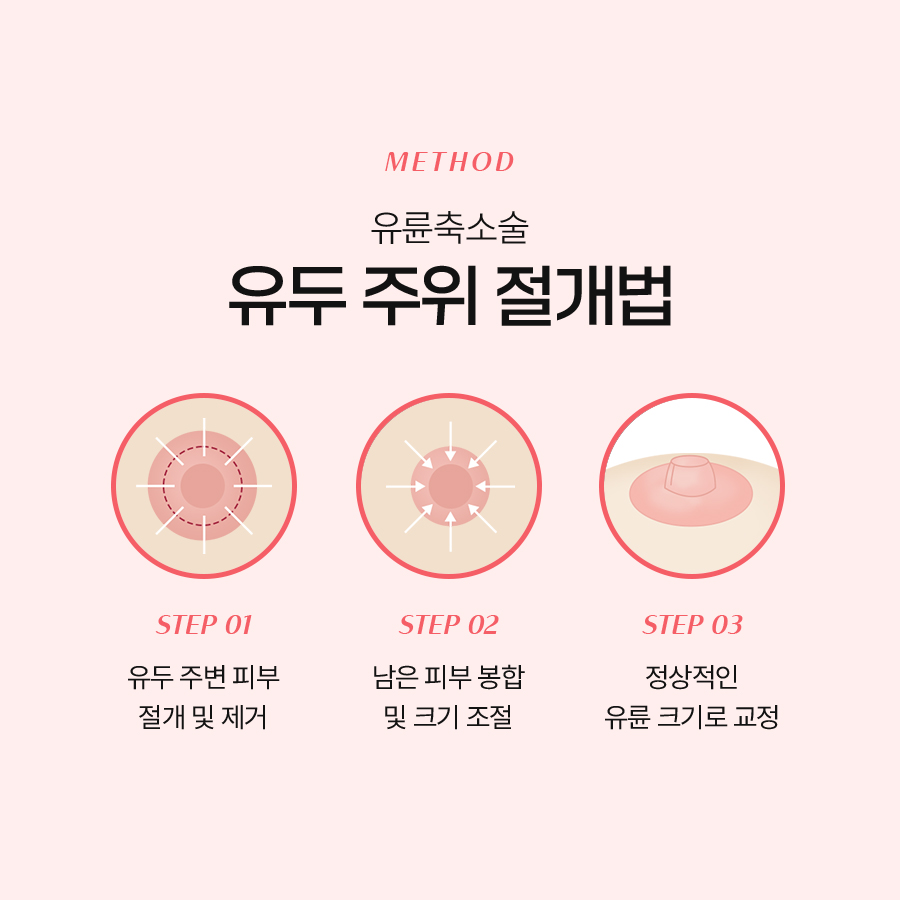
In areola reduction surgery, the periareolar incision method is a technique that removes excess skin from the areola through surgery and naturally improves the shape of the nipple and areola. Since the nipple and areola have a clearly defined skin border, making the incision around the nipple minimizes scarring and allows the surgical result to look more natural.
The biggest advantage of the periareolar incision method is that it produces natural-looking results. By making the incision along the border of the areola, postoperative scars are barely noticeable, and the shapes of the nipple and areola are harmonized to provide aesthetic satisfaction.
Also, because the scar is located along the areola’s natural boundary, it is hardly visible after surgery. This is a major advantage compared with other surgical methods and increases confidence in the surgical outcome.
The periareolar incision method that minimizes scarring
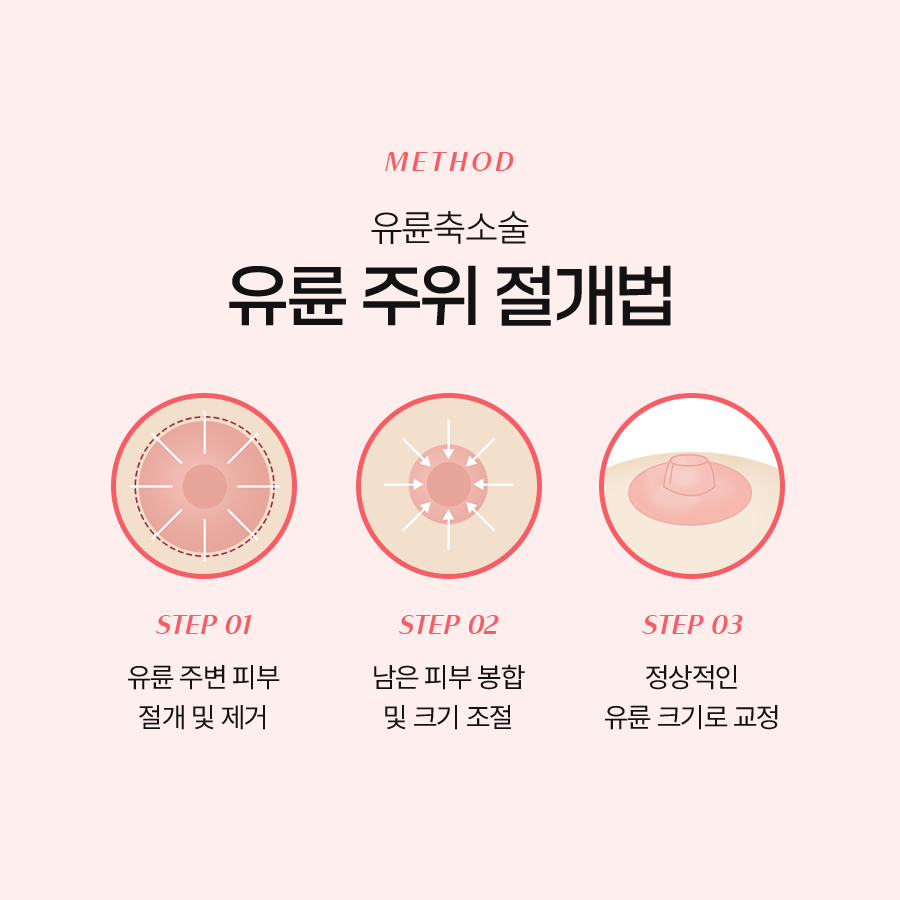
The periareolar incision method is performed by making an incision along the natural border of the areola during surgery. This method has the advantage of making postoperative scars barely visible by aligning the incision with the areola’s border. Because the incision is placed around the areola, noticeable scarring after surgery is minimized, making it highly advantageous from an aesthetic perspective.
In areola reduction surgery, the periareolar incision method is effective for reducing and reconstructing the areola when it is excessively large or stretched out. It is also suitable for matching the size and shape of both areolas when there is asymmetry.

If you are concerned about enlarged areolas
Areola reduction surgery is not a procedure that everyone can undergo. If the areola has become excessively large or stretched out due to menstruation, pregnancy, or other causes, people who are dissatisfied with the size or shape of their areola can reduce it through surgery.
In addition, if the size of the areola lowers your confidence in your appearance and causes psychological burden due to difficulties in social activities or sexual self-esteem, you may improve this through areola reduction surgery. This procedure is also recommended when the areola has stretched as the breasts have grown larger, or when the areola has become enlarged due to aging.

Areola reduction surgery is chosen by many women for aesthetic and psychological reasons. For women who feel uncomfortable because their areolas are large or lack confidence in their appearance, this surgery can bring significant change. Through the procedure, a more beautiful and balanced breast line can be created, and psychological confidence may also improve.
Before surgery, it is important to choose the surgical method that suits your condition based on sufficient consultation and a medical team’s diagnosis. After surgery, carefully following the management and recovery process leads to better results.