
Breast Revision Surgery: Thoroughly Identifying the Causes of Capsular Contracture

Some women who are considering breast surgery decide to undergo revision surgery because they are not satisfied with the results after the initial operation. This type of breast revision surgery plays an important role not only in bringing about external changes, but also in helping restore confidence and psychological comfort.
However, capsular contracture, one of the common complications that can occur after breast surgery, is something many people who have undergone surgery may experience. Capsular contracture occurs when abnormal tissue forms around the breast implant, affecting the shape of the breast and sometimes causing pain or discomfort. So today, let’s take a look at the causes and symptoms of capsular contracture.
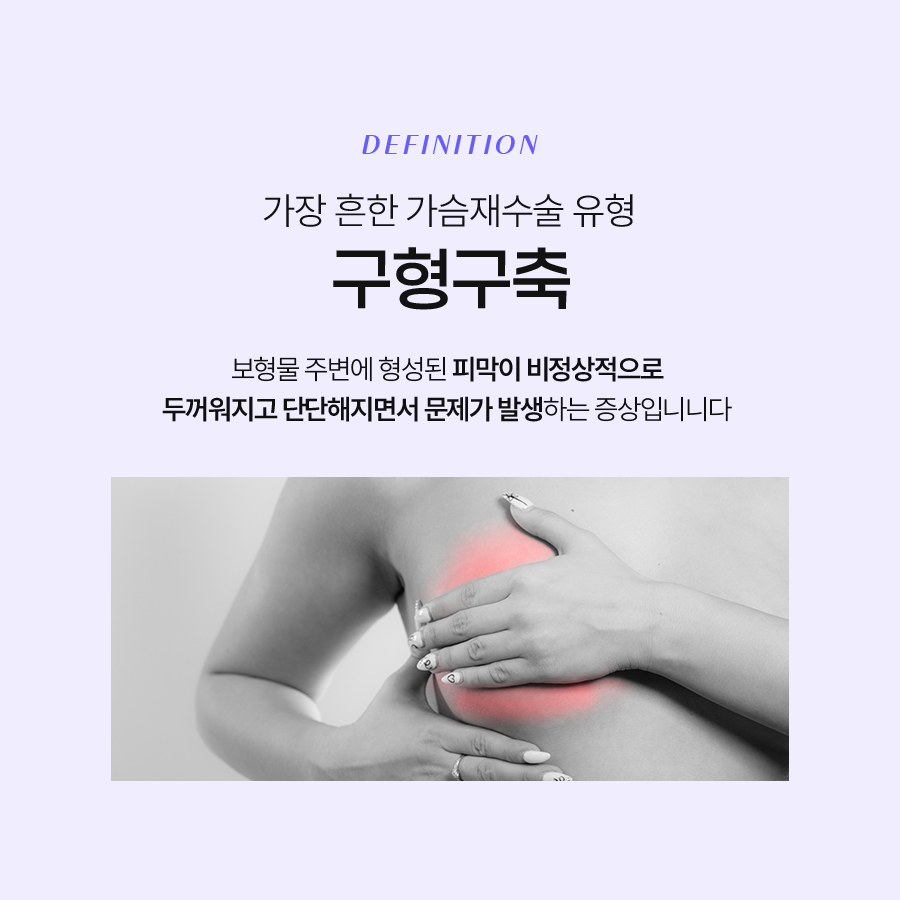
What is capsular contracture, a type of breast revision surgery?
Capsular contracture, the most common type of breast revision surgery, refers to a condition in which abnormal fibrous tissue forms around the breast implant, thickens, and hardens the breast, causing its shape to become deformed. Capsular contracture may be a natural phenomenon that occurs as an immune response after an implant is inserted, but when excessive fibrosis occurs, the breast can become hard and irregular in shape.
In severe cases, pain may occur, or the breasts may become asymmetrical. This condition is one of the most common complications in patients who have undergone breast augmentation surgery and usually can occur within one year after surgery.
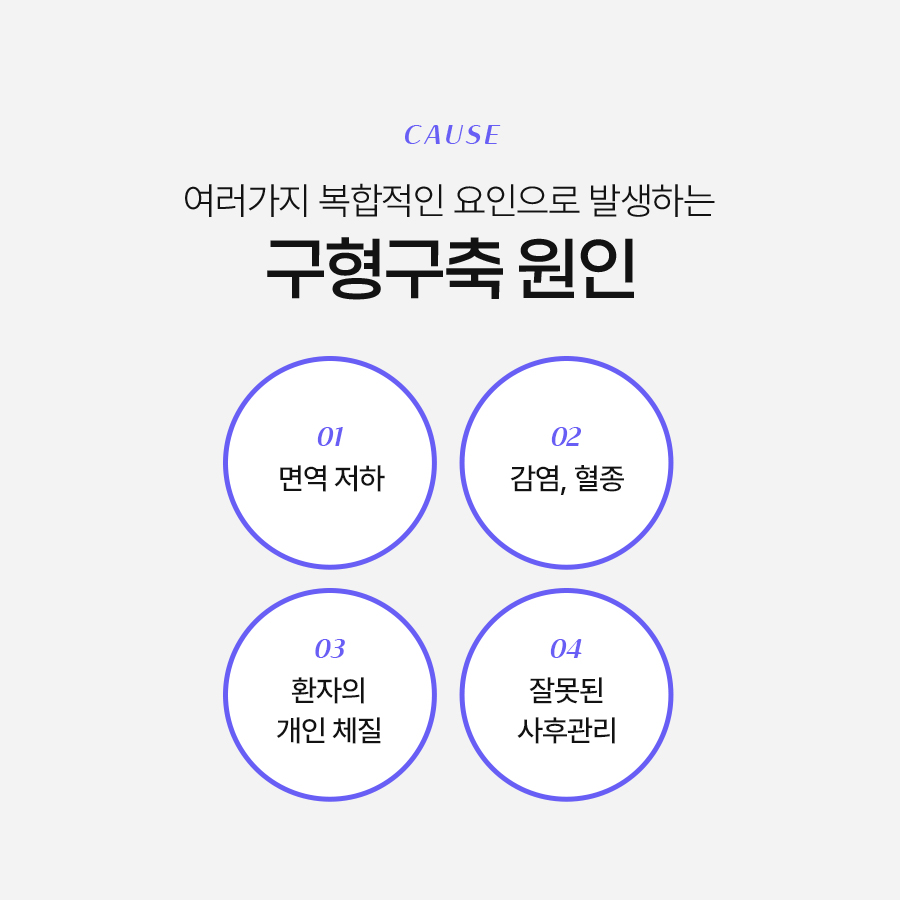
Why does capsular contracture occur?
In the case of capsular contracture, it develops due to a combination of several factors. First, it can occur due to weakened immune function. When an implant is inserted, the body recognizes it as a foreign substance and forms fibrous tissue to surround it. While this fibrous tissue protects the implant, if it forms excessively, capsular contracture may occur as a result of an overactive immune response.
There are also several technical factors to be careful about during the implant insertion process in breast revision surgery. If the position where the implant is inserted or the size and direction of the surgical incision are incorrect, the likelihood of capsular contracture may increase.
In addition, inserting an implant that is too large or lacking proper post-operative recovery care after implantation can increase the possibility of capsular contracture.

If symptoms of capsular contracture appear
Capsular contracture is divided into four stages depending on the symptoms. In stage 1, the breast tissue maintains a soft and natural feel. The implant is in its normal position, and most patients do not feel any particular discomfort.
In stage 2, the breast begins to feel slightly firmer, but there is still no major visible change in appearance, and there is often no pain. Stage 3 is moderate contracture, in which the breast becomes hard, its shape becomes irregular, and pain may be felt. At this stage, the implant may not be properly positioned, or the shape of the breast may begin to change.
Finally, stage 4 is a severe contracture state. The symptoms include the breast becoming very hard, severe pain, and a significant distortion in breast shape. At this point, the implant is no longer functioning normally, and implant replacement or corrective breast revision surgery is needed.
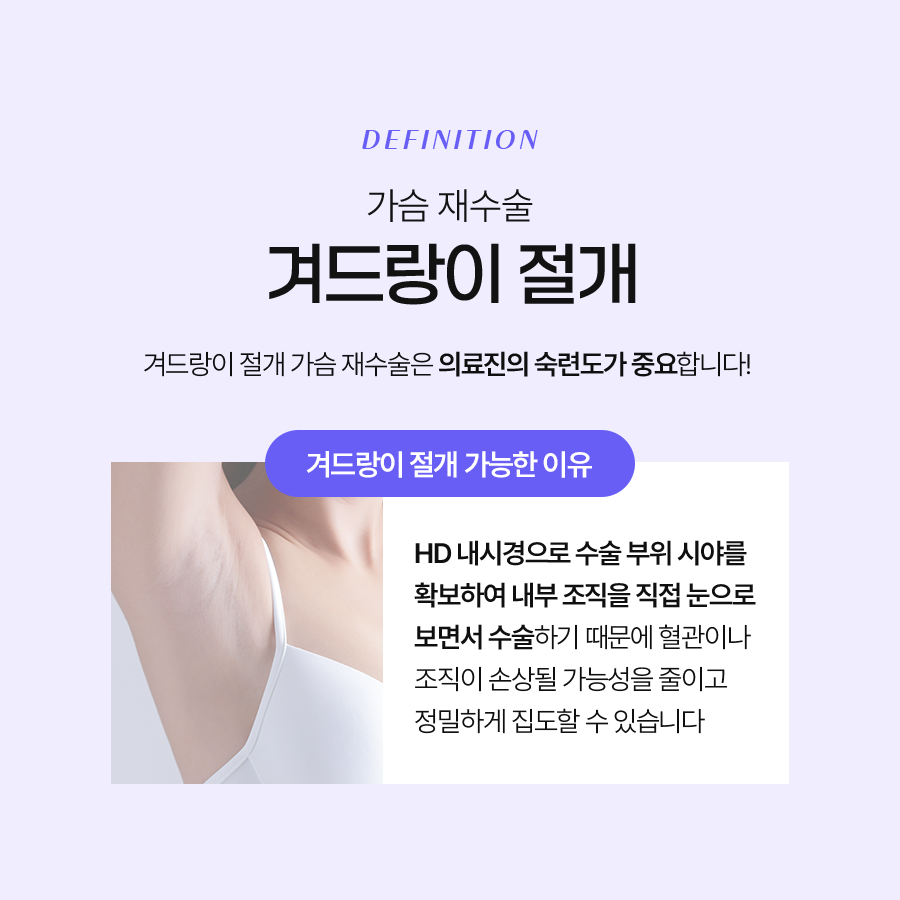
Why breast revision surgery is possible through an armpit incision
Breast revision surgery can be performed through an armpit incision. In revision surgery, the surgeon’s skill is more important than anything else when using an armpit incision. The reason an armpit incision is possible is that HD endoscopy secures the surgical field, allowing the procedure to be performed while directly viewing the internal tissue. As a result, the risk of damage to blood vessels or tissue can be reduced.
In addition, because this incision method does not involve incisions around the breast or near the nipple and instead makes the incision in the armpit area, one advantage is that the scar is less noticeable.

Capsular contracture is an important complication that can occur after breast surgery, so it is very important to understand it well and manage it properly. If you are familiar with the causes and prevention methods of capsular contracture and receive consistent care and professional treatment after breast revision surgery, you can achieve better results.
Because revision surgery is also possible through an armpit incision, increasing your understanding of capsular contracture and knowing how to respond appropriately will help you maintain satisfactory results after surgery.