
Revision Surgery for Breast Capsular Contracture: A Complete Solution for Natural Results

Breast surgery is an important decision for many women who want to gain confidence and create a more beautiful figure. Not only for aesthetic reasons, but also for psychological satisfaction, more and more women are considering breast surgery. However, not all surgeries go as expected, and various complications can occur after breast surgery. One of the most common problems is capsular contracture.
Capsular contracture is one of the major issues that can occur after surgery, and it is a problem many women may experience after implant surgery. Today, we will take a closer look at what capsular contracture is, why it occurs, and how revision surgery for breast capsular contracture is performed when it happens.
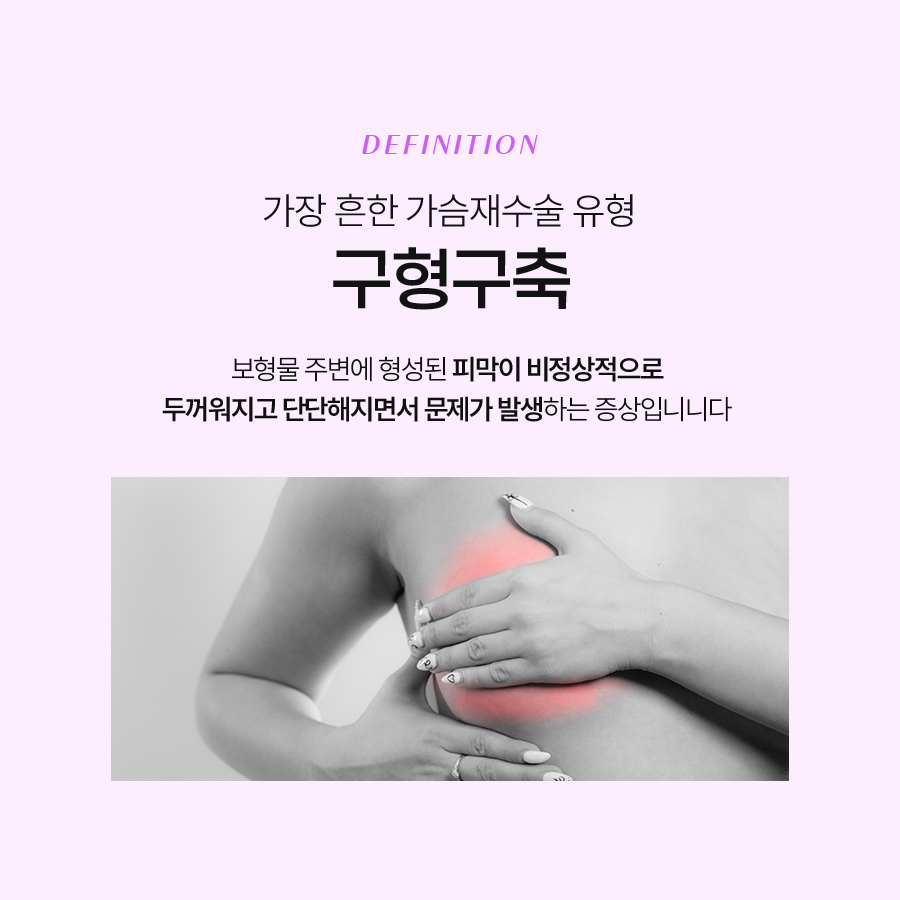
The most common type of breast revision surgery: capsular contracture
Capsular contracture is one of the complications that occurs after breast augmentation surgery. It develops when the surrounding fibrous tissue abnormally thickens around the breast implant. This fibrous tissue is called a "capsule." Normally, it protects and stabilizes the implant, but when capsular contracture occurs, this capsule contracts and hardens, causing the breast to become abnormally firm and uncomfortable.
Capsular contracture can occur for specific reasons, and the result can greatly affect the shape and feel of the breast. In severe cases, it may be accompanied by pain, and the breast may become hard and fixed, creating an uncomfortable appearance. If the implant becomes hard or pain occurs after breast surgery, consider revision surgery for breast capsular contracture.
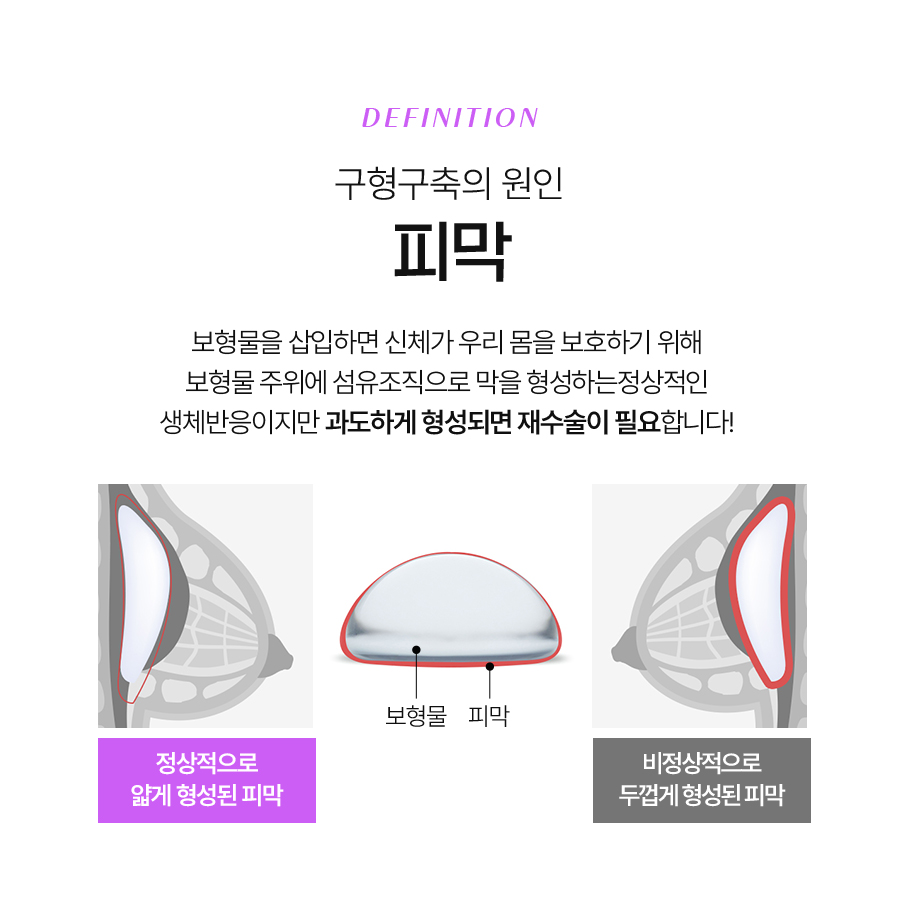
What is the capsule, one of the causes of capsular contracture?
After breast augmentation surgery, the body recognizes the implant, which is an external material, as a foreign body and triggers an immune response. As a result, fibrous tissue forms around the breast implant. This tissue acts as a kind of protective barrier and helps secure the implant stably within the body. Usually, this capsule is flexible and thin, helping preserve the breast's natural movement and shape.
However, sometimes this capsule can become excessively thick or hard. This abnormal reaction leads to capsular contracture and causes the implant to move away from its originally intended shape and position, making revision surgery for breast capsular contracture necessary.
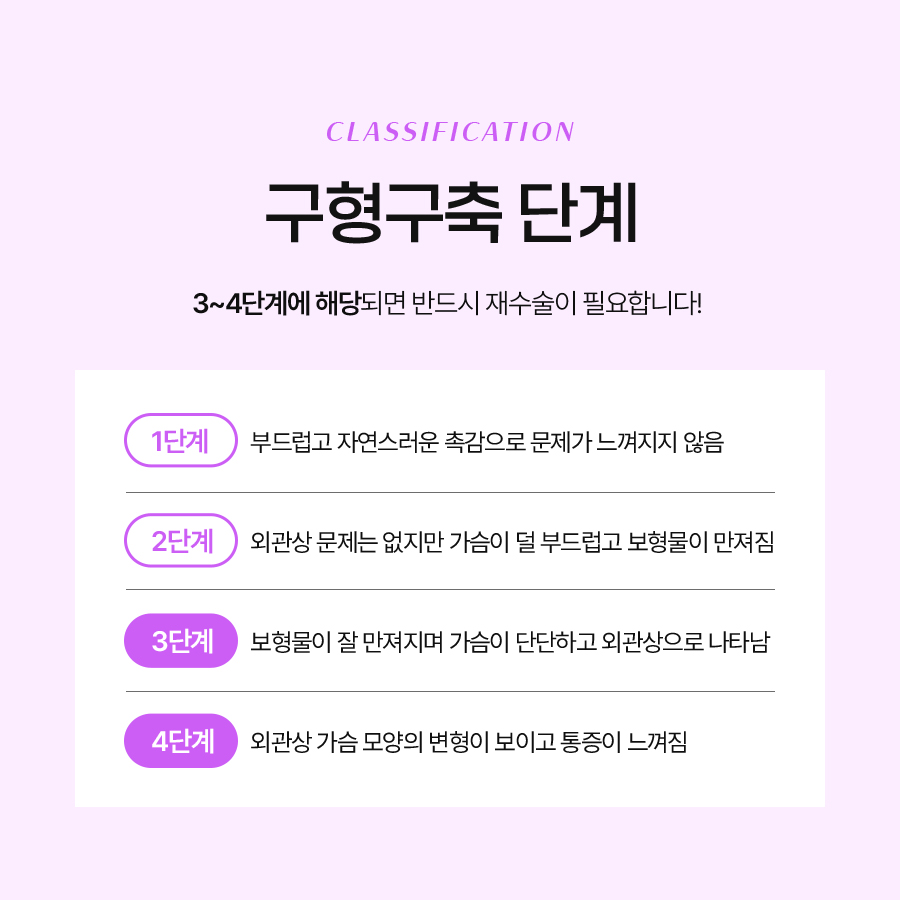
Things to know before considering breast revision surgery
In the early stage of capsular contracture, a capsule has formed, but the capsule around the implant is still soft and thin, so it does not significantly affect the shape or feel of the breast. In most cases, there are no symptoms at this stage, and the breast looks natural and feels soft to the touch.
In stage 2, the capsule begins to harden, and the breast gradually becomes stiffer. There may be no major changes in appearance, but the breast may feel slightly firmer when touched.
In stages 3 and 4, the breast becomes hard and the shape is severely distorted, with obvious asymmetry and even pain. In such cases, the capsular contracture has progressed to a very serious stage, and revision surgery for breast capsular contracture is necessary.
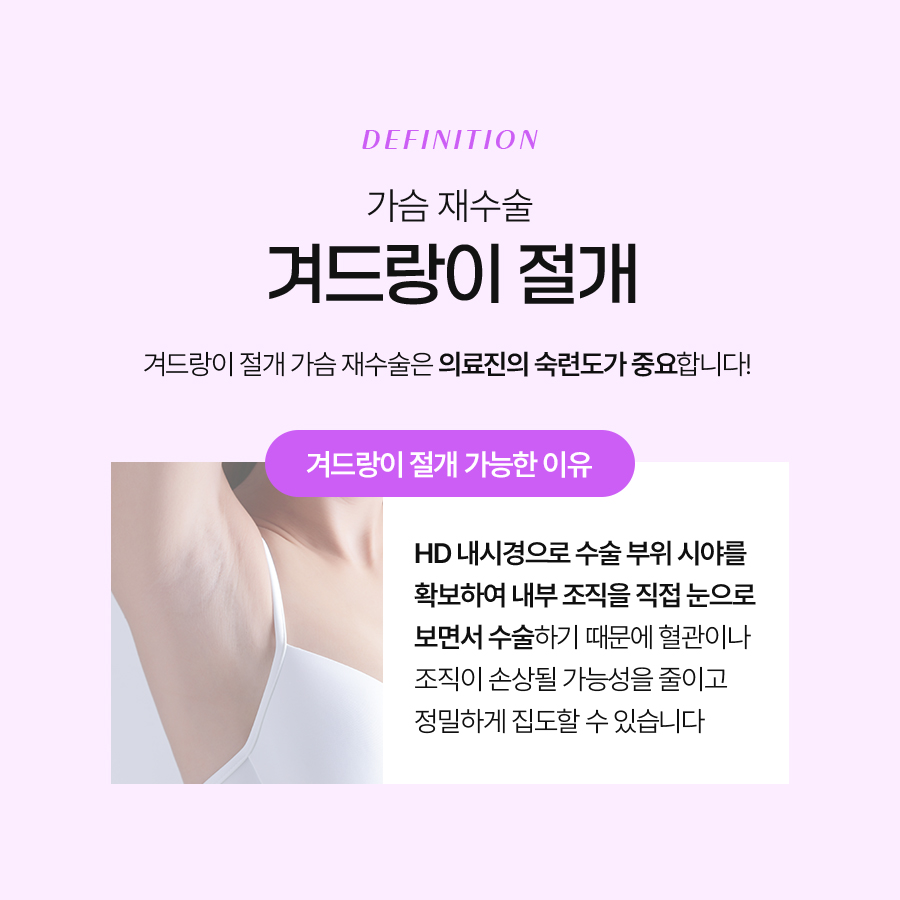
Why breast revision surgery through an armpit incision is needed
The reason an armpit incision is possible when capsular contracture occurs is that HD endoscopy allows a clear view of the surgical area, so the surgery can be performed while directly seeing the internal tissues. This reduces the likelihood of damage to blood vessels or tissue and allows the procedure to be carried out precisely and safely.
An armpit incision is one of the very important options in revision surgery for breast capsular contracture, and it is an attractive method for many patients who want a natural recovery and appearance. With advantages such as an inconspicuous scar, a lower risk of infection, and a favorable approach for capsule removal and implant replacement, many people prefer this method. However, before deciding on surgery, it is important to choose the incision method that is most appropriate for you through sufficient consultation with a specialist.

The capsule is one of the main causes of capsular contracture after breast augmentation surgery. An abnormal capsule reaction can occur due to various factors, and it can cause problems such as pain, stiffness, and shape distortion, so it is advisable to undergo revision surgery for breast capsular contracture.
To prevent or treat capsular contracture, careful management before and after surgery and help from a specialist are important. Understanding capsular contracture and knowing how to prevent or treat it can greatly help achieve good results after surgery.